Ask ten people who’ve walked the Camino what to pack, and you’ll get ten slightly different answers, mostly because they walked in different months. A packing list built for a sunny September stretch through Galicia is genuinely the wrong list for a February crossing of the Pyrenees. The route doesn’t change, but the weather across it does, sometimes dramatically, and what’s in your pack should change with it.
Quick answer: pack lighter, breathable layers with a 20–35L backpack for summer walking; add a light fleece and waterproof shell with a 40L backpack for spring and autumn; and bring thermal base layers, waterproof gloves, and a larger 40–45L pack for winter walking, when snow is possible on higher passes.
Before the Seasonal Breakdown: A Few Rules That Apply Year-Round
A handful of packing principles hold true no matter when you walk. Break in your footwear well before you arrive, ideally over 150 kilometres of walking at home, since stiff, unbroken-in boots are the single most common cause of a Camino cut short by blisters. Pack in layers rather than a few heavy items, since Northern Spain’s weather shifts through the day more than most people expect, even in summer. Bring rain protection regardless of season or forecast; Galicia’s Atlantic weather doesn’t always follow the forecast, and a sunny morning can turn into a wet afternoon with little warning. And keep your pack as light as you can manage, since every extra kilogram matters more on day twelve than it did on day one.
Spring (March to May)
Spring is widely considered one of the best times to walk the Camino, with landscapes at their greenest and temperatures generally comfortable, but it’s also one of the harder seasons to pack for precisely because it’s so variable. Early spring can still feel like winter in the mornings; late spring can feel close to summer by afternoon.
A backpack around 40L gives you enough room for a light fleece and rain layer without carrying full winter gear. For clothing, breathable short and long-sleeved shirts work well as a base layer, paired with a light fleece or wool long-sleeved piece for cooler mornings and evenings, and a waterproof jacket you can actually rely on, since spring rain in northern Spain is common rather than occasional. Gloves are worth packing too, especially for early spring; mornings can be genuinely cold before the day warms up.
Waterproof boots or trail shoes are the safer footwear choice over sandals or unlined trail runners here, since spring trails can still be muddy from winter rain. For sleeping, a lightweight sleeping bag rated around 10–15°C, or a warmer liner than you’d use in summer, covers most albergue nights, which can still be chilly, particularly in the mountains.
Summer (June to August)
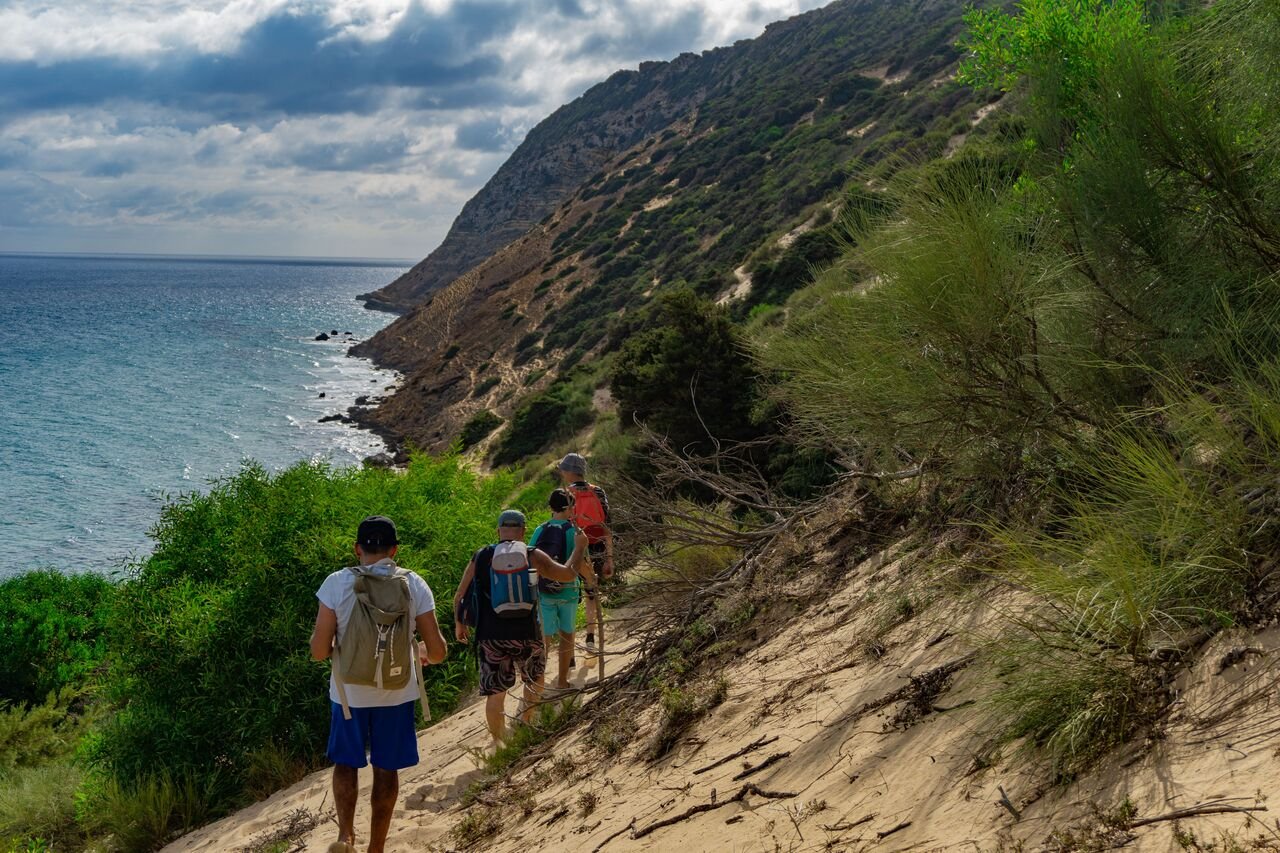
Summer is the Camino’s busiest and hottest season, and packing for it is mostly about managing heat rather than cold. It’s also when you can travel lightest, which is some consolation for the crowds and the sun. A 20–35L backpack is genuinely enough for most summer walkers, since you’re not carrying heavy insulating layers.
Breathable, quick-dry short-sleeved shirts, lightweight walking shorts or convertible trousers, a wide-brimmed hat, and high-SPF sun cream cover the essentials. On the Meseta section in particular, the flat, exposed central plateau, sun exposure is a real concern, and carrying at least two litres of water capacity is worth planning around; the Spanish State Meteorological Agency (AEMET) is a reliable source for checking conditions on a specific route before you go. A light poncho usually covers summer rain needs better than a full raincoat, since the goal is staying dry without overheating.
This is the one season where trail runners or even trekking sandals genuinely work well for a lot of walkers, since they drain and dry faster in Galicia’s humidity than a full boot. For sleeping, a silk or microfiber sleeping bag liner is usually sufficient: lightweight, packs small, and provides a hygienic layer in shared albergue beds without the bulk of a full sleeping bag.
Autumn (September to November)
Autumn is deceptive: early autumn often feels like an extension of summer, while late autumn can feel close to winter, especially if you’re walking a longer route where the season visibly shifts underfoot over several weeks.
A backpack around 40L, similar to spring, gives you room for a fuller layering system as temperatures drop through the season. Clothing-wise, the same light fleece and waterproof jacket combination from spring applies, with an extra warm layer worth packing if you’re walking into late October or November. Waterproof trousers earn their weight in this season more than any other, since sustained autumn rain in the route’s wetter northern sections is common.
Waterproof boots, low or high ankle depending on preference, are the more reliable footwear choice than summer-style trail shoes once the ground starts holding moisture. For sleep gear, stick with a 10–15°C rated sleeping bag or a warm liner, similar to spring; nights get noticeably colder as summer transitions into autumn, particularly at elevation.
Winter (December to February)
Only a small number of pilgrims walk in winter, but it’s entirely possible on the more popular routes, with the right gear. Average temperatures sit around 8–14°C, colder and snow-prone in mountain sections like Roncesvalles and O Cebreiro.
A 40–45L backpack, the largest of any season, accommodates proper thermal layers and cold-weather accessories. Thermal base layers are the winter essential most other seasons don’t need, paired with a warm mid-layer and a genuinely waterproof, not just water-resistant, outer shell. Waterproof gloves and gaiters matter here specifically, for snow and slush in the higher mountain passes rather than just rain.
Footwear needs to step up too: waterproof boots with good ankle support are non-negotiable in winter, ideally with trail gaiters or waterproof boot liners for snow-affected sections. And for sleeping, bring a proper sleeping bag rather than a liner, since many smaller albergues reduce their heating (or close entirely) in the off-season, and some winter accommodation runs colder than you’d expect indoors.
Seasonal Packing at a Glance
| Season | Backpack Size | Key Extra Items | Footwear |
|---|---|---|---|
| Spring | ~40L | Light fleece, gloves for early spring | Waterproof boots or trail shoes |
| Summer | 20–35L | Sun hat, high-SPF cream, extra water capacity | Trail runners or sandals |
| Autumn | ~40L | Waterproof trousers, extra warm layer for late autumn | Waterproof boots |
| Winter | 40–45L | Thermal base layers, waterproof gloves, gaiters | Waterproof boots with gaiters |
Year-Round Essentials, Regardless of Season
A handful of items belong in every pack no matter when you’re walking: a headlamp or phone light for early starts, a power bank, since charging points can be scarce in smaller albergues, a basic first-aid kit with blister plasters as the priority item, earplugs, genuinely essential for shared dormitory sleeping, a lightweight quick-dry towel, and a pilgrim credential to collect stamps along the way toward your Compostela certificate, issued by the official Pilgrim’s Reception Office in Santiago de Compostela. Toiletries are worth keeping to travel sizes across every season; weight adds up faster in this category than people expect.
Frequently Asked Questions
What’s the best season to walk the Camino de Santiago? Late spring (mid-May to mid-June) and early September are generally considered the sweet spots, offering stable weather, full hostel availability, and more manageable crowds than peak summer.
Do I need a sleeping bag for the Camino, or is a liner enough? A lightweight liner is usually enough for summer walking. Spring, autumn, and especially winter call for a proper sleeping bag rated around 10–15°C or warmer, since albergue nights can get cold outside the summer months.
What backpack size do I need for the Camino de Santiago? It depends on season: 20–35L for summer, around 40L for spring and autumn, and 40–45L for winter, when thermal layers and cold-weather gear take up more space.
Is rain gear necessary even in summer? Yes. Northern Spain’s weather, especially in Galicia, can shift quickly regardless of season. A light poncho is usually enough for summer showers; a full waterproof jacket and trousers matter more in spring, autumn, and winter.
Can you walk the Camino de Santiago in winter? Yes, though far fewer pilgrims do. It requires proper cold-weather gear, including thermal layers, waterproof boots, and gaiters, since mountain sections like Roncesvalles and O Cebreiro can see snow.
Final Thoughts
The core of a good Camino packing list doesn’t change much between seasons: light layers, broken-in footwear, and genuine rain protection. What changes is how much of each you need and how heavy your cold-weather layer has to be. Pack for the season you’re actually walking in, not a generic “Camino packing list” built for whichever month the person who wrote it happened to go, and you’ll carry less, stay more comfortable, and spend more of the trip thinking about the walk itself rather than the weather.
Also Read: Backpacking Advice CWBiancaVoyage | Smart Tips for Planning Your Next Adventure

Muhammad Ali Sada is the founder of Trip Guiderz and a travel writer covering destination guides, travel planning, seasonal advice, and practical travel tips.
Email: sadaali7799@gmail.com
Phone: +923059817213
Address: Rehma street house no. 25 MA Jinnah road Multan, Punjab, Pakistan