
Malaysia sits at the crossroads of the South China Sea, the Strait of Malacca, and the Celebes Sea, which gives it one of the most varied coastlines in Southeast Asia. On Peninsular Malaysia, the west coast offers calmer, more accessible waters near Langkawi and Penang, while the east coast, in Terengganu and Pahang, delivers the powder-white sand and clear turquoise water most people picture when they think of a Malaysian beach holiday. Cross the South China Sea to Malaysian Borneo (Sabah and Sarawak) and the coastline changes again, trading resort islands for world-class dive sites, rainforest-backed bays, and marine parks protecting some of the richest reef systems on Earth.
Travelers choose Malaysia for island vacations because it packs an unusual amount of variety into one country you can snorkel over a coral garden in the morning, explore a rainforest boardwalk in the afternoon, and eat street food in a night market by evening. It’s also more affordable than the Maldives or the Seychelles, with a well-developed ferry and domestic flight network that makes island-hopping straightforward.
This guide walks through 25 of Malaysia’s best beaches, organized by island, state, and travel style, along with practical planning tools weather by month, a packing checklist, safety tips, and sample itineraries so you can build a beach trip that actually fits how you like to travel.
Malaysia’s best beaches include Langkawi (Pantai Cenang, Tanjung Rhu, Datai Bay) for resort-style convenience, the Perhentian Islands and Redang Island for clear turquoise water and reef snorkeling, Tioman Island for jungle-backed bays, Pangkor Island for a quieter, budget-friendly escape, and Sipadan, Mabul, and Tunku Abdul Rahman Marine Park in Sabah for some of the best diving in Southeast Asia. Each offers a different mix of accessibility, scenery, and activities.
Malaysia Beaches at a Glance
| Beach | State | Best For | Water Color | Activities | Family Friendly | Best Time to Visit |
|---|---|---|---|---|---|---|
| Pantai Cenang | Kedah (Langkawi) | Nightlife, sunsets | Turquoise-green | Swimming, jet ski, parasailing | Yes | Nov–Mar |
| Tanjung Rhu | Kedah (Langkawi) | Tranquility | Emerald green | Swimming, sandbar walks | Yes | Nov–Mar |
| Datai Bay | Kedah (Langkawi) | Luxury, nature | Deep turquoise | Swimming, rainforest walks | Yes | Nov–Mar |
| Juara Beach | Pahang (Tioman) | Surfing, seclusion | Deep blue | Surfing, swimming | Moderate | Mar–Sep |
| Salang Beach | Pahang (Tioman) | Snorkeling | Clear turquoise | Snorkeling, diving | Yes | Mar–Sep |
| ABC Beach | Pahang (Tioman) | Backpackers | Clear blue | Swimming, chalet stays | Moderate | Mar–Sep |
| Long Beach | Terengganu (Perhentian Kecil) | Backpackers, nightlife | Clear turquoise | Snorkeling, diving | Moderate | Mar–Oct |
| Turtle Beach | Terengganu (Perhentian) | Turtle nesting | Clear blue-green | Turtle watching, swimming | Yes | Mar–Oct |
| Teluk Dalam | Terengganu (Perhentian Besar) | Families | Clear turquoise | Swimming, snorkeling | Yes | Mar–Oct |
| Coral Bay | Terengganu (Perhentian Kecil) | Snorkeling | Clear turquoise | Snorkeling | Yes | Mar–Oct |
| Redang Long Beach | Terengganu (Redang) | Resort stays | Crystal turquoise | Snorkeling, diving | Yes | Mar–Oct |
| Pasir Panjang | Terengganu (Redang) | Quiet swimming | Clear turquoise | Swimming | Yes | Mar–Oct |
| Kapalai | Sabah | Diving | Deep blue | Diving, macro life | No (diving-focused) | Apr–Aug |
| Sipadan | Sabah | World-class diving | Deep blue | Scuba diving | No | Apr–Aug |
| Mabul | Sabah | Diving, muck diving | Turquoise | Diving, snorkeling | Moderate | Apr–Aug |
| Mantanani | Sabah | Snorkeling, dugongs | Clear turquoise | Snorkeling, swimming | Yes | Mar–Oct |
| Rawa Island | Johor | Honeymoon | Clear turquoise | Swimming, snorkeling | Yes | Mar–Oct |
| Sibu Island | Johor | Diving, seclusion | Clear turquoise | Diving, snorkeling | Moderate | Mar–Oct |
| Teluk Nipah | Perak (Pangkor) | Budget travel | Green-blue | Swimming, water sports | Yes | Nov–Mar |
| Monkey Beach | Penang | Day trips | Green-blue | Swimming, hiking access | Yes | Nov–Mar |
| Batu Ferringhi | Penang | Nightlife, families | Green-brown | Water sports, night market | Yes | Nov–Mar |
| Damai Beach | Sarawak | Culture, resorts | Green-blue | Swimming, cultural village | Yes | Mar–Sep |
| Tusan Beach | Sarawak | Sunsets, blue tears | Deep blue | Sightseeing, tide pools | Moderate | Mar–Sep |
| Kelambu Beach | Sarawak | Turtle nesting | Green-blue | Turtle watching | Moderate | Mar–Sep |
| Port Dickson | Negeri Sembilan | KL day trips | Brown-green | Swimming, water sports | Yes | Year-round |
Note: “Best Time to Visit” reflects general monsoon patterns. Always check current ferry schedules and resort closures before booking several east coast islands close entirely during the November–February monsoon.
Why Malaysia Is Famous for Beautiful Beaches
1. Tropical climate
Malaysia sits near the equator, giving it warm water and air temperatures year-round, typically between 25–32°C (77–90°F), which makes swimming comfortable in almost any month you can actually reach a given beach.
2. Crystal-clear water
The Perhentian Islands, Redang, and Sipadan owe their visibility to a combination of low sediment runoff, minimal industrial development nearby, and being positioned away from major river mouths that would otherwise cloud the water.
3. White sandy coastline
Much of the east coast’s sand is fine and pale because it’s composed largely of coral and shell fragments rather than volcanic or mineral-heavy sediment, which is also why the sand stays cool underfoot compared to darker beaches elsewhere in the region.
4. Coral reefs
Malaysia’s Borneo waters fall within the Coral Triangle, the global epicenter of marine biodiversity, which is why Sabah’s dive sites consistently rank among the best in the world.
5. Marine biodiversity
Green and hawksbill turtles nest on beaches like Turtle Beach (Perhentian) and Kelambu (Sarawak), while Sipadan and Mabul host reef sharks, barracuda schools, and an unusually dense population of macro marine life.
6. Affordable island holidays
Compared to the Maldives or French Polynesia, Malaysia’s islands are reachable by short domestic flights and inexpensive speedboat transfers, and accommodation spans backpacker chalets to five-star resorts at a fraction of comparable Indian Ocean pricing.
7. Easy accessibility
Kuala Lumpur’s international airport connects directly to gateway towns like Langkawi, Kota Bharu (for Perhentian), Kuala Terengganu (for Redang), and Tawau (for Sipadan/Mabul), so most beaches are reachable within a single day of transit from the capital.
25 Best Malaysia Beaches
1. Pantai Cenang (Langkawi)
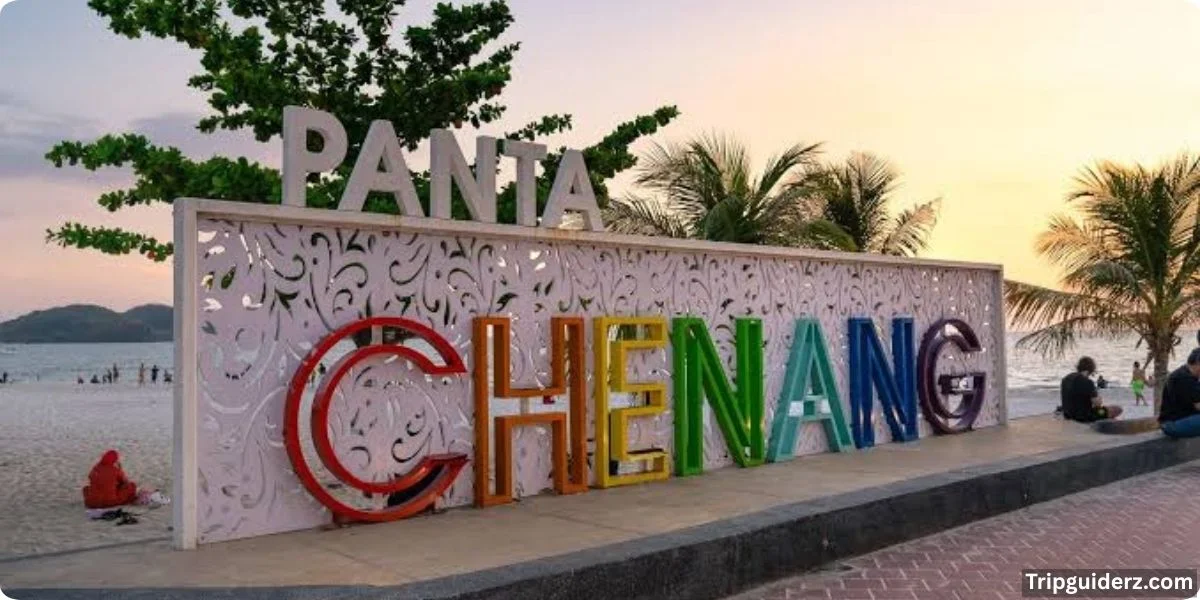
Located on the southwest coast of Langkawi Island in Kedah, Pantai Cenang is the island’s liveliest beach strip, lined with beachfront bars, restaurants, and resorts, with calm, shallow water good for wading. Visitors can enjoy parasailing, jet skiing, banana boating, and sunset-watching from a beach bar, and the area is close to Underwater World Langkawi, the Langkawi Sky Bridge, and the Cenang night market. Public beach access is free, though watersports are paid per activity, and the beach offers full facilities including showers, restaurants, resorts, and souvenir shops.
(Important: book watersports early morning before crowds arrive and the water is calmer.) The southern end of the beach at low tide is best for photography, where wet sand creates mirror-like sunset reflections.
2. Tanjung Rhu (Langkawi)
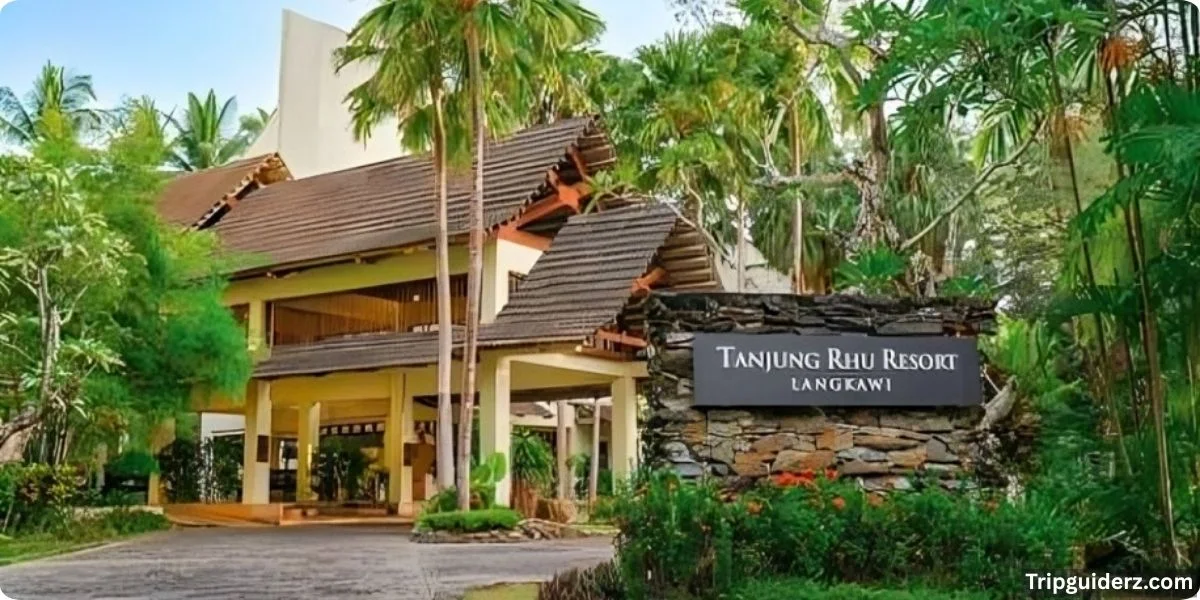
On Langkawi’s northern coast, Tanjung Rhu is a quieter, more upscale beach known for its sandbar that emerges at low tide, connecting to a small limestone islet. Activities here include swimming, walking the sandbar, and mangrove or cave boat tours, with Tasik Dayang Bunting (Lake of the Pregnant Maiden) and Geopark mangrove tours nearby. Access is free, though facilities are limited mostly to resort properties.
(Important: check tide tables the day before you visit time the sandbar walk correctly.) Golden hour on the sandbar, with limestone karsts in the background, offers the best photo opportunities.
3. Datai Bay (Langkawi)
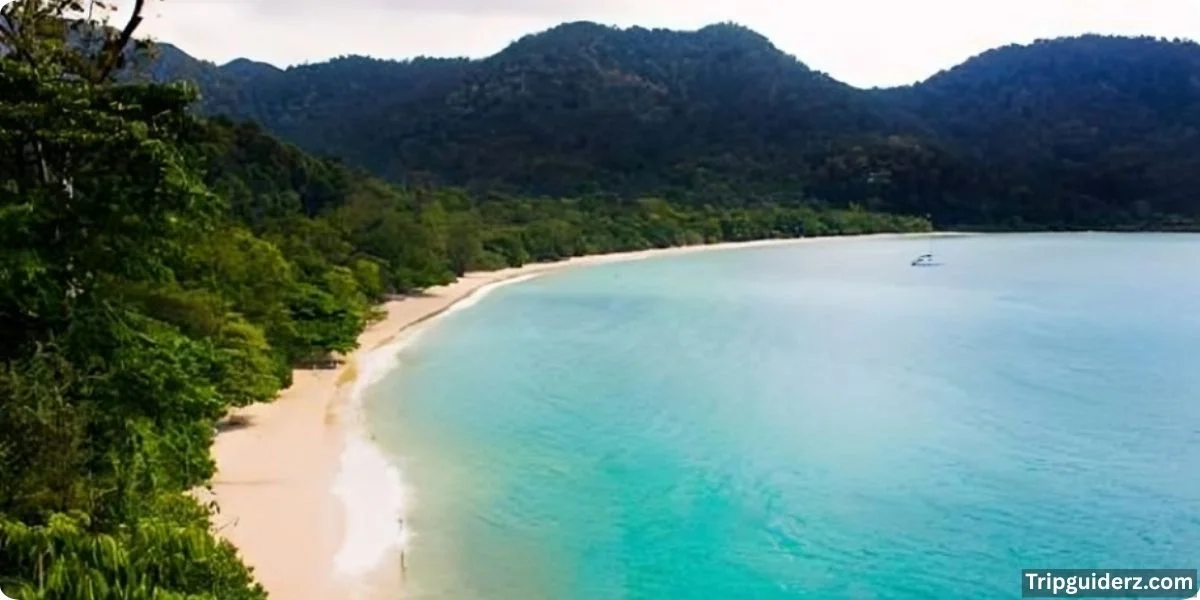
Datai Bay sits at Langkawi’s northwest tip, backed by ancient rainforest rather than development, making it one of the island’s most secluded beaches, home to hornbills and long-tailed macaques. Swimming, rainforest canopy walks, and wildlife spotting around the resort grounds are the main activities, with the Datai’s own trails and Temurun Waterfall nearby. Public beach access is free, though it’s primarily reached through resort grounds, and facilities are minimal outside the resort.
(Important: visit at dawn for the best chance of spotting hornbills feeding near the shoreline.) The best shots capture the rainforest tree line meeting the sand at the bay’s northern curve.
4. Juara Beach (Tioman Island)
On the east coast of Tioman Island facing the open South China Sea, Juara is the only beach on the island with a reliable swell for surfing, and it has a far more rustic, quieter vibe than the west coast villages. Visitors come for seasonal surfing, swimming, and the Juara Turtle Project conservation center, with a jungle trail connecting to Tekek village. Access is free, though facilities remain basic chalets and small cafes only.
(Important: the Tekek-to-Juara jungle trail takes roughly 2–3 hours, offering a scenic alternative to a boat transfer.) Sunrise at the turtle hatchery and the empty sand south of the village make for the best photos.
5. Salang Beach (Tioman Island)
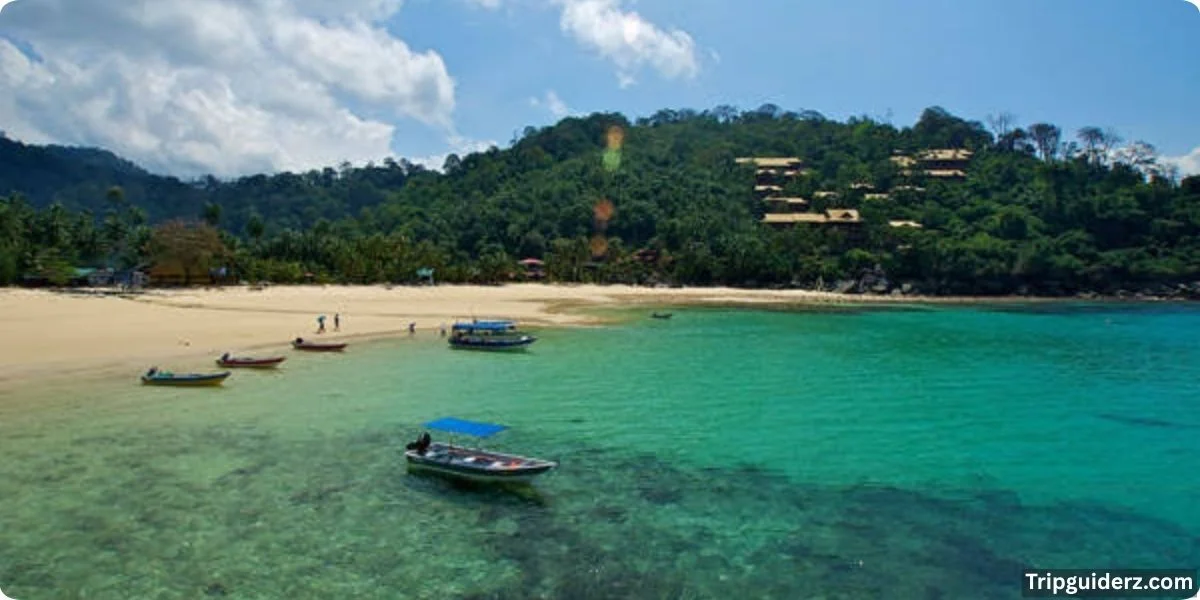
Salang Beach, on Tioman’s northwest coast, is a compact bay known for easy shore-entry snorkeling right off the beach. Snorkeling, diving, and swimming are the main draws, supported by several dive shops based in the area, with short boat rides to nearby coral gardens and Coral Island. Entry is free, and facilities include dive shops, guesthouses, and restaurants along the beach path.
(Important: snorkel near the rocky points at either end of the bay, where coral cover is denser than the open sand areas.) Sunset shots of the wooden jetty silhouetted against the hills are especially popular.
6. ABC Beach (Tioman Island)
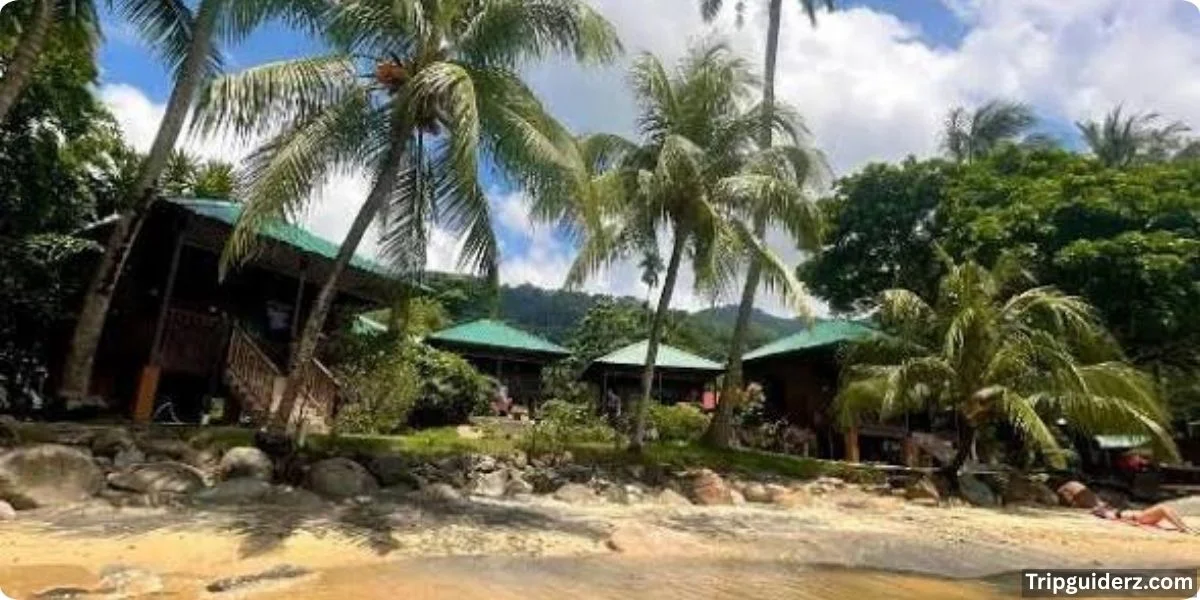
Just south of Tekek village, ABC Beach is a popular backpacker base with a relaxed, low-key strip of chalets built right on the sand. Activities include swimming, kayaking, and short jungle walks to waterfalls, with the Mukut waterfall trail and Tekek village nearby. Access is free, and facilities include budget chalets, cafes, and small dive operators.
(Important: ABC’s water is calmer than beaches further south, making it a better option for swimming with young kids.) The row of chalets built out over the water at low tide is a standout photo spot.
7. Long Beach (Perhentian Kecil)
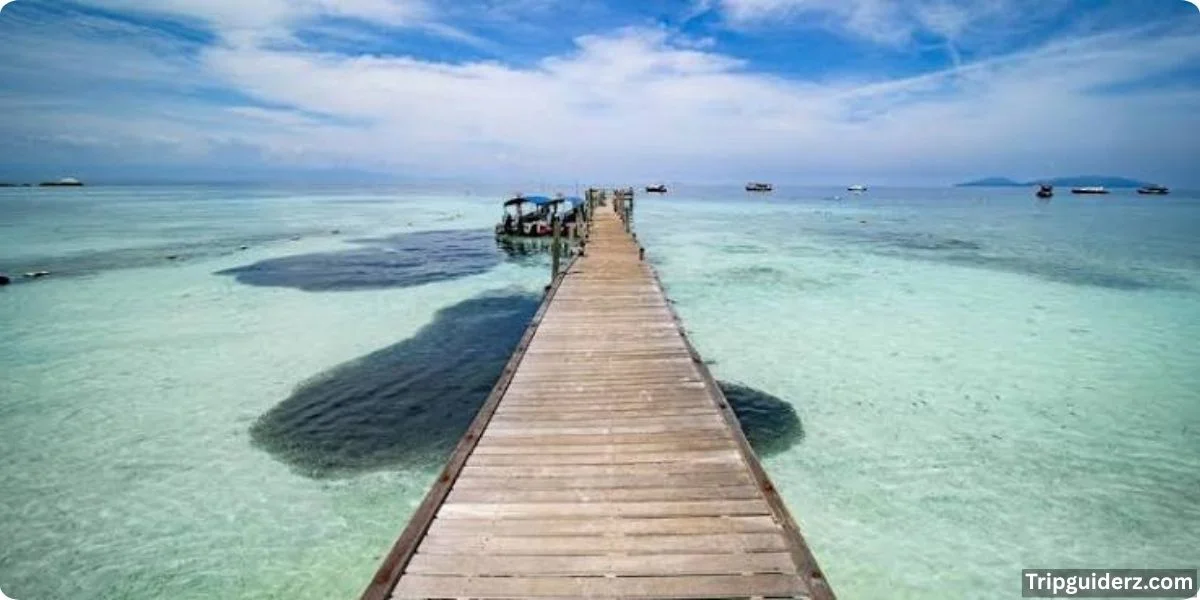
Long Beach, on the east side of Perhentian Kecil in Terengganu, is the island’s main backpacker and party hub, featuring a long stretch of white sand and the widest range of budget accommodation available. Snorkeling, night market browsing, and beach bar nightlife are the top activities, with Coral Bay and Turtle Beach just a short boat ride away. Entry is free, and facilities are extensive, including chalets, dive shops, restaurants, and bars.
(Important: book accommodation well ahead during peak season, June–August, since island room supply is limited.) The northern rocky headland overlooking the full curve of the beach offers the best photography.
8. Turtle Beach (Perhentian)
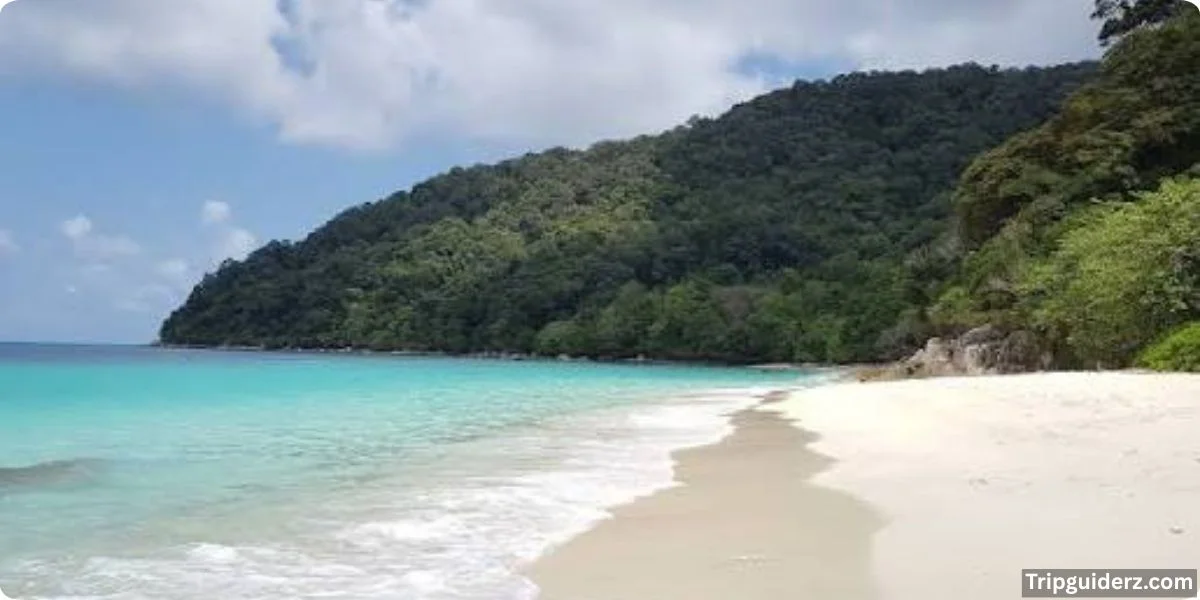
A quieter cove on Perhentian Besar reachable by short boat or jungle trail, Turtle Beach is a nesting site for green turtles and sees far fewer visitors than Long Beach. Turtle watching (seasonal), swimming, and snorkeling near the Marine Park boundary are the main activities. A marine park conservation fee applies on arrival at either island, and facilities are minimal, limited to a couple of small guesthouses.
(Important: nesting season timing varies year to year check with your resort for current sightings rather than assuming a fixed date.) Early morning in the quiet cove, before day-trip boats arrive, offers the best photo conditions.
9. Teluk Dalam (Perhentian Besar)
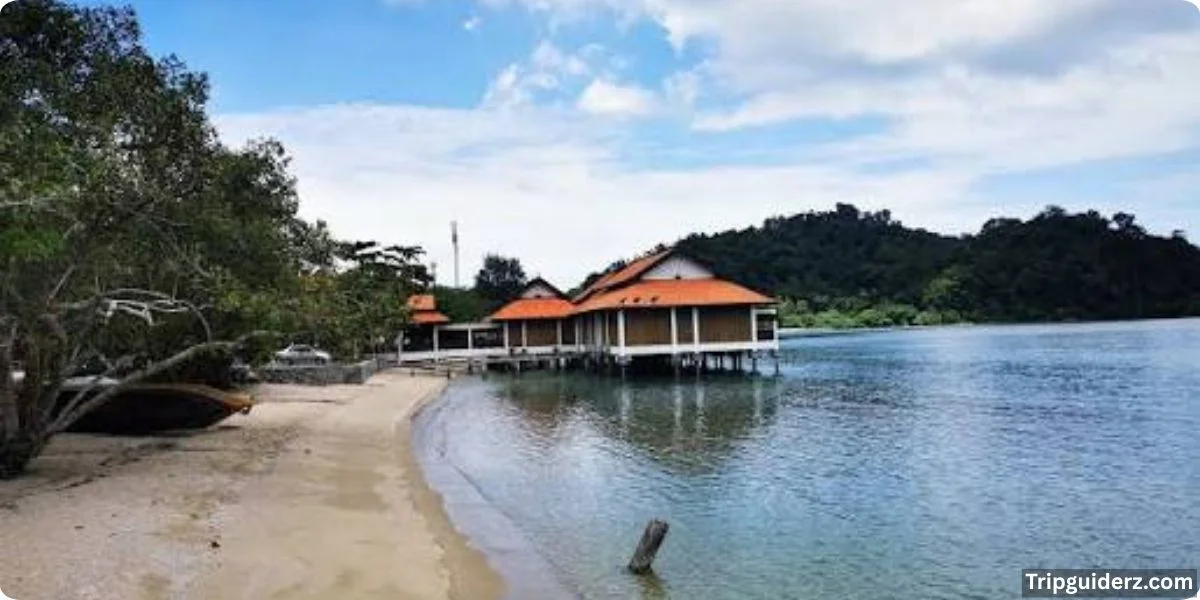
Located on the southern coast of Perhentian Besar, Teluk Dalam is a family-oriented beach with calmer, shallower water than Long Beach. Swimming, offshore snorkeling, and resort pool access are the main draws, with short walks connecting to other coves along the island. A marine park conservation fee applies, and facilities include mid-range resorts and restaurants.
(Important: this is considered the better base on Perhentian for families with young children thanks to the gentler shore break.) The resort jetty at low tide, framing the bay, is the top photo spot.
10. Coral Bay (Perhentian Kecil)
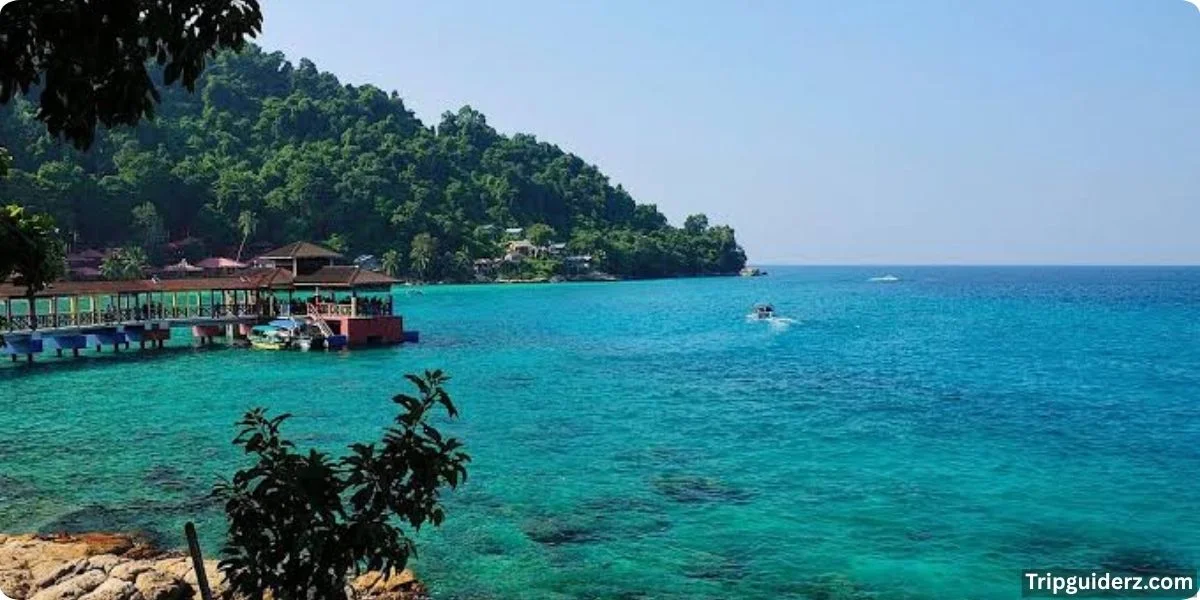
On the west side of Perhentian Kecil, Coral Bay is named for its shore-accessible coral patches and is especially popular for sunset views over the water. Snorkeling, sunset watching, and casual beach dining are the main activities, with a short walk over the headland connecting to Long Beach. A marine park conservation fee applies, and facilities include guesthouses and beachfront restaurants.
(Important: Coral Bay faces west, making it the island’s best sunset-photo spot arrive 30 minutes early to secure a place along the point.) The rocky point at the bay’s northern edge is ideal during sunset.
11. Redang Long Beach (Pulau Redang)
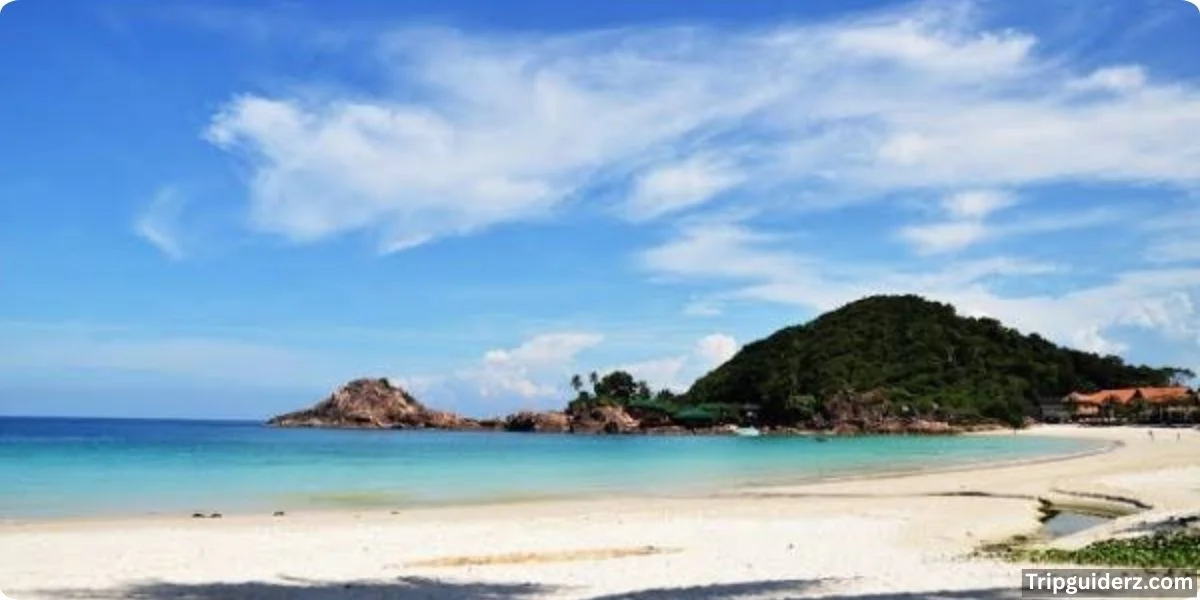
On the east coast of Redang Island in Terengganu, Redang Long Beach is home to most of the island’s resort development, with wide white sand and calm, clear water. Snorkeling, diving, and resort watersports are the main activities, alongside boat trips to Marine Park snorkeling points and nearby Turtle Bay. A marine park conservation fee applies, and facilities are extensive, including restaurants, dive centers, and spas.
(Important: most Redang resorts operate on an all-inclusive package basis covering meals and boat transfers book the transfer as part of the package rather than separately.) Sunrise at the jetty, when the water is calmest and clearest, makes for the best photos.
12. Pasir Panjang (Pulau Redang)
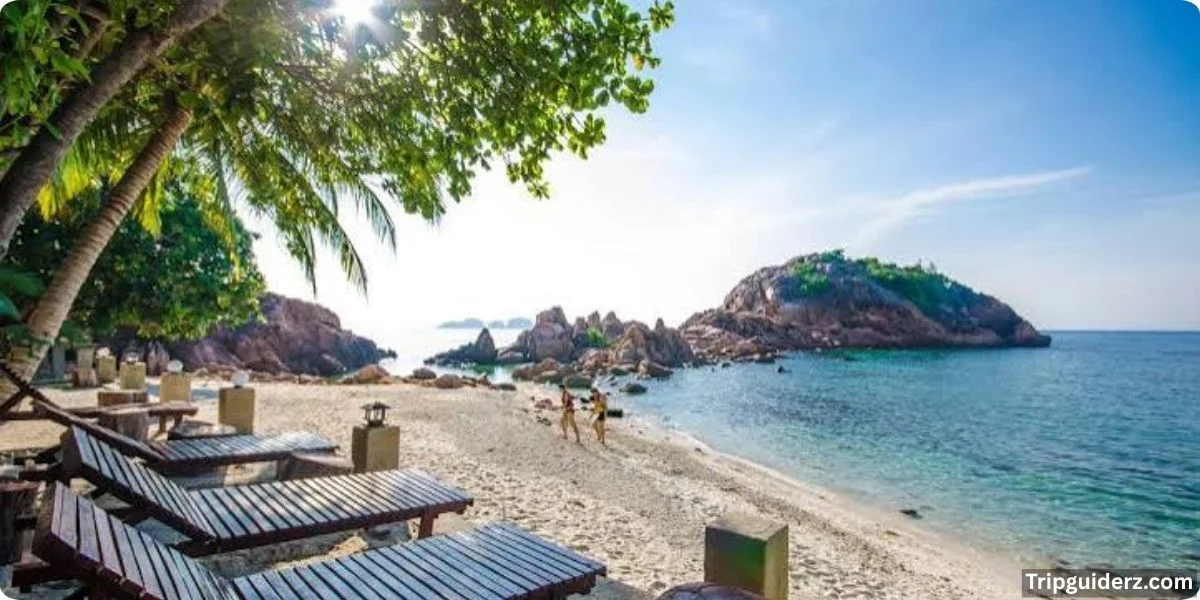
Adjacent to Redang’s main resort strip, Pasir Panjang, meaning “long sand” in Malay, is a quieter alternative to Long Beach with similarly clear water. Swimming and relaxing away from the main resort crowds are the primary draws, with dive shops a short walk or boat hop away. A marine park conservation fee applies, and facilities are fewer than at Long Beach, mostly accessed via nearby resorts. (Important: ask your resort about a short boat transfer here if your property sits on the busier stretch of Long Beach.) The tree-lined southern end, where the beach curves away from development, offers the best photography.
13. Kapalai
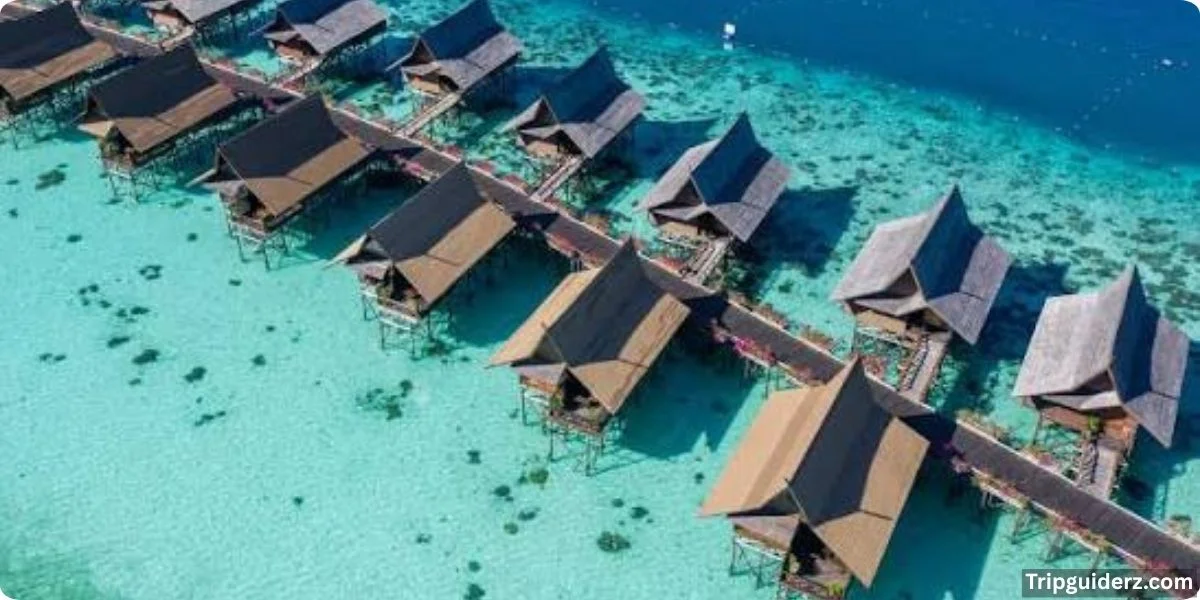
A sand-and-coral atoll near Sipadan off Sabah’s Semporna peninsula, Kapalai is known for muck diving and macro marine life rather than a conventional sand beach, with most of the “island” consisting of a stilt resort over a reef flat. Diving, macro photography, and snorkeling are the main activities, with Sipadan and Mabul a short boat ride away. Dive permits and conservation fees apply for Sipadan trips, though Kapalai’s own reef flat has no separate entry fee; facilities are limited to a single stilt resort with no public amenities.
(Important: worth visiting even without a Sipadan permit, thanks to resident frogfish and seahorses.) Underwater shots along the reef flat at low tide are ideal for macro photography.
14. Sipadan
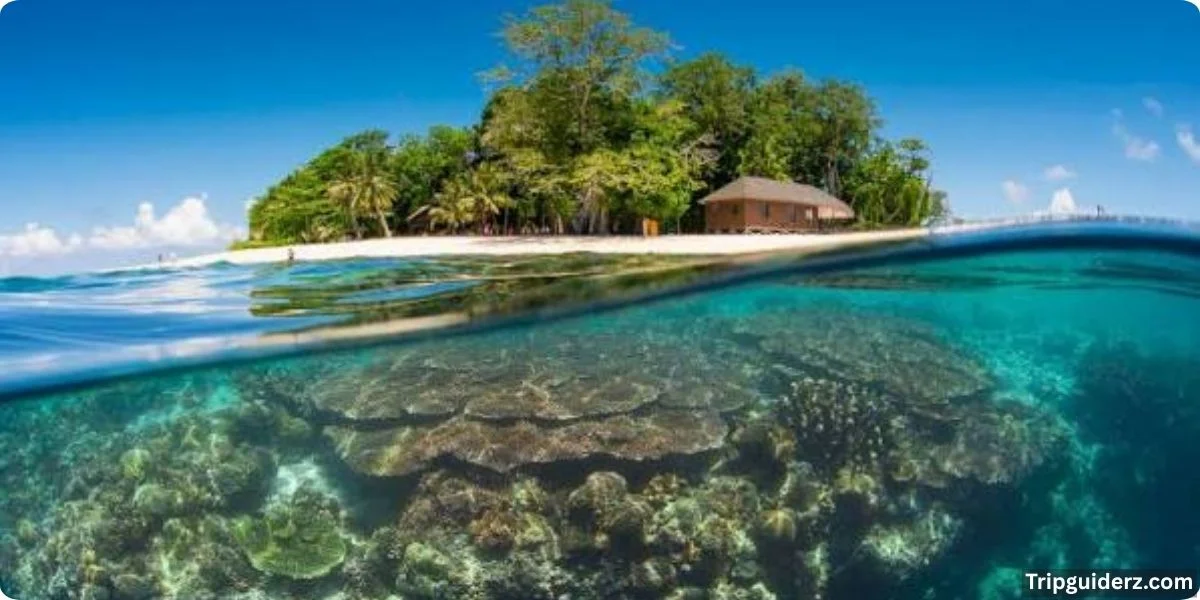
An oceanic island off Sabah’s east coast rising from a 600-meter underwater volcanic cone, Sipadan is widely regarded as one of the best dive sites in the world, famous for its barracuda “tornado,” turtles, and steep drop-offs. Scuba diving is the primary activity (Advanced Open Water certification has been required since October 2022), with Mabul and Kapalai serving as overnight bases since overnight stays on Sipadan itself aren’t permitted. Sabah Parks issues a fixed daily permit quota reported at roughly 176–254 permits per day depending on source and season, bundled into resort dive packages, with a diving fee of around RM250 for Malaysians and RM350 for foreigners plus a separate conservation fee, according to recent operator listings.
(Important — flagged for review: exact permit numbers and fees change periodically; confirm current figures with a licensed operator before publishing.) Booking a multi-night dive package (3–5 nights) is recommended since permit allocation favors resorts holding larger quotas for longer stays. Barracuda Point, underwater, is the signature photography spot.
15. Mabul
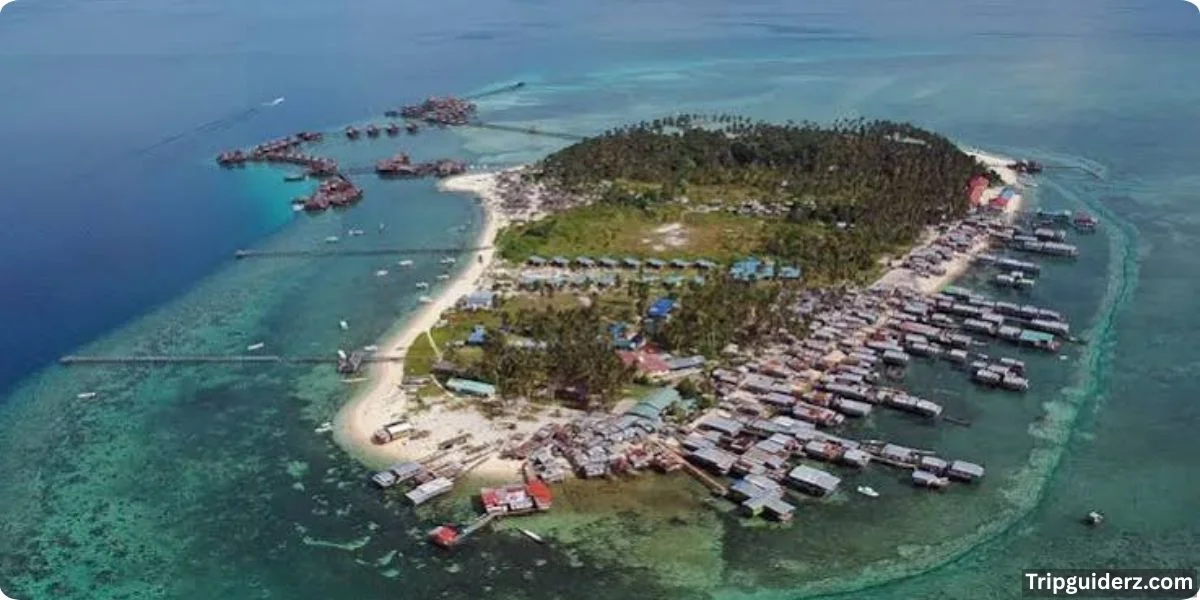
A small island near Sipadan off Sabah’s Semporna coast, Mabul is known worldwide for “muck diving” sandy-bottom dive sites packed with rare, small marine species like mandarinfish and ghost pipefish. Diving, snorkeling, and relaxing at water-village-style resorts are the main activities, with Sipadan (via permit), Kapalai, and Semporna town nearby. There’s no general entry fee, though Sipadan permits are required separately for those dives; facilities range from budget to upscale dive resorts alongside a local village.
(Important: Mabul’s night dives are considered some of the best in the region for spotting unusual critters don’t skip them in favor of daytime Sipadan diving alone.) Sunset shots of the stilt villages, taken from the water looking back at the island, are the top photo choice.
16. Mantanani
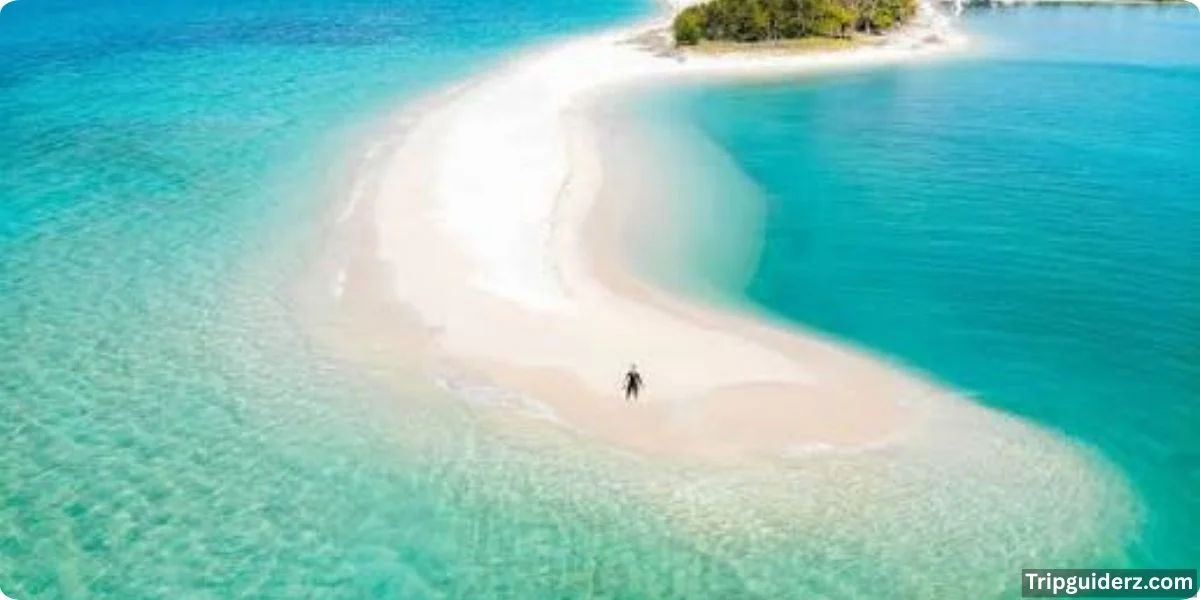
Off the northwest coast of Sabah near Kota Belud, Mantanani is a small island group known for resident dugong sightings and clear, calm water suited to beginners. Snorkeling, swimming, and dugong-watching boat trips are the main activities, with Kota Belud’s Sunday market on the mainland nearby. Beach access is free, though boat transfer and tour costs apply, and facilities are limited to a handful of resorts.
(Important: dugong sightings aren’t guaranteed on any given trip ask your operator about recent sighting frequency before setting expectations.) The shallow turquoise flats visible from the jetty at low tide make for the best photography.
17. Rawa Island
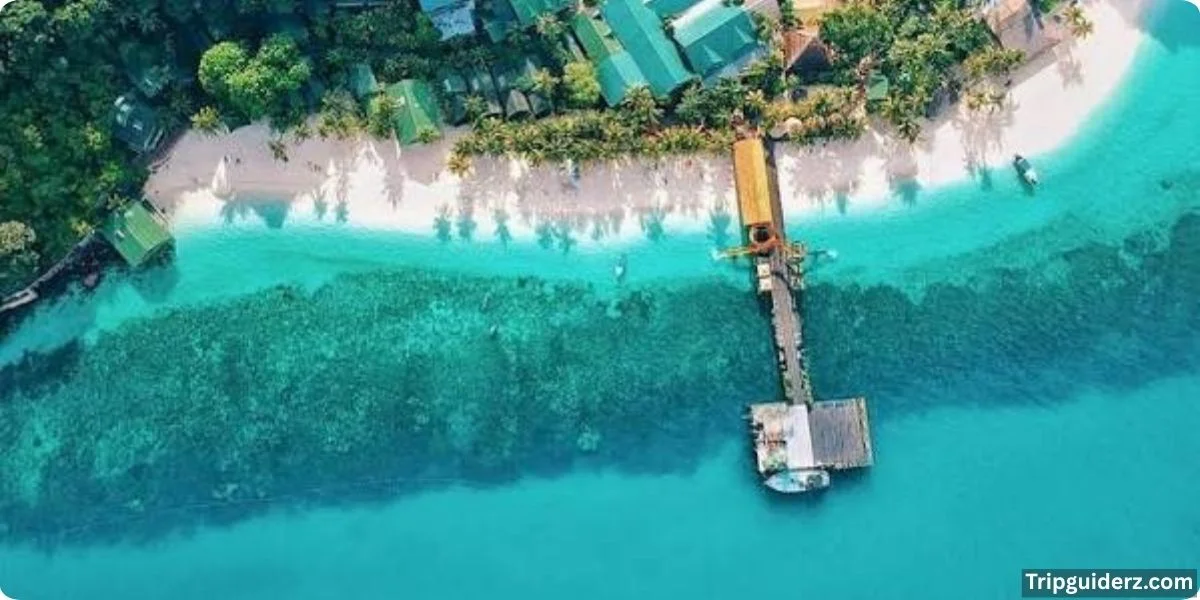
A short boat ride from Mersing off Johor’s east coast, Rawa Island is a small, low-key destination popular for honeymoons and quiet getaways, with clear water close to shore. Swimming, snorkeling, and kayaking are the main activities, with Tengah and Besar islands also reachable from Mersing. Access is free, and resort stays typically bundle in facility access; overall development is limited.
(Important: Rawa sees far fewer day-trippers than Redang or Perhentian, making it a strong pick for travelers prioritizing quiet over nightlife.) The jetty walkway extending into shallow turquoise water is the standout photo spot.
18. Sibu Island
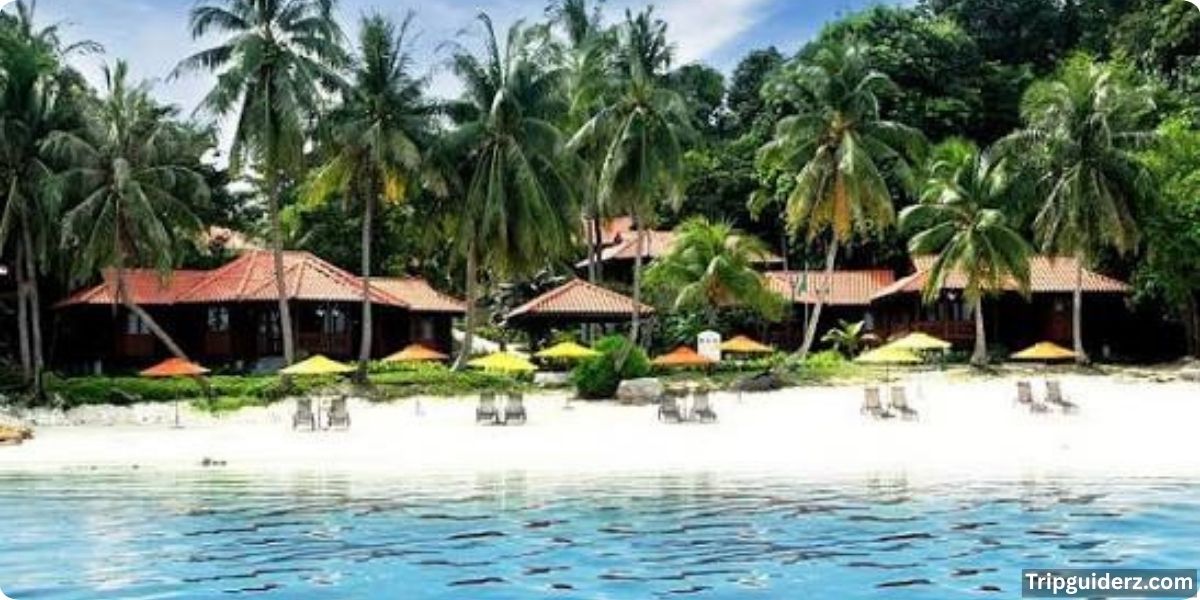
Part of the Sibu archipelago off Johor’s coast near Mersing, Sibu Island is known for diving and a laid-back pace, with less tourist traffic than the east coast’s bigger-name islands. Diving, snorkeling, and jungle trekking are the main activities, with Sibu Tengah and Sibu Kukus reachable by short boat. Access is free, and resort packages typically include transfers, with only a handful of independent resorts on the island.
(Important: ferry schedules from Mersing are limited confirm both outbound and return times before booking your stay.) The forested ridgeline behind the main beach, visible from the water, offers the best photography.
19. Pangkor Beaches (Teluk Nipah area)
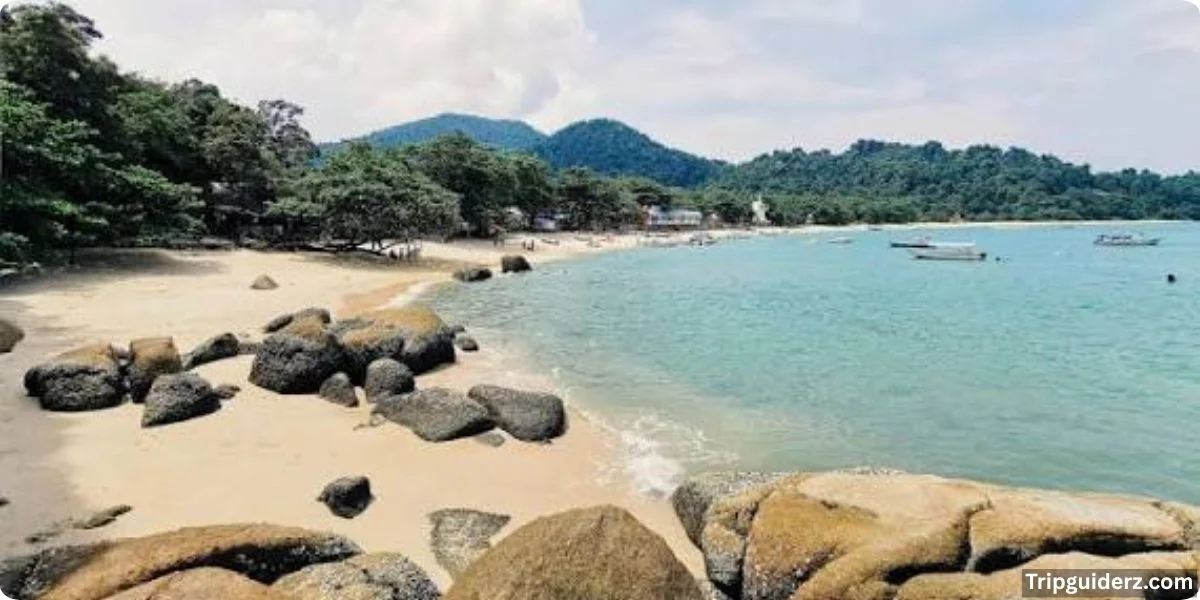
On Pulau Pangkor off Perak’s coast, the Teluk Nipah area offers a budget-friendly, west-coast alternative to Langkawi, with calmer seas and lower prices. Swimming, water sports, and visits to the nearby Dutch fort ruins are the main draws, alongside Pangkor’s fishing villages and Fu Lin Kong Temple. Access is free, and facilities include budget to mid-range chalets, restaurants, and watersports operators.
(Important: renting a scooter is the best way to explore the island’s smaller coves beyond the main tourist strip.) Sunrise at the fishing jetty, with boats silhouetted against the morning light, is the top photo opportunity.
20. Teluk Nipah
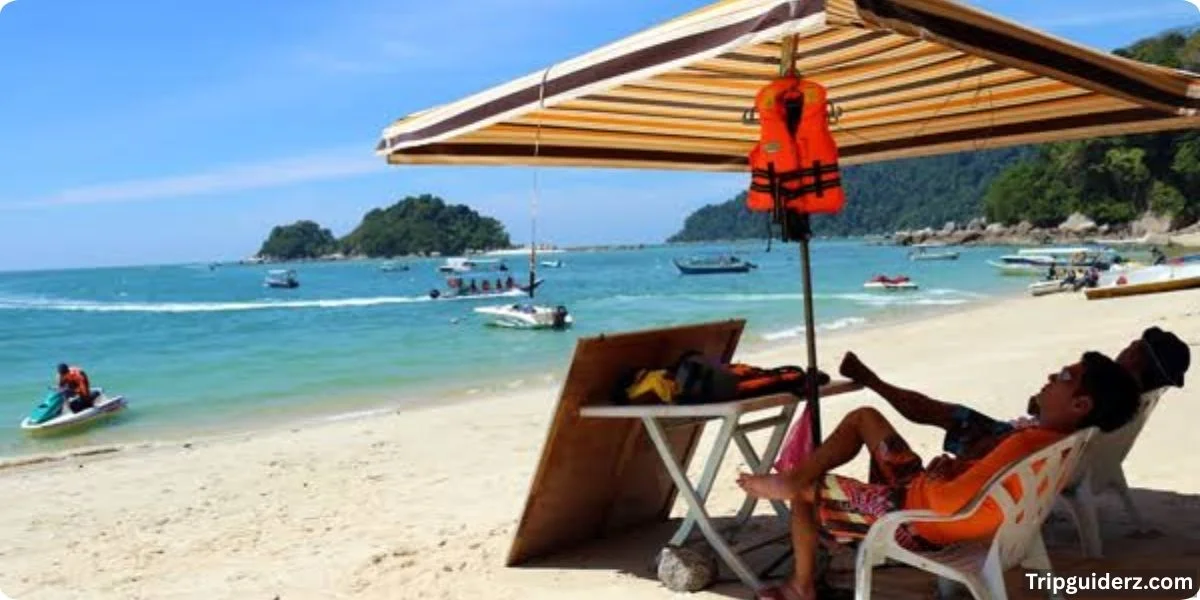
The most developed beach on Pangkor Island’s northwest coast, Teluk Nipah offers calm, shallow water good for casual swimming. Swimming, jet skiing, and banana boat rides are the main activities, with Coral Beach and Pasir Bogak a short walk away. Access is free, and facilities include restaurants, guesthouses, and watersports rentals.
(Important: visit on a weekday to avoid domestic tourist crowds, which peak on weekends and public holidays.) The small rocky islet visible offshore is especially photogenic at sunset.
21. Monkey Beach (Penang)
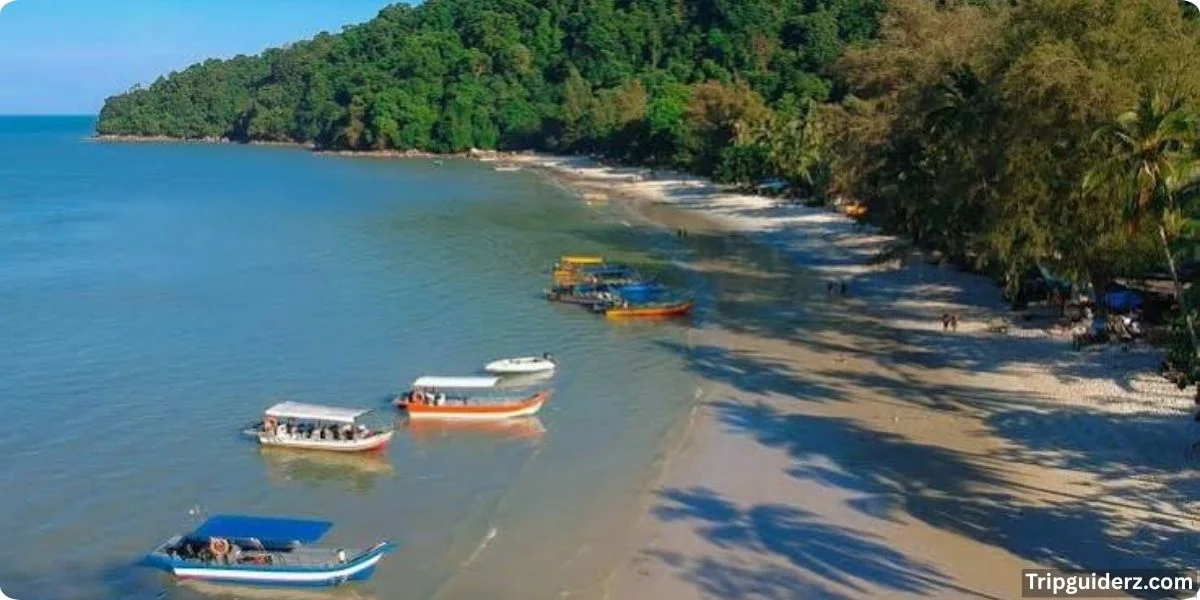
Located at Penang Island’s northwest tip inside Penang National Park, Monkey Beach is a secluded spot reachable only by boat or jungle trek, named for the long-tailed macaques that frequent the area. Swimming, short hikes, and wildlife spotting are the main activities, with the park’s canopy walkway and Turtle Beach (Pantai Kerachut) nearby. Park entry may apply depending on trail access, and boat transfers are paid separately; facilities are minimal, limited to a few basic stalls near the boat drop-off.
(Important: keep food packed away and out of sight, since the resident macaques are habituated to grabbing unattended bags.) The tree line meeting the sand near the boat jetty is the best photo spot.
22. Batu Ferringhi
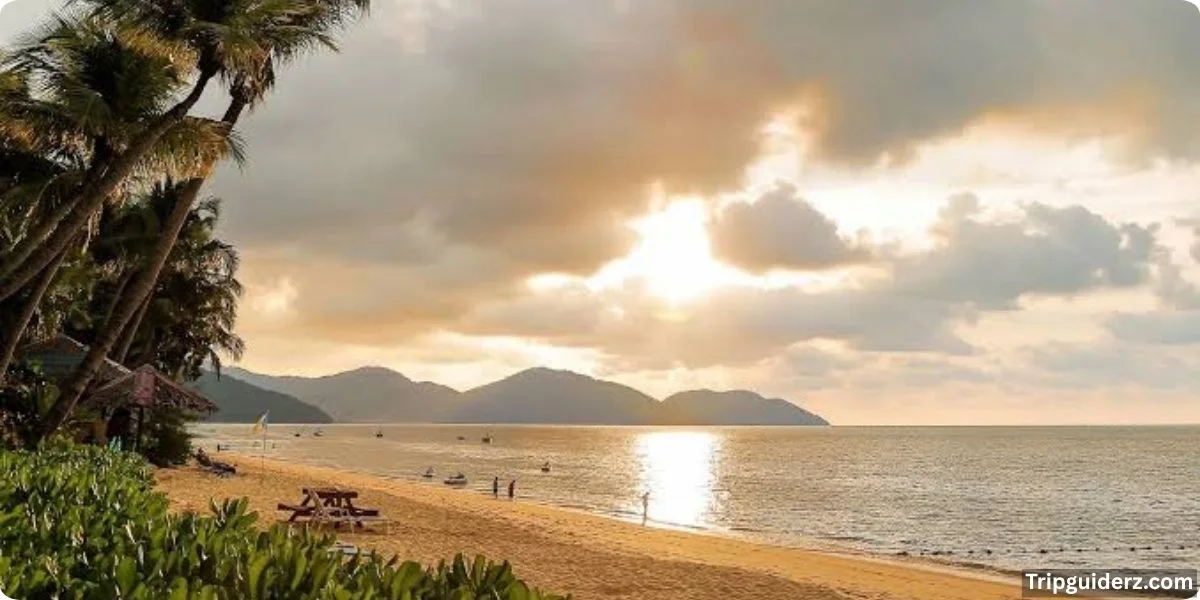
On Penang Island’s north coast, Batu Ferringhi is the island’s main resort and nightlife beach, backed by a well-known night market. Water sports, night market shopping, and beachfront dining are the main draws, with the Tropical Spice Garden and Penang Hill a short drive away. Access is free, and facilities are extensive, including resorts, restaurants, watersports, and night market stalls.
(Important: the night market is as much of a draw as the beach itself plan an evening visit even if you spend your daytime elsewhere.) Dusk shots of the beach with the night market lights beginning to glow behind it make for standout photography.
23. Damai Beach
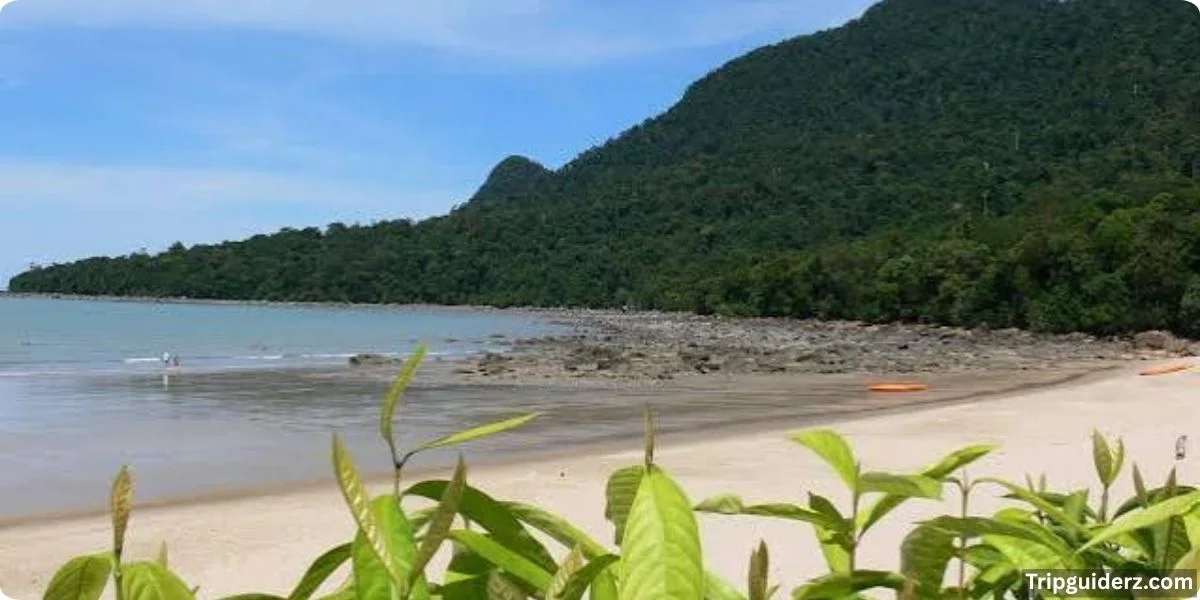
Set against Mount Santubong near Kuching, Sarawak, Damai Beach blends beach time with cultural tourism thanks to its proximity to the Sarawak Cultural Village. Swimming, visiting the Cultural Village, and short hikes on Mount Santubong are the main activities, with Bako National Park a short drive or boat ride away. Beach access is free, though the Cultural Village charges separate admission; facilities include resort properties and nearby restaurants.
(Important: combine a morning at the Cultural Village with an afternoon on the beach for an efficient day trip from Kuching.) Sunset shots with Mount Santubong rising behind the beach are the top photo choice.
24. Tusan Beach
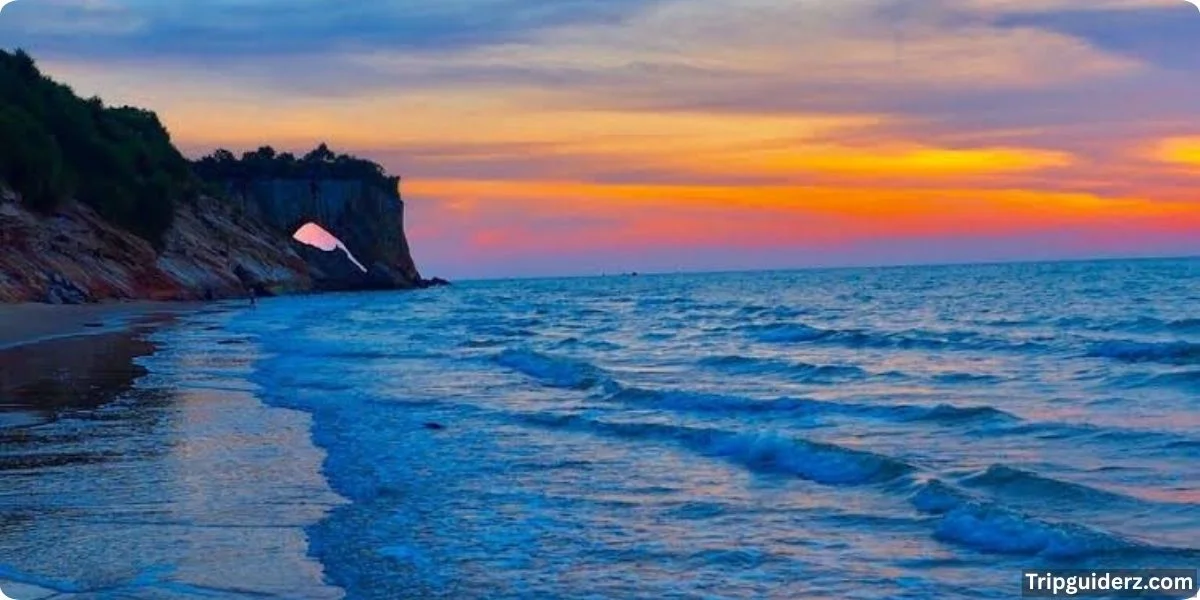
Near Miri, Sarawak, Tusan Beach is known for its dramatic cliffside rock formations and, under the right conditions, a bioluminescent “blue tears” plankton effect after dark. Sightseeing, tide-pool exploring, and sunset watching are the main activities, with Niah Caves National Park a short drive away. Access is free, and facilities are minimal, just a small parking area and a few food stalls.
(Important: the “blue tears” phenomenon is weather- and season-dependent and isn’t guaranteed on any given night treat it as a bonus rather than the main reason to visit.) Sunset at the rock arch and cliff formations, when low light brings out their texture, offers the best photography.
25. Kelambu Beach
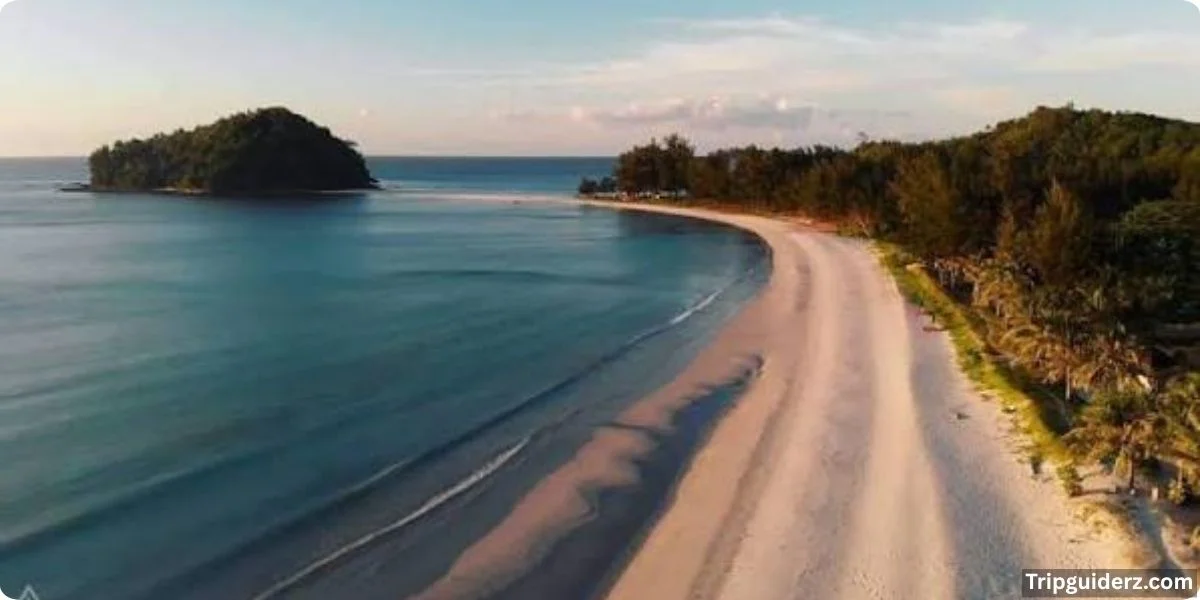
Near Bintulu, Sarawak, Kelambu Beach is a quiet turtle nesting site with far less tourist infrastructure than Peninsular Malaysia’s beaches. Turtle watching (seasonal) and quiet beach walks are the main activities, with Similajau National Park located nearby. Access is free, though conservation program visits may request a donation facilities are very limited, as this remains an undeveloped beach.
(Important: check with the local conservation office for current turtle-watching guidelines before visiting during nesting season.) The empty shoreline at low tide, with Similajau’s forest as a backdrop, is the best photo spot.
Best Beaches by Travel Style
1. Beaches for Families
Teluk Dalam and Pantai Cenang are the two most family-friendly stretches in the region, both defined by calm, shallow water that stays gentle well past the shoreline ideal for young swimmers and parents who want to relax without constant supervision stress. Both beaches sit alongside full-service resorts offering kids’ clubs, shallow pools, and family-sized rooms, so there’s little need to shuttle between accommodation and beach activities.
Batu Ferringhi rounds out the family-friendly options with its walkable night market, which runs along the main beach road most evenings. Families can wrap up a beach day with street food, souvenir shopping, and casual entertainment on foot no rental car or taxi required, which matters for parents managing tired kids after sunset.
2. Beaches for Couples
Datai Bay and Rawa Island both prioritize privacy over crowds, making them natural choices for couples seeking quiet time together rather than a lively beach scene.
Datai Bay is backed by primary rainforest, giving it a more secluded, jungle-meets-ocean atmosphere with limited public access points. Rawa Island, by contrast, offers open-water views and a smaller, low-density footprint most visitors stay at the island’s limited resort accommodations, which naturally caps daily crowds. Both destinations suit a slower travel pace fewer excursions, more time spent simply being on the beach together.
3. Beaches for Honeymoon
Rawa Island and Redang Long Beach are the standout honeymoon picks, largely because they combine upscale, all-inclusive resort packages with genuinely clear, swimmable water a combination that’s harder to find at more developed, day-tripper-heavy beaches.
Both destinations see minimal day-tripper traffic, since neither is easily reached on a short group excursion visitors tend to be overnight resort guests rather than day-boat crowds. This keeps the beaches quieter for couples during peak daylight hours, and the all-inclusive resort model means honeymooners can book meals, water activities, and spa time without leaving the property.
4. Beaches for Backpackers
Long Beach on Perhentian Kecil and ABC Beach on Tioman are the top choices for budget-conscious travelers, both offering the widest range of budget chalet accommodation in their respective island clusters think basic beachfront huts at a fraction of resort pricing.
Beyond affordability, both beaches have a social, low-cost atmosphere: shared common areas, beach bars, and a steady flow of fellow backpackers make it easy to strike up conversations, split boat trips, or join informal group activities without pre-planning.
5. Beaches for Luxury Travelers
Datai Bay and select Redang resorts cater to travelers seeking a higher-end experience, offering villa-style accommodation with private plunge pools or direct beach frontage in many cases.
Both destinations also provide private beach access a meaningful upgrade from public beach areas, since it limits foot traffic directly in front of guest accommodations. Dining tends to be elevated, with resort restaurants often built around fresh seafood and international menus rather than the casual beachside stalls found at budget destinations.
6. Beaches for Solo Travelers
Long Beach (Perhentian Kecil) and Salang Beach (Tioman) both have enough established backpacker infrastructure hostels, dive shops, communal dining areas to make solo travel genuinely easy rather than isolating.
This infrastructure makes it simple to meet other travelers organically, particularly around shared boat trips and group dive courses, which are common at both beaches. Solo travelers often find that these shared activities naturally lead to forming informal travel groups for the rest of their trip.
7. Beaches for Digital Nomads
Batu Ferringhi (Penang) and Pantai Cenang (Langkawi) are the two beach destinations best suited to remote work, primarily because both sit within larger towns rather than remote islands a key distinction that separates them from every other beach on this list.
That town-adjacent location translates into more reliable Wi-Fi, a wider range of longer-stay accommodation (monthly rentals, serviced apartments), and access to co-working-friendly cafes nearby. Unlike the island destinations covered above, neither location requires a boat transfer to reach, which also simplifies logistics for nomads juggling calls, deadlines, or equipment.
Best Beaches by State
1. Langkawi (Kedah)
Pantai Cenang, Tanjung Rhu, and Datai Bay.
2. Terengganu
Long Beach, Turtle Beach, Teluk Dalam, Coral Bay, Redang Long Beach, and Pasir Panjang.
3. Sabah
Sipadan, Mabul, Kapalai, and Mantanani.
4. Sarawak
Damai Beach, Tusan Beach, and Kelambu Beach.
5. Johor
Rawa Island and Sibu Island.
6. Penang
Batu Ferringhi and Monkey Beach.
7. Pahang
Juara Beach, Salang Beach, and ABC Beach (all on Tioman Island).
8. Perak
Pangkor’s beaches, including Teluk Nipah.
Best Islands with Amazing Beaches
Langkawi leads for accessibility and resort variety, with direct flights from most major Malaysian and regional cities. Redang and the Perhentian Islands are the top picks for clear water and reef snorkeling on the east coast. Tioman blends jungle scenery with beach time. Sipadan, Mabul, and Kapalai form Sabah’s dive-focused trio, best suited to travelers prioritizing underwater experiences over beach lounging. Pangkor and Rawa round out the list as quieter, lower-cost alternatives for travelers who want fewer crowds.
Hidden Beaches Most Tourists Miss
Beaches like Juara (Tioman), Sibu Island (Johor), and Kelambu Beach (Sarawak) stay under the radar largely because they’re harder to reach Juara requires a jungle crossing or longer boat ride, Sibu has limited ferry service from Mersing, and Kelambu sits well outside Sarawak’s main tourist corridor near Kuching.
Why they’re underrated: Limited transport access naturally caps visitor numbers, which keeps beaches quieter and reefs less pressured than at flagship destinations like Long Beach or Batu Ferringhi.
How to reach them: Juara jungle trail or direct boat from Mersing/Tioman jetty Sibu Island boat from Mersing; Kelambu private car or arranged transport from Bintulu.
Crowd level: Low to very low outside of local holiday weekends.
Best months: March through September, aligning with the calmer sea conditions on the east coast and in Sabah/Sarawak before the November–February monsoon sets in.
Best White Sand Beaches
Pantai Cenang, Redang Long Beach, and Turtle Beach (Perhentian) are consistently noted for their pale, fine sand composed largely of coral and shell fragments.
Best Crystal Clear Water Beaches
Redang, Perhentian (Coral Bay and Turtle Beach), and Sipadan/Mabul offer the clearest visibility, thanks to minimal sediment runoff and their marine park protections.
Best Beaches for Swimming
Teluk Dalam, Pantai Cenang, and Teluk Nipah all have gentle, shallow entry points well-suited to casual swimmers and children.
Best Beaches for Snorkeling
Coral Bay, Salang Beach, and Redang Long Beach allow shore-entry snorkeling without needing a boat trip.
Best Beaches for Diving
Malaysia’s premier dive sites cluster around Sabah’s Semporna peninsula. Sipadan is the headline site, famous for its wall dives and barracuda schools. Mabul is the region’s best-known muck-diving destination, and Kapalai rounds out the trio with macro-focused reef-flat dives. On the Peninsular side, Tioman (Salang) and the Perhentian Islands offer more accessible, beginner-friendly diving.
Best Beaches for Surfing
Juara Beach (Tioman) is Malaysia’s most recognized beach surf spot, with a seasonal swell that draws local and visiting surfers, though conditions are modest compared to major global surf destinations.
Best Beaches for Sunsets
Coral Bay (Perhentian), west-facing and open to the horizon, along with Tusan Beach (Sarawak), known for its cliffside sunset views, are the standout choices.
Best Beaches for Sunrise
Juara Beach and Redang Long Beach, both east-facing, offer clear sunrise views over open water.
Best Beaches Near Kuala Lumpur
For travelers without time for a flight or long ferry ride, several beaches sit within driving distance of KL:
- Port Dickson: roughly 90 minutes to 2 hours by road, Negeri Sembilan’s most popular beach town.
- Morib: around 1.5 hours, a quieter, more local-oriented beach in Selangor.
- Bagan Lalang: roughly 1 hour, popular for its beach cafes and kite-flying.
- Blue Lagoon (Port Dickson area): a short distance from central Port Dickson, known for calmer, clearer water than the main strip.
- Pantai Cahaya Negeri: Port Dickson’s main public beach stretch.
(Note: driving times vary with traffic; treat these as general estimates rather than fixed figures.)
Malaysia Beach Activities
Island hopping, parasailing, kayaking, jet skiing, and paddleboarding are widely available at resort beaches like Pantai Cenang and Batu Ferringhi. Banana boats remain a staple family activity at most developed beaches. Scuba diving and snorkeling dominate the east coast islands and Sabah. Turtle watching is seasonal and location-specific (Perhentian’s Turtle Beach, Kelambu). Mangrove tours are a Langkawi specialty, and sunset cruises are commonly offered from Langkawi and Redang resorts.
Best Time to Visit Malaysia Beaches
1. West Coast (Langkawi, Penang, Pangkor)
Generally calmer and drier from November to March, though the west coast sees less extreme seasonal swings than the east coast overall.
2. East Coast (Perhentian, Redang, Tioman)
Best from March to October; many resorts close entirely from November through February during the northeast monsoon, when seas become too rough for ferry crossings.
3. Borneo (Sabah/Sarawak)
Diving conditions around Sipadan and Mabul are good most of the year, with the clearest visibility typically April through August; Sipadan itself closes entirely each November for a scheduled marine recovery period.
Malaysia Beach Weather by Month
| Month | Rainfall | Sea Condition | Tourist Crowds | Best Beaches |
|---|---|---|---|---|
| January | High (east coast) | Rough (east coast monsoon) | Low (east coast), Moderate (west) | Langkawi, Penang, Pangkor |
| February | High (east coast) | Rough (east coast) | Low (east coast) | Langkawi, Penang |
| March | Moderate | Improving (east coast) | Moderate | Redang, Perhentian reopening |
| April | Low–moderate | Calm | Moderate–high | Sabah islands, Redang |
| May | Low | Calm | High | Perhentian, Tioman, Sabah |
| June | Low | Calm | Peak | All east coast + Sabah |
| July | Low | Calm | Peak | All east coast + Sabah |
| August | Low | Calm | Peak | All east coast + Sabah |
| September | Moderate | Generally calm | Moderate–high | East coast, Sabah |
| October | Moderate–high | Beginning to roughen | Moderate | East coast (shoulder season) |
| November | High (east coast) | Rough (east coast); Sipadan closed | Low (east), Moderate (west) | Langkawi, Penang |
| December | High (east coast) | Rough (east coast) | Low (east), Moderate (west) | Langkawi, Penang |
(This is a general seasonal guide based on typical monsoon patterns — always check current-year ferry and resort status before booking, since exact closure dates vary.)
Malaysia Beach Packing Checklist
- Reef-safe sunscreen: many marine parks now discourage or restrict oxybenzone-based sunscreens.
- Swimwear: (pack two sets so one can dry while you wear the other)
- Water shoes: useful for rocky entry points and coral-adjacent shorelines
- Dry bag: for boat transfers and day trips
- Snorkel gear: a personal set if you’re picky about fit, though most resorts rent it
- Mosquito repellent: especially for jungle-adjacent beaches like Datai Bay and Juara
- Power bank: useful on smaller islands with limited charging access
- Waterproof phone case: for boat transfers and beach photography near the waterline
Malaysia Beach Safety Tips
Jellyfish awareness: Seasonal jellyfish blooms occur on some east coast beaches ask locally before swimming if warning flags or signs are posted. Strong currents: Surf beaches like Juara and more exposed bays can have rip currents; swim within marked or resort-monitored areas. UV protection: Equatorial sun is intense year-round; reapply sunscreen more often than you would at higher latitudes. Coral conservation: Avoid standing on or touching coral, and keep fins away from the reef when snorkeling or diving. Swimming flags: Follow posted flag systems at developed beaches, particularly during monsoon swell. Wildlife safety: Keep food secured around monkey populations at beaches like Monkey Beach, and never touch or chase nesting turtles.
Sustainable Beach Travel in Malaysia
Protecting coral reefs means choosing reef-safe sunscreen and avoiding fin contact with coral during snorkeling or diving trips. Avoiding single-use plastics many island resorts now provide refill stations, so bring a reusable bottle. Supporting local communities by choosing locally owned guesthouses and tour operators rather than only international chains. Responsible wildlife interactions mean never touching turtles, feeding monkeys, or chasing marine life for photos. Choosing eco-friendly operators who follow Sabah Parks and Marine Park guidelines, particularly for Sipadan and Perhentian trips where permit systems already limit visitor impact.
Sample Malaysia Beach Itineraries
1. 3-Day Beach Escape
Base yourself entirely in Langkawi — Pantai Cenang for two nights, a day trip to Tanjung Rhu and the mangroves, and a sunset dinner at Datai Bay.
2. 5-Day Island Adventure
Fly into Kota Bharu, ferry to the Perhentian Islands for four nights split between Long Beach (nightlife, snorkeling) and Teluk Dalam (calmer swimming), returning via Kota Bharu.
3. 7-Day Malaysia Beach Road Trip
Start in Kuala Lumpur, drive to Port Dickson (1 night), continue to Penang for Batu Ferringhi (2 nights), then Pangkor (2 nights), before returning to KL a west-coast loop that avoids ferry dependency for most of the trip.
4. 10-Day Ultimate Beach Vacation
Combine Peninsular and Borneo Malaysia: 4 nights in Redang or Perhentian, fly to Tawau, transfer to Mabul for 4 nights with Sipadan dive days included, and a final night in Kota Kinabalu before flying home.
Budget for a Malaysia Beach Trip
| Category | Budget | Mid-Range | Luxury |
|---|---|---|---|
| Accommodation (per night) | RM50–120 | RM200–500 | RM800+ |
| Food (per day) | RM30–50 | RM80–150 | RM200+ |
| Ferries (round trip, per island) | RM70–120 | RM70–120 | RM70–150 (speedboat/private) |
| Activities (per day) | RM50–100 | RM150–300 | RM400+ |
| Domestic transport | RM100–300 (bus/flight) | RM200–500 | RM500+ (private transfer) |
(Figures are general estimates based on typical published rates and should be confirmed against current listings before publishing, since accommodation and ferry pricing shift seasonally.)
Common Mistakes Tourists Make
- Visiting the East Coast during monsoon season (roughly November–February), when many resorts close and ferries stop running entirely.
- Ignoring ferry schedules, which run less frequently than mainland transport and can be canceled outright in rough seas.
- Feeding wildlife, especially macaques, which encourages aggressive behavior toward other visitors.
- Underestimating sun exposure near the equator, leading to sunburn on the first day of a trip.
- Booking accommodations too late for peak months (June–August), when island lodging sells out well in advance.
Malaysia Beaches vs Other Southeast Asian Destinations
Compared to Thailand, Malaysia’s islands are generally less crowded and less commercially developed, though Thailand offers a wider range of nightlife and budget infrastructure. Against Indonesia (Bali, the Gilis), Malaysia’s Sabah dive sites rival or exceed Indonesian diving quality, while Bali holds an edge in overall tourism infrastructure and direct international flight access. Compared to Vietnam, Malaysia’s beaches tend to have clearer water and better-protected marine parks, though Vietnam is typically cheaper for food and accommodation. Against the Philippines, both countries offer world-class diving (Sipadan vs. Tubbataha/Palawan), but Malaysia’s ferry and flight network is generally more predictable and easier to plan around independently.
Frequently Asked Questions
What is the best beach in Malaysia?
There’s no single answer, since it depends on priorities Redang and the Perhentian Islands are usually cited for clear water and snorkeling, while Sipadan tops the list for diving and Langkawi’s Pantai Cenang is the most accessible resort beach overall.
Which side of Malaysia has the best beaches?
The east coast (Terengganu, Pahang) and Sabah generally have clearer water and better reefs, while the west coast (Langkawi, Penang) offers calmer seas and easier year-round access.
Are Malaysia beaches safe for swimming?
Most developed beaches are safe for swimming when you follow posted flags and avoid areas with known rip currents conditions vary by season, so check local advisories, especially during monsoon months.
Which beaches have the clearest water?
Redang, Perhentian’s Coral Bay, and the Sabah dive islands (Sipadan, Mabul) consistently have the clearest visibility, largely due to marine park protections and low sediment runoff.
What is the best month to visit Malaysia beaches?
March through September is generally best for the east coast and Sabah, while the west coast (Langkawi, Penang) is more visitable year-round with a preference for November–March.
Are Malaysian beaches free to visit?
Most public beaches are free; island destinations within marine parks (Perhentian, Redang) charge a small conservation fee, and dive sites like Sipadan carry separate permit costs.
Which beach is best for snorkeling?
Coral Bay (Perhentian) and Redang Long Beach both offer shore-accessible snorkeling with minimal boat time required.
Can you swim year-round in Malaysia?
On the west coast, generally yes; on the east coast, many islands close entirely during the November–February monsoon due to rough seas and canceled ferry service.
Are there beaches near Kuala Lumpur?
Yes — Port Dickson, Morib, and Bagan Lalang are all within a 1–2 hour drive, though their water is less clear than the east coast islands.
Which island is best for first-time visitors?
Langkawi is the easiest starting point, thanks to direct flights, developed infrastructure, and calm, accessible beaches.
Are Malaysia beaches family-friendly?
Many are — Pantai Cenang, Teluk Dalam, and Batu Ferringhi all offer calm water and resort amenities suited to children, though more remote dive-focused islands like Sipadan are less practical for families.
What should I pack for a beach vacation in Malaysia?
Reef-safe sunscreen, quick-dry swimwear, water shoes, a dry bag for boat transfers, and mosquito repellent for jungle-adjacent beaches are the essentials most travelers overlook.
Final Thoughts
Malaysia’s beaches reward travelers willing to match the destination to the trip: Langkawi and Penang for easy, resort-style access; Redang and the Perhentian Islands for clear water and reef snorkeling without a long-haul flight; Tioman for a jungle-and-beach combination; and Sabah’s Sipadan, Mabul, and Kapalai for travelers who care more about what’s underwater than what’s on the sand. Plan around the monsoon calendar — east coast islands close for several months each year — and book peak-season accommodation early. Beyond the well-known names, beaches like Juara, Sibu Island, and Kelambu offer a quieter, more responsible way to experience Malaysia’s coastline without adding pressure to its most crowded shores.
Please Read More Informative Articles:
Top 15 Miami Beaches With Photos Guide 2025: For Families, Couples & Parties
Play Miami Beach Golf Club | Booking, Hours & Course Guide
Explore Lytle Beach on Bainbridge Island: Best Things to Do & Map Guide
Saxon Harbor Webcam | Live Views and Updates Today
5 Best Beaches Open at Night in Miami, Night Activities 2025

Arman Ashraf is a content writer focused on travel and tourism. He creates practical, well-researched travel guides, destination articles, and travel tips designed to help readers plan trips with greater confidence. His work combines clear, engaging writing with SEO best practices, covering destinations, things to do, travel planning, and useful advice for travelers. Arman is committed to producing helpful content that makes discovering and planning travel easier.