
Planning things to do in Oxford is a pleasure and a puzzle the city is compact, but almost every street hides a college quad, a chapel or a museum worth stopping for. Oxford, the historic university city in Oxfordshire, England, sits about 50 miles northwest of London, roughly an hour by train, which makes it a favourite for history lovers, architecture enthusiasts, students and day-trippers. Its centre packs in 39 colleges and the Ashmolean, the world’s first university museum, open since 1683. It is also popular: Oxfordshire recorded 26 million visits in 2025, worth £2.47 billion to the local economy, and tourism contributes nearly £1 billion a year to Oxford itself while supporting 14% of local employment.
That is why a little planning matters. Exploring Oxford on foot is one of the best ways to experience its character, from the historic buildings and cobbled streets to the peaceful college gardens and riverside paths. However, some popular attractions have limited visiting hours, seasonal closures or admission requirements, so checking the details before arriving can save both time and money.
This guide goes beyond the postcard views. It shows which attractions need advance booking, which are free, what has changed since older guides were written, and how to pair famous sights with quieter corners, so you can see the real Oxford rather than just queue for it. Prices, opening hours and booking rules were last checked on 14 November 2026.
What Are the Best Things to Do in Oxford?
The best things to do in Oxford are exploring the historic University of Oxford, photographing the Radcliffe Camera, joining a Bodleian Library tour, visiting Christ Church, browsing the free Ashmolean Museum, eating at the Covered Market, and punting on the River Cherwell. Book Christ Church and Bodleian tours ahead, then fill gaps with free museums and riverside walks.
1. Explore the Historic University of Oxford

The University of Oxford isn’t one campus with one gate. It’s a network of colleges, libraries and museums woven through the city centre, so exploring it means walking, peeking through porters’ lodges and booking the parts that welcome visitors.
i) Discover Oxford’s Historic College Buildings
Each college sets its own visiting rules. Some welcome visitors daily, some charge entry, and many close during exams or for college events, so check the college’s website before you arrive. Christ Church is the best known, but smaller colleges often reward you with quieter quads and chapels.
ii) Learn About Oxford’s Academic Heritage
Oxford is one of the world’s oldest universities, and you can see that heritage in the Old Schools, the Divinity School and the Sheldonian Theatre, a Christopher Wren design used for university ceremonies. Look for carved heads, coats of arms and Latin inscriptions that show who built what, and why.
iii) Explore the University Grounds and Surroundings
The grounds are part of the experience. Magdalen College has a deer park and riverside walks, while University Parks and the Cherwell meadows sit a short walk from the centre. Many grounds charge or restrict access, so treat an open gate as a bonus rather than a guarantee.
2. Visit the Famous Radcliffe Camera

The Radcliffe Camera is Oxford’s most photographed building a circular, domed reading room that now forms part of the Bodleian Libraries. You can admire it for free from Radcliffe Square, but you can only go inside on a guided tour.
i) Admire Its Unique Architecture
Designed by James Gibbs and built between 1737 and 1749, the Camera’s rotunda and dome look unlike anything else in Oxford. Walk a full circle around it to see how the columns and stonework change with the light.
ii) Explore Radcliffe Square
The square is framed by the University Church of St Mary the Virgin, All Souls College and the Old Bodleian, so several landmarks share one view. It’s a public space, which makes it an ideal first stop before your timed tickets begin.
iii) Best Time to Photograph the Radcliffe Camera
Early morning usually means fewer tour groups, while late-afternoon light warms the golden stone. Overcast days soften harsh shadows. If you want interior shots, book a Bodleian tour that includes the building rather than hoping for a lucky glimpse.
3. Discover the Bodleian Library
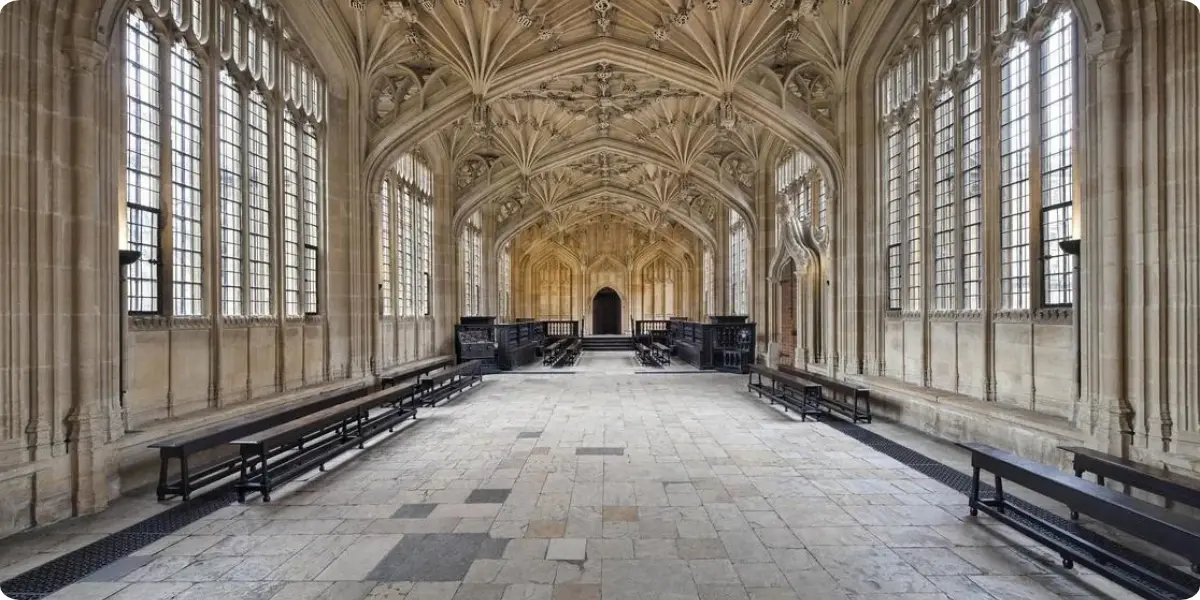
The Bodleian is the University of Oxford’s main research library and one of the oldest libraries in Europe. According to the Bodleian’s own tour FAQs, the Old Library and Radcliffe Camera are working libraries, so guided tours are the only way into those spaces.
i) Explore One of Europe’s Oldest Libraries
The Bodleian is really three libraries: the Old Library, which includes medieval Duke Humfrey’s Library, the Radcliffe Camera and the Weston Library. Depending on the tour, you may also pass through the 21st-century Gladstone Link, which connects the older buildings.
ii) Visit the Historic Divinity School
Completed in the 15th century, the Divinity School is the oldest room in the Bodleian, with a spectacular fan-vaulted ceiling. It doubled as the Hogwarts hospital wing in the Harry Potter films and is wheelchair accessible, unlike the stair-heavy guided tours.
iii) What Visitors Should Know Before Booking a Tour
Tour formats have changed recently, and the Radcliffe Camera interior is currently tied to a weekend walking tour, so check the live schedule before you plan around it. Library tours have also set a minimum age of 11 at the time of writing, and tickets can be booked online or in person.
4. Explore Christ Church College and Cathedral

Christ Church combines a grand college, the city’s cathedral and some of Oxford’s best-known film locations. Visits use timed tickets, and the college advises booking online in advance through its visitor page.
i) Walk Through the Famous College Grounds
Founded by Cardinal Thomas Wolsey and later refounded by Henry VIII, Christ Church is built around Tom Quad, a vast courtyard that sets the scale for the whole visit. The adjoining meadow and the college exteriors can be viewed from outside, but entering the Hall, cloisters and cathedral needs a ticket.
ii) Visit Christ Church Cathedral
The cathedral is a 12th-century church that also serves as the college chapel, so it follows a service calendar. The cathedral and Great Hall can close for services, student lunches or events, which is why a morning slot is the safer choice if either is your priority.
iii) Discover Its Harry Potter Connections
The Bodley staircase leading to the Great Hall appeared in the first two Harry Potter films, while the Hall itself inspired the Hogwarts set rather than serving as a filming location. Alice fans have their own link: Lewis Carroll taught mathematics here, and Alice Liddell was the dean’s daughter.
5. Visit the Ashmolean Museum
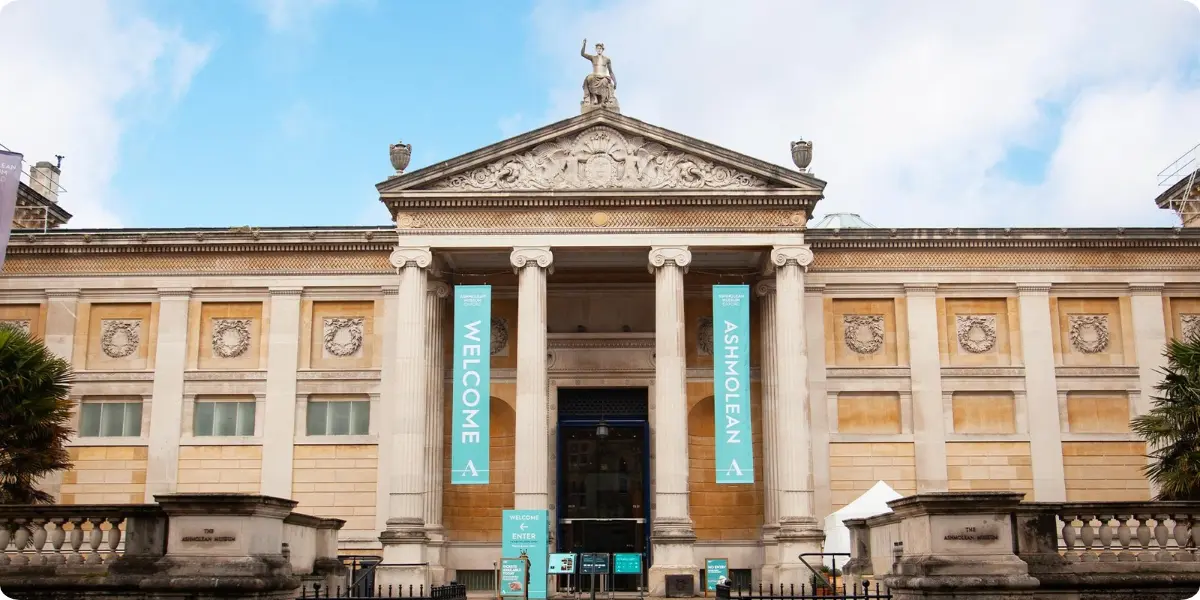
The Ashmolean is Oxford’s museum of art and archaeology, and general admission is free. Its access page lists daily opening from 10am to 5pm, with last entry at 4.45pm.
i) Discover Ancient Art and Archaeological Collections
Founded in 1683, the Ashmolean is widely described as Britain’s oldest public museum. The University says its collections span half a million years of history, from ancient artefacts to European paintings, so the museum works as a compact tour of world culture.
ii) Explore Egyptian and Greek Exhibitions
The Egyptian and Greek galleries are natural highlights for ancient-history fans. If you enjoyed our British Museum visitor guide, think of the Ashmolean as the calmer, more manageable version, where two or three galleries can fill a satisfying hour.
iii) Visitor Information and Admission
Special exhibitions are ticketed, and the museum closes over Christmas and on 1 January. The rooftop restaurant serves lunch and afternoon tea, and booking ahead is sensible at weekends and during school holidays.
6. Go Punting on the River Cherwell

Punting on the River Cherwell is Oxford’s classic river experience you glide along in a flat-bottomed boat while someone pushes it with a long pole. Operators such as Cherwell Boathouse hire punts by the hour, usually from spring to early autumn.
i) Experience Traditional Oxford Punting
Magdalen Bridge Boathouse is the most central station, on the High Street, while Cherwell Boathouse on Bardwell Road is further north and often quieter. Cherwell Boathouse advertises more than 80 punts and a six-person limit, and it keeps a card as a deposit while you’re on the water.
ii) Self-Hire vs Chauffeur Punting
Self-hire is cheaper and more flexible, but poling a punt is harder than it looks, especially on a busy stretch. A chauffeur does the work for you. Unlike Cambridge, though, Oxford’s river doesn’t run past college “Backs”, so don’t expect a guided commentary; ask when you book.
iii) Best Season for a River Experience
Most stations run roughly from March to October, with late spring and early summer offering the best balance of weather and daylight. Summer weekends are busiest, especially at Magdalen Bridge, so go early or choose the quieter northern stretch.
7. Explore Oxford Covered Market
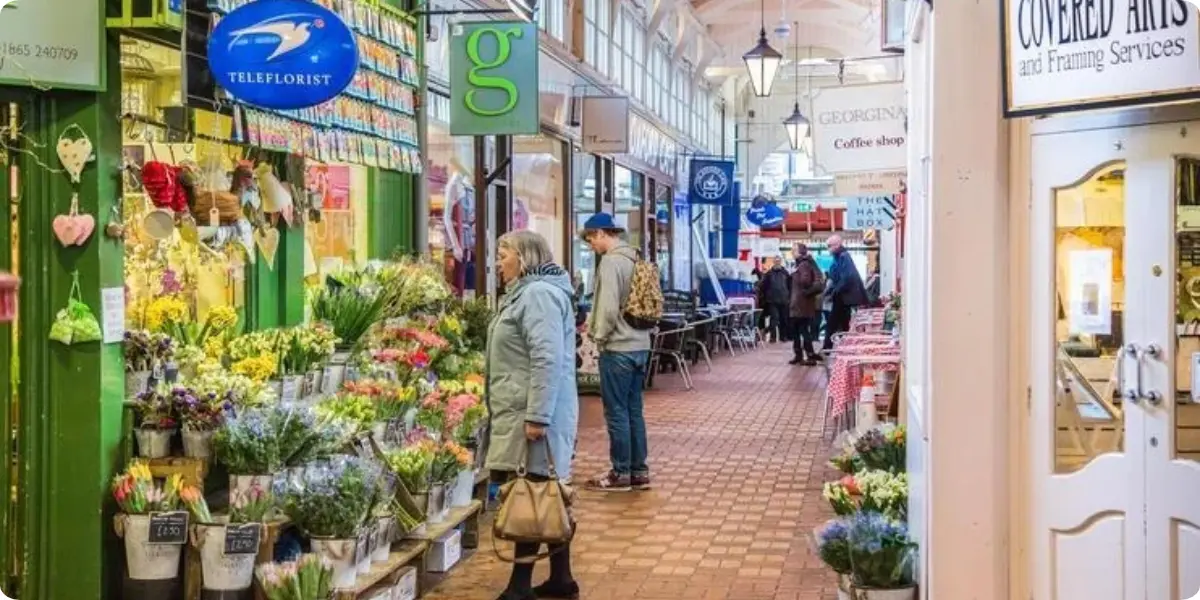
Oxford’s Covered Market is a historic indoor market off the High Street, built in the 1770s and still used mainly by local businesses. Oxford City Council’s heritage assessment describes it as rare for a market that has stayed in continual use.
i) Discover Independent Shops and Local Businesses
Inside you’ll find bakers, cafés, jewellers, clothing and gift shops, mostly independent. Wander the narrow avenues rather than sticking to one route, because the entrances on High Street and Market Street lead to different corners.
ii) Try Traditional British Food
Look for Oxford sausages, pies, fresh bread and cakes, then pair a market lunch with an afternoon in the Ashmolean. Stalls change often, so treat names in older guides with caution and see what’s open when you arrive.
iii) Find Unique Souvenirs and Gifts
Handmade jewellery, gifts and specialist food make better souvenirs than generic merchandise. The University’s official High Street shop has closed, so independent traders and museum shops are now the better places to buy Oxford gifts.
8. Climb Carfax Tower for City Views
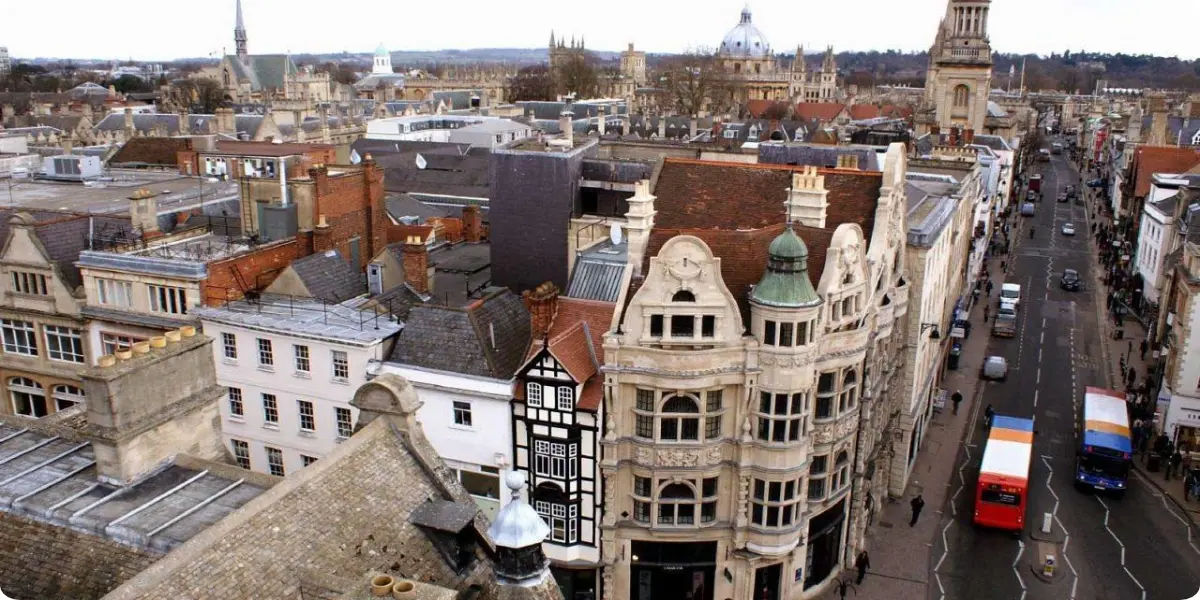 It’s all that remains of the medieval St Martin’s Church, which was demolished in 1896 to make room for traffic.
i) Enjoy Panoramic Views of Oxford
At about 74 feet tall, the tower is modest, but a long-standing planning rule keeps new buildings in the centre below its height, so the skyline of spires and domes stays visible. There’s no lift, the stairs are narrow and the viewing space is small.
ii) Explore the Historic City Centre
Carfax is where Cornmarket Street, Queen Street, St Aldate’s and the High Street meet, which makes it a handy landmark for orientation. From here, Christ Church, the Covered Market and the Story Museum are all a short walk away.
iii) Photography Tips for Visitors
Climb on a clear day, ideally mid-morning or late afternoon when the light is softer than at midday. A wide lens helps in the tight space, and it’s polite to take turns at the edge when the platform is busy. Opening hours are limited, so check before you queue.
9. Walk Along Oxford’s Most Beautiful Streets
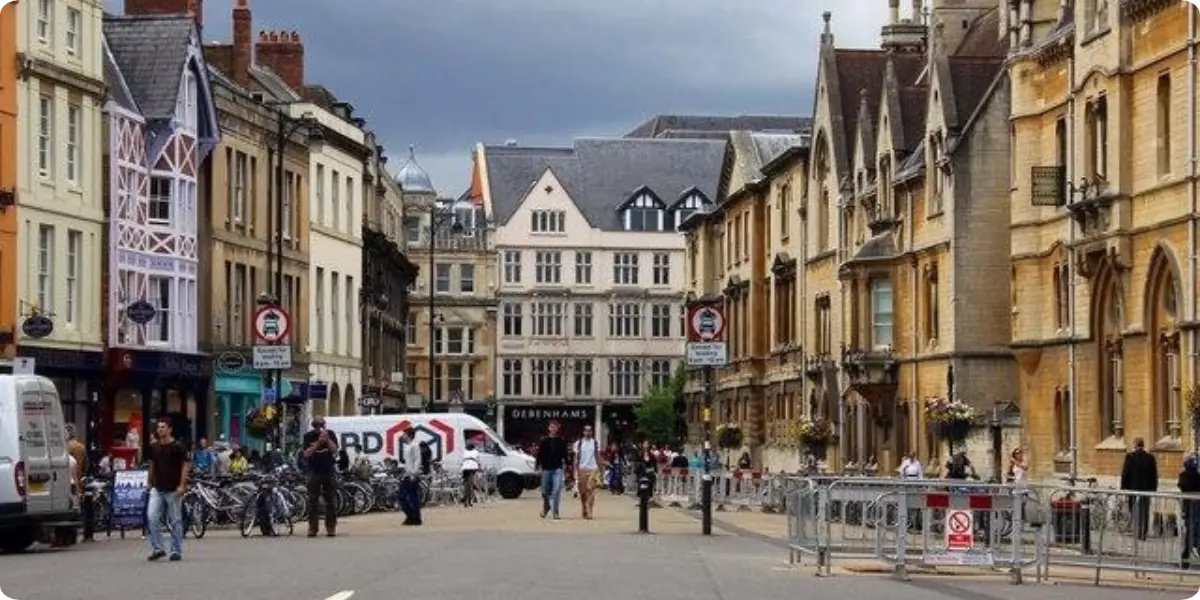
Oxford’s most beautiful streets cost nothing to enjoy. Broad Street, Holywell Street and Turl Street each pack centuries of architecture into a short stroll, and together they make an easy loop between the main sights.
i) Explore Broad Street
Broad Street is home to the Sheldonian Theatre, the Weston Library and the famous Blackwell’s bookshop. Look down for the cross set into the cobbles near Balliol College, which marks where Protestant martyrs were burned in the 16th century.
ii) Walk Through Holywell Street
Holywell Street feels quieter and older, lined with historic houses and leading towards New College. The Holywell Music Room, a concert hall from the 1740s, sits here, and the lanes nearby hide old pubs and small courtyards worth a detour.
iii) Discover Turl Street and Its Historic Buildings
Turl Street links the High Street with Broad Street and passes Jesus, Exeter and Lincoln colleges. It’s short but dense with college gateways, cafés and bookshops, which makes it a rewarding shortcut rather than a stop you need to plan around.
10. Discover the Pitt Rivers Museum
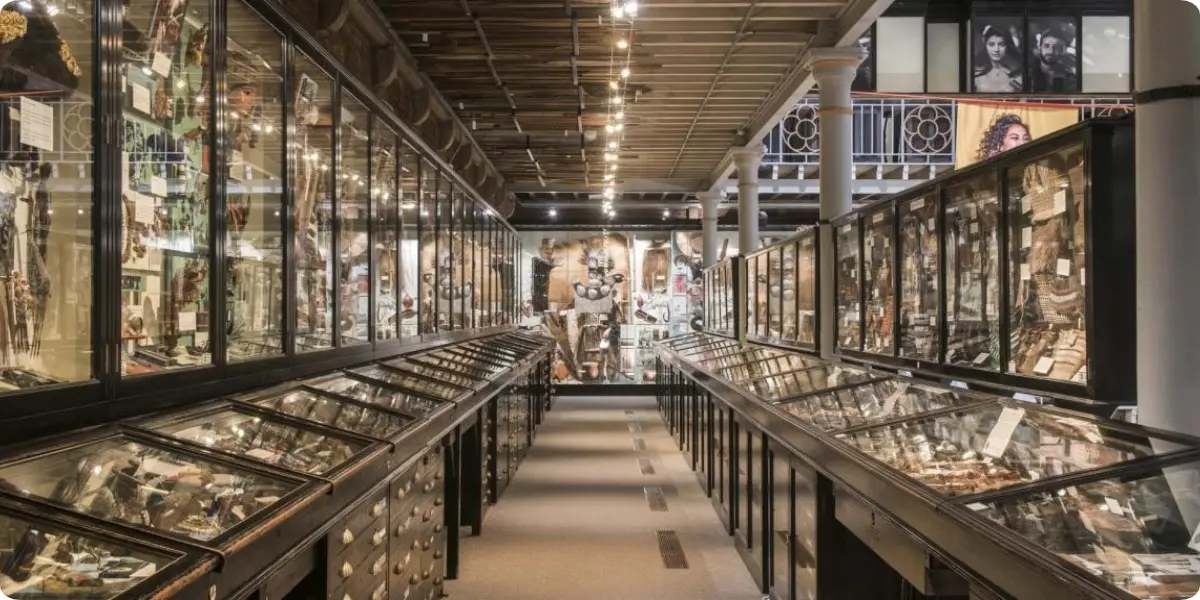
The Pitt Rivers Museum is a Victorian-era museum of archaeology and world cultures, and the University lists it among its free museums open daily. You reach it through the Oxford University Museum of Natural History on Parks Road.
i) Explore Unusual Historical Collections
The collection runs to roughly half a million objects, packed into dark wooden cases with handwritten Victorian labels. Displays are grouped by type, such as masks, musical instruments or tools, rather than by date or region, which invites close looking and surprising comparisons.
ii) Discover Cultural Objects From Around the World
The largest object is an 11.36-metre Haida totem pole that towers over the main court. The museum was founded in 1884 when Augustus Pitt Rivers donated his collection to the University, and it now acknowledges the colonial history of how many objects were collected.
iii) What Makes This Museum Different?
It’s a deliberately preserved Victorian display rather than a modern gallery, so expect low light, creaking floors and crowded cases. Older guides still promote the shrunken heads, but the museum has removed them from display, so don’t plan your visit around them.
11. Relax in Oxford Botanic Garden

Founded in 1621, Oxford Botanic Garden is the oldest botanic garden in the UK, according to the garden’s own visitor page. It’s a compact green retreat beside the River Cherwell, close to Magdalen Bridge.
i) Explore the Historic Garden
The Walled Garden is the oldest section, laid out in 1621 as a physic garden for growing medicinal plants. Its geometric beds and stone walls feel very different from the open lawns of University Parks, making it a good counterpoint to a museum-heavy day.
ii) Discover Different Plant Collections
The garden holds more than 5,000 plant species across the Walled Garden, the Lower Garden and its glasshouses. Glasshouses sometimes close for maintenance, so check the garden’s website if a particular house matters to you.
iii) Best Time to Visit
Late spring and summer bring the most flowers, and opening hours are longest then. In winter the garden opens for fewer hours, last entry comes about an hour before closing, and it closes on 25 and 26 December, so plan around daylight.
12. Experience Oxford’s Literary History
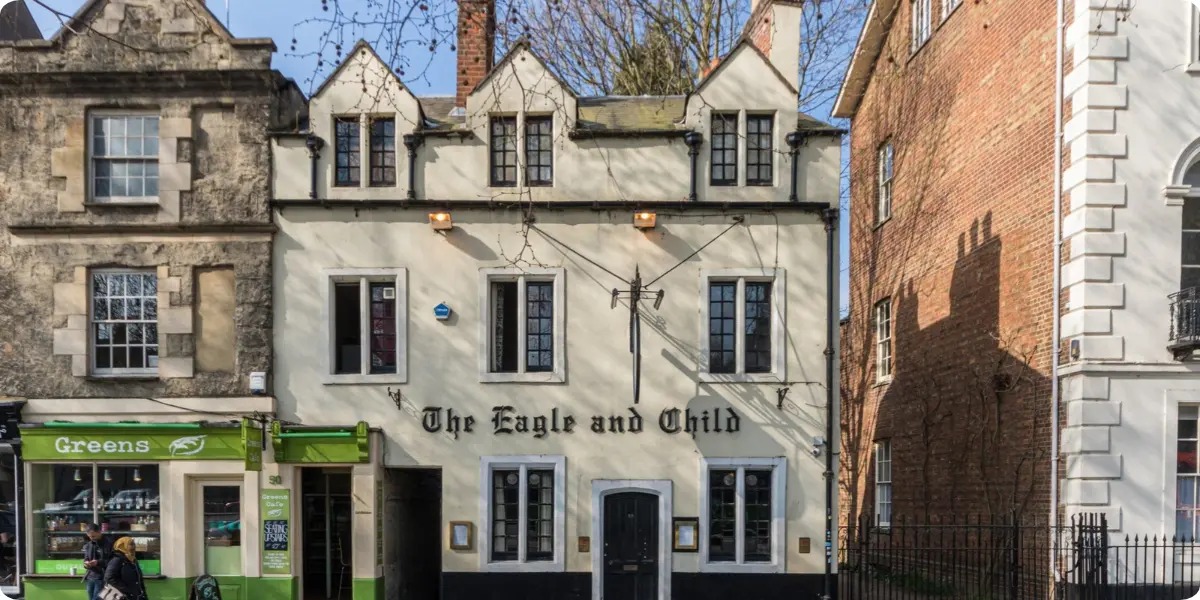
Oxford’s literary history runs from Lewis Carroll’s Alice stories to the Inklings, the writers’ group that included J.R.R. Tolkien and C.S. Lewis. You don’t need to be a scholar to enjoy it, because many landmarks are simply streets, pubs and gardens.
i) Discover the Legacy of J.R.R. Tolkien and C.S. Lewis
From the 1930s the Inklings gathered in the back “Rabbit Room” of the Eagle and Child pub on St Giles’, and informal lunchtime meetings carried on for years. Tolkien and Lewis were both Oxford academics, so their story is woven into the university as much as the pubs.
ii) Explore Literary Landmarks Around the City
Christ Church links to Alice, the Botanic Garden appears in Philip Pullman’s His Dark Materials, and the Divinity School and Great Hall bring in Harry Potter. The Story Museum, dedicated to children’s stories, is another good stop for families.
iii) Visit Historic Pubs Associated With Oxford Writers
The Lamb & Flag on St Giles’ reopened in October 2022 under a community group called the Inklings Group, and the Oxford Drinker’s first impressions of the reopening captures the mood. The Eagle and Child closed in 2020, so check whether it has reopened before you plan a visit.
13. Enjoy a Peaceful Walk Through University Parks
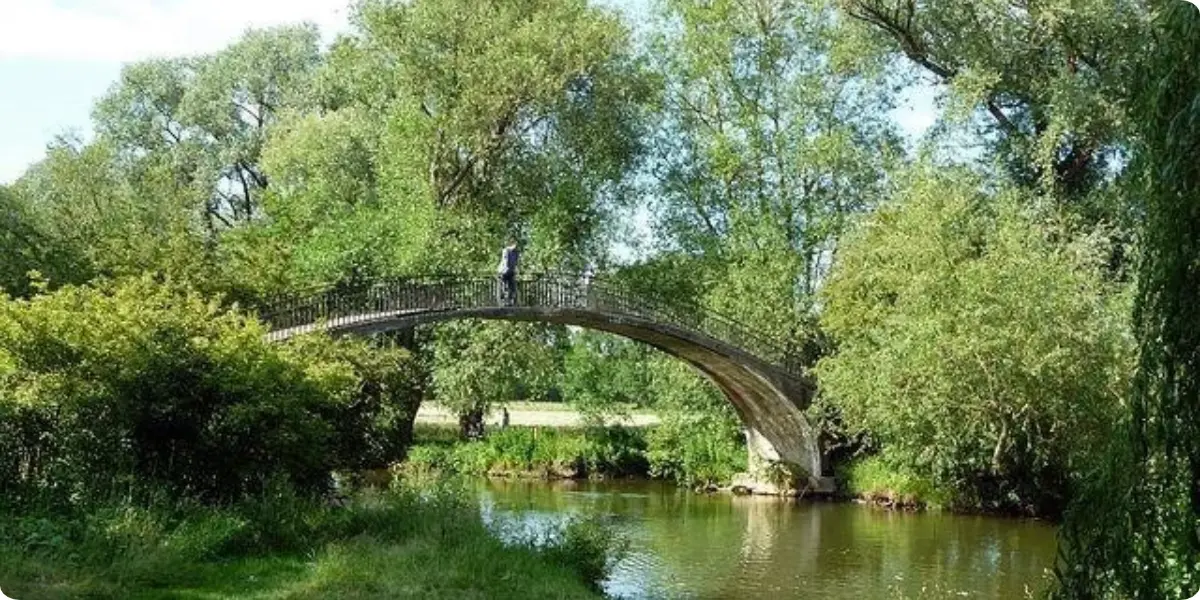
University Parks is a large riverside green space near the centre, free to enter and open from early morning, with closing times that vary by season. It’s the easiest way to swap stone and queues for grass and river views.
i) Explore Scenic Walking Routes
Follow the paths beside the Cherwell and loop back across the open lawns. A pleasant route runs from Magdalen Bridge along the river towards the Parks, linking the Botanic Garden to the green belt without going back through the busy centre.
ii) Enjoy a Picnic and Outdoor Activities
Open grass makes it easy to picnic after a morning of museums, and in summer the University’s cricket ground is often in use, so you may be able to watch a match. Pick up supplies from the Covered Market beforehand.
iii) Best Spots for Relaxing and Photography
Riverside corners and tree-lined paths catch low light in the late afternoon, and the Parks are far quieter than Radcliffe Square. Treat them as a reset between ticketed sights.
14. Discover Oxford Castle and Prison

Oxford Castle & Prison is a guided-tour attraction on the site of an 11th-century castle, with a Saxon tower, a crypt and a former prison. The attraction’s own history page traces the site from its Norman beginnings to its life as the county gaol.
i) Learn About Oxford’s Medieval History
The castle began as a Norman motte-and-bailey, and its mound still survives. Tours retell the story of Empress Matilda’s escape during the 12th-century civil war, while the site later became part of the county gaol, which stayed in use as a prison until 1996.
ii) Explore the Castle and Prison Tour
Admission is by costumed-guide tour, which takes roughly an hour, followed by time to explore the exhibition on your own. You’ll see the crypt, the Debtors’ Tower, the prison wing and the castle mound. It isn’t suitable for everyone: the tower and mound involve steep steps, and children under five can’t enter the tower.
iii) Discover the Historic St George’s Tower
St George’s Tower is one of Oxford’s oldest buildings, and climbing its 101 steps rewards you with a 360-degree view across the rooftops. Beneath it, the roughly 900-year-old crypt of St George’s Chapel is an atmospheric highlight.
15. Take a Day Trip From Oxford to Nearby Attractions
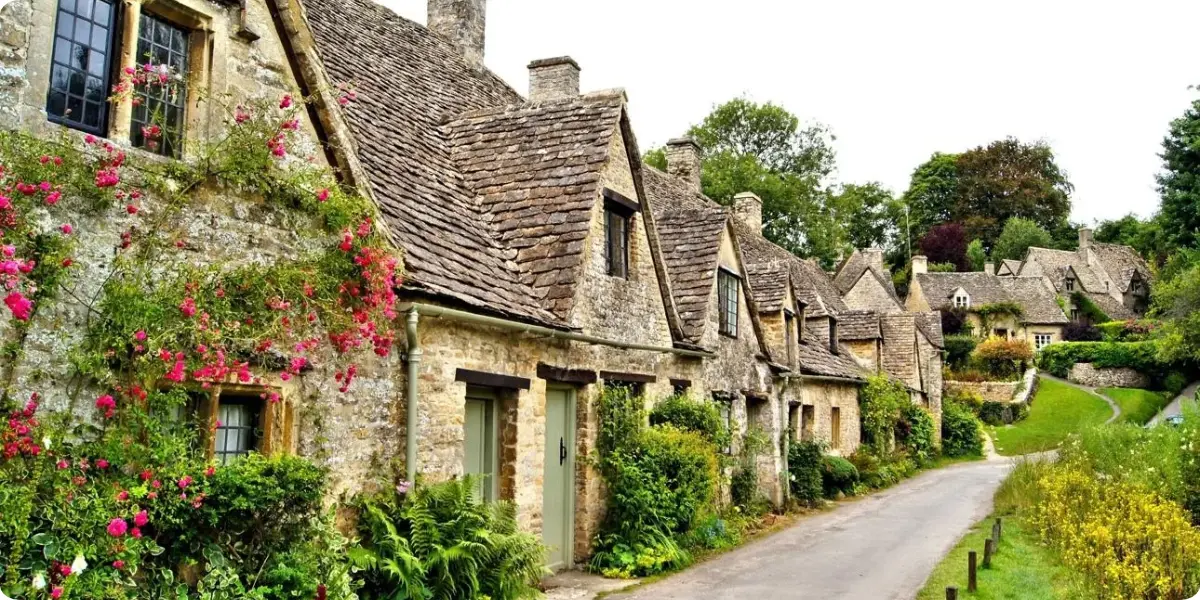
Oxford is a good base for day trips, and the easiest ones run on buses or trains. If you’re building a wider England itinerary, our London attractions guide pairs well with a day in Oxford.
i) Visit Blenheim Palace
Blenheim Palace in Woodstock is a UNESCO World Heritage Site, the birthplace of Winston Churchill and the home of the Dukes of Marlborough. Experience Oxfordshire lists the S3 and 7 buses from Oxford, running roughly every half hour to Woodstock.
ii) Explore the Cotswolds
The Cotswolds begin just north-west of Oxford. The S3 bus continues beyond Woodstock to Charlbury and Chipping Norton, but services are limited, so a small-group tour or hire car gives far more flexibility if you want several villages in a day.
iii) Spend Time at Bicester Village
Bicester Village is a designer outlet reached on the Chiltern Railways line between Oxford and London Marylebone, according to Oxford City Council’s public transport guidance. It’s a handy rainy-day option when another museum feels like too much.
Free Things to Do in Oxford
Several of Oxford’s best experiences cost nothing:
- Historic streets: Broad Street, Holywell Street and Turl Street reward slow walking.
- Free museums: The Ashmolean, Pitt Rivers Museum and Oxford University Museum of Natural History all offer free general admission, though special exhibitions may be ticketed.
- University Parks: Riverside paths, open lawns and, in summer, cricket.
- Historic architecture: Radcliffe Square, the Sheldonian Theatre’s exterior and the cobbled lanes around New College.
- Riverside walks: The Cherwell near Magdalen Bridge, or the Thames Path near Folly Bridge.
Unique Things to Do in Oxford
- Hidden architectural details: Look for the carved heads around the Sheldonian Theatre on Broad Street.
- Independent bookshops: Browse Blackwell’s, then explore the smaller independents off the main streets.
- Traditional punting: Try it once, even if you only manage a short stretch.
- Unusual museum collections: Pair the Pitt Rivers with the History of Science Museum on Broad Street, which the University describes as the world’s oldest surviving purpose-built public museum building.
- Lesser-known courtyards: Where colleges allow entry, step into smaller quads quietly and respect any signs.
Things to Do in Oxford for Couples
- Romantic punting: Choose a quieter time of day on the Cherwell and agree who’s steering first.
- Peaceful riverside walk: Stroll from Magdalen Bridge towards University Parks.
- College surroundings: Many exteriors and lanes glow at golden hour and are visible from the street.
- Dinner in a historic setting: Cherwell Boathouse runs a riverside restaurant, and the city has plenty of historic pubs and dining rooms.
Things to Do in Oxford With Kids
- Oxford University Museum of Natural History: Dinosaur skeletons, a dodo display and family trails, with free admission.
- Botanic Garden: Glasshouses and open space to explore at a child’s pace.
- Interactive collections: The Story Museum suits younger readers, and the Castle’s tower climb suits older children (under-fives are excluded from the tower).
- University Parks: Room to run between sights.
Best Time to Visit Oxford
The best time to visit Oxford is late spring to early autumn if you want river activities and long days, though quieter seasons suit museum-focused trips. For wider trip preparation, see our travel planning hub.
i) Visiting Oxford in Spring
Spring brings gardens in bloom and a lively calendar the Oxford Literary Festival typically runs in March, the Oxford Folk Festival in April, and May Morning and Eights Week rowing races in May. Check exact dates before booking.
ii) Exploring Oxford in Summer
Summer offers the longest days, the full punting season and easy picnics, but also the biggest crowds and strongest demand for rooms. Book timed tickets early and start sightseeing before 10am.
iii) Autumn Travel Experience
Autumn brings golden light on the stone, quieter river stations and the return of students as the new academic term begins. The gardens still look good, and you avoid peak-summer crowds.
iv) Winter in Oxford
Winter suits indoor sightseeing, with museums, libraries and pubs as the focus. Daylight is short, some attractions close earlier or over Christmas, and river hire pauses, so build in indoor backups.
How Many Days Do You Need in Oxford?
One day covers Oxford’s headline sights, two days let you add museums, the river and the Castle, and three days allow a Blenheim or Cotswolds day trip. Our trip duration calculator can help match your days to your pace.
i) Oxford in One Day
Choose three or four priorities: the Radcliffe Square area, one timed college or library visit, one free museum and the Covered Market. Use the sample itinerary below as a template.
ii) Oxford in Two Days
Spend day one on the core centre, then use day two for the Botanic Garden, the Pitt Rivers and Natural History museums, Oxford Castle and a punt on the Cherwell.
iii) Oxford in Three Days
Use a third day for Blenheim Palace and Woodstock or a Cotswolds excursion, then return for a literary walk and a slow afternoon in University Parks.
How to Get Around Oxford
Walk. The centre is compact and partly closed to traffic, and buses and bikes handle the rest. If you arrive by car, the University recommends its five Park and Ride services; see its visitor travel guidance.
i) Exploring on Foot
Most central sights are a 10 to 20 minute walk apart. Cobbles, steps and narrow pavements are part of the charm, so wear comfortable shoes and check accessibility details for individual attractions.
ii) Public Buses and Local Transport
Park and Ride buses connect the outskirts with the centre, and regular buses reach Woodstock and the wider region. Direct trains run to Oxford from London Paddington and Marylebone, with Paddington services taking roughly an hour.
iii) Cycling Around Oxford
Cycling is a local habit, and bikes are an easy way to reach the Parks or riverside paths. Stay in cycle lanes, watch for buses and cobbles, and lock your bike securely.
Where to Stay in Oxford
The best base for first-time visitors is the city centre, where you can walk to colleges, museums and restaurants. Budget travellers can stay further out and use buses or Park and Ride; browse more options in our hotel guides.
i) Best Areas for First-Time Visitors
The centre around the High Street, St Aldate’s and Broad Street puts most sights within easy walking distance. Expect higher prices and limited parking, but you save time and transport costs.
ii) Accommodation Near Oxford City Centre
Jericho, a short walk north-west of the centre, is known for restaurants and a local feel, while the Magdalen Bridge and Cowley Road side suits travellers who want an eclectic, less formal base.
iii) Budget-Friendly Places to Stay
Look outside the ring road, near Park and Ride sites, or in areas such as Headington and Cowley. If you’re combining cities, staying in London and taking a direct train can also work, so compare total costs including transport.
How to Plan a Perfect Day in Oxford

A strong one-day plan starts at Radcliffe Square, books timed entries first and saves the free museums for the afternoon.
| Time | Activity | Planning note |
|---|---|---|
| 9:00 AM | Radcliffe Camera and Radcliffe Square | Free from outside; interior only on a guided tour |
| 10:00 AM | Bodleian Library | Book your tour or Divinity School entry ahead |
| 11:30 AM | Christ Church | Timed ticket; Great Hall may close around lunchtime |
| 1:00 PM | Lunch at Covered Market | Check trader opening hours |
| 2:00 PM | Ashmolean Museum | Free; last entry 4:45 PM |
| 4:00 PM | University Parks | Free; closing time varies by season |
| 5:00 PM | Walk through historic Oxford | Try Broad Street, Holywell Street or Turl Street |
Opening times and tour availability change, so check each venue before you go.
Frequently Asked Questions About Visiting Oxford
Is Oxford worth visiting for tourists?
Yes. Oxford packs historic colleges, free museums, river walks and literary landmarks into a compact centre, so you can see a lot without much travel. It suits first-time visitors, history and book lovers, and families. If you dislike crowds, go early in the day or outside peak summer weekends.
Can you explore Oxford without joining a guided tour?
Yes, and most visitors do. The streets, Radcliffe Square, University Parks, the Covered Market and three major free museums need no tour. Tours are essential only for the Bodleian’s historic interiors and Oxford Castle. Christ Church sells timed tickets, with guided visits as an optional extra.
Is Oxford a walkable city for visitors?
Very. Most central sights are a 10 to 20 minute walk apart, and parts of the centre are closed to traffic. Cobbled lanes, steps and narrow pavements can be tricky with wheelchairs or prams, and some historic buildings have stairs only, so check accessibility pages for individual attractions.
What is Oxford most famous for besides its university?
Oxford is known for its literary legacy, including Lewis Carroll, J.R.R. Tolkien and C.S. Lewis. It is also home to Oxford University Press, publisher of the Oxford English Dictionary, and to the wartime research that turned penicillin into a usable medicine. Film and TV fans will recognise it from Harry Potter and detective dramas.
Is Oxford expensive for a day trip?
It doesn’t have to be. The Ashmolean, Pitt Rivers, Natural History Museum, University Parks and the streets cost nothing, so your main costs are travel, one or two paid sights and food. Use our trip cost calculator to estimate your budget before choosing which paid attractions to add.
Can you visit Oxford University as a tourist?
Yes, but there is no single entrance. Visitors tour individual colleges, the Bodleian Libraries and university museums, each with its own hours, tickets and closures. Many colleges close during exam periods, so check each website. Walking the public streets and squares is free at any time.
Is one day enough to explore Oxford?
One day is enough for the headline sights if you plan carefully, but not for everything. Choose three or four priorities, book timed entries first and leave gaps for walking. If you also want the Castle, punting, the Botanic Garden and a half-day at Blenheim, stay overnight.
What should you book in advance in Oxford?
Book Christ Church’s timed entry and any Bodleian tour first, especially if you want the Radcliffe Camera interior. Reserve an Oxford Castle tour, a chauffeured punt or a rooftop table at the Ashmolean in busy periods. Free museums need no ticket, though special exhibitions may. Train tickets are usually cheaper when booked early.
Final Thoughts: Making the Most of Your Time in Oxford
The best things to do in Oxford blend the famous with the quiet a timed visit to Christ Church or the Bodleian, a free afternoon in the Ashmolean or Pitt Rivers, and a slow walk beside the Cherwell. Book the few things that sell out, leave space for wandering and check opening times before each stop. For more ideas for your next trip, browse our things to do guides and decide which Oxford spot you’ll visit first.

Arman Ashraf is a content writer focused on travel and tourism. He creates practical, well-researched travel guides, destination articles, and travel tips designed to help readers plan trips with greater confidence. His work combines clear, engaging writing with SEO best practices, covering destinations, things to do, travel planning, and useful advice for travelers. Arman is committed to producing helpful content that makes discovering and planning travel easier.