
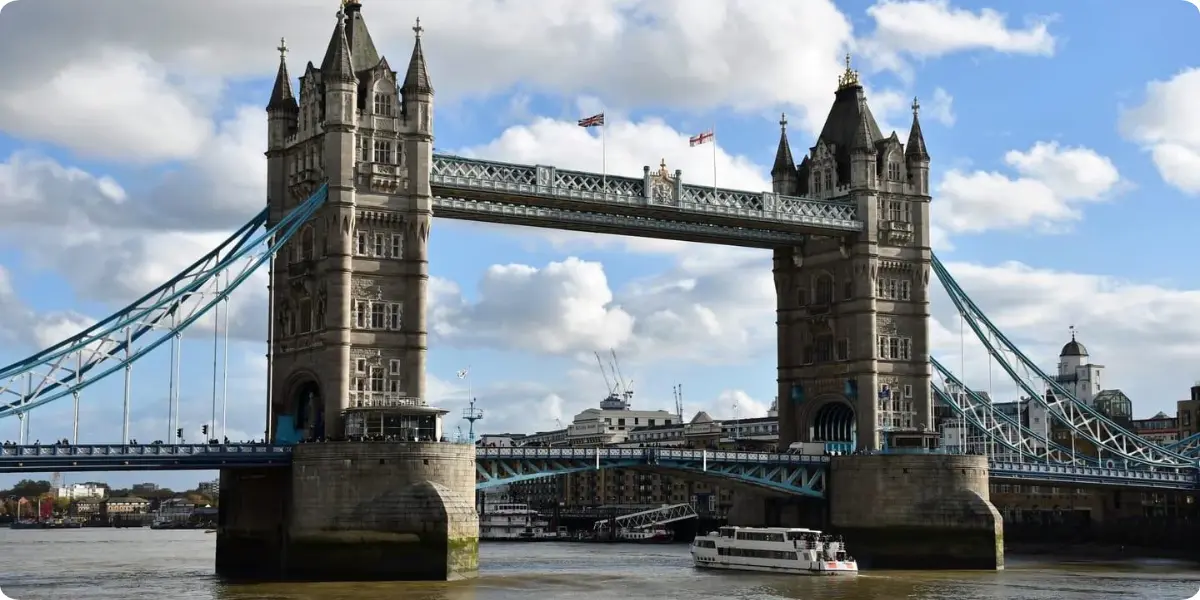
Tower Bridge is one of the most recognizable landmarks in London, and it often gets mistaken for London Bridge. Its two Gothic-style towers, blue-and-white steel, and lifting roadway make it the picture most people have of the city. It rewards a closer look, with a glass-floored walkway high above the Thames, a Victorian engine room, and an exhibition that explains how the bridge works. If you’re building a wider trip, the London travel guides on Trip Guiderz cover the rest of the city around it.
What Is Tower Bridge in London?
Tower Bridge is a combined bascule and suspension bridge over the River Thames, in the east of central London. Most bridges in the city simply carry traffic. This one is also a working piece of Victorian engineering that can still split in the middle to let tall vessels through.
It stands beside the Tower of London on the north bank and links the borough of Southwark with the Tower Hamlets side. That position makes it a natural centerpiece for a riverside sightseeing day. The surrounding streets hold some of the city’s oldest history, so the bridge works as an anchor for a half-day or full-day walk.
The History of Tower Bridge
By the 1870s, London’s east end had a serious problem. Commerce and population were growing fast, but the lowest bridge crossing was London Bridge, and the busy Pool of London docks lay downstream. A fixed bridge would have blocked the tall-masted ships that fed the docks. The city needed a crossing that could carry people and traffic and still open for river traffic.
After years of debate and a design competition, a plan by city architect Horace Jones and engineer John Wolfe Barry was chosen. Construction began in 1886 and took roughly eight years, with several hundred workers and a vast amount of steel hidden under the stone-clad towers. Jones died during the project, and the architect George D. Stevenson adapted the final look. The bridge opened in 1894.
Its role has shifted over time. It began as an answer to river congestion and now serves mainly as a road crossing, an icon, and a ticketed attraction, while still opening for ships when needed. The original steam power was replaced in the 20th century with an electro-hydraulic system, and the old machinery became part of the visitor experience.
What Makes Tower Bridge’s Architecture Unique?
The look is Victorian Gothic. The pointed details and turreted towers were chosen partly to harmonize with the nearby Tower of London. The towers are about 65 meters tall and contain stairs, lifts, and the high-level walkways that join them at the top.
The engineering is the clever part. The central roadway is divided into two leaves called bascules. Each one is counterweighted and pivots upward, almost like a seesaw, so a very heavy section of road can be lifted by a relatively modest force. When both bascules are raised, a wide gap opens for ships.
Originally, steam engines pumped water into hydraulic accumulators, and that stored pressure drove the lifting machinery. Because the system is so well built and maintained, the bridge can still open for river traffic today, in line with a published lift schedule.
What Can You See Inside Tower Bridge?
The exterior is free to enjoy, but the real depth is inside. The ticketed experience combines three areas that suit different interests.
1. The Tower Bridge Glass Walkway
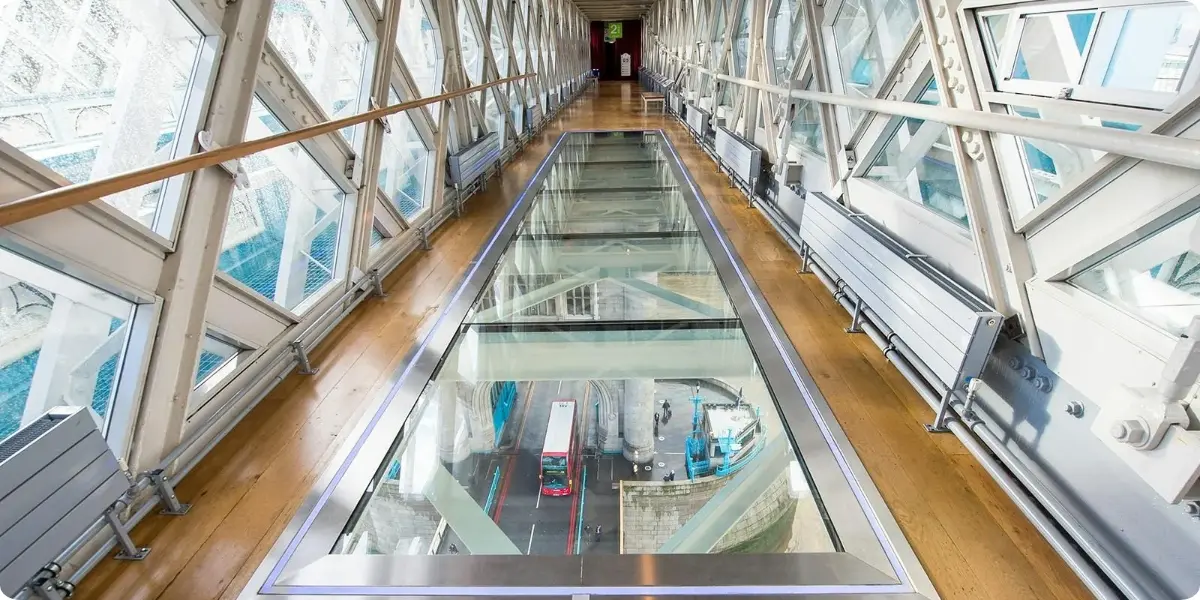
High above the Thames, the walkways link the two towers and include glass floor panels. Looking down, you can watch buses, taxis, cyclists, pedestrians, and boats move far below. The views along the river toward the Shard, the City, and Canary Wharf are excellent, and the walkway is a popular spot for photos. If you dislike heights, take it slowly: the floor is sturdy, but the first step onto glass can feel odd.
2. The Victorian Engine Rooms
Across on the south bank, the engine rooms house the original steam-era machinery that once powered the lifting system. You can see boilers, engines, and accumulators up close, and the displays explain how pressure was turned into motion. This is the section engineering fans tend to love most.
3. The Tower Bridge Exhibition
Inside the towers, interactive displays cover the construction story, the people who built the bridge, and the reasons it exists. It gives the walkway and the engines their context. Most visitors spend somewhere between 90 minutes and two hours across the whole experience.
Tower Bridge Tickets and Admission Fees
Crossing the bridge on foot at road level is free. You only pay to enter the exhibition, which includes the towers, the high-level walkways, and the engine rooms. Adult tickets have been priced in the mid-to-high teens in pounds during 2026, with children aged 5 to 15 at roughly half price, under-fives free, and a free companion place for disabled visitors. Prices and seasonal offers change, so confirm the exact figure on the official Tower Bridge website before you buy.
A standard ticket covers the exhibition, walkways, and engine rooms. Family and group options are usually available. Pre-booking is the sensible route, since slots are timed and busy dates fill up. Guided tours are worth considering if you want more of the engineering and history explained, though many visitors find the standard audio and display content sufficient.
If you’re watching your spending across a whole city break, our guide on how to plan an international trip on a budget and the trip cost calculator can help you fit attractions like this into a realistic budget. For peak periods such as school holidays and summer weekends, book as early as you can.
Tower Bridge Opening Times and Best Time to Visit
The exhibition is typically open daily from 9:30 to 18:00, with last entry at 17:00, and it closes for a few days around Christmas. The official opening hours page lists the current schedule and any closures, so check it before you go.
Mornings just after opening are the quietest. Late afternoon can also thin out once the lunchtime rush passes. Weekdays are calmer than weekends, and outside school holidays you’ll usually have more room on the glass floor. Plan about two hours inside, and extra time if you want to cross the river, take photos, or visit nearby sights.
For photography, golden hour in the early morning or just before sunset gives the best light on the stonework, and dusk brings the illuminated look. If you’d like a quieter, low-stimulation visit, the bridge also runs a monthly Relaxed Opening session on certain Saturday mornings.
How to Get to Tower Bridge
1. By Underground
Tower Hill station, on the District and Circle lines, is the closest on the north side and about a five-minute walk. London Bridge station, served by the Jubilee and Northern lines, is a good option from the south side and takes around ten to fifteen minutes on foot.
2. By Train
London Bridge mainline station connects with a large part of southeast England and is the most useful rail hub for the bridge. From the concourse, follow signs toward the river and Tooley Street, then head east along the Thames path. Fenchurch Street is another option on the north side. Check live services on National Rail.
3. By Bus or River Boat
Several London bus routes stop close to the bridge, on both Tooley Street and the north bank approaches. For river travel, Thames Clippers and sightseeing cruises call at piers near the bridge, including Tower Millennium Pier and London Bridge City Pier. Transport for London has live journey planning and service updates.
4. By Walking
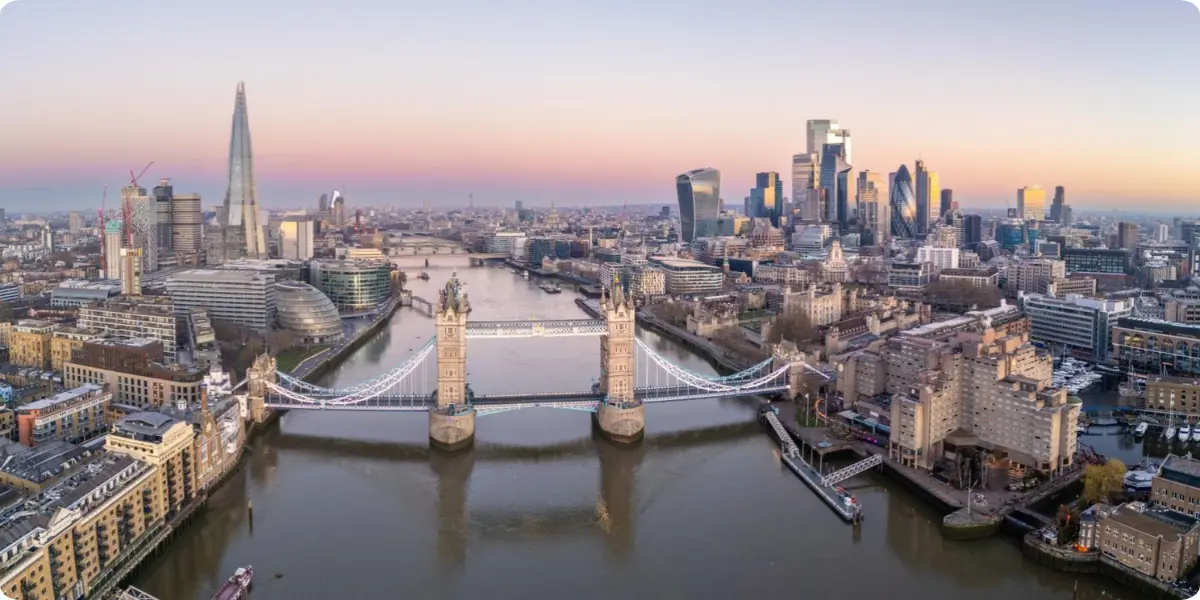
Walking from the Tower of London takes only a couple of minutes. Riverside routes on both banks pass through some of the city’s best-known waterfront scenery, so a walk is often the nicest way to arrive.
Best Things to See Near Tower Bridge
The area is compact, which makes combining several sights into one trip realistic.
1. Tower of London
Just beside the bridge, this fortress holds the Crown Jewels, centuries of royal and military history, and the famous ravens. Give it at least half a day. Our Tower of London visitor guide covers tickets and what to prioritize, and you can book through Historic Royal Palaces.
2. Tower Bridge Riverside Walk
The path along the Thames on both sides gives constantly changing views of the bridge, historic warehouses, and modern towers. It’s free, easy, and good for photos at any time of day.
3. HMS Belfast
This Second World War cruiser is moored upstream and open to visitors. You can explore decks, engine rooms, and gun turrets. Details are on the Imperial War Museums site.
4. Borough Market
A short walk west on the south bank, this historic food market is great for lunch and snacks. It’s busiest at midday, so go earlier if you want space to browse. See the Borough Market website for trading days and hours.
5. The Shard
Western Europe’s tallest building by some measures, the Shard has a public viewing gallery with sweeping views over the river. You can plan a visit through The View from The Shard.
6. Potters Fields Park
This small park on the south bank is one of the best places to sit, relax, and look at the bridge across the water. It also pairs well with the area’s quieter corners, which our guide to hidden gems in London explores further.
Best Photography Spots Around Tower Bridge
- Southern bank of the Thames: Walk along the promenade for straight-on views with the Tower of London and the City skyline behind.
- Tower of London side: The north-bank approach gives a close, dramatic angle on the towers and the Gothic detailing.
- Potters Fields Park: A calm foreground of grass and river makes this a favorite for wide shots.
- Riverside pedestrian paths: Moving along the water lets you frame the bridge with boats, lampposts, and historic buildings.
- Night photography: After dark, the bridge is lit up and reflects in the water. Use a steady hold or a small support, and shoot around dusk for the deepest blue sky.
Interesting Facts About Tower Bridge
- It’s often confused with London Bridge. The plainer crossing upstream is London Bridge, and many first-time visitors photograph the wrong one by assumption.
- The bascules lift for tall ships. The two roadway leaves rise in the middle, and the bridge can open in a few minutes.
- Steam did the heavy work. In the 1890s, steam engines were the best available power for the job, so they drove the hydraulic system.
- The lift schedule is arranged in advance. Vessels need to give notice, and the bridge lifts several hundred times a year, so you can plan to see one.
- The towers look the way they do for a reason. The Gothic styling was chosen to blend with the Tower of London next door, while a steel frame inside carries the load.
Tower Bridge vs London Bridge: What’s the Difference?
The two bridges look nothing alike. Tower Bridge is an ornate Victorian bascule-and-suspension structure with two towers. The current London Bridge is a modern, low-profile concrete crossing completed in the 1970s, built on a site that has held a bridge for centuries.
Tower Bridge dates from 1894, while London Bridge has been rebuilt several times over a very long history. Tower Bridge is east, close to the Tower of London, and London Bridge is a little upstream, near the station of the same name and Borough Market.
For tourists, Tower Bridge is clearly the more interesting one: it has the exhibition, the walkways, and the photographic appeal. First-time visitors should photograph Tower Bridge. London Bridge is worth a glance mainly for its history and its convenient station.
Is Tower Bridge Worth Visiting?
For most travelers, yes. The exhibition suits people who enjoy engineering, architecture, and local history, and the glass walkway delivers a view and a story you can’t get from the street. Families with children generally enjoy it too, thanks to interactive displays, though younger kids may tire of the stairs and the more technical rooms.
If time or money is tight, seeing the bridge from outside is still rewarding. A walk across and a photo from the riverbank costs nothing. A good way to decide is simple: if you like how things work or want the high-level views, buy the ticket; if you mainly want a classic London photo, skip it. For more ideas on what to see around the city, browse our roundup of London attractions.
Practical Tips for Visiting Tower Bridge
- Book exhibition tickets ahead when possible, especially in summer and school holidays.
- Check the official website for current opening times and closures.
- Look up the bridge lift schedule if you’d like to see it open.
- Leave extra time for nearby attractions, since the area is full of things to do.
- Arrive early for a quieter visit.
- Wear comfortable walking shoes, as the day involves plenty of stairs and riverside walking.
- Check accessibility information before you go, including lift access and quiet-time options.
- Pair the bridge with another big-ticket sight, such as the London Eye, on a separate day rather than rushing both.
Frequently Asked Questions About Tower Bridge
Why is Tower Bridge so famous around the world?
Its Gothic towers, lifting roadway, and prominent position on the Thames make it one of the most distinctive bridges anywhere, and it appears constantly in films and photos of London.
Is Tower Bridge a drawbridge or a suspension bridge?
It’s both. The central section is a bascule (the drawbridge-style lifting part), and the side spans are suspension sections.
Can you walk across Tower Bridge without buying a ticket?
Yes. Crossing at road level is free. The ticket covers the high-level walkways, towers, and engine rooms.
How often does Tower Bridge open for ships?
It opens several hundred times a year, usually when tall vessels request a lift. A schedule is published online so you can plan to watch.
Can cars still drive across Tower Bridge?
Yes. It remains a working road crossing, though traffic is restricted by weight limits and managed carefully.
Is Tower Bridge accessible for wheelchair users?
There is step-free access to key areas, including lifts in the towers. Details change, so confirm what’s available on the official website before your visit.
Can you see Tower Bridge from the Tower of London?
Yes. It’s right beside the Tower of London, and you get a close look from the riverside area.
Is Tower Bridge beautiful at night?
Very. It’s illuminated after dark, and the lights reflect in the river, making it a popular time for photographs.
What is the best season to photograph Tower Bridge?
Spring and autumn often give clear light with fewer crowds, while winter brings early sunsets that are convenient for evening shots.
Is there a dress code for visiting the Tower Bridge Exhibition?
No formal dress code applies. Comfortable clothes and shoes are the practical choice.
Conclusion
Tower Bridge earns its place on any London itinerary. It combines Victorian engineering, Gothic architecture, and some of the best river views in the city. Whether you cross it for free, step onto the glass floor, or watch the bascules rise, it makes a memorable stop. Pair it with the nearby attractions for a full day, and if you want to extend the trip, our guides to Westminster Abbey, the British Museum, and Buckingham Palace make good next steps.

Arman Ashraf is a content writer focused on travel and tourism. He creates practical, well-researched travel guides, destination articles, and travel tips designed to help readers plan trips with greater confidence. His work combines clear, engaging writing with SEO best practices, covering destinations, things to do, travel planning, and useful advice for travelers. Arman is committed to producing helpful content that makes discovering and planning travel easier.