
Westminster Abbey is one of the most significant historic landmarks in London, standing beside the Houses of Parliament in the City of Westminster. For more than a thousand years it has been a place of worship, a royal church, and a national memorial. Kings and queens have been crowned here, married here, and laid to rest here, and so have scientists, writers, and statesmen who shaped the country.
That mix of faith, monarchy, and national memory is why the Abbey draws more than a million visitors a year, according to the Abbey’s own visitor information. People come for the Gothic architecture, for Poets’ Corner, for the royal tombs, and for the feeling of standing where so many defining moments in British history took place.
Inside, you can see the Coronation Chair, the Lady Chapel, the medieval Chapter House, the Cloisters, and the College Garden, along with the graves and memorials of people such as Isaac Newton, Charles Darwin, and Geoffrey Chaucer. This guide covers the history, the highlights, and the practical details you need, including tickets, opening hours, transport, and how long to allow. The Abbey’s address is Dean’s Yard, London SW1P 3PA, United Kingdom.
Quick Answer: What Is Westminster Abbey?
Westminster Abbey is a historic Gothic church in Westminster, London, famous for British royal coronations, royal weddings, historic burials, and memorials. It has played an important role in British religious and royal history for centuries and remains one of London’s most visited historic attractions.
What Is Westminster Abbey?
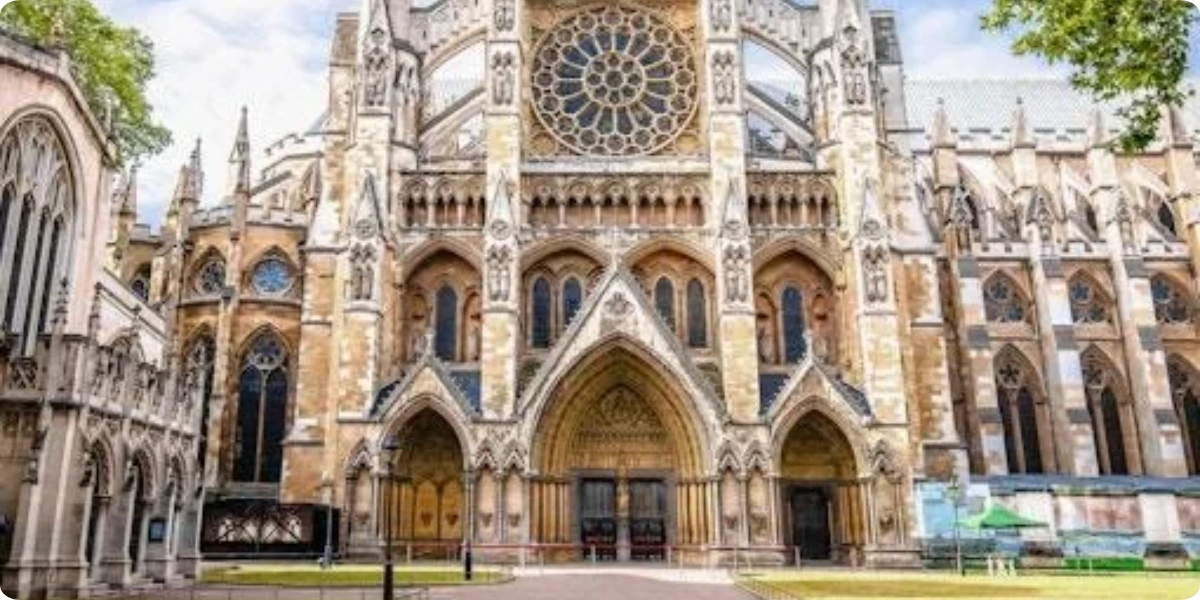
Westminster Abbey is a working Anglican church and a UNESCO World Heritage Site in the heart of London, beside the Palace of Westminster. It is both a living place of worship and a historic monument. Daily services still take place under its medieval vaults, and visitors walk through the same building where monarchs have been crowned since 1066.
1. Where Is Westminster Abbey Located?
Westminster Abbey sits in Westminster, in the City of Westminster, on the north bank of the River Thames. The address is Dean’s Yard, London SW1P 3PA. It stands directly opposite the Houses of Parliament and is only a few minutes’ walk from Big Ben and Westminster Bridge. It is a short walk from Victoria Street, one of the main roads running toward Victoria Station.
To answer a common question: yes, Westminster Abbey is near Big Ben. The two are separated by Parliament Square, so you can see both on the same walk.
2. Why Is Westminster Abbey Famous?
Westminster Abbey is famous for royal coronations, royal weddings and funerals, and for the many monarchs, poets, and scientists buried or commemorated there. Every coronation of a British monarch since 1066 has been held at the Abbey. It is also where Prince William and Catherine Middleton married in 2011, and where the funeral of Queen Elizabeth II was held in 2022.
3. What Makes Westminster Abbey Important to British History?
Westminster Abbey is important to British history because it has been the stage for the country’s major royal ceremonies for almost a millennium and acts as a national memorial for people who shaped the nation. It links the monarchy, the Church, and Parliament in one place. A 13th-century Gothic rebuilding, a Tudor chapel, and centuries of burials and monuments mean the building itself works as a timeline of British life. According to the London Tickets travel guide, it is also one of the capital’s essential sightseeing stops for first-time visitors.
4. Is Westminster Abbey a Church, Museum, or Historic Landmark?
It is all three, but first and foremost a church. Westminster Abbey is a “Royal Peculiar”, meaning it answers directly to the sovereign rather than to a bishop. It holds regular services, it displays treasures and memorials in the way a museum does, and it is a protected historic landmark. Because it is a working church, parts of it can close at short notice for services and special events.
The History of Westminster Abbey
The history of Westminster Abbey stretches back more than a thousand years. It began as a Benedictine monastery, grew into the royal church of England under Edward the Confessor, was rebuilt in the Gothic style in the 13th century, and survived the Reformation to become the Collegiate Church it is today.
1. Early Origins of Westminster Abbey
A religious community was established on this site, then known as Thorney Island on the Thames, before the Norman Conquest. The Benedictine monks who lived here gave the place its name: the “west minster”, or western monastery, in contrast to St Paul’s in the City of London to the east. Over time the monastery became closely tied to the Crown, which is why the Abbey is still linked so strongly with royal ceremony.
2. How King Edward the Confessor Shaped Its History
Edward the Confessor rebuilt the church in the mid-11th century, creating a large Romanesque abbey that was consecrated in December 1065. He died only days later, in January 1066, and was buried in the church. His shrine became a major place of pilgrimage. The Abbey’s connection with coronations began that same year, when Harold and then William the Conqueror were crowned here, and the tradition has continued ever since.
3. The Construction of the Gothic Abbey
The Abbey you see today is largely the work of Henry III, who began rebuilding the church in 1245 in the French-influenced Gothic style, partly to honor Edward the Confessor. The result was the soaring nave, pointed arches, and flying buttresses that define the building. The west towers were added much later, in the 18th century, to designs associated with Nicholas Hawksmoor. Even so, the medieval character of the interior has survived remarkably well.
4. Westminster Abbey During the Tudor Period
The Tudor era brought both great change and great additions. Henry VII commissioned the Lady Chapel (now known as the Henry VII Chapel) in the early 1500s, with its famous fan-vaulted ceiling. Then Henry VIII dissolved the monastery in the 1530s as part of the Reformation, ending the Benedictine community. Elizabeth I later refounded the Abbey in 1560 as a Collegiate Church, the status it holds today, and she is buried here herself.
5. Major Historical Events That Changed the Abbey
Many events have shaped the Abbey over the centuries.
- 1245 onward: Henry III’s Gothic rebuilding.
- Early 1500s: the Henry VII Chapel added at the east end.
- 1560: Elizabeth I refounds the Abbey as a Collegiate Church.
- 1740s: the western towers are completed.
- 1920: the Tomb of the Unknown Warrior is placed near the Great West Door.
- 1997, 2011, 2022, and 2023: the funeral of Diana, Princess of Wales, the wedding of Prince William and Catherine Middleton, the funeral of Queen Elizabeth II, and the coronation of King Charles III.
What Is Westminster Abbey Famous For?
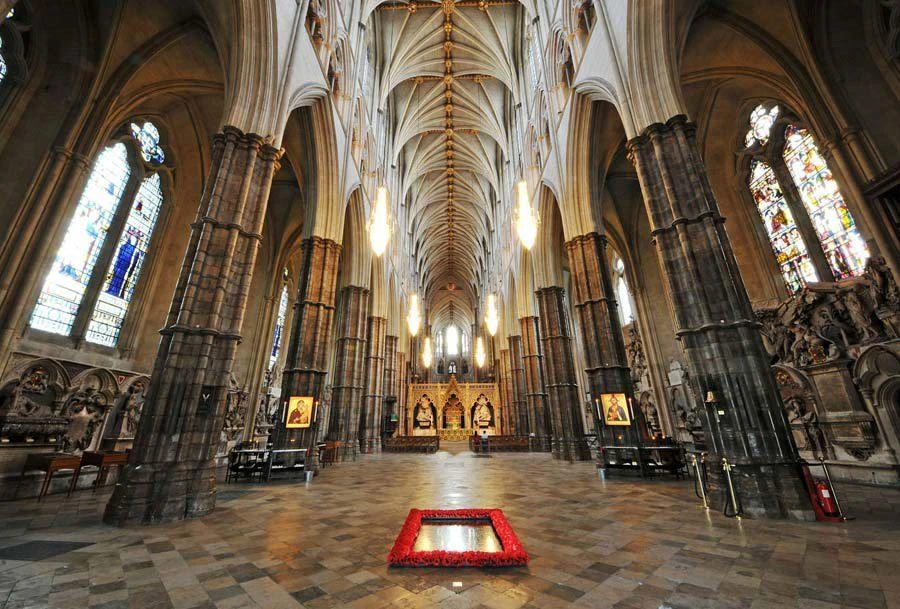
Westminster Abbey is famous for coronations, royal weddings and funerals, the burials of monarchs, and its role in British national identity. If you are asking what Westminster Abbey is famous for in a single line, the answer is that it is where Britain crowns, marries, mourns, and remembers.
1. British Royal Coronations
Westminster Abbey has hosted coronations since 1066, making it the country’s coronation church. The ceremony takes place around the Coronation Chair and involves anointing, crowning, and the presentation of the regalia. The most recent was the coronation of King Charles III in May 2023. You can read more about the ceremony’s history and traditions on the Abbey’s coronations pages.
2. Royal Weddings at Westminster Abbey
Several royal weddings have taken place here, including the marriage of Princess Elizabeth and Philip Mountbatten in 1947 and the wedding of Prince William and Catherine Middleton in 2011. The Abbey remains a popular venue for royal ceremonies because of its scale, its history, and its place in national life.
3. Royal Funerals and Memorial Services
The Abbey also hosts royal funerals and national memorial services. The funeral of Diana, Princess of Wales, took place here in 1997, and the funeral of Queen Elizabeth II was held here in September 2022 before her burial at Windsor. It is also the setting for services of remembrance and thanksgiving that mark national moments.
4. The Burial Place of British Monarchs
Around seventeen monarchs are buried at Westminster Abbey, with many more royal family members interred or commemorated. Edward the Confessor lies in his shrine behind the high altar, and Elizabeth I lies in the Henry VII Chapel. Not every monarch is buried here, however. Queen Elizabeth II, for example, was buried at St George’s Chapel at Windsor Castle, and several others rest elsewhere.
5. Its Connection to British National Identity
Westminster Abbey is sometimes described as the nation’s church. It brings together the Crown, the Church, and Parliament, and it remembers writers, scientists, soldiers, and statesmen alongside kings and queens. The Tomb of the Unknown Warrior, placed here in 1920 to honor the unidentified dead of the First World War, shows how the Abbey speaks for the whole country rather than for royalty alone.
Best Things to See Inside Westminster Abbey
The best things to see inside Westminster Abbey are the Coronation Chair, Poets’ Corner, the royal tombs, the Henry VII Chapel, the nave, the Chapter House, the Cloisters, and the College Garden. The general admission ticket covers most of these, along with the Pyx Chamber, and the multimedia guide helps you find them in a sensible order.
1. The Coronation Chair
The Coronation Chair was made around 1300 for Edward I and has been used at coronations for centuries. It is one of the oldest pieces of furniture in continuous ceremonial use in Britain. For a long time it held the Stone of Scone beneath its seat. The wooden surface is worn and carries centuries of carved graffiti, which is part of its appeal.
2. Poets’ Corner
Poets’ Corner, in the south transept, is the Abbey’s famous literary space. Geoffrey Chaucer was the first poet buried here, in 1400, and later writers were buried or commemorated nearby. Charles Dickens is buried here, while Jane Austen, the Brontë sisters, and William Shakespeare are remembered with memorials rather than graves. Keep that distinction in mind as you read the stones and plaques.
3. The Royal Tombs and Memorials
The royal tombs sit mainly around the shrine of Edward the Confessor and in the Henry VII Chapel. Look for the tomb of Henry III, the monument to Mary, Queen of Scots, and the shared tomb of Mary I and Elizabeth I. The sculpted effigies and carved tomb chests are among the finest examples of medieval and Tudor monumental art in England.
4. The Lady Chapel (Henry VII Chapel)
The Henry VII Chapel, at the east end, is often considered the Abbey’s most beautiful space. Its fan-vaulted ceiling looks almost like lace carved in stone, and the colorful banners of the Order of the Bath hang above the stalls. Henry VII and his queen are buried here, and so are Elizabeth I and many later monarchs.
5. The Nave and Gothic Architecture
The nave is the great central space of the church, rising to roughly 31 metres, among the tallest Gothic naves in England. It is lined with monuments and graves, and it holds the Tomb of the Unknown Warrior near the west door. Stand at the entrance and look up and along the full length of the church to get a sense of the scale.
6. The Chapter House
The octagonal Chapter House dates from the 13th century and was originally the meeting room for the Benedictine monks. It has a beautiful medieval tiled floor and some surviving wall paintings. In the 14th century it was also used by the House of Commons, which shows how closely the Abbey was tied to the early history of Parliament.
7. The Cloisters
The Cloisters are the quiet covered walkways around a central garden, once the center of monastic life. They are a calm break from the crowded church and link to the Chapter House, the Pyx Chamber, and the Abbey’s other monastic spaces. The stonework here is largely medieval and rewards slow walking.
8. The College Garden
The College Garden is a small, peaceful green space in the Abbey grounds with a history reaching back many centuries. It is one of the oldest gardens in Britain still in use. Opening arrangements for the garden can vary, so check the Abbey’s visitor information before you rely on seeing it.
Famous People Buried at Westminster Abbey
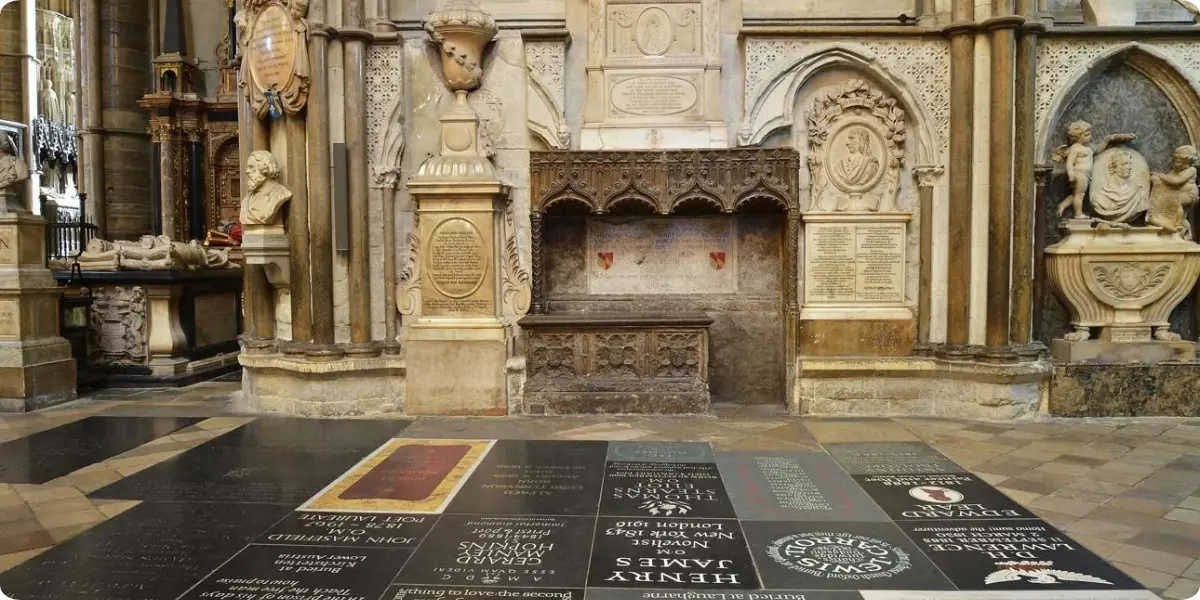
Westminster Abbey is the burial place and memorial site of many of Britain’s most famous people, including monarchs, scientists, writers, and statesmen. A key editorial point: not everyone associated with the Abbey is buried there. Some people lie in graves under the floor, some are interred as ashes, and many more are commemorated by memorials or monuments elsewhere in the building. The Abbey’s own famous people pages are a useful place to confirm who is buried and who is remembered.
To answer a frequent question directly: Isaac Newton, Charles Darwin, Geoffrey Chaucer, Charles Dickens, Elizabeth I, and Stephen Hawking are all interred at Westminster Abbey.
1. Isaac Newton
Isaac Newton died in 1727 and was buried in the nave, in an area near the choir screen. His monument, with its allegorical figures and globe, is one of the most elaborate in the Abbey. This is both a grave and a monument.
2. Charles Darwin
Charles Darwin was buried in the nave in 1882, close to Newton. His grave is marked with a simple stone on the floor, which reflects his reputation as one of the most important scientists in British history.
3. Geoffrey Chaucer
Geoffrey Chaucer, author of The Canterbury Tales, was buried at the Abbey in 1400 and is regarded as the first writer interred in what became Poets’ Corner. His later tomb was built in the 16th century. He is buried, not simply memorialized.
4. Charles Dickens
Charles Dickens is buried in Poets’ Corner. He died in 1870 and, although he had asked for a quiet funeral elsewhere, he was buried in the Abbey after public pressure. His grave is marked by a plain stone. This is a burial, not just a memorial.
5. Stephen Hawking
Stephen Hawking’s ashes were interred in the Abbey in June 2018, near the graves of Newton and Darwin. A memorial stone marks the spot. He is therefore both buried and commemorated.
6. British Kings, Queens, and Other Historical Figures
The Abbey also contains the graves and tombs of many monarchs, including Edward the Confessor, Henry III, Edward I, Henry V, Henry VII, Elizabeth I, and Mary I. Alongside them are statesmen, soldiers, poets, and musicians. Remember the difference: monuments such as those to Shakespeare and Jane Austen honor people who are buried elsewhere or whose graves are not in the Abbey.
Westminster Abbey Architecture and Design
Westminster Abbey is a leading example of English Gothic architecture, with pointed arches, ribbed vaults, flying buttresses, and a richly decorated interior. Its design reflects more than seven centuries of building, from Henry III’s 13th-century church to the Tudor chapel and the 18th-century towers.
1. Gothic Architectural Features
The key Gothic features are the pointed arches, the high vaulted ceilings, the large windows, and the flying buttresses that carry the weight of the walls outward. The proportions are tall and narrow, which draws the eye upward. The French influence is clear in the height and the chapels radiating around the east end.
2. The Abbey’s Impressive Stained Glass Windows
The Abbey’s stained glass ranges from medieval fragments to modern commissions. Much historic glass was lost over the centuries, so many windows are Victorian or 20th-century replacements. A modern window honoring Queen Elizabeth II, by the artist Hughie O’Donoghue, was unveiled in 2018, showing that the building is still adding to its story.
3. Sculptures, Monuments, and Decorative Details
Every corner holds carving. There are painted and gilded tombs, marble monuments, medieval wall paintings, and the Cosmati Pavement in front of the high altar, a glittering mosaic floor laid in the 13th century. Look closely at small details such as carved misericords and the heraldic banners above the stalls.
4. The Ceiling, Columns, and Medieval Craftsmanship
The vaulted ceilings and clustered columns show the skill of the medieval masons. The nave vault draws the eye along the whole length of the church, while the fan vault of the Henry VII Chapel is a showpiece of late-medieval stonework. Many of the carved bosses and capitals were cut by hand and have survived for centuries.
5. Why Its Architecture Is Historically Significant
The architecture matters because the building has been in continuous use as a royal and religious space for almost a thousand years. It is part of a UNESCO World Heritage Site, listed together with the neighboring Palace of Westminster and St Margaret’s Church, as explained on the UNESCO World Heritage page for the site. Few buildings in the world combine this much architectural quality with so much documented history.
Westminster Abbey Tickets and Admission
Tourists can go inside Westminster Abbey on a general admission ticket, which also includes a multimedia guide in a choice of languages. Ticket prices change from time to time, so always confirm the current price before you go.
1. How Much Do Westminster Abbey Tickets Cost?
According to the Abbey’s published prices, an adult ticket costs £32, tickets for people aged 65 and over and for students cost £29, and tickets for children aged 6 to 17 cost £14. Children under 6 enter free. A family ticket for one adult and one child is £32. Reduced rates and free entry are available to some groups, including people receiving certain benefits and UK Armed Forces serving personnel and veterans.
So, to answer the common question: a standard adult visit costs £32, and the multimedia guide is included.
2. Where to Buy Official Tickets
The safest option is the Abbey’s official booking site, tickets.westminster-abbey.org, where there is no booking fee. Tickets are timed and single-entry, so you cannot leave and re-enter. If you buy an online ticket from the Abbey directly, you can upgrade it free of charge to an annual pass that allows three visits in a year. Third-party tickets and promotional tickets cannot be upgraded in this way.
3. Are Guided Tours Available?
Yes. Guided tours are available, and the Abbey’s own staff lead some of them. Several third-party providers also sell tours that combine the Abbey with other sights, which you can browse through GetYourGuide’s London experiences. If you choose a third-party tour, check carefully what is included and whether entry to the Abbey is part of the price.
4. Who Can Visit for Free?
Some people can visit without paying. Children under 6 enter free, and disabled visitors and their essential companion are admitted free. NHS staff and UK Armed Forces serving personnel and veterans also qualify under current offers, subject to the Abbey’s conditions. Anyone attending a daily service can enter at no charge, but that is for worship rather than sightseeing.
5. Is Westminster Abbey Included in the London Pass?
Yes, the Go City London Pass includes Westminster Abbey, but you must pre-book your visit through the Go City app. The Queen’s Diamond Jubilee Galleries are not covered by the pass and can be bought separately on arrival. Read the Go City terms for Westminster Abbey before you rely on the pass.
Westminster Abbey Opening Hours and Best Time to Visit
Westminster Abbey is open to visitors from Monday to Saturday and is generally open for worship only on Sundays. Hours can change at short notice because the Abbey is a working church, so always check the live calendar before you travel.
1. Westminster Abbey Opening Days and Hours
On weekdays, general admission currently runs from 9:30am to 3:30pm. Saturday hours differ and vary by season, so check the Abbey’s calendar for the date of your visit. The Queen’s Diamond Jubilee Galleries, the shop, and the Cellarium Café keep their own hours, which are listed on the same page.
2. Best Time of Day to Explore the Abbey
The best time of day to visit is the afternoon. The Abbey’s busiest period is generally 9:30am to noon, and it is usually quieter later in the day. Because last entry is mid-afternoon, aim to arrive after lunch with at least two hours in hand.
3. Best Months to Visit Westminster Abbey
The best months for a calmer visit are outside the peak season. The Abbey’s busiest periods are May to August, Easter, Christmas, and New Year. Late autumn, winter, and early spring tend to be quieter, although London weather can be wet, which makes the Abbey a good indoor choice.
The best time to visit Westminster Abbey, then, is a weekday afternoon outside the summer peak.
4. How Busy Does Westminster Abbey Get?
It can get very busy. At peak times, waiting for entry can exceed an hour if you have not booked online, according to the Abbey’s ticketing FAQ. Booking a timed online ticket usually shortens the wait. Inside, the nave and Poets’ Corner are the most crowded areas.
5. When Is the Abbey Closed to Visitors?
The Abbey is closed to sightseeing on Sundays, which are for worship, and it may also close on certain religious holidays and for special services or state events. It typically closes over the Christmas period. Because closures can be announced at short notice, check the official calendar on the day.
How to Get to Westminster Abbey
The easiest way to reach Westminster Abbey is by Tube to Westminster station, followed by a short walk across Parliament Square. Because the Abbey is in the City of Westminster, it is also well served by buses and within walking distance of many other landmarks. Plan your exact route with Transport for London.
1. Nearest Underground Stations
The nearest station is Westminster, on the Jubilee, District, and Circle lines, a few minutes’ walk away. St James’s Park station, on the District and Circle lines, is also close. Victoria station is further along Victoria Street and can be reached on foot, though the Tube is quicker for most visitors.
2. Getting There by Bus
Several London bus routes pass Parliament Square and the streets around Victoria Street, so a bus is a good alternative if you prefer to see the city on the way. Check the latest routes and stops on the TfL journey planner, since services change.
3. Walking From Nearby London Attractions
The Abbey is within easy walking distance of Big Ben, the Houses of Parliament, Westminster Bridge, St James’s Park, and the Churchill War Rooms. Buckingham Palace is a longer walk through St James’s Park. You can easily link several of these on one route along the River Thames.
4. Getting to Westminster Abbey From London Airports
From Heathrow, take the Elizabeth line or the Tube into central London and change for Westminster. From Gatwick, trains run to Victoria, from where you can reach the Abbey by Tube or on foot. From other airports, use the journey planner, as the best option depends on where you are arriving. Allow extra time for luggage, since large bags may not be allowed inside the Abbey. If you are still planning the rest of your trip, our London tourist information guide covers the basics.
5. Accessibility and Visitor Facilities
The Abbey provides step-free access routes, and free admission applies to registered disabled visitors and their essential companion. There are facilities for visitors, including the Cellarium Café and Terrace and the Abbey shop. For details on the current access arrangements, check the Abbey’s accessibility information before you visit.
How Long Do You Need to Visit Westminster Abbey?
Most visitors need between one and a half and three hours to explore Westminster Abbey, depending on how much of the multimedia guide they listen to. A shorter visit is possible, but you will miss details.
1. Is One Hour Enough?
One hour is enough for a quick highlights walk, covering the nave, Poets’ Corner, and the Henry VII Chapel. It will feel rushed, and you will probably skip the Chapter House, the Cloisters, and the galleries.
2. Recommended Time for First-Time Visitors
First-time visitors should plan for around two hours. That gives you time to follow the guide through the main sights, pause at the tombs, and visit the Cloisters without hurrying.
3. What to See During a Two-Hour Visit
With two hours, you can cover the nave and the Tomb of the Unknown Warrior, Poets’ Corner, the Coronation Chair and royal tombs, the Henry VII Chapel, the Chapter House, and the Cloisters. Save a few minutes at the end for the College Garden if it is open.
4. Can You Explore Westminster Abbey in Half a Day?
Yes. A half-day lets you combine the Abbey with other nearby sights, such as Big Ben and the Houses of Parliament, and still leave time for lunch. It is a sensible plan if you want a relaxed pace.
What to Know Before Visiting Westminster Abbey
Before you go, check opening times, book a ticket, and plan for bag checks and respectful dress. Knowing a few rules in advance makes the visit smoother.
1. Dress Code and Visitor Etiquette
There is no strict dress code, but visitors are asked to dress and behave respectfully, because the Abbey is an active place of worship. Keep voices low, follow staff directions, and respect anyone who is praying.
2. Photography Rules Inside the Abbey
Photography is generally restricted inside the main church, although some outdoor and cloister areas have different rules. Policies can change, so read the Abbey’s photography guidelines before you bring a camera.
3. Security Checks and Restricted Items
Expect airport-style security screening at the entrance. Large bags and luggage may not be allowed in, and certain items are restricted. Travel light, and check the Abbey’s visitor information for the current list.
4. Accessibility for Wheelchair Users
Wheelchair users can visit the Abbey, and registered disabled visitors and their essential companion are admitted free. Because parts of an ancient building have uneven floors and limited access, contact the Abbey in advance if you need specific arrangements.
5. Religious Services and Visitor Restrictions
Services take priority, and some areas may close while one is taking place. You can attend a daily service at no charge, entering through the Great West Door. Sightseeing is not permitted during services in the areas where worship is taking place.
6. Facilities and Nearby Places to Eat
The Cellarium Café and Terrace serves breakfast, lunch, and afternoon tea on the days the Abbey is open to visitors, and the Abbey also has a kiosk and a shop. Beyond the Abbey, you will find plenty of cafes and restaurants along Victoria Street and around Parliament Square.
Places to Visit Near Westminster Abbey
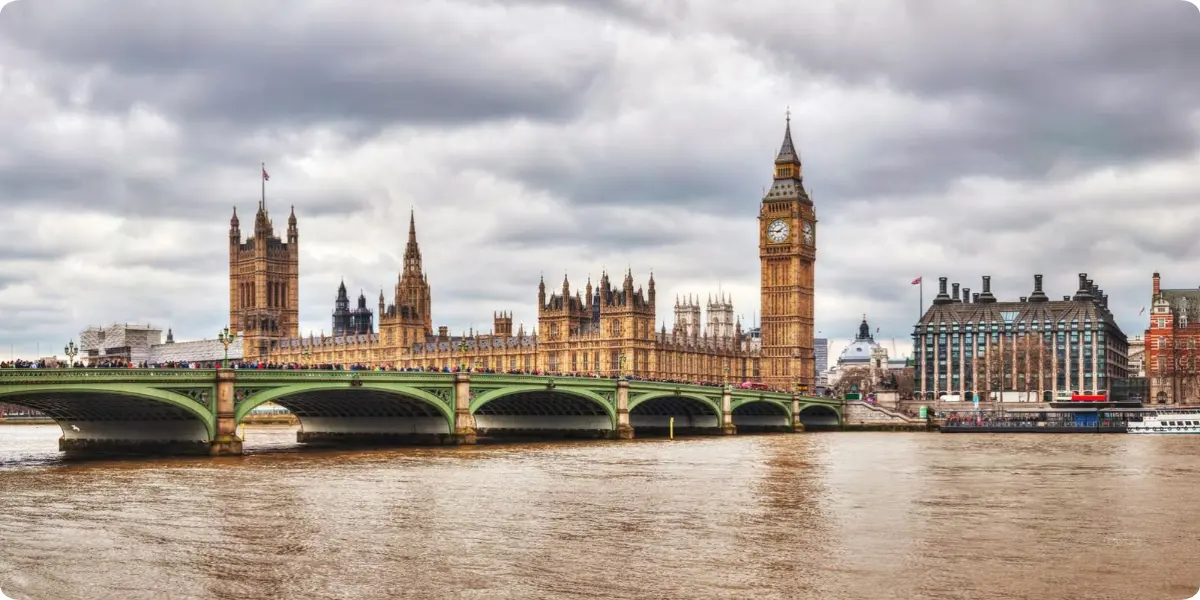
Westminster Abbey sits in one of London’s most walkable areas, so it is easy to combine with other landmarks. If you want to go beyond the main sights, our guide to hidden gems in London suggests quieter places to explore.
1. Big Ben and Elizabeth Tower
Big Ben, the bell inside Elizabeth Tower, is a short walk from the Abbey. The tower is one of London’s most photographed landmarks, and the view from Westminster Bridge is especially good.
2. Houses of Parliament
The Houses of Parliament stand directly opposite the Abbey. The Palace of Westminster is where the UK Parliament meets, and tours may be available when Parliament is not sitting.
3. Westminster Bridge
Westminster Bridge crosses the River Thames beside the Houses of Parliament. It is a good place for views of the river, Big Ben, and the London Eye.
4. St James’s Park
St James’s Park is a royal park a short walk away, with a lake, pelicans, and views toward Buckingham Palace. It is a calm place to rest after the busy Abbey.
5. Churchill War Rooms
The Churchill War Rooms, the underground bunker used during the Second World War, are a short walk from the Abbey and make a natural follow-up for history lovers.
6. Buckingham Palace
Buckingham Palace, the royal residence, is a longer walk through St James’s Park. Check the dates for the State Rooms, which are open only at certain times of year.
Westminster Abbey vs St Paul’s Cathedral
Westminster Abbey and St Paul’s Cathedral are both essential London churches, but they offer different experiences. The Abbey is a medieval Gothic royal church in Westminster, while St Paul’s Cathedral is a Baroque masterpiece by Sir Christopher Wren on Ludgate Hill in the City of London.
1. Differences in History and Architecture
The Abbey is much older and is tied to coronations, royal burials, and national memorials. St Paul’s, completed in the early 18th century after the Great Fire of London, is known for its enormous dome and the Whispering Gallery. One is medieval Gothic, the other Baroque.
2. Which Landmark Is Better for History Lovers?
For royal history, coronations, and literary and scientific burials, Westminster Abbey is usually the better choice. St Paul’s is better for architecture lovers who want to climb a dome and see panoramic views of the city.
3. Admission and Visitor Experience
Both charge admission, and both are working churches that can close for services. The Abbey includes a multimedia guide, and St Paul’s offers its own tours. Check each site’s current prices, because they change.
4. Which One Should You Visit First?
If you only have time for one, choose the Abbey for history and royalty, or St Paul’s for the dome. If you have time for both, start with the Abbey, since it sits close to Parliament and several other sights.
One point of clarity Westminster Abbey is not the same as Westminster Cathedral. Westminster Cathedral is the Roman Catholic cathedral, located on Victoria Street, with a very different Byzantine-style design.
Is Westminster Abbey Worth Visiting?
Yes, Westminster Abbey is worth visiting for anyone interested in British history, royalty, architecture, or literature. It is among the few places where you can see coronation traditions, medieval tombs, and the graves of famous writers and scientists under one roof.
1. What Makes It Special for First-Time Visitors?
First-time visitors get the chance to stand in the church where coronations and royal weddings have taken place. The scale of the nave, the beauty of the Henry VII Chapel, and Poets’ Corner are all memorable. If this is your first trip to the capital, our London first-time visitor guide can help you fit the Abbey into a wider plan.
2. Who Will Enjoy Visiting Westminster Abbey?
History fans, literature lovers, architecture enthusiasts, and families with older children usually enjoy it most. Visitors who dislike crowds or long queues may prefer to go in the afternoon on a weekday.
3. Is It Worth the Admission Price?
For most visitors, the £32 adult ticket is good value, because it includes the multimedia guide and access to several areas, including the Cloisters and Chapter House. The income also helps support the upkeep of the building, which relies heavily on visitor revenue.
4. Final Reasons to Include It in Your London Itinerary
Include the Abbey if you want to see where British history has unfolded, if you want to see famous graves and memorials, or if you want an easy, central landmark close to Big Ben and the Houses of Parliament.
Frequently Asked Questions About Westminster Abbey
Why is Westminster Abbey so famous?
Westminster Abbey is famous for being the coronation church of British monarchs since 1066, as well as the site of royal weddings and funerals and the burial or memorial place of many famous people. Its Gothic architecture and its role in national life add to its reputation.
Can you enter Westminster Abbey for free?
Only some visitors can enter for free. Children under 6, registered disabled visitors and their essential companion, and certain groups can enter without paying, and anyone attending a daily service does not pay. Most sightseeing visitors need a ticket.
Is Westminster Abbey still used as a church?
Yes. Westminster Abbey is a working church with daily services, choral music, and special ceremonies. It continues to host important national and royal occasions, which is why visitor areas sometimes close at short notice.
Can you attend a service at Westminster Abbey?
Yes. Anyone can attend a daily service at no charge, entering through the Great West Door. Check the service times first, since services follow their own schedule and some special services need invitations or tickets.
Who is buried inside Westminster Abbey?
Around seventeen monarchs are buried here, along with figures such as Isaac Newton, Charles Darwin, Geoffrey Chaucer, Charles Dickens, and Stephen Hawking. Many other famous people, including Jane Austen and William Shakespeare, are commemorated with memorials rather than graves.
Is Westminster Abbey the same as Westminster Cathedral?
No. Westminster Abbey is an Anglican royal church beside the Houses of Parliament. Westminster Cathedral is the Roman Catholic cathedral on Victoria Street, with a distinct Byzantine-style design. They are different buildings in different parts of Westminster.
Can you visit Westminster Abbey without a guided tour?
Yes. General admission includes a multimedia guide, so most visitors explore independently. A guided tour is optional and can add background, but it is not required.
Is photography allowed inside Westminster Abbey?
Photography is generally restricted inside the main church, though rules differ in some areas such as the cloisters and garden. Check the Abbey’s current photography guidelines before you visit, since the policy can change.
Final Thoughts
Westminster Abbey is more than a famous London landmark. It is a living church, a royal ceremonial stage, and a national memorial, all in one Gothic building beside the River Thames. Whether you come for the coronation history, Poets’ Corner, the royal tombs, or the architecture, a visit rewards the time you give it. Book a timed ticket, aim for a weekday afternoon, check the live opening times, and allow around two hours.

Arman Ashraf is a content writer focused on travel and tourism. He creates practical, well-researched travel guides, destination articles, and travel tips designed to help readers plan trips with greater confidence. His work combines clear, engaging writing with SEO best practices, covering destinations, things to do, travel planning, and useful advice for travelers. Arman is committed to producing helpful content that makes discovering and planning travel easier.