
Greece is one of those destinations where a single trip can feel completely different depending on where you go. You can spend the morning walking among ancient ruins in Athens, swim in clear Aegean water by afternoon, and finish the day with grilled seafood at a small taverna. This variety helps explain why the country keeps breaking its own tourism records: Greece set a new tourism record in 2025, with inbound travel increasing 5.6 percent to reach 37.98 million travelers, up from 35.95 million in 2024, according to Bank of Greece data, making it one of the most-visited countries in the Mediterranean relative to its population.
The country is famous for places such as the Acropolis, Santorini, and Mykonos, but there is much more to see beyond the best-known islands. Mainland Greece has archaeological sites, mountain villages, monasteries, hiking trails, and historic towns. The islands bring their own mix of beaches, food, sailing, and local traditions.
Greece’s historical depth is officially recognized on the world stage: the country is home to over 20 UNESCO World Heritage properties, including the Acropolis of Athens, Delphi, Meteora, Olympia, the Medieval City of Rhodes, and the Minoan Palatial Centres. Mount Olympus, the mythological home of Zeus and the Twelve Olympians, was added to the list in 2026 as Greece’s newest UNESCO site, recognized for both its cultural significance and its rich Mediterranean biodiversity a rare “mixed” designation that reflects the country’s layered identity as both a natural and historical destination.
What Are the Best Things to Do in Greece?
The best things to do in Greece include exploring the Acropolis in Athens, watching the sunset in Santorini, discovering Meteora, visiting Delphi and Ancient Olympia, relaxing on Greek beaches, tasting local food, exploring Crete, and taking an island-hopping trip. Greece also rewards travelers who go beyond the famous islands to places such as Nafplio, Monemvasia, Naxos, Corfu, and the Peloponnese.
The right choice depends on your travel style. History lovers may prefer Athens, Delphi, and Olympia, while beach lovers can focus on Crete and the islands. Hikers have plenty of options in the mountains and gorges, and food lovers can build an entire trip around regional Greek cuisine.
35 Best Things to Do in Greece
1. Explore the Acropolis in Athens
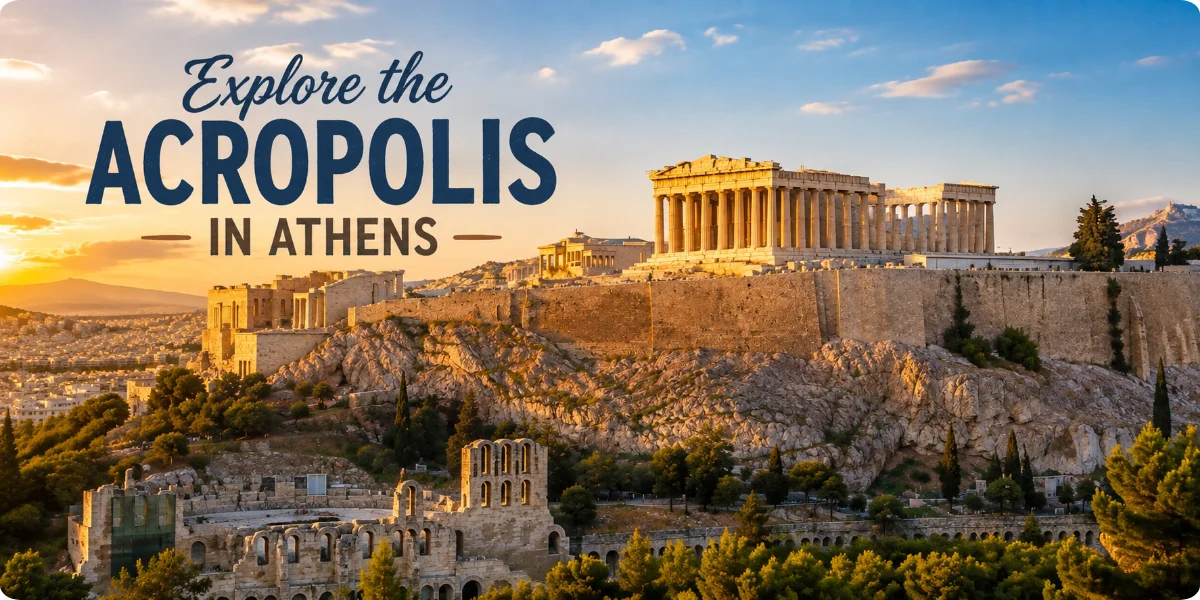
The Acropolis is the obvious starting point for many first-time visitors, and the numbers back up its reputation: it drew over 4.6 million visitors in 2025, making it Greece’s single most-visited archaeological site and roughly a third above pre-pandemic 2019 levels, according to ELSTAT data. As of 2025, entry costs €30 year-round (the seasonal winter discount was phased out), and timed-entry tickets are mandatory during peak morning hours because Greece caps daily visitor flow to protect the monument from wear.
Walk up the rocky hill to see the Parthenon, Erechtheion, Propylaea, and Temple of Athena Nike. Built between 447 and 432 BC under the statesman Pericles, the complex represents one of the defining achievements of classical Greek civilization and has been a UNESCO World Heritage Site since 1987. Allow enough time to explore rather than rushing through for a few photos most visitors underestimate how much ground the plateau actually covers.
Afterward, visit the Acropolis Museum to put what you have seen into historical context. It welcomed nearly 2 million visitors in 2025, ranking among the world’s top 40 art museums by attendance, and houses more than 4,250 excavated objects across 14,000 square meters, including the site’s original sculptures displayed with sightlines back to the hill itself.
- Best for: First-time visitors, history lovers, photographers
- Time needed: Around half a day
- Practical tip: Book timed-entry slots in advance for June–August visits mornings before 9 am see noticeably smaller crowds.
| Tour Option | Group Size | Duration | Approx. Price* | Best For |
|---|---|---|---|---|
| Self-Guided (ticket only) | N/A | Flexible | €30 | Independent travelers on a budget |
| Audio Guide Tour | Individual | 1.5–2 hrs | €30 + €5–8 audio rental | Solo visitors wanting context without a live guide |
| Small-Group Guided Tour | 10–20 people | 2–2.5 hrs | €40–65 per person | First-timers wanting a licensed guide at a lower cost |
| Private Guided Tour | 1–8 people | 2–3 hrs | €150–300 total | Families, photographers, or those wanting a flexible pace |
| Skip-the-Line Combo Tour (Acropolis + Museum) | Varies | 4–5 hrs | €70–90 per person | Visitors wanting both sites covered in one guided session |
Prices are approximate 2026 market averages for licensed guides in Athens and should be verified against current operator listings before publishing.
2. Wander Through Plaka and Monastiraki
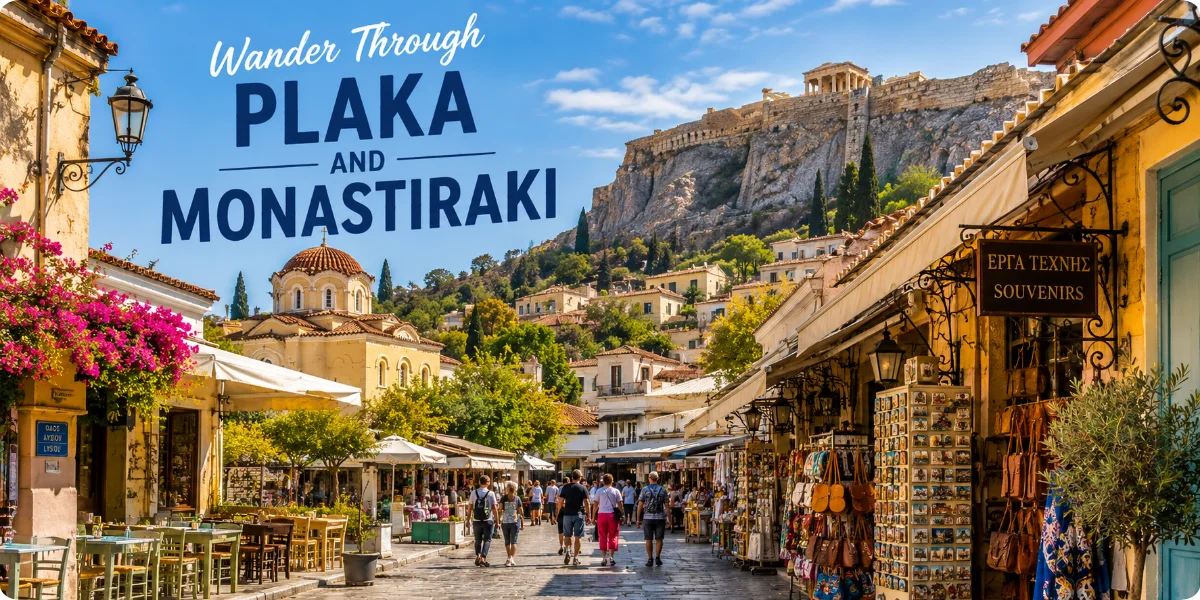
After visiting the Acropolis, slow down in the neighborhoods below it. Plaka, often called the “Neighborhood of the Gods,” sits on the site of ancient Athens itself and is known for its narrow, largely pedestrianized streets, neoclassical buildings, small shops, and family-run tavernas. Because much of the area predates modern zoning, its layout still roughly follows the footprint of the ancient city a detail that makes simply walking through it a kind of open-air history lesson.
Nearby Monastiraki brings a livelier, more commercial atmosphere, centered on its flea market and the Sunday antiques bazaar that has operated in some form for well over a century. The neighborhood takes its name from a small Byzantine monastery still standing at its main square.
This is a good part of Athens for wandering without a strict schedule. Stop for coffee at a Plaka courtyard café, browse local ceramics and leather shops, and find a taverna for your first Greek meal. Look for menus in Greek first, a reliable sign a restaurant serves locals as much as tourists.
- Best for: History lovers, first-time visitors, and travelers who enjoy wandering without a fixed itinerary
- Time needed: 2–3 hours
- Practical tip: Head to Plaka in the early morning or after 6 pm to avoid the midday tour-group crush; menus printed only in Greek are usually a good sign of an authentic taverna
| Tour Option | Group Size | Duration | Approx. Price* | Best For |
|---|---|---|---|---|
| Self-Guided Walk | N/A | Flexible | Free | Independent travelers who prefer to wander at their own pace |
| Walking Tour (Plaka & Monastiraki) | 10–15 people | 2–2.5 hrs | €25–40 per person | First-timers wanting historical context on the neighborhoods |
| Private Neighborhood Tour | 1–6 people | 2–3 hrs | €120–200 total | Families or travelers wanting a flexible, personalized pace |
| Food & Market Tour (Monastiraki focus) | 6–12 people | 3 hrs | €55–75 per person | Visitors wanting tastings alongside the flea market experience |
Prices are approximate 2026 market averages for licensed guides and tour operators in Athens and should be verified against current listings before publishing.
3. Watch the Sunset in Santorini
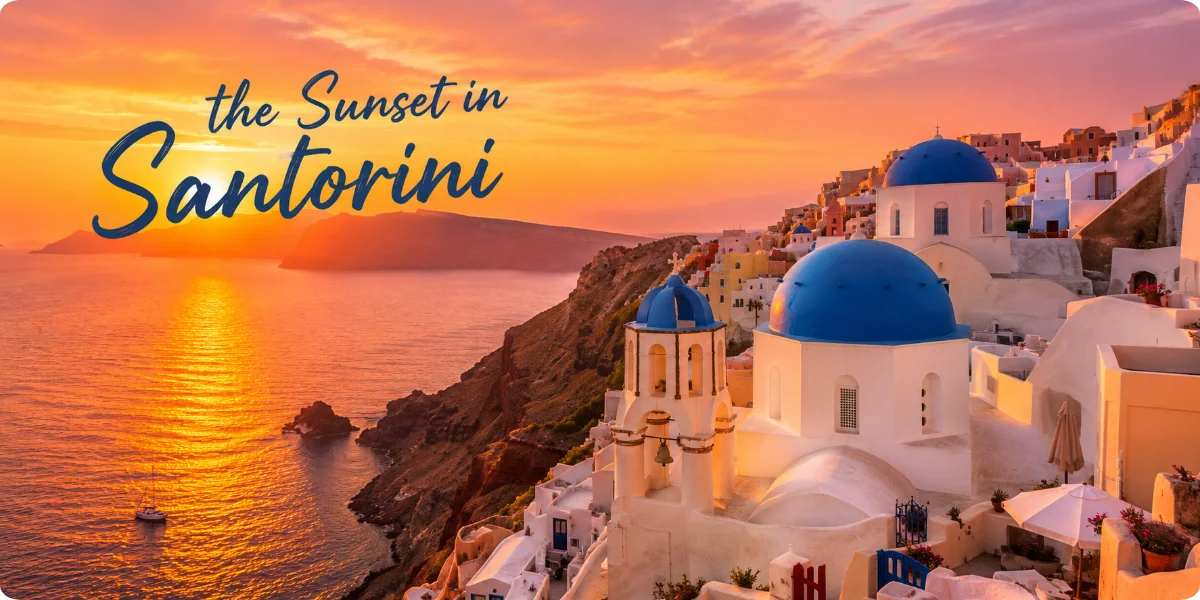
Santorini is famous for its whitewashed villages perched on the rim of a volcanic caldera, formed by one of the largest volcanic eruptions in recorded history around 1600 BC, an event some archaeologists connect to the Atlantis myth. Sunset is the moment many visitors plan their day around, and it draws a genuinely large crowd: the island’s caldera-facing towns can see tourist density spike many times over their year-round resident population during peak summer weeks.
Oia is the best-known spot to watch it, with its blue-domed churches forming the backdrop seen in countless photographs, but it is not the only option. Fira and Imerovigli also offer impressive views with far thinner crowds, while a sunset boat trip gives you a completely different perspective, watching the caldera cliffs turn orange from the water below rather than looking down from the rim.
Visit Greece, the country’s official tourism organization, lists Santorini among its major destinations and highlights sailing, beaches, gastronomy, and other experiences as part of the wider Santorini itinerary beyond the single sunset photo.
- Best for: Couples, honeymooners, photographers, and travelers chasing that classic caldera view
- Time needed: Full day, or 2–3 days if combined with beaches and boat trips
- Practical tip: Arrive at your sunset viewpoint at least 90 minutes early during June–September. Oia’s best spots fill up well before the sun actually sets, and Fira or Imerovigli are far less stressful if you’d rather not fight for a rail spot
| Tour Option | Group Size | Duration | Approx. Price* | Best For |
|---|---|---|---|---|
| Self-Guided (walk to viewpoint) | N/A | Flexible | Free | Budget travelers and independent planners |
| Sunset Catamaran Cruise | 15–30 people | 4–5 hrs | €80–120 per person | Travelers wanting the caldera view from the water, often with drinks/dinner included |
| Private Sunset Boat Tour | 2–10 people | 3–5 hrs | €300–600 total | Couples or small groups wanting a private, flexible experience |
| Guided Village Walking Tour (Oia/Fira) | 8–15 people | 2–3 hrs | €35–55 per person | First-timers wanting history and context before sunset |
| Volcano & Hot Springs Boat Trip | 20–40 people | 5–6 hrs | €30–45 per person | Travelers wanting a daytime activity that pairs with a sunset |
Prices are approximate 2026 market averages for licensed tour operators in Santorini and should be verified against current listings before publishing.
4. Explore Santorini Beyond Oia
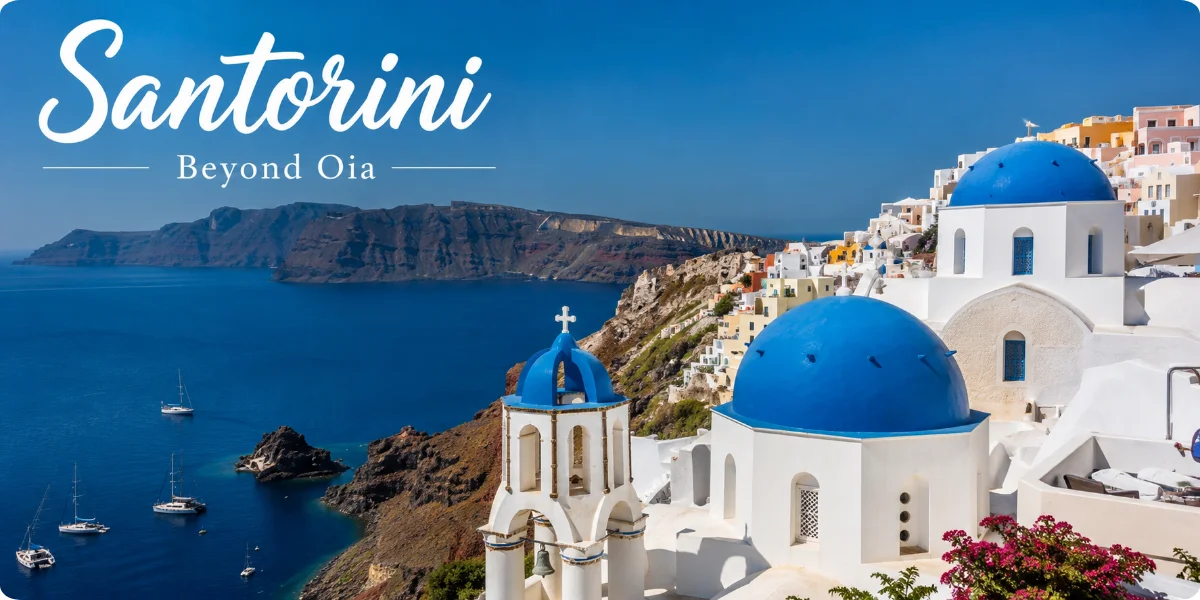
There is a lot more to Santorini than its famous sunset. Visit Akrotiri, one of the island’s most important archaeological attractions a Bronze Age settlement preserved almost intact under volcanic ash, sometimes described as Greece’s own “Pompeii” because daily life there was frozen in place rather than destroyed by the eruption. Spend time in Fira, walk around Imerovigli, relax on one of the island’s volcanic black- and red-sand beaches, or take a boat trip around the caldera to see the still-active islets of Nea Kameni up close.
A broader Santorini experience is especially worthwhile if you have several days rather than a single overnight stop cut from a cruise itinerary. You get history, scenery, food, beaches, and village life rather than spending your entire visit competing for one viewpoint, a distinction that matters given how concentrated Santorini’s tourist crowds are around its handful of famous caldera towns.
- Best for: Travelers with multiple days on the island, history buffs, beach lovers, and anyone wanting to avoid the single-viewpoint tourist crush
- Time needed: 2–4 days for a fuller experience
- Practical tip: If you’re on a cruise stopover, prioritize either Akrotiri or a caldera boat trip rather than trying to fit both in alongside sunset, half-day itineraries rarely allow for all three
| Tour Option | Group Size | Duration | Approx. Price* | Best For |
|---|---|---|---|---|
| Self-Guided (Akrotiri + beaches) | N/A | Flexible | €12 (Akrotiri entry) + transport | Independent travelers on a budget |
| Akrotiri Guided Tour | 10–20 people | 1.5–2 hrs | €20–35 per person | History lovers wanting archaeological context |
| Caldera & Volcano Boat Tour (Nea Kameni) | 20–40 people | 5–6 hrs | €30–45 per person | Travelers wanting hot springs, swimming, and volcano hiking |
| Full-Day Island Highlights Tour | 8–15 people | 7–8 hrs | €70–100 per person | Cruise-stop visitors wanting Akrotiri, beaches, and villages in one day |
| Private Multi-Day Itinerary Planning | 1–6 people | Custom | €150–300 per day | Travelers with several days wanting a tailored pace |
Prices are approximate 2026 market averages for licensed tour operators in Santorini and should be verified against current listings before publishing.
5. Walk Around Mykonos Town
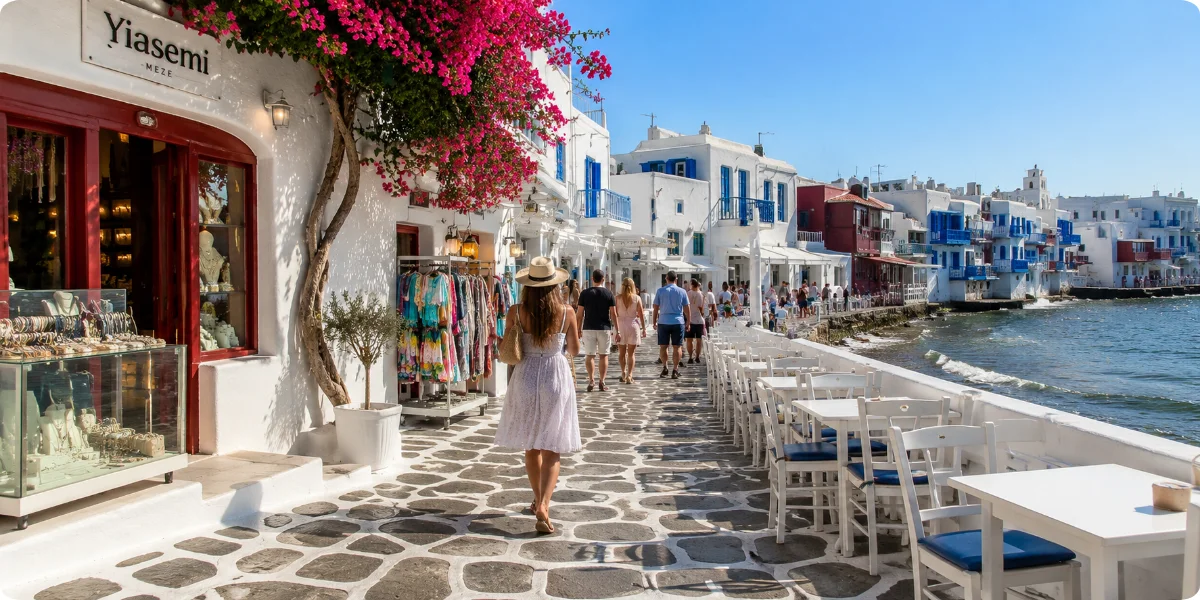
Mykonos Town (also called Chora) is made for wandering. Walk through the whitewashed lanes deliberately laid out in a maze-like pattern centuries ago to disorient pirate raiders and see the island’s iconic row of windmills, most dating to the 16th through 18th centuries when Mykonos was a regional grain-milling hub. Visit Little Venice, where balconies hang directly over the water, and explore the small churches and shops around the center. The island is famously home to hundreds of small chapels, many built by families as private vows of thanks.
Mykonos is often associated with nightlife, and its beach clubs are a genuine draw for a large share of visitors, but you do not need to spend your entire trip partying. Early mornings can be surprisingly peaceful and are a good time for photography before the streets fill with day-trippers arriving from cruise ships and nearby islands.
- Best for: Photographers, couples, nightlife seekers, and travelers who enjoy wandering historic lanes
- Time needed: Half a day to a full day
- Practical tip: Visit Little Venice and the windmills before 9 am to get photos without cruise-ship day-trippers crowding the lanes; save beach clubs and nightlife for the afternoon and evening
| Tour Option | Group Size | Duration | Approx. Price* | Best For |
|---|---|---|---|---|
| Self-Guided Walk | N/A | Flexible | Free | Independent travelers who prefer to explore at their own pace |
| Chora Walking Tour | 10–15 people | 2 hrs | €25–40 per person | First-timers wanting history behind the windmills and lanes |
| Private Photography Walk | 1–4 people | 1.5–2 hrs | €100–180 total | Photographers wanting early-morning access without crowds |
| Mykonos Highlights & Beach Club Day Tour | 6–12 people | Full day | €90–150 per person | Visitors wanting both the old town and a beach club experience |
Prices are approximate 2026 market averages for licensed tour operators in Mykonos and should be verified against current listings before publishing.
6. Discover a Quieter Side of Mykonos
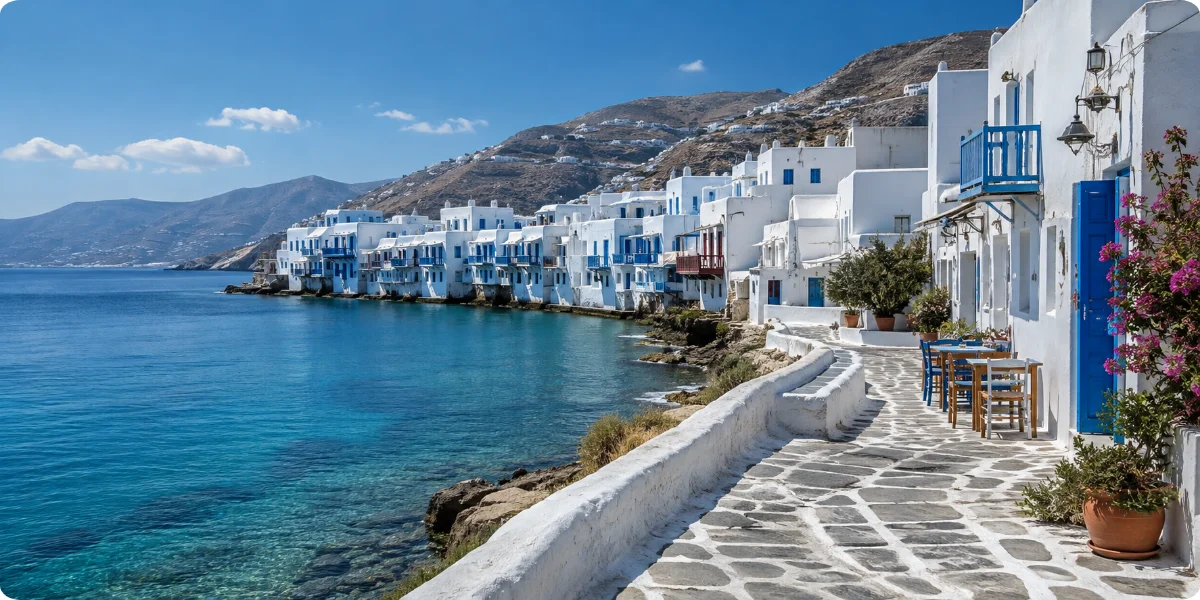
If the party scene is not your thing, look beyond the busiest parts of Mykonos. Spend time at a less-crowded beach on the island’s northern or eastern coast, explore inland villages such as Ano Mera, home to the historic Panagia Tourliani monastery, or take a boat trip along the coast to quieter coves that are difficult to reach by road.
Visiting outside the busiest summer period, late spring or September, can also make the experience feel more relaxed, since Mykonos’s infrastructure and crowd levels shift dramatically between July–August and the shoulder months. This is one reason it is useful to think of Mykonos as more than a nightlife destination it has a genuinely quiet, traditional Cycladic character once you step away from the clubs.
- Best for: Travelers seeking a quieter side of Mykonos, couples, and those visiting in shoulder season
- Time needed: Half a day to a full day
- Practical tip: Visit Ano Mera and the northern coast beaches in late spring or September for noticeably thinner crowds and lower prices than the July–August peak
| Tour Option | Group Size | Duration | Approx. Price* | Best For |
|---|---|---|---|---|
| Self-Guided (rental car/ATV) | N/A | Flexible | €25–45 per day rental | Independent travelers wanting to explore quiet beaches and villages freely |
| Ano Mera & Monastery Half-Day Tour | 8–15 people | 3–4 hrs | €35–55 per person | Travelers wanting village life and history away from the coast |
| Private Coastal Boat Trip (Quiet Coves) | 2–8 people | 3–5 hrs | €250–450 total | Couples or small groups wanting secluded beaches and swimming |
| Shoulder-Season Island Highlights Tour | 6–12 people | Full day | €80–120 per person | Visitors wanting a relaxed, less-crowded overview of the island |
*Prices are approximate 2026 market averages for licensed tour operators in Mykonos and should be verified against current listings before publishing.
7. Visit the Monasteries of Meteora
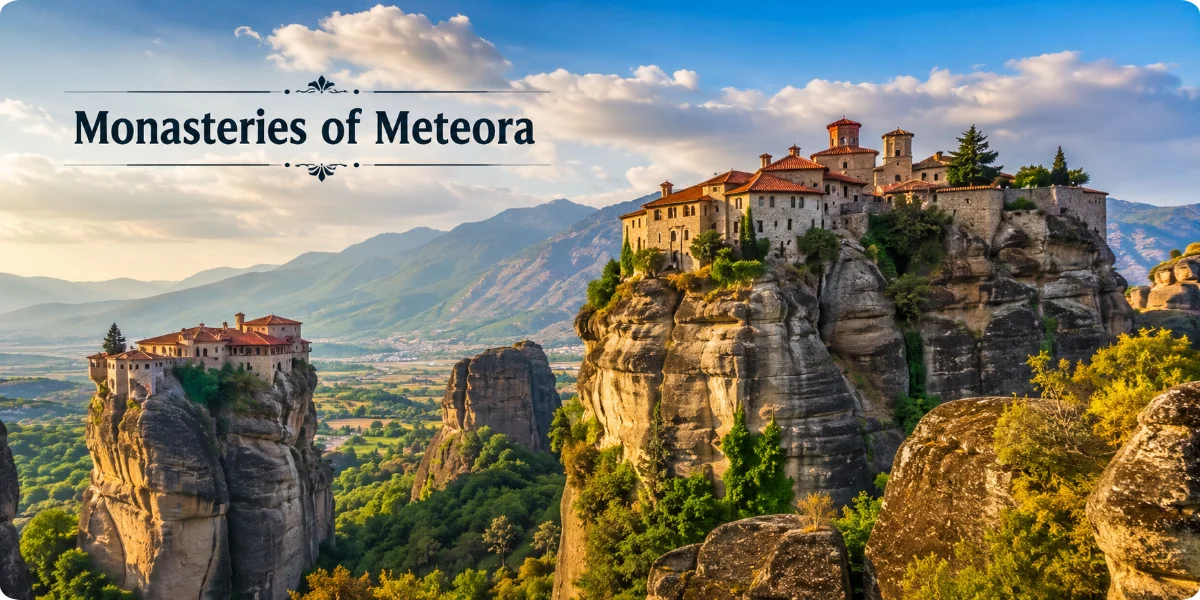
Meteora is one of the most unusual landscapes in Greece: enormous sandstone pillars, some rising over 400 meters, formed roughly 60 million years ago and later settled by hermit monks seeking isolation. Monastic life here dates back to the 11th century, and by the height of the community there were as many as 24 monasteries built into the rock. Today only six remain active, inhabited by a small number of monks and nuns who still maintain centuries-old frescoes and manuscripts.
UNESCO inscribed Meteora as a World Heritage Site in 1988, recognizing it as a rare combination of natural geology and living Byzantine religious tradition. The site now draws over 150,000 visitors a year. You can visit the monasteries, modest entrance donations apply at each one, hike through the surrounding landscape on marked trails, and stop at viewpoints for wide panoramas over the Thessalian plain.
- Best for: History, photography, hiking, culture
- Time needed: One to two days
- Practical tip: Dress modestly (shoulders and knees covered) monasteries enforce this strictly and offer wraps at the entrance if needed.
| Tour Option | Group Size | Duration | Approx. Price* | Best For |
|---|---|---|---|---|
| Self-Guided (rental car) | N/A | Flexible | €3 per monastery (donation) + rental | Independent travelers wanting to set their own pace |
| Half-Day Guided Monastery Tour | 10–20 people | 4–5 hrs | €40–60 per person | First-timers wanting history and access to 2–3 monasteries |
| Full-Day Meteora Tour from Athens | 15–30 people | 12–14 hrs (incl. travel) | €90–130 per person | Day-trippers without a car, often includes train or coach transfer |
| Private Guided Tour | 1–8 people | 4–6 hrs | €200–350 total | Families or photographers wanting a flexible, unhurried pace |
| Sunrise/Sunset Photography Tour | 1–6 people | 2–3 hrs | €80–150 per person | Photographers wanting the pillars in golden-hour light |
Prices are approximate 2026 market averages for licensed tour operators in Meteora and should be verified against current listings before publishing.
8. Step Into Ancient Delphi
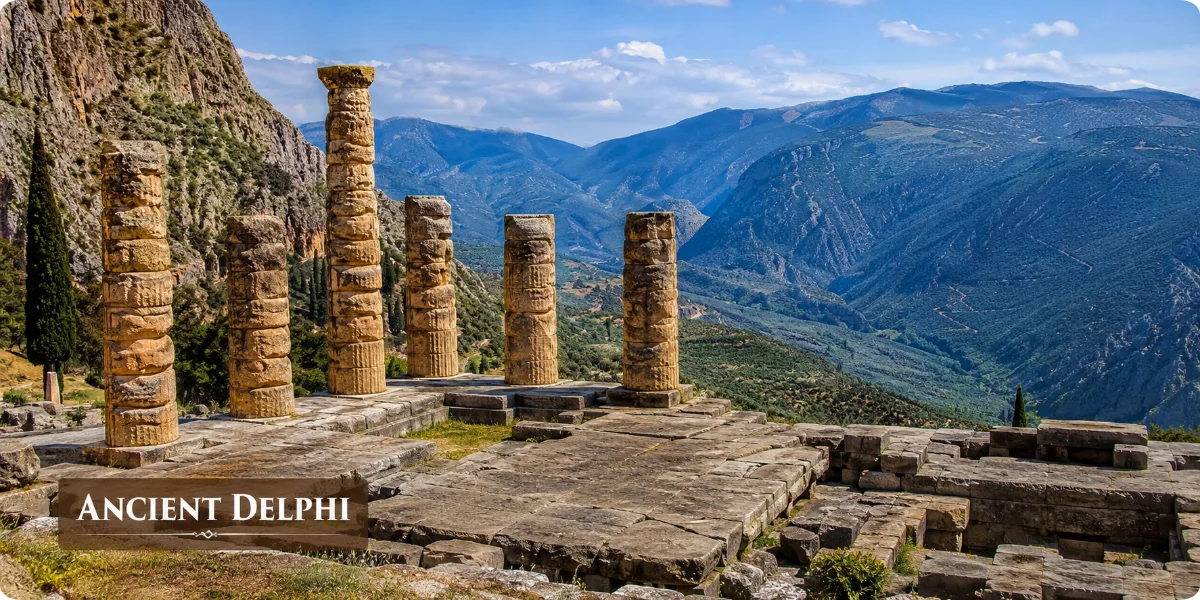
Delphi combines history with dramatic mountain scenery. In ancient Greece, it was considered the center of the world and home to the Oracle of Apollo, whose cryptic prophecies were sought by kings and city-states alike for centuries. The archaeological site sits on the slopes of Mount Parnassus, and UNESCO recognizes it for its exceptional cultural and historical importance as a pan-Hellenic sanctuary.
Walk through the sanctuary along the Sacred Way, see the well-preserved ancient theater that once seated around 5,000 spectators, and visit the archaeological museum, home to the famous bronze Charioteer of Delphi. For travelers interested in Greek mythology and ancient history, Delphi remains one of the strongest additions to a mainland itinerary, best combined with a stop in Arachova, a mountain village just above the site known for its own distinct food and architecture.
- Best for: History lovers, mythology enthusiasts, and travelers wanting mountain scenery alongside ancient ruins
- Time needed: Half a day for the site, a full day if combined with Arachova
- Practical tip: Visit early morning to see the Sacred Way and theater before tour buses arrive from Athens, then head up to Arachova for lunch and a break from the heat
| Tour Option | Group Size | Duration | Approx. Price* | Best For |
|---|---|---|---|---|
| Self-Guided (rental car) | N/A | Flexible | €12 (site) + €6 (museum) + rental | Independent travelers wanting to set their own pace |
| Half-Day Guided Site Tour | 10–20 people | 3–4 hrs | €40–60 per person | First-timers wanting historical and mythological context |
| Full-Day Tour from Athens (Delphi + Arachova) | 15–30 people | 10–12 hrs (incl. travel) | €80–120 per person | Day-trippers without a car wanting both stops covered |
| Private Guided Tour | 1–8 people | 4–6 hrs | €220–380 total | Families or history buffs wanting a flexible, unhurried pace |
Prices are approximate 2026 market averages for licensed tour operators in Delphi and should be verified against current listings before publishing.
9. Walk Through Ancient Olympia
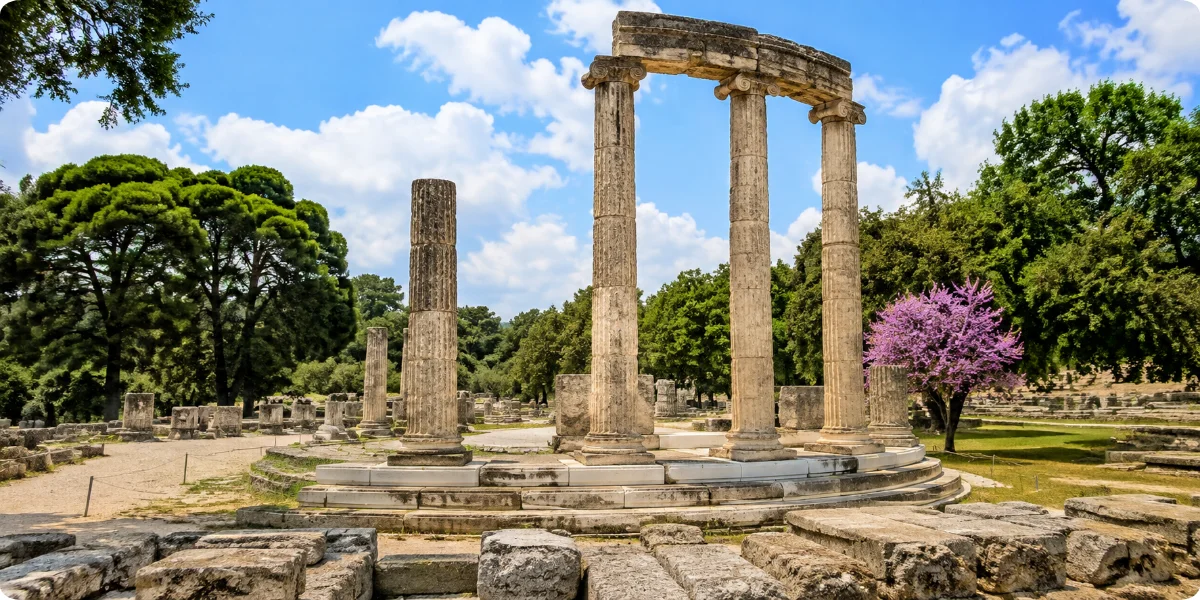
Olympia is where the ancient Olympic Games were held, beginning in 776 BC and continuing every four years for over a millennium, the founding event behind the modern Games and the origin of the term “Olympic.” The archaeological site includes the remains of temples, training grounds, and the original stadium track where ancient athletes competed.
Visit the archaeological site and museum, home to the Hermes of Praxiteles and surviving fragments of the temple of Zeus, then take a moment at the stadium entrance to imagine what the sanctuary would have looked like when athletes and spectators arrived from across the Greek world thousands of years ago. Olympia sits in the western Peloponnese, making it a natural stop on a longer road trip through the region rather than an easy day trip from Athens.
- Best for: History lovers, sports enthusiasts, and travelers on a Peloponnese road trip
- Time needed: Half a day to a full day
- Practical tip: Stand at the stadium’s original starting line, marked grooves are still visible in the stone, and combine the visit with an overnight stay in the region rather than rushing back to Athens
| Tour Option | Group Size | Duration | Approx. Price* | Best For |
|---|---|---|---|---|
| Self-Guided (rental car) | N/A | Flexible | €12 (site) + €6 (museum) + rental | Independent travelers on a Peloponnese road trip |
| Half-Day Guided Site Tour | 10–20 people | 3–4 hrs | €40–60 per person | First-timers wanting historical context on the ancient Games |
| Multi-Day Peloponnese Tour (incl. Olympia) | 8–15 people | 3–5 days | €400–700 per person | Travelers wanting Olympia combined with other Peloponnese sites |
| Private Guided Tour | 1–8 people | 3–4 hrs | €200–350 total | Families or history buffs wanting a flexible, unhurried pace |
*Prices are approximate 2026 market averages for licensed tour operators in Olympia and should be verified against current listings before publishing.
10. Discover Crete
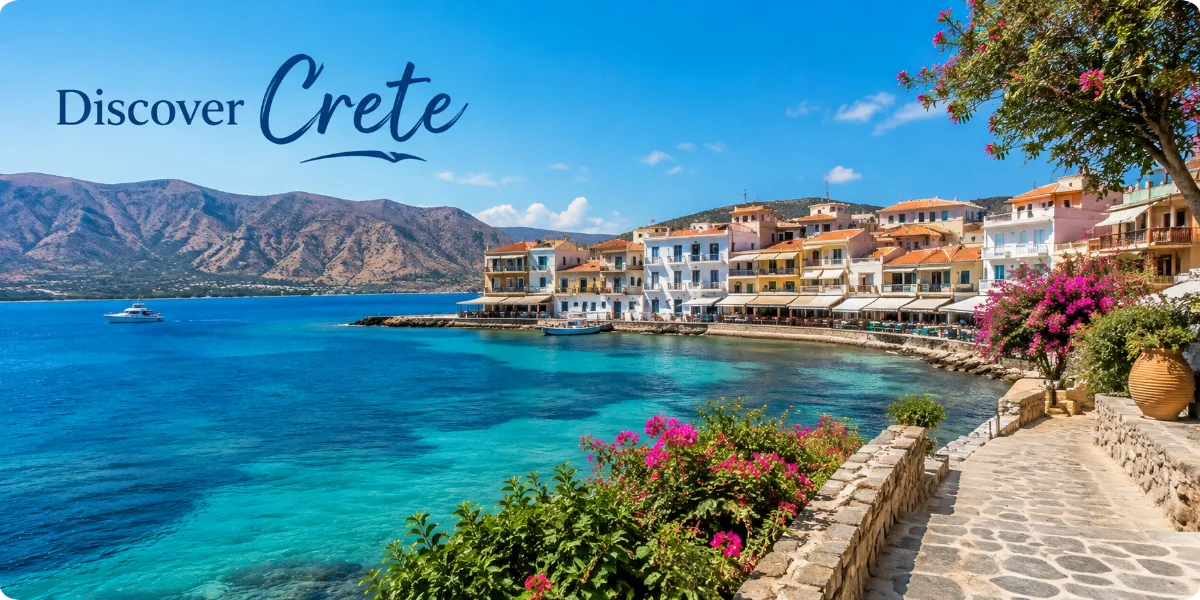
Crete is large enough to deserve more than a quick stop. You can combine archaeological sites, beaches, mountain landscapes, traditional villages, and some of Greece’s most distinctive regional food in one trip. Cretan cuisine is often singled out separately from mainland Greek cooking for its olive oil, wild greens, and long-lived population, a connection researchers have studied as part of the broader “Mediterranean diet” story.
Heraklion, Chania, Rethymno, and Agios Nikolaos each offer a different experience, from Heraklion’s archaeological weight to Chania’s Venetian charm. The island is also home to the Minoan Palatial Centres Knossos, Phaistos, Malia, Zakros, Zominthos, and Kydonia, which UNESCO added to the World Heritage List on 12 July 2025. Knossos alone drew nearly 1 million visitors in 2025, making it Greece’s second most-visited archaeological site after the Acropolis. If you have a week or more, Crete can easily become the main destination of a Greece trip rather than a side trip.
- Best for: Food lovers, history buffs, beachgoers, and travelers wanting a longer, varied itinerary
- Time needed: Minimum 3–4 days, ideally a week or more
- Practical tip: Base yourself in Chania or Rethymno rather than Heraklion for easier access to both beaches and mountain villages, and visit Knossos first thing in the morning before large tour groups arrive
| Tour Option | Group Size | Duration | Approx. Price* | Best For |
|---|---|---|---|---|
| Self-Guided (rental car) | N/A | Flexible | Varies by site + rental | Independent travelers wanting to explore multiple towns and beaches |
| Knossos Guided Tour | 10–20 people | 1.5–2 hrs | €25–40 per person | First-timers wanting archaeological and mythological context |
| Multi-Day Crete Highlights Tour | 8–15 people | 4–7 days | €600–1,200 per person | Travelers wanting sites, beaches, and villages covered in one trip |
| Private Full-Island Tour | 1–8 people | Custom | €250–400 per day | Families or groups wanting a tailored, flexible pace |
| Cretan Food & Wine Tour | 6–12 people | 4–5 hrs | €70–100 per person | Food lovers wanting a deep dive into regional cuisine |
Prices are approximate 2026 market averages for licensed tour operators in Crete and should be verified against current listings before publishing.
11. Explore Chania’s Old Town
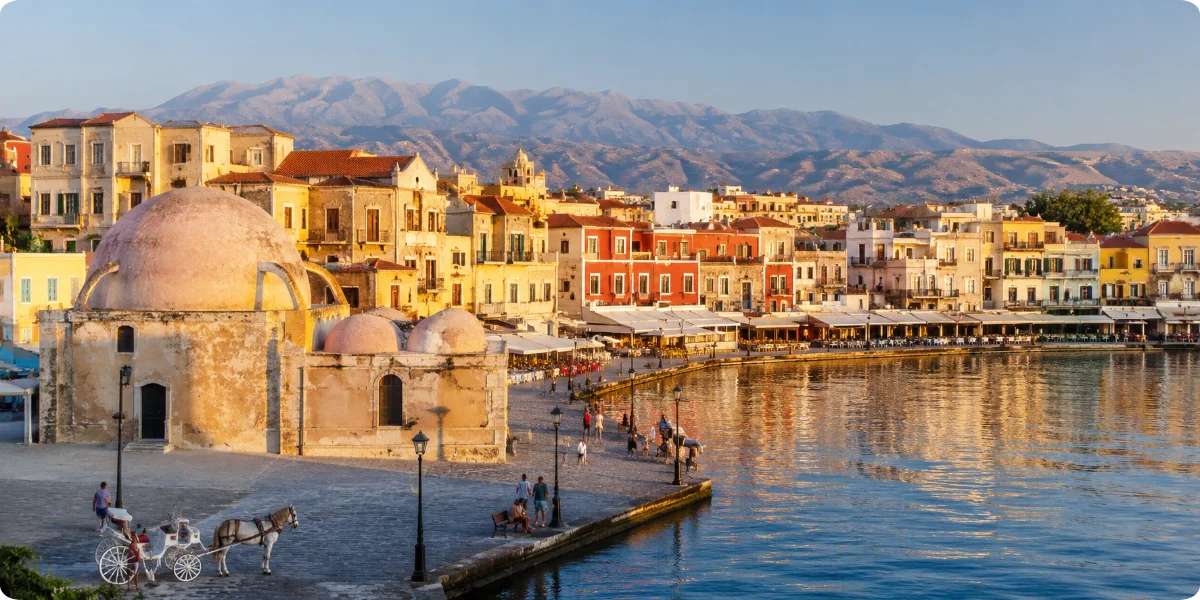
Chania is one of Crete’s most atmospheric places to explore. Its harbor was built by Venetian rulers in the 14th century, and the lighthouse at its entrance was rebuilt under Egyptian administration in the 19th century, remains one of the most photographed landmarks in Crete. Walk around the Venetian harbor, explore the narrow streets of the old town, visit historic buildings such as the former mosque and Venetian arsenals, and sit at a waterfront restaurant as the evening light hits the water.
The old town is particularly enjoyable in the evening when temperatures drop from the summer heat and the harbor lights reflect off the water. Pair a few days in Chania with nearby beaches like Balos or Elafonissi, or use it as the starting point for a longer Crete road trip toward the White Mountains.
- Best for: Photographers, couples, food lovers, and travelers wanting a relaxed base for exploring western Crete
- Time needed: One to two days, more if combined with nearby beaches
- Practical tip: Walk the harbor promenade after 7 pm when the day-trip crowds thin out and the lighthouse and Venetian buildings are lit for photos book a waterfront table early if you want a view during sunset
| Tour Option | Group Size | Duration | Approx. Price* | Best For |
|---|---|---|---|---|
| Self-Guided Walk | N/A | Flexible | Free | Independent travelers exploring the old town at their own pace |
| Old Town & Harbor Walking Tour | 10–15 people | 2 hrs | €25–35 per person | First-timers wanting Venetian and Ottoman-era history |
| Chania to Balos/Elafonissi Day Trip | 15–30 people | 8–10 hrs | €40–60 per person | Beach lovers wanting to combine the old town with famous beaches |
| Private Photography Walk | 1–4 people | 1.5–2 hrs | €100–180 total | Photographers wanting early morning or golden-hour access |
| White Mountains & Chania Multi-Day Tour | 6–12 people | 2–4 days | €300–550 per person | Travelers wanting to pair Chania with a western Crete road trip |
Prices are approximate 2026 market averages for licensed tour operators in Chania and should be verified against current listings before publishing.
12. Relax on a Greek Beach
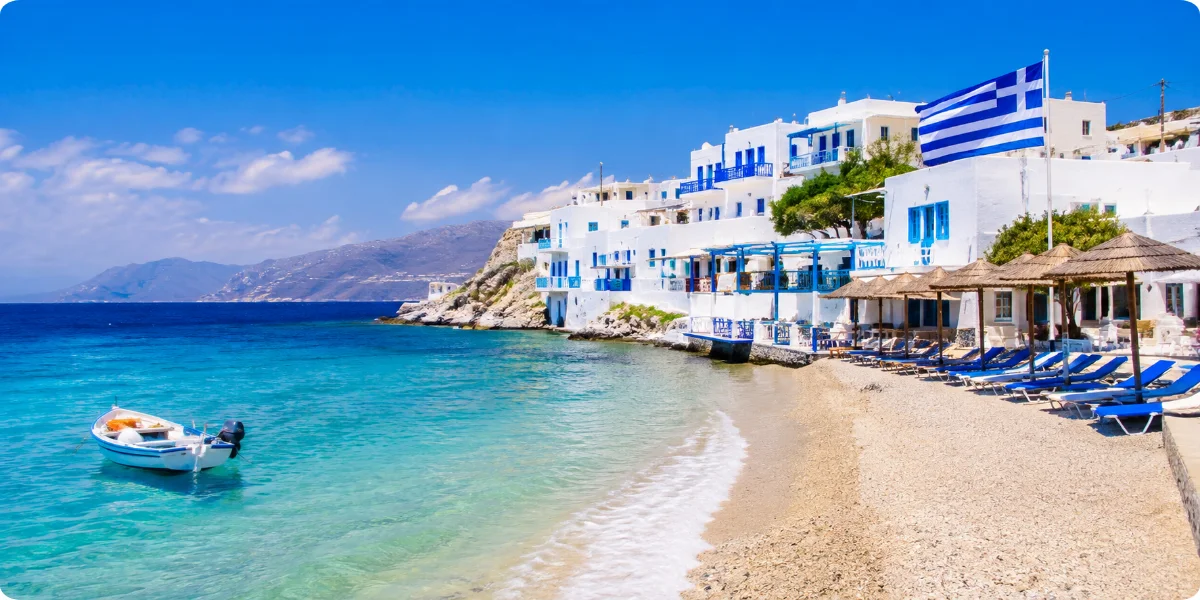
Greece has an unusually long coastline for its size one of the longest in Europe relative to land area, thanks to its thousands of islands, which means beaches for almost every type of traveler. Some are backed by dramatic cliffs, others by pine trees or small fishing villages. Some are easy to reach by car, while others require a boat or a hike to access.
Instead of choosing a beach only because it appears in a popular list, consider what you actually want:
- Families: Easy access and calmer, shallow water
- Couples: Scenic coves and sunset-facing beach bars
- Adventure: Remote beaches reached only by boat or trail
- Relaxation: Less-developed coastal areas away from resort clusters
- Photography: Unusual rock formations, clear water, and dramatic light
- Best for: Every type of traveler, from families to photographers, depending on which beach type you choose
- Time needed: Varies widely, from a half-day beach stop to a full day for boat-access coves
- Practical tip: Match the beach to the traveler type above before booking anything; a beach that ranks high on generic “best beaches in Greece” lists may not suit calmer swimmers, sunset chasers, or families with young kids
| Tour Option | Group Size | Duration | Approx. Price* | Best For |
|---|---|---|---|---|
| Self-Guided (rental car) | N/A | Flexible | Rental cost only | Independent travelers wanting to pick their own beach |
| Boat Trip to Remote Beaches | 15–30 people | 5–7 hrs | €40–70 per person | Adventure seekers wanting access to boat-only coves |
| Private Beach-Hopping Tour | 2–8 people | Full day | €250–450 total | Couples or families wanting a tailored, multi-beach itinerary |
| Photography Beach Tour (Sunrise/Sunset) | 1–6 people | 2–3 hrs | €90–160 per person | Photographers wanting rock formations and dramatic light |
Prices are approximate 2026 market averages for licensed tour operators in Greece and should be verified against current listings before publishing.
13. Go Greek Island Hopping
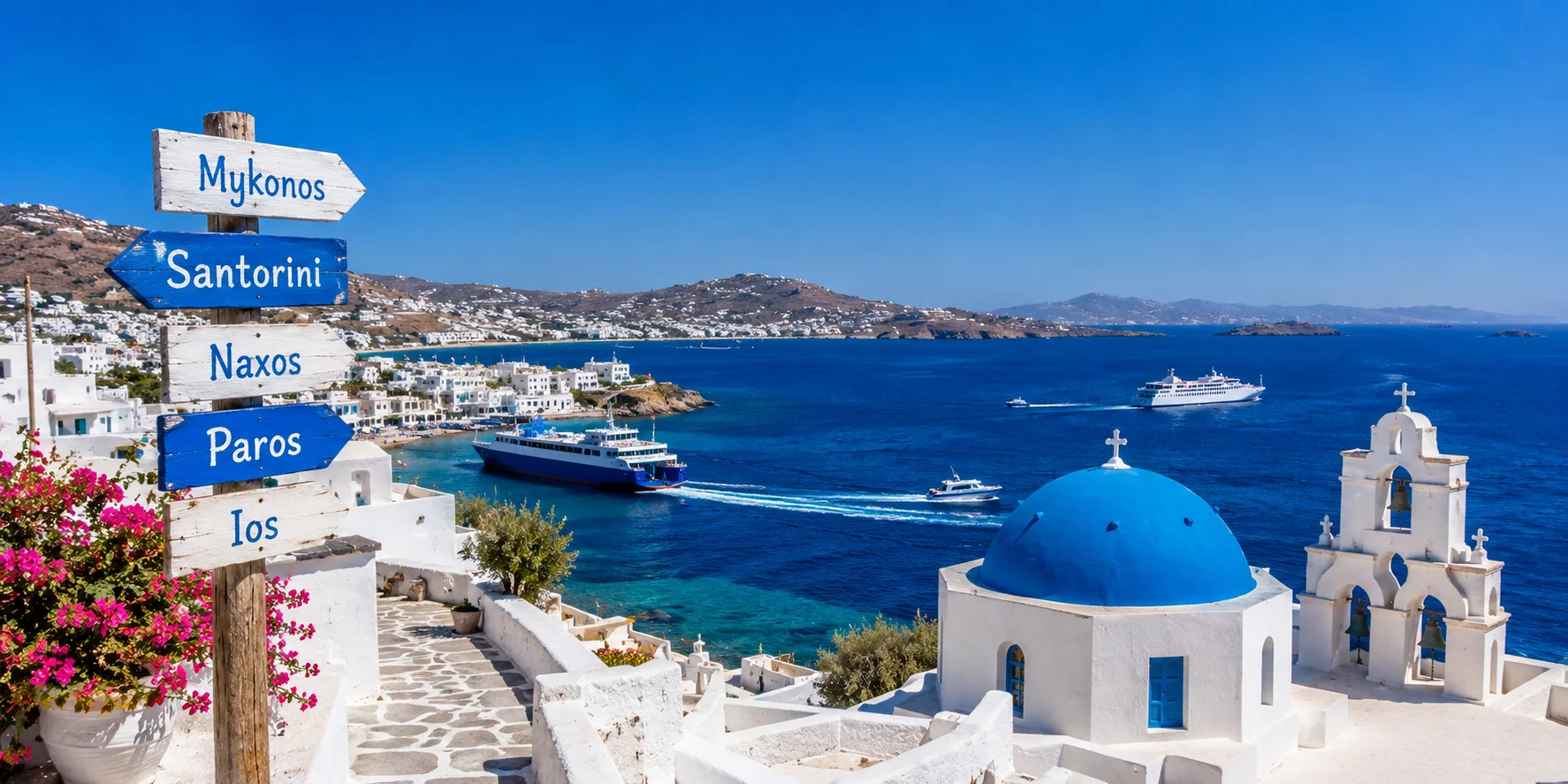
Island hopping lets you experience several sides of Greece during one trip. A first-time itinerary might combine Athens with two islands rather than trying to visit four or five fewer stops mean less time packing, checking out, and waiting on ferries, and more time actually experiencing each place.
The Cyclades offer plenty of choices beyond Santorini and Mykonos. Visit Greece, the official tourism site, also highlights islands such as Naxos, Paros, Milos, Tinos, Amorgos, Serifos, and Sifnos as part of a broader, less-crowded island network. Ferry connections between these islands are frequent in summer but drop sharply in the off-season, so it’s worth checking schedules before locking in a route.
Choose islands that match your interests rather than simply following the most popular route a food-and-village-focused trip through Naxos and Paros, for example, looks very different from a nightlife-focused trip through Mykonos and Ios.
- Best for: First-time visitors planning a multi-island trip, and travelers wanting a less-crowded alternative to Santorini and Mykonos
- Time needed: 7–10 days for Athens plus two islands
- Practical tip: Book ferry tickets in advance for July–August travel; routes fill up and off-season schedules drop sharply, so check connections before finalizing your island order
| Tour Option | Group Size | Duration | Approx. Price* | Best For |
|---|---|---|---|---|
| Self-Guided (ferry + hotel booking) | N/A | Flexible | Varies by route | Independent travelers planning their own island order |
| Small-Group Cyclades Island-Hopping Tour | 10–16 people | 7–10 days | €900–1,500 per person | First-timers wanting a structured multi-island itinerary |
| Private Island-Hopping Itinerary | 2–8 people | Custom | €300–500 per day | Couples or families wanting a tailored route and pace |
| Sailing Yacht Island-Hopping Trip | 6–12 people | 5–7 days | €700–1,200 per person | Travelers wanting to move between islands by private boat |
Prices are approximate 2026 market averages for licensed tour operators in Greece and should be verified against current listings before publishing.
14. Take a Boat or Catamaran Cruise
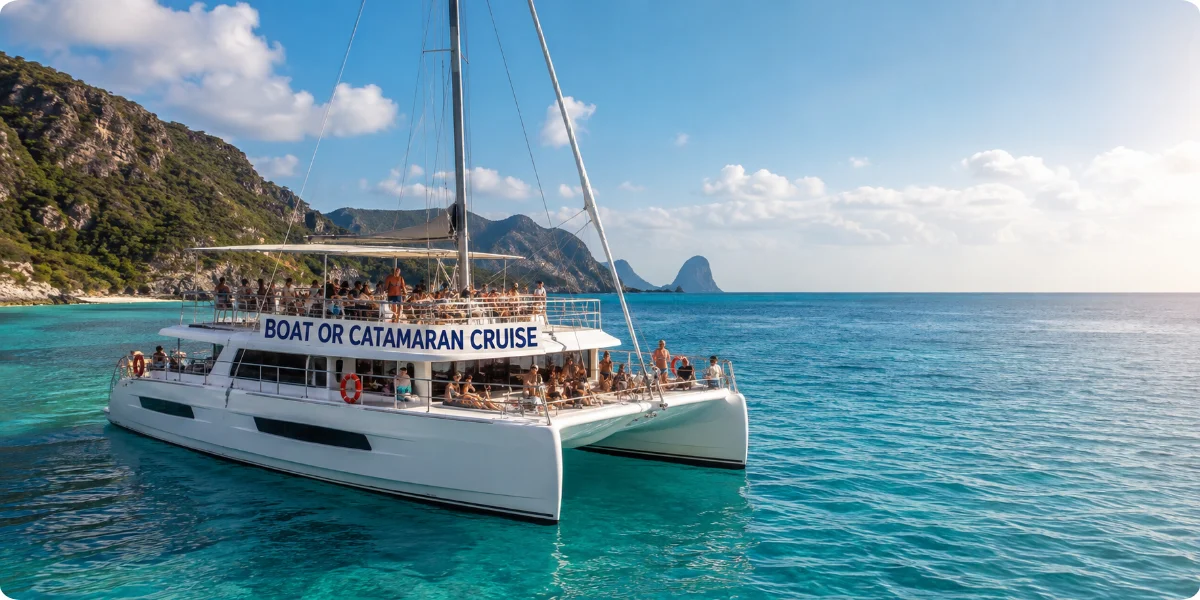
Seeing Greece from the water changes the experience entirely. A cruise can take you to small coves, swimming spots, beaches, and coastal viewpoints that are difficult or impossible to reach by road. In Santorini, a caldera cruise is especially popular and typically includes stops at the volcanic islets of Nea Kameni and the hot springs of Palea Kameni, while other islands offer full-day sailing and snorkeling trips along their coastlines.
A sunset cruise can also be a good alternative if you want to enjoy coastal scenery without spending the evening competing for space in a crowded clifftop town, particularly relevant in Santorini, where land-based sunset viewpoints get genuinely packed during peak season.
- Best for: Couples, photographers, and travelers wanting to see the coastline from a different angle
- Time needed: Half a day for a standard cruise, a few hours for a sunset-only trip
- Practical tip: Book a caldera or sunset cruise a few days ahead during July–August popular departure times sell out, and boats with fewer than 20 passengers tend to offer a calmer, less rushed experience
| Tour Option | Group Size | Duration | Approx. Price* | Best For |
|---|---|---|---|---|
| Semi-Private Caldera Cruise | 15–25 people | 5–6 hrs | €90–140 per person | Travelers wanting Nea Kameni, hot springs, and swimming stops |
| Private Caldera Cruise | 2–10 people | 4–6 hrs | €400–800 total | Couples or families wanting a flexible, private itinerary |
| Sunset Sailing Cruise | 20–40 people | 2.5–3 hrs | €70–100 per person | Travelers wanting caldera views from the water without the clifftop crowds |
| Full-Day Snorkeling & Sailing Trip | 10–20 people | 6–7 hrs | €80–120 per person | Snorkelers and swimmers wanting several coastal stops |
Prices are approximate 2026 market averages for licensed tour operators in Santorini and should be verified against current listings before publishing.
15. Eat Traditional Greek Food
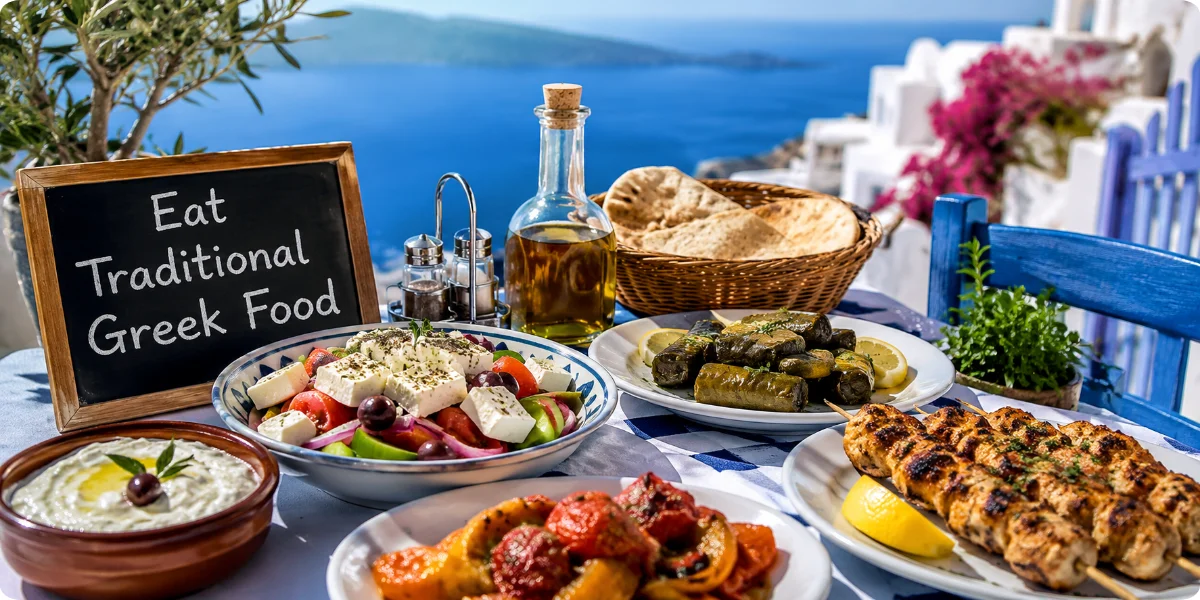
Food should be a planned part of your Greece itinerary, not something squeezed in between attractions. Try classics such as moussaka (a layered eggplant and minced meat bake), souvlaki, tzatziki, Greek salad (traditionally made without lettuce, using tomato, cucumber, onion, olives, and feta), fresh seafood, grilled vegetables, local cheeses, and baklava.
But do not stop at dishes you already know. Greece’s regional cooking varies across Crete, the Peloponnese, and the northern mainland each has distinct culinary traditions shaped by local olive oil, herbs, and produce. Ask restaurant staff what is local and in season regional food is one of the easiest ways to make two Greek destinations feel completely different, even when the base ingredients (olive oil, tomatoes, feta) are similar across the country.
Best for: Food lovers, culturally curious travelers, and anyone wanting a deeper sense of place beyond sightseeing
Time needed: Ongoing throughout the trip, or a dedicated half-day for a food tour
Practical tip: Skip menus with photos and multiple languages aimed at tourists, ask staff what is made fresh that day, it is usually the best (and most local) thing on the menu
| Tour Option | Group Size | Duration | Approx. Price* | Best For |
|---|---|---|---|---|
| Self-Guided (restaurant hopping) | N/A | Flexible | Cost of meals only | Independent travelers wanting to explore on their own |
| Food Walking Tour (Athens or island town) | 8–15 people | 3–4 hrs | €60–90 per person | First-timers wanting guided tastings and local context |
| Private Cooking Class | 2–8 people | 3–4 hrs | €70–120 per person | Travelers wanting hands-on experience with regional dishes |
| Regional Food & Wine Day Trip | 6–12 people | 6–8 hrs | €90–140 per person | Food lovers wanting to explore rural producers and tavernas |
*Prices are approximate 2026 market averages for licensed tour operators in Greece and should be verified against current listings before publishing.
16. Take a Greek Food Tour
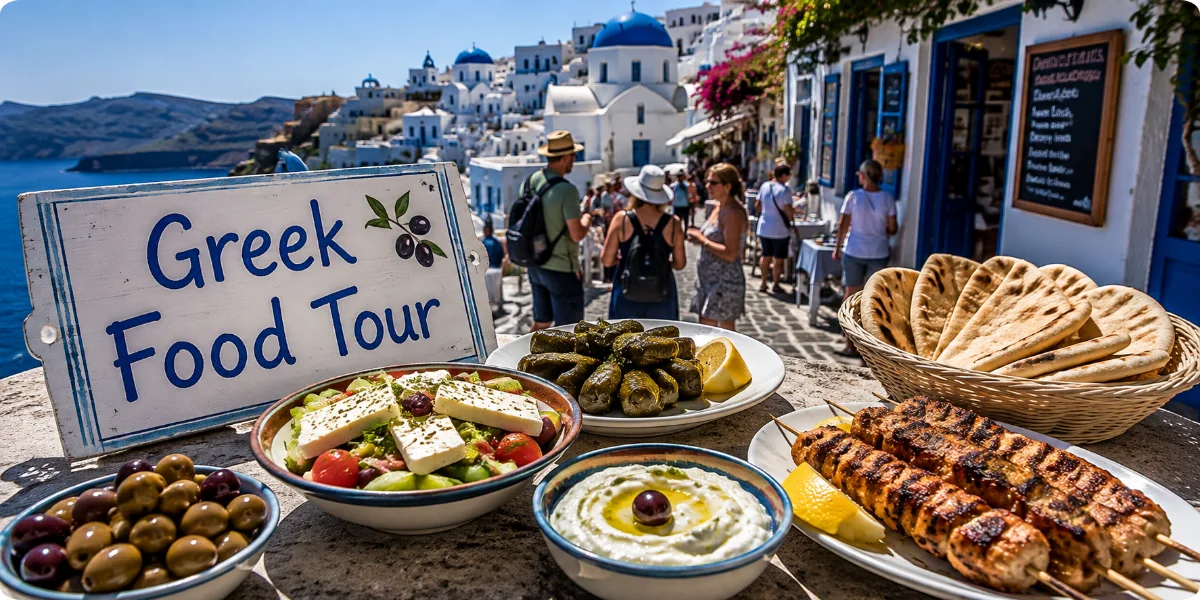
A food tour is particularly useful during your first few days because it helps you understand what to order for the rest of the trip. Athens, Thessaloniki, and Crete all offer strong, distinct food traditions worth exploring with a guide who can point out ingredients and techniques a menu alone won’t explain.
Athens’s Central Market (Varvakios) and the Psiri neighborhood are common food-tour stops, while Thessaloniki is widely regarded within Greece as the country’s unofficial food capital, shaped by its Ottoman-era and Sephardic Jewish culinary influences. A food tour is also a good option when you want a cultural activity that does not involve another archaeological site, useful for pacing a longer trip so it doesn’t become all ruins and no rest.
- Best for: First-time visitors wanting an early orientation to Greek food, and travelers wanting a break from historical sites
- Time needed: 3–4 hours
- Practical tip: Book a food tour in your first two or three days rather than your last, the ingredient and technique knowledge you pick up will shape better ordering decisions for the rest of the trip
| Tour Option | Group Size | Duration | Approx. Price* | Best For |
|---|---|---|---|---|
| Self-Guided (market visit) | N/A | Flexible | Cost of purchases only | Independent travelers wanting to explore markets on their own |
| Athens Central Market & Psiri Food Tour | 8–15 people | 3–4 hrs | €60–90 per person | First-timers wanting guided tastings with local context |
| Thessaloniki Food Heritage Tour | 8–15 people | 3–4 hrs | €55–85 per person | Travelers wanting Ottoman and Sephardic culinary history |
| Private Food Tour (Athens, Thessaloniki, or Crete) | 2–6 people | 3–4 hrs | €150–280 total | Travelers wanting a flexible, personalized tasting route |
Prices are approximate 2026 market averages for licensed tour operators in Greece and should be verified against current listings before publishing.
17. Explore Naxos
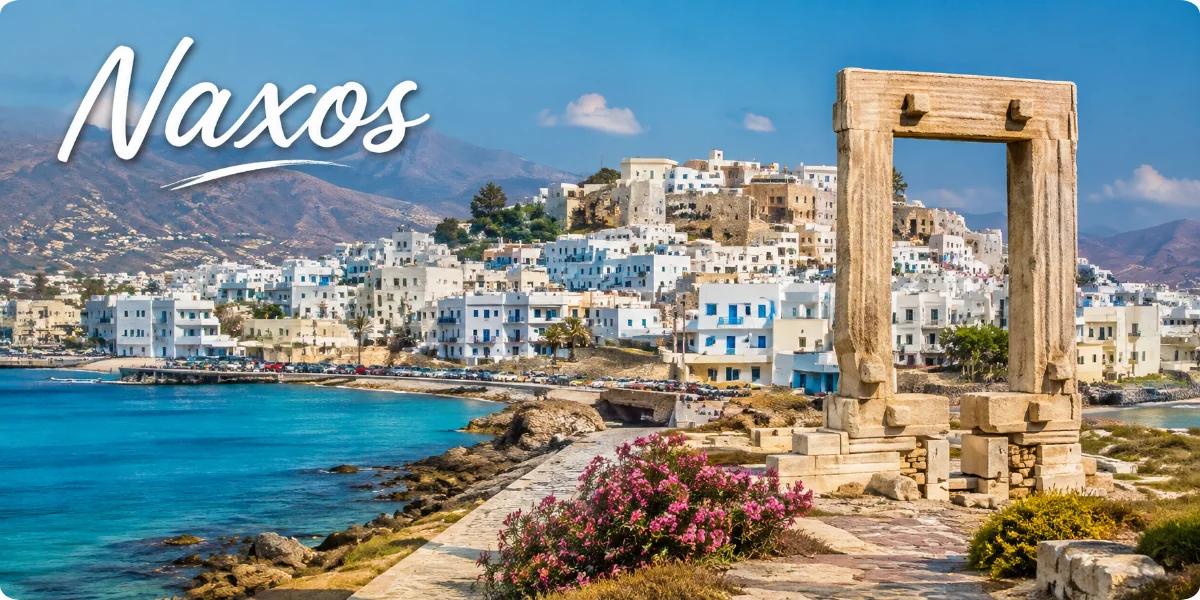
Naxos offers a useful middle ground between famous Greek island experiences and a more relaxed, less commercialized atmosphere. Visit the Portara, a massive freestanding marble doorway that is the last remnant of an unfinished 6th-century BC temple to Apollo and one of the most photographed sunset spots in the Cyclades. Walk around Chora, spend time on the island’s beaches. Naxos has some of the longest sandy stretches in the Cyclades, and explore traditional inland villages like Halki and Apiranthos.
If you enjoy active travel, the island’s mountainous interior, including Mount Zeus (Zas), the highest peak in the Cyclades, offers genuine hiking opportunities. Visit Greece describes Naxos as the heart of the Cyclades and includes it among the country’s major island destinations, alongside its long-standing reputation as a major producer of Greek potatoes and cheese.
- Best for: Travelers wanting a relaxed island alternative, hikers, beach lovers, and families
- Time needed: 3–5 days
- Practical tip: Watch sunset at the Portara from the causeway rather than a paid viewpoint, it’s free, uncrowded compared to Santorini’s clifftop spots, and offers one of the best photo opportunities in the Cyclades
| Tour Option | Group Size | Duration | Approx. Price* | Best For |
|---|---|---|---|---|
| Self-Guided (rental car/scooter) | N/A | Flexible | Rental cost only | Independent travelers wanting to explore beaches and villages freely |
| Chora & Portara Walking Tour | 8–15 people | 2 hrs | €25–35 per person | First-timers wanting history behind the Portara and old town |
| Mount Zeus Hiking Tour | 6–12 people | 4–5 hrs | €45–70 per person | Hikers wanting a guided ascent of the Cyclades’ highest peak |
| Village & Countryside Day Tour (Halki, Apiranthos) | 8–15 people | 6–7 hrs | €55–85 per person | Travelers wanting inland village culture and local produce |
*Prices are approximate 2026 market averages for licensed tour operators in Naxos and should be verified against current listings before publishing.
18. Discover Paros and Its Villages
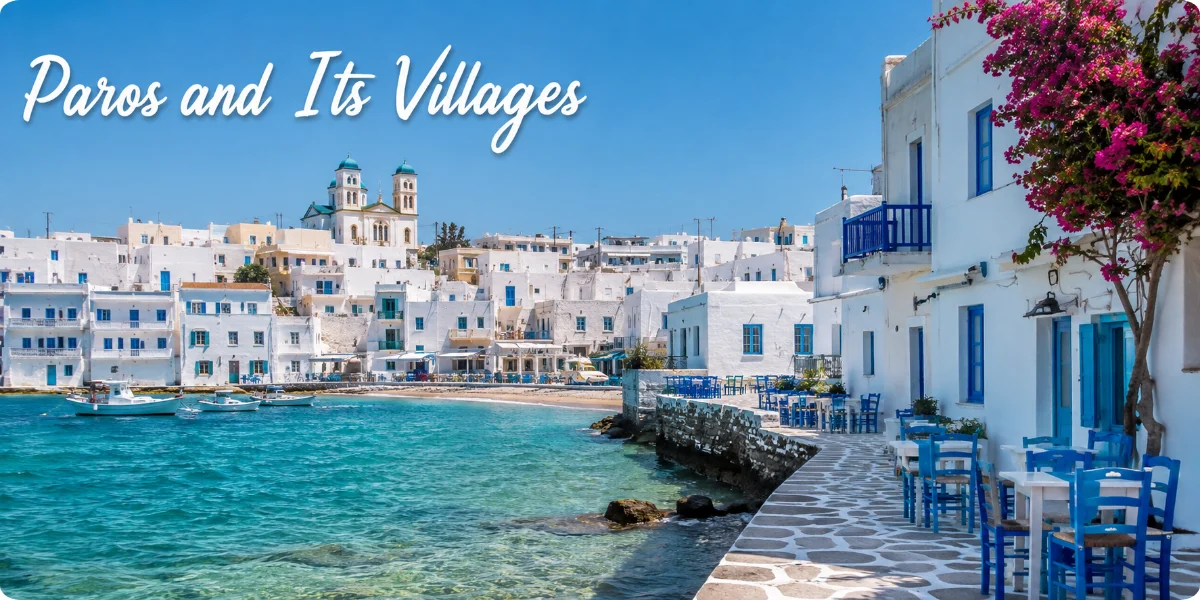
Paros combines beaches, villages, restaurants, and classic island scenery without the crowd density of Santorini or Mykonos. Spend time in Parikia, the island’s main port town with its Byzantine-era castle ruins, and Naoussa, a former fishing village turned upscale harbor town known for its restaurants and boutiques. Then head inland to see a different side of the island.
Lefkes, the island’s former capital before piracy pushed the population to the coast, is particularly worth considering if you enjoy traditional marble-paved villages and quieter mountain walks. Paros can work well for travelers who want a genuine Greek island experience good food, good beaches, and walkable villages without building the entire trip around nightlife.
- Best for: Travelers wanting a genuine island experience without heavy crowds, food lovers, and couples
- Time needed: 3–4 days
- Practical tip: Base yourself in Naoussa for restaurants and boutiques, but set aside a half-day for Lefkes, most visitors skip the inland villages entirely and miss the marble-paved streets and quieter walking trails
| Tour Option | Group Size | Duration | Approx. Price* | Best For |
|---|---|---|---|---|
| Self-Guided (rental car/scooter) | N/A | Flexible | Rental cost only | Independent travelers wanting to explore coast and inland freely |
| Parikia & Naoussa Walking Tour | 8–15 people | 2–3 hrs | €25–40 per person | First-timers wanting history and harbor town context |
| Lefkes & Inland Villages Half-Day Tour | 8–15 people | 4 hrs | €40–60 per person | Travelers wanting marble-paved villages and quiet mountain walks |
| Private Island Highlights Tour | 1–8 people | Full day | €220–380 total | Families or couples wanting a flexible, tailored pace |
*Prices are approximate 2026 market averages for licensed tour operators in Paros and should be verified against current listings before publishing.
19. Explore Corfu’s Old Town
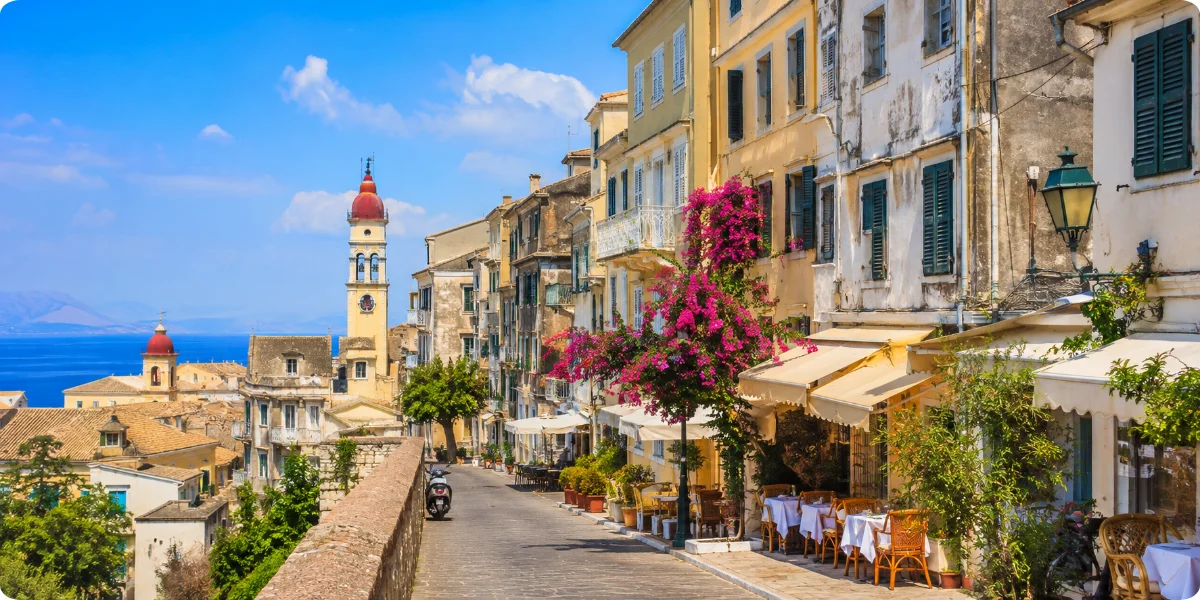
Corfu stands out among Greek islands for its architectural and cultural character, shaped by roughly four centuries of Venetian rule followed by periods of French and British administration a layered history uncommon among Greek islands, most of which fell under Ottoman rule instead. Its Old Town reflects this Mediterranean and Venetian influence and was recognized by UNESCO as a World Heritage Site in 2007.
Walk through the historic center’s narrow Venetian-style lanes (kantounia), explore the waterfront esplanade, one of the largest in the Balkans, sample local food that shows genuine Italian influence, unusual for Greece, and use the island as a base for beach trips along its greener, more forested coastline compared to the drier Cyclades.
- Best for: History and architecture lovers, food-curious travelers, and those wanting a greener, less typically “Cycladic” island
- Time needed: 2–4 days
- Practical tip: Explore the kantounia and esplanade early morning or evening to avoid cruise-ship crowds, Corfu is a regular Mediterranean cruise stop, and midday can get busy in the Old Town
| Tour Option | Group Size | Duration | Approx. Price* | Best For |
|---|---|---|---|---|
| Self-Guided Walk | N/A | Flexible | Free | Independent travelers exploring the Old Town at their own pace |
| Old Town Walking Tour | 10–15 people | 2 hrs | €25–35 per person | First-timers wanting Venetian, French, and British-era history |
| Corfu Highlights & Beach Day Tour | 8–15 people | Full day | €70–110 per person | Travelers wanting the Old Town combined with coastal scenery |
| Private Guided Tour | 1–8 people | 3–4 hrs | €180–320 total | Families or history buffs wanting a flexible, unhurried pace |
Prices are approximate 2026 market averages for licensed tour operators in Corfu and should be verified against current listings before publishing.
20. Visit Rhodes and Lindos
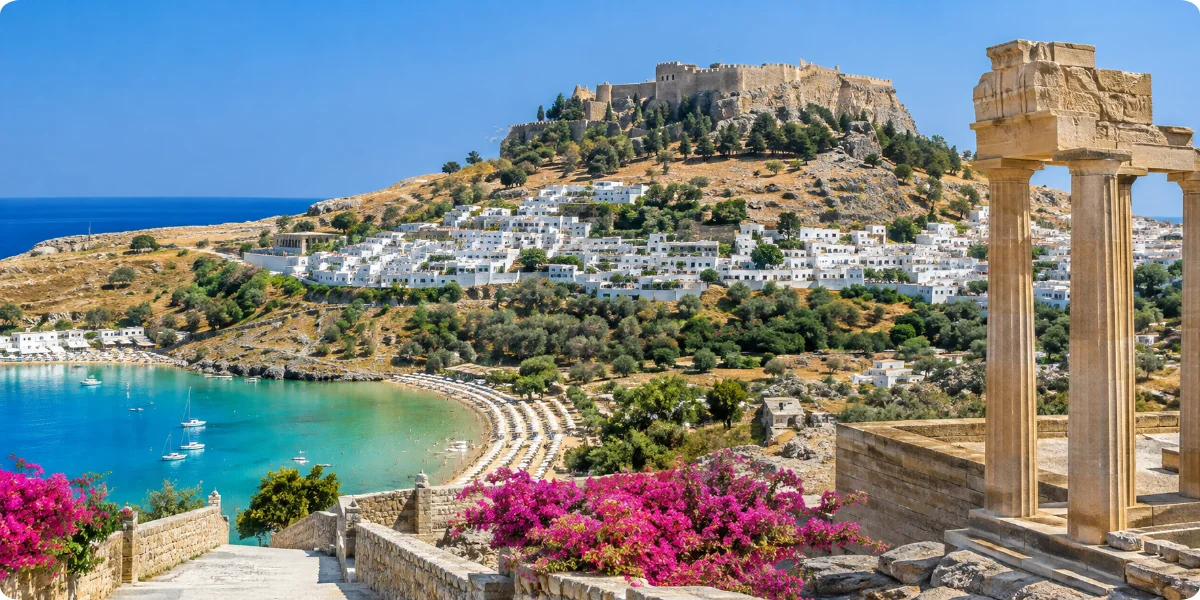
Rhodes offers a combination that is hard to beat: medieval history, beaches, and ancient sites in one island. Start with the Medieval City of Rhodes, a UNESCO World Heritage property and one of the best-preserved medieval walled towns in Europe, built largely by the Knights Hospitaller who controlled the island from 1309 to 1522.
Then head toward Lindos for its hilltop Acropolis, a smaller-scale but genuinely impressive ancient site overlooking the sea and the coastal scenery below it. Rhodes was also home to the Colossus of Rhodes, one of the Seven Wonders of the Ancient World, though no confirmed physical trace of the statue remains today. The island works particularly well for travelers who want sightseeing during the day and beach time afterward, since its beaches and historic sites sit relatively close together compared to larger islands like Crete.
- Best for: History lovers, beachgoers, and travelers wanting to combine medieval and ancient sites with coastal time
- Time needed: 3–5 days
- Practical tip: Visit the Medieval City early morning before cruise-ship crowds arrive, then save Lindos for late afternoon, the hilltop Acropolis is far more manageable once the midday heat and tour groups thin out
| Tour Option | Group Size | Duration | Approx. Price* | Best For |
|---|---|---|---|---|
| Self-Guided (rental car/scooter) | N/A | Flexible | Rental cost only | Independent travelers wanting to explore freely |
| Medieval City Walking Tour | 10–15 people | 2 hrs | €25–40 per person | First-timers wanting Knights Hospitaller history and context |
| Lindos Acropolis & Village Half-Day Tour | 8–15 people | 4–5 hrs | €40–65 per person | Travelers wanting the ancient site combined with beach time |
| Full-Day Rhodes Highlights Tour | 15–30 people | 8–9 hrs | €70–100 per person | Visitors wanting the Medieval City and Lindos covered in one day |
| Private Guided Tour | 1–8 people | Full day | €250–400 total | Families or history buffs wanting a flexible, unhurried pace |
*Prices are approximate 2026 market averages for licensed tour operators in Rhodes and should be verified against current listings before publishing.
21. Explore Zakynthos
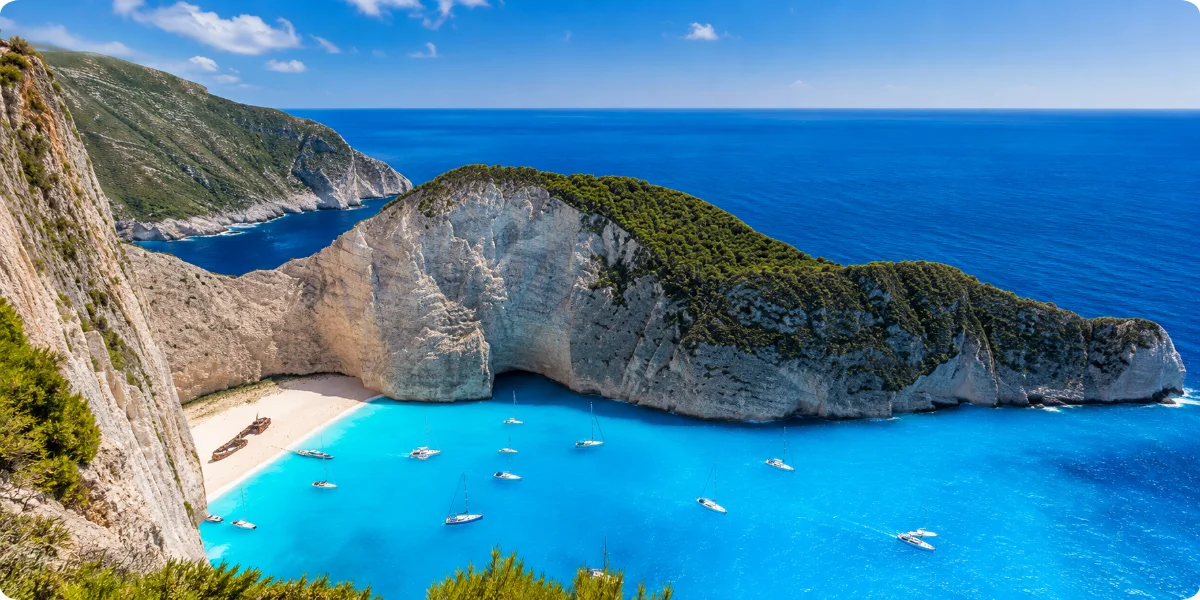
Zakynthos (also called Zante) is known for striking coastal scenery and unusually clear, deep-blue water, largely due to its limestone geology. Its most famous feature, Navagio (Shipwreck) Beach, is accessible only by boat and framed by sheer white cliffs. Access rules have tightened in recent years following rockfall safety concerns, so it’s worth checking current landing conditions before planning a visit.
A boat trip is one of the best ways to explore the coastline generally, not just the shipwreck cove. Depending on conditions and local access rules, you can combine sightseeing with swimming or snorkeling around the island’s sea caves. Do not plan your entire Zakynthos trip around one famous viewpoint the island also has quieter beaches, inland villages, and coastal roads worth exploring, along with a resident loggerhead sea turtle population protected in the Bay of Laganas.
- Best for: Photographers, boat-trip lovers, and travelers wanting dramatic coastal scenery beyond one famous beach
- Time needed: 2–4 days
- Practical tip: Check current landing access for Navagio Beach before booking, rockfall restrictions have changed availability in recent years, and consider a boat tour that includes the Blue Caves for a fuller coastal experience
| Tour Option | Group Size | Duration | Approx. Price* | Best For |
|---|---|---|---|---|
| Self-Guided (rental car/scooter) | N/A | Flexible | Rental cost only | Independent travelers wanting to explore beaches and villages freely |
| Navagio & Blue Caves Boat Tour | 20–40 people | 5–6 hrs | €35–55 per person | Travelers wanting the shipwreck cove and sea caves in one trip |
| Private Boat Charter | 2–10 people | 4–6 hrs | €350–650 total | Couples or families wanting a flexible, private coastal itinerary |
| Turtle-Watching Boat Trip (Laganas Bay) | 15–30 people | 2–3 hrs | €25–40 per person | Wildlife lovers wanting to see loggerhead sea turtles responsibly |
Prices are approximate 2026 market averages for licensed tour operators in Zakynthos and should be verified against current listings before publishing.
22. Take a Day Trip to Hydra
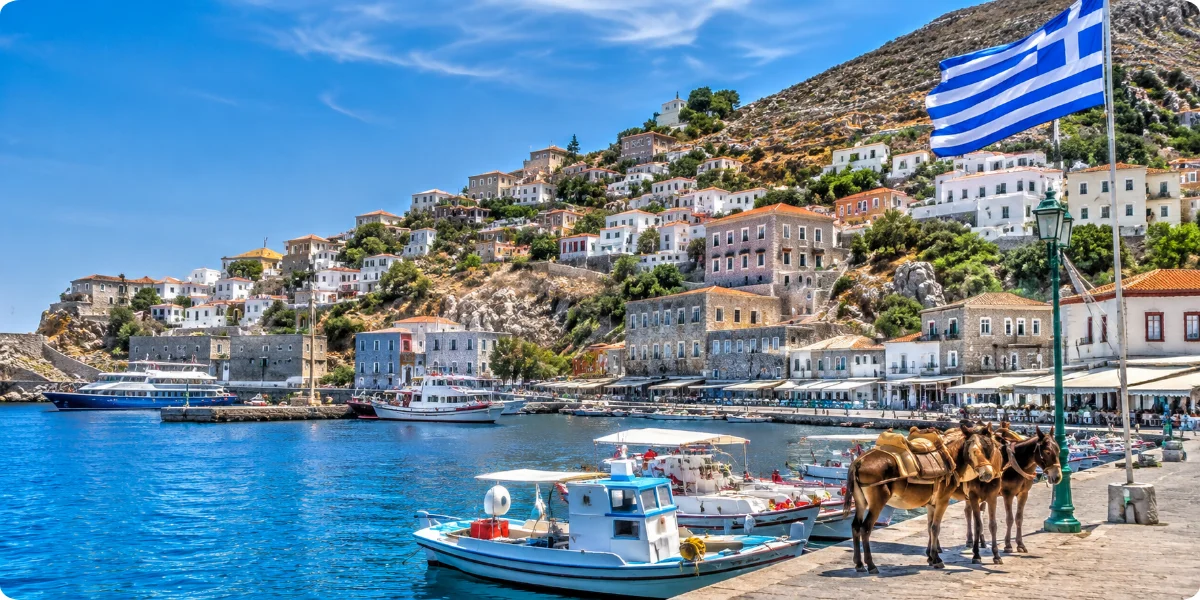
Hydra is a strong choice if you want island scenery without traveling deep into the Aegean. Its proximity to Athens roughly a 90-minute to two-hour ferry ride from Piraeus makes it practical for a shorter trip or even a long day out. Notably, Hydra has banned motor vehicles since the early 20th century the island still relies on donkeys, mules, and water taxis for transport, giving it a genuinely different pace from any other major Greek destination.
Spend the day walking through the stone-built harbor area, enjoying the 18th- and 19th-century captains’ mansions that line the hills, swimming, or simply slowing down. It can also work well as a contrast to busy Athens a compact, walkable, car-free island reachable without committing to a multi-day island-hopping itinerary.
- Best for: Day-trippers from Athens, couples, and travelers wanting a slower, car-free island atmosphere
- Time needed: A full day, or one overnight for a more relaxed pace
- Practical tip: Take an early ferry from Piraeus to arrive by mid-morning, day-trip crowds peak around midday, and the harbor feels noticeably quieter in the late afternoon before the last return ferries
| Tour Option | Group Size | Duration | Approx. Price* | Best For |
|---|---|---|---|---|
| Self-Guided Day Trip (ferry only) | N/A | Flexible | €25–40 (ferry round-trip) | Independent travelers wanting to explore at their own pace |
| Hydra Day Trip from Athens (Guided) | 15–30 people | 8–10 hrs (incl. ferry) | €60–90 per person | First-timers wanting a structured day trip with commentary |
| Private Day Trip (Athens to Hydra) | 2–8 people | 8–10 hrs | €300–500 total | Families or couples wanting a flexible, private itinerary |
| Multi-Island Day Trip (Hydra, Poros, Aegina) | 20–40 people | 10–12 hrs | €70–100 per person | Travelers wanting to see several Saronic islands in one day |
*Prices are approximate 2026 market averages for licensed tour operators in Athens/Hydra and should be verified against current listings before publishing.
23. Explore Nafplio
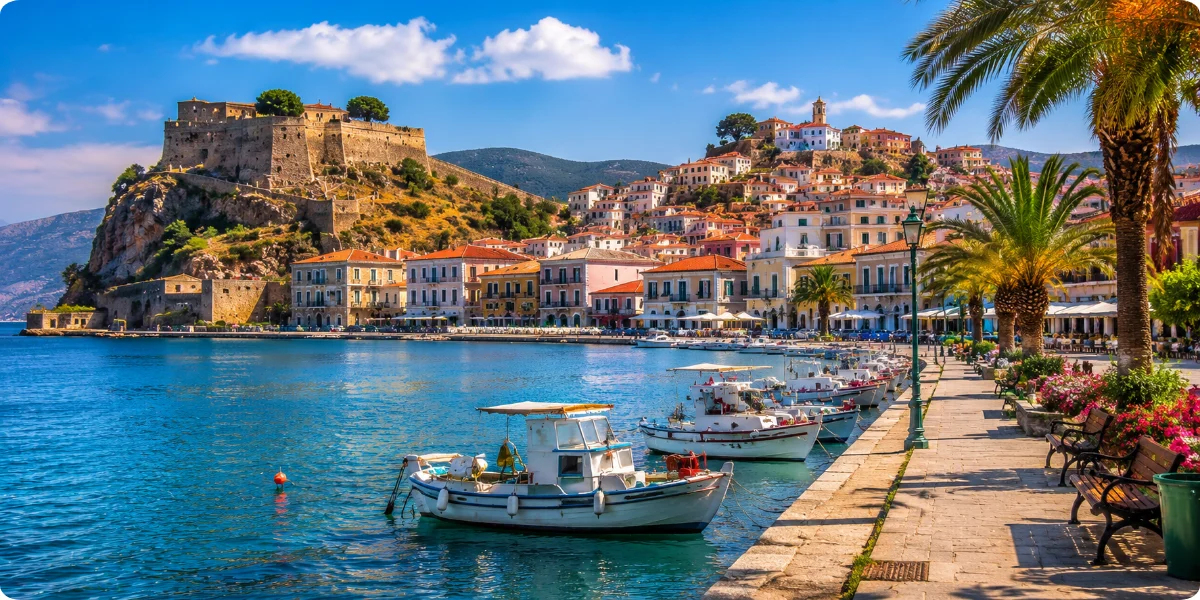
Nafplio is one of the best choices for travelers who want a charming mainland town rather than an island. It briefly served as the first capital of modern independent Greece, from 1829 to 1834, which explains the unusually dense concentration of neoclassical architecture for a town its size.
Walk through the old town, explore the waterfront promenade, and climb toward Palamidi Fortress, an 18th-century Venetian fortification reached by 857 steps for sweeping views over the Argolic Gulf. Nafplio is also a useful base for exploring nearby archaeological sites, including Mycenae and Epidaurus, making it a natural stop on a Peloponnese road trip rather than a standalone destination.
- Best for: History lovers, couples, and travelers on a Peloponnese road trip wanting a mainland base
- Time needed: 1–2 days, more if combined with Mycenae and Epidaurus
- Practical tip: Climb Palamidi Fortress early morning before the heat sets in, all 857 steps are exposed with little shade, and the views over the Argolic Gulf are clearest before midday haze builds up
| Tour Option | Group Size | Duration | Approx. Price* | Best For |
|---|---|---|---|---|
| Self-Guided (rental car) | N/A | Flexible | €8 (Palamidi entry) + rental | Independent travelers wanting to explore town and fortress freely |
| Old Town & Fortress Walking Tour | 10–15 people | 2–3 hrs | €25–40 per person | First-timers wanting history behind the neoclassical architecture |
| Nafplio, Mycenae & Epidaurus Day Tour | 15–30 people | 8–9 hrs | €70–100 per person | Travelers wanting all three sites covered in one guided day |
| Private Guided Tour | 1–8 people | 4–6 hrs | €200–350 total | Families or history buffs wanting a flexible, unhurried pace |
Prices are approximate 2026 market averages for licensed tour operators in Nafplio and should be verified against current listings before publishing.
24. Discover Monemvasia
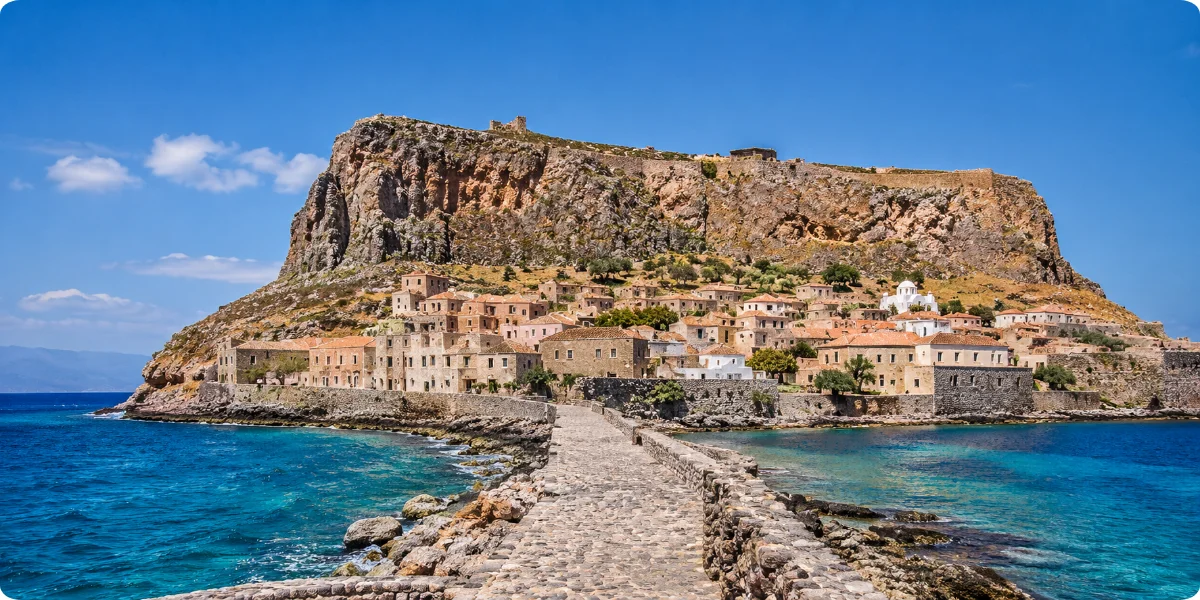
Monemvasia feels completely different from the modern Greek island image, largely because it isn’t an island at all in the conventional sense it’s a fortified medieval settlement built on a rocky outcrop connected to the mainland by a single narrow causeway, which gives the town its name (roughly “single entrance” in Greek).
The settlement dates back to the 6th century AD and was once a major Byzantine trading port. Its stone lanes, restored old buildings, and sea views give it an atmosphere closer to a living open-air museum than a typical resort town. It is an excellent choice for travelers who want history and atmosphere without the scale of Athens or the crowds of Greece’s most famous islands.
- Best for: History lovers, couples, and travelers wanting an atmospheric, low-crowd alternative to the major islands
- Time needed: 1–2 days
- Practical tip: Stay overnight inside the walled town itself rather than visiting as a day trip, most day-trippers leave by late afternoon, and the stone lanes feel completely different once the crowds clear and the evening light hits the buildings
| Tour Option | Group Size | Duration | Approx. Price* | Best For |
|---|---|---|---|---|
| Self-Guided (rental car) | N/A | Flexible | Free (town entry) + rental | Independent travelers wanting to explore at their own pace |
| Old Town Walking Tour | 8–15 people | 1.5–2 hrs | €20–35 per person | First-timers wanting Byzantine history and context |
| Private Guided Tour | 1–6 people | 2–3 hrs | €150–250 total | Couples or small groups wanting a flexible, unhurried pace |
| Peloponnese Multi-Stop Day Tour (incl. Monemvasia) | 10–20 people | 9–10 hrs | €80–120 per person | Travelers combining Monemvasia with other Peloponnese sites |
Prices are approximate 2026 market averages for licensed tour operators in Monemvasia and should be verified against current listings before publishing.
25. Explore the Mani Peninsula
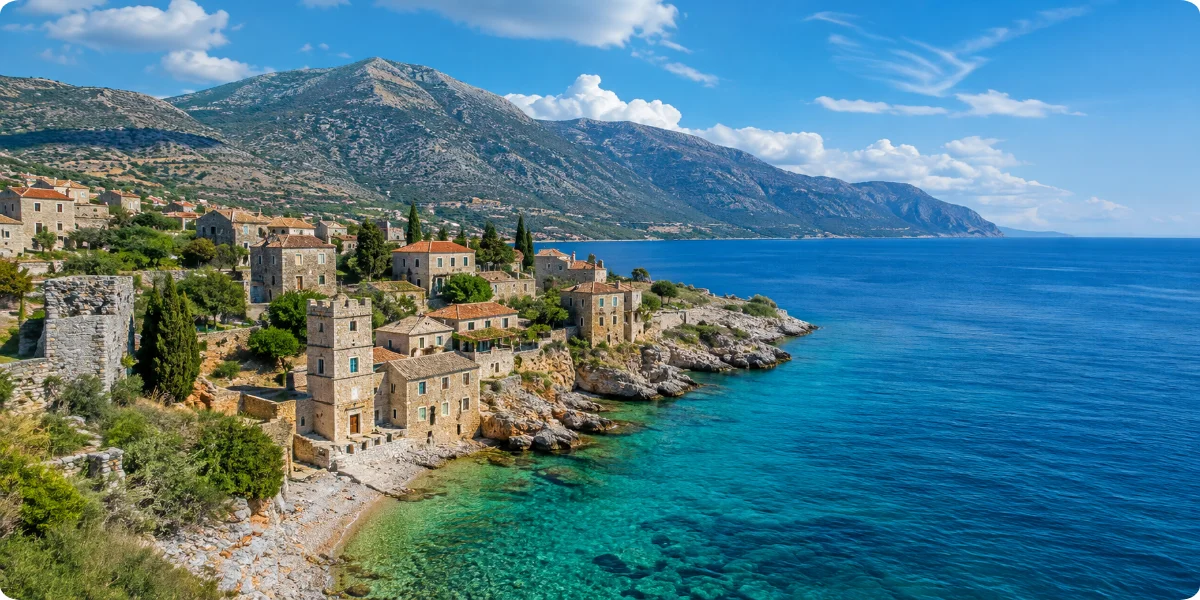
The Mani Peninsula, in the southern Peloponnese, is for travelers who want to see a rougher and less polished side of Greece. Expect stone tower-houses, a distinctive local architectural style built for clan defense during centuries of internal feuding, rugged coastlines, winding mountain roads, and a strong sense of regional identity that sets Mani apart culturally from much of the rest of Greece.
It is best explored slowly, by car, with no fixed itinerary. Give yourself time to stop at small villages and coastal churches rather than treating the Mani as a place to rush through on the way to another destination its appeal is almost entirely in the unhurried driving and stopping, not in any single headline attraction.
- Best for: Slow travelers, road-trippers, and those wanting an off-the-beaten-path, culturally distinct region
- Time needed: 2–3 days
- Practical tip: Skip a fixed itinerary entirely and allow at least a full tank of patience for winding mountain roads, the best stops here are usually the unplanned ones, a quiet tower-house village or a coastal church you happen to notice while driving
| Tour Option | Group Size | Duration | Approx. Price* | Best For |
|---|---|---|---|---|
| Self-Guided (rental car) | N/A | Flexible | Rental cost only | Independent travelers wanting a slow, unstructured road trip |
| Mani Villages & Tower-Houses Day Tour | 8–15 people | 7–8 hrs | €60–90 per person | Travelers wanting guided context on the region’s history and architecture |
| Private Mani Road Trip (Multi-Day) | 1–6 people | 2–3 days | €250–400 per day | Couples or small groups wanting a tailored, flexible pace |
Prices are approximate 2026 market averages for licensed tour operators in the Mani Peninsula and should be verified against current listings before publishing.
26. Visit Ancient Corinth and the Corinth Canal
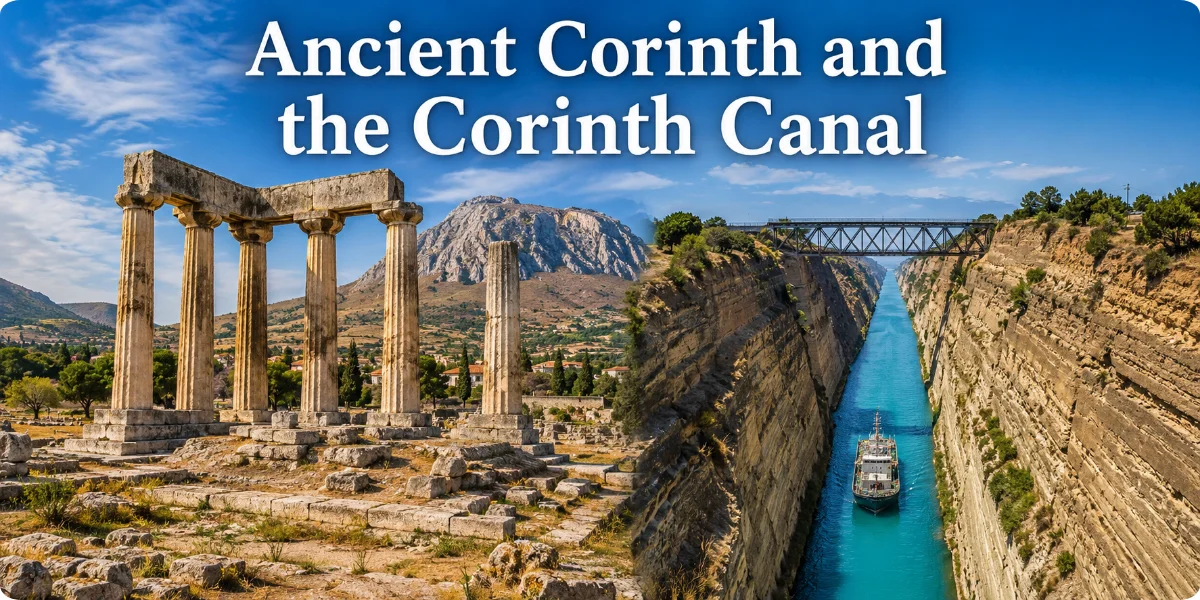
Ancient Corinth is an easy addition to a mainland Greece itinerary. Explore the archaeological remains including the well-preserved Temple of Apollo, one of the oldest standing Doric temples in Greece, and learn about the city’s role as a major commercial hub in the ancient world, famously visited by the Apostle Paul, whose letters to the Corinthians are named after it.
Then visit the nearby Corinth Canal, an impressive piece of 19th-century engineering completed in 1893 that cuts through roughly 6.4 kilometers of rock to connect the Gulf of Corinth with the Saronic Gulf, separating the Peloponnese from mainland Greece. Its narrow, near-vertical limestone walls about 90 meters high in places, make it a striking stop even for a brief look from the road bridge above.
The combination works well as a day trip from Athens or as part of a longer Peloponnese road trip.
- Best for: History lovers, photographers, and travelers on a day trip from Athens or a Peloponnese road trip
- Time needed: Half a day
- Practical tip: Stop at the Corinth Canal bridge first for photos before the midday tour-bus crowds arrive, then head to the archaeological site. The combined visit fits comfortably into a half-day if timed early
| Tour Option | Group Size | Duration | Approx. Price* | Best For |
|---|---|---|---|---|
| Self-Guided (rental car) | N/A | Flexible | €8 (site entry) + rental | Independent travelers wanting to explore at their own pace |
| Ancient Corinth & Canal Half-Day Tour | 10–20 people | 4–5 hrs | €45–65 per person | First-timers wanting guided historical context |
| Corinth Canal Bungee/Zipline Add-On | 1–4 people | 30–60 min | €70–100 per jump | Adventure seekers wanting an adrenaline stop at the canal |
| Private Guided Tour | 1–8 people | 4–5 hrs | €200–320 total | Families or history buffs wanting a flexible, unhurried pace |
Prices are approximate 2026 market averages for licensed tour operators in Ancient Corinth and should be verified against current listings before publishing.
27. Explore Thessaloniki
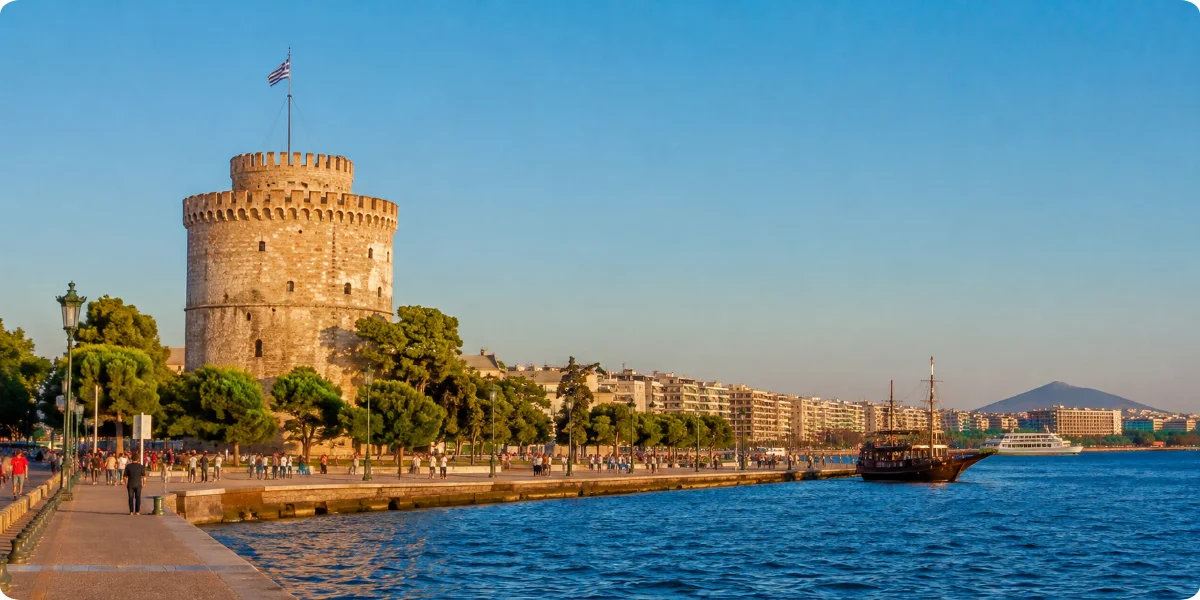
Thessaloniki deserves more attention from travelers who want food, history, and city life rather than another island stop. Founded in 315 BC, it later became one of the most important cities of the Byzantine Empire and still carries that layered history today.
Walk along the waterfront, visit the White Tower, the city’s best-known landmark and former Ottoman-era fortification, and explore historic neighborhoods, then try local dishes shaped by the city’s Ottoman-era and Sephardic Jewish heritage. The city also has important early Christian and Byzantine monuments recognized by UNESCO, including its city walls, rotunda, and several historic churches. It is a particularly good alternative for travelers who have already visited Athens and want a different, less tourist-saturated Greek city experience.
- Best for: Food lovers, history buffs, and travelers wanting a less tourist-saturated Greek city
- Time needed: 2–3 days
- Practical tip: Combine the waterfront and White Tower in the morning, then take a food-focused walk through the historic center in the afternoon. Thessaloniki rewards slower, food-led exploration more than a checklist of monuments
| Tour Option | Group Size | Duration | Approx. Price* | Best For |
|---|---|---|---|---|
| Self-Guided Walk | N/A | Flexible | Free (White Tower entry separate) | Independent travelers exploring the waterfront and old town freely |
| City Highlights Walking Tour | 10–15 people | 2.5–3 hrs | €25–40 per person | First-timers wanting Byzantine and Ottoman-era history |
| Thessaloniki Food & Heritage Tour | 8–15 people | 3–4 hrs | €55–85 per person | Food lovers wanting Ottoman and Sephardic culinary context |
| Private Guided City Tour | 1–8 people | 4 hrs | €180–300 total | Families or history buffs wanting a flexible, unhurried pace |
Prices are approximate 2026 market averages for licensed tour operators in Thessaloniki and should be verified against current listings before publishing.
28. Go Hiking in Greece
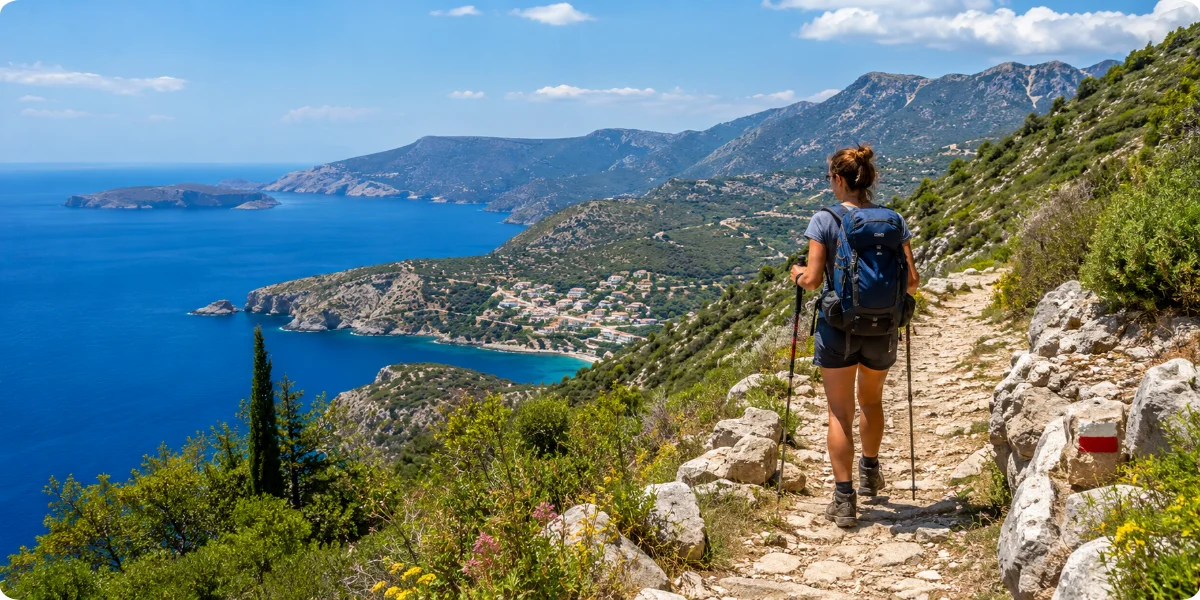
Greece is not only a beach destination. You can hike through gorges, mountains, coastal paths, and island landscapes across the country. Crete’s Samaria Gorge is one of the most famous options, roughly 16 kilometers long and descending about 1,200 meters from the Omalos Plateau to the Libyan Sea, it’s one of the longest gorges in Europe and draws over 100,000 hikers per season, making it Crete’s most visited natural attraction. The narrowest point, the Iron Gates, closes to just 3–4 meters between sheer limestone walls.
Mainland Greece and other islands provide many additional routes, from coastal paths to the E4 European Long Distance Path, which passes through several of the country’s major trail systems. For a more unusual adventure, Visit Greece also promotes routes such as climbing Mount Olympus Greece’s highest peak at 2,917 meters and, as of 2026, a UNESCO World Heritage Site, and exploring the country’s other mountain landscapes.
Always check trail conditions and seasonal opening dates before setting out; Samaria Gorge, for example, is typically only open from May to October.
- Best for: Hikers, nature lovers, and travelers wanting an active break from historical sightseeing
- Time needed: Full day for Samaria Gorge, half a day to multiple days for other trails depending on route
- Practical tip: Start the Samaria Gorge hike as early as possible (buses to Omalos Plateau leave before sunrise in peak season), the walk down takes 5–7 hours, and arriving late means finishing in the afternoon heat at Agia Roumeli
| Tour Option | Group Size | Duration | Approx. Price* | Best For |
|---|---|---|---|---|
| Self-Guided (bus + entry) | N/A | Full day | €5 (gorge entry) + bus fare | Independent hikers comfortable navigating on their own |
| Samaria Gorge Guided Day Trip | 15–30 people | 12–13 hrs (incl. transport) | €45–65 per person | First-timers wanting transport, guiding, and boat return included |
| Mount Olympus Guided Trekking Tour | 6–12 people | 2 days (with refuge stay) | €150–250 per person | Experienced hikers wanting a guided summit attempt |
| Private Hiking Tour (Custom Trail) | 1–6 people | Half-day to multi-day | €120–250 per day | Travelers wanting a tailored route and pace |
Prices are approximate 2026 market averages for licensed tour operators in Greece and should be verified against current listings before publishing.
29. Go Snorkeling or Scuba Diving
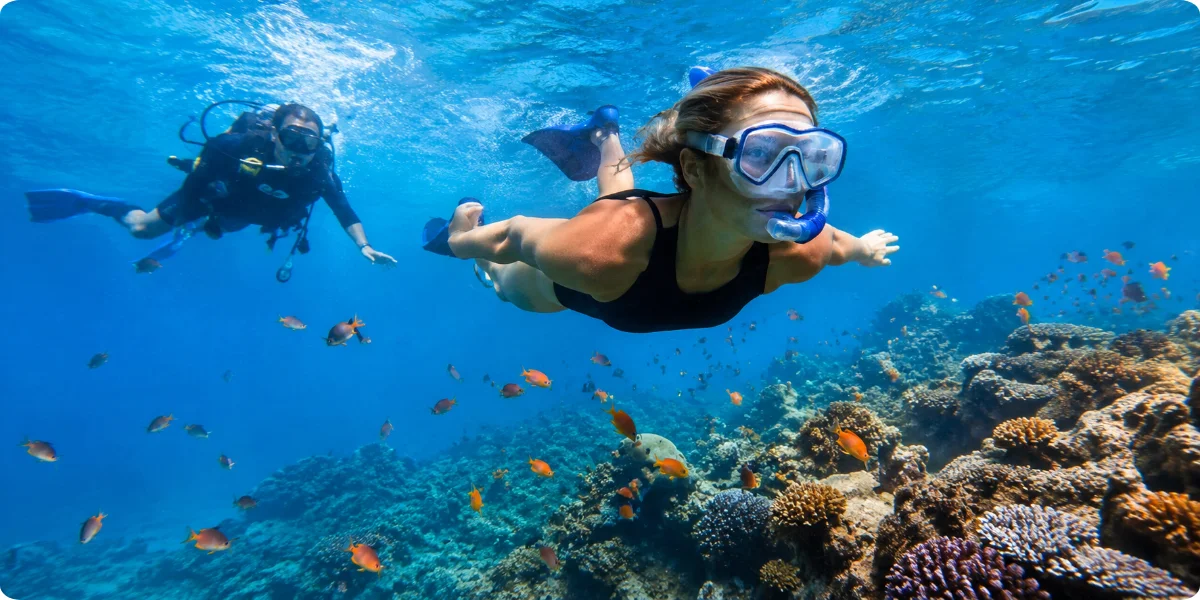
The Greek coastline gives water lovers plenty of choices, thanks to its exceptionally clear water and long, indented coastline. Snorkeling is easy to add to almost any beach day, while scuba diving requires more planning and appropriate certification or instruction. Greece only lifted long-standing restrictions on diving near archaeological sites in past years, which has since opened up a growing number of shipwreck and underwater-ruin dive sites.
Look for clear water, rocky coastal areas, and organized operators with proper safety certifications. If you are new to diving, choose an introductory experience rather than planning an advanced dive independently. Several islands, including Zakynthos and the Cyclades, now offer beginner-friendly PADI-certified centers.
- Best for: Snorkelers, beginner divers, and water-sport enthusiasts wanting to explore beneath the surface
- Time needed: A few hours for snorkeling, half a day for an introductory dive
- Practical tip: Book an introductory dive through a PADI-certified center rather than renting gear independently, especially near archaeological or wreck sites, some locations still require permits or a licensed guide to visit legally
| Tour Option | Group Size | Duration | Approx. Price* | Best For |
|---|---|---|---|---|
| Self-Guided Snorkeling | N/A | Flexible | Gear rental only | Independent travelers wanting casual snorkeling at any beach |
| Introductory Scuba Dive (PADI) | 1–6 people | 3–4 hrs | €80–120 per person | Beginners wanting a supervised first dive experience |
| Certified Dive Trip (Wreck/Reef) | 4–10 people | 4–5 hrs | €60–90 per person | Certified divers wanting shipwreck or underwater-ruin sites |
| Private Snorkeling & Swimming Boat Trip | 2–8 people | 3–5 hrs | €250–450 total | Couples or families wanting a flexible, private itinerary |
Prices are approximate 2026 market averages for licensed dive operators in Greece and should be verified against current listings before publishing.
30. Visit a Greek Winery
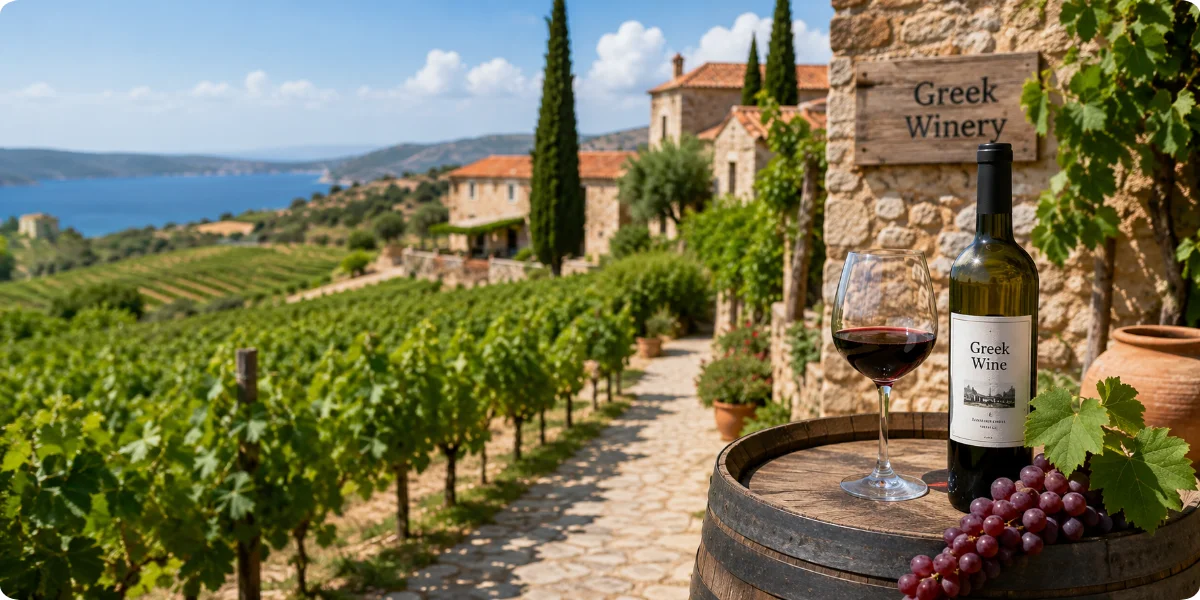
Wine adds another layer to a Greece trip, and the country’s wine history is genuinely old. Greece has one of the longest continuous winemaking traditions in the world, with evidence of viticulture stretching back thousands of years. Santorini is particularly known for its vineyards, where vines are trained into low, basket-shaped coils close to the ground to survive the island’s strong winds and volcanic soil, producing the distinctive Assyrtiko white wine.
Wine culture extends far beyond the island, though. Crete, the Peloponnese, and Macedonia in the north all have their own distinct wine traditions and grape varieties rarely seen outside Greece. A winery visit can combine tasting with countryside scenery and local food, making it a useful, slower-paced activity to break up a trip otherwise built around sightseeing.
- Best for: Wine lovers, food-and-wine travelers, and those wanting a slower-paced day away from sightseeing
- Time needed: Half a day to a full day
- Practical tip: Book a Santorini winery visit in the late afternoon, the light over the caldera vineyards is best a couple of hours before sunset, and most tastings pair well with a light meal rather than a full dinner beforehand
| Tour Option | Group Size | Duration | Approx. Price* | Best For |
|---|---|---|---|---|
| Self-Guided Winery Visit | N/A | Flexible | Tasting fee only (varies) | Independent travelers wanting to pick their own winery |
| Santorini Wine Tasting Tour (Multiple Wineries) | 8–15 people | 4–5 hrs | €70–100 per person | First-timers wanting Assyrtiko and volcanic-soil wine context |
| Private Wine & Food Pairing Tour | 2–8 people | 3–4 hrs | €200–350 total | Couples or small groups wanting a flexible, tailored experience |
| Peloponnese or Crete Countryside Wine Tour | 6–12 people | 6–7 hrs | €90–140 per person | Travelers wanting wine paired with countryside scenery and local food |
Prices are approximate 2026 market averages for licensed wine tour operators in Greece and should be verified against current listings before publishing.
31. Explore Traditional Greek Villages
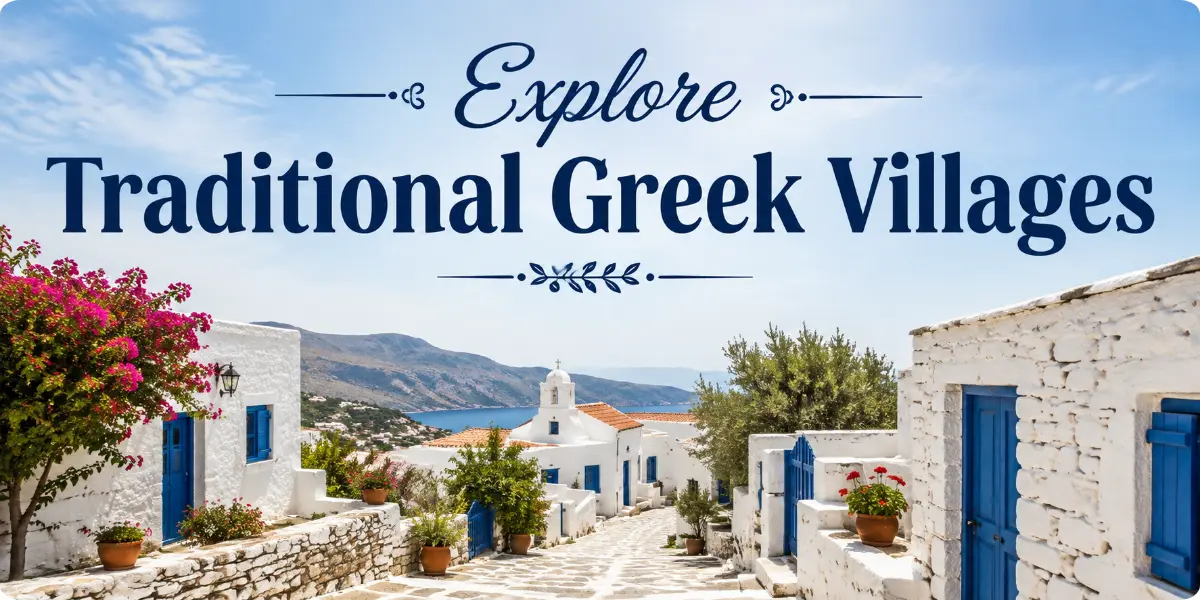
Some of your best memories may come from places that never appear on a “top 10 attractions” list. Visit a village square, walk the stone streets, stop at a family-run taverna, and watch everyday life unfold at its own pace a genuine contrast to the more staged experience of Greece’s most photographed destinations.
Visit Greece, the country’s official tourism organization, actively promotes slow travel and lesser-known destinations alongside the country’s famous attractions, with recommendations ranging from the stone villages of Zagori in the northern Pindus mountains to Metsovo and many smaller, less-visited Cycladic islands, as part of a broader national effort to spread tourism beyond the handful of destinations that currently absorb the bulk of visitor traffic.
- Best for: Slow travelers, culturally curious visitors, and anyone wanting a break from crowded, heavily photographed sites
- Time needed: Half a day to a full day, or worked into a longer trip as unplanned stops
- Practical tip: Skip the search for a specific “must-see” village and instead pick one at random along your driving route, the appeal of places like Zagori and Metsovo comes from unhurried wandering, not ticking off a particular landmark
| Tour Option | Group Size | Duration | Approx. Price* | Best For |
|---|---|---|---|---|
| Self-Guided (rental car) | N/A | Flexible | Rental cost only | Independent travelers wanting to explore villages at their own pace |
| Zagori & Vikos Gorge Day Tour | 8–15 people | 8–9 hrs | €65–95 per person | Travelers wanting stone villages and mountain scenery in one trip |
| Metsovo & Pindus Mountains Day Tour | 8–15 people | 7–8 hrs | €55–85 per person | Travelers wanting mountain village culture and local cheese/wine |
| Private Slow-Travel Village Tour | 1–6 people | Custom | €150–280 per day | Couples or small groups wanting a tailored, unhurried route |
*Prices are approximate 2026 market averages for licensed tour operators in Greece and should be verified against current listings before publishing.
32. Experience Greek Nightlife

Nightlife in Greece is not limited to Mykonos. Athens has rooftop bars with Acropolis views, live music venues, and late-night restaurants that don’t get going until well after 10 pm. Thessaloniki has a strong, distinct food and nightlife culture shaped by its large student population, while the islands offer everything from relaxed beach bars with sunset DJ sets to major clubs.
Choose your destination based on the type of evening you actually want rather than assuming every Greek island has the same atmosphere Mykonos and Ios lean heavily toward large-scale clubbing, while islands like Naxos or Paros tend toward a quieter, restaurant-and-bar evening scene.
- Best for: Travelers wanting a night out beyond Mykonos, from rooftop views to quieter bar-and-restaurant evenings
- Time needed: An evening, typically from dinner through late night
- Practical tip: In Athens, book a rooftop bar table before sunset if you want Acropolis views, the best spots fill up fast, and remember most restaurants and bars don’t feel lively until after 10 pm
| Tour Option | Group Size | Duration | Approx. Price* | Best For |
|---|---|---|---|---|
| Self-Guided (bar/venue hopping) | N/A | Flexible | Cost of drinks/entry only | Independent travelers wanting to choose their own venues |
| Athens Rooftop Bar & Nightlife Tour | 8–15 people | 3–4 hrs | €45–70 per person | First-timers wanting curated venues with Acropolis views |
| Thessaloniki Nightlife & Bar Crawl | 10–20 people | 3–4 hrs | €35–55 per person | Travelers wanting the city’s student-driven bar scene |
| Private VIP Club Experience (Mykonos/Ios) | 2–8 people | Evening | €300–800+ total | Groups wanting table service at major island clubs |
Prices are approximate 2026 market averages for licensed tour and nightlife operators in Greece and should be verified against current listings before publishing.
33. Visit Greece’s Archaeological Museums
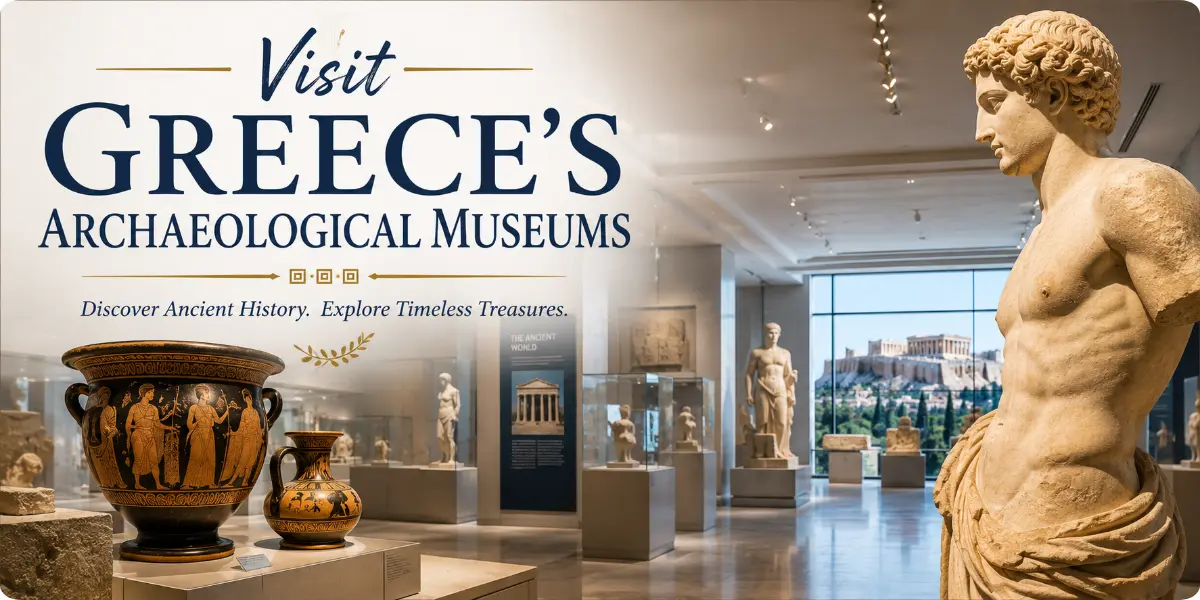
If you love ancient sites, museums can make those ruins significantly easier to understand. Good choices include the National Archaeological Museum in Athens (665,000+ visitors in 2025), the Delphi Archaeological Museum, the Olympia Archaeological Museum, and the Heraklion Archaeological Museum in Crete, which houses the majority of Minoan-era artifacts recovered from Knossos and other Cretan sites.
They allow you to see sculptures, artifacts, and everyday objects connected to the sites you have already visited, often explaining context burial customs, religious practices, daily life that a bare archaeological site alone cannot convey. A museum visit is also a smart activity for very hot afternoons when walking around outdoor ruins becomes uncomfortable, particularly across the Peloponnese and Crete in July and August.
- Best for: History lovers, museum enthusiasts, and travelers wanting context after visiting archaeological sites
- Time needed: 1.5–3 hours per museum
- Practical tip: Save museum visits for the hottest part of the afternoon (roughly 1 to 4 pm) rather than the morning, this frees up cooler hours for outdoor sites and turns a heat problem into productive downtime
| Tour Option | Group Size | Duration | Approx. Price* | Best For |
|---|---|---|---|---|
| Self-Guided (ticket only) | N/A | Flexible | €12 (National Archaeological Museum) | Independent visitors wanting to explore at their own pace |
| Guided Museum Tour | 10–20 people | 1.5–2 hrs | €30–45 per person | First-timers wanting expert context on key artifacts |
| Combo Site & Museum Guided Tour | 10–20 people | 4–5 hrs | €55–80 per person | Travelers wanting a site visit paired with its matching museum |
| Private Museum Tour | 1–8 people | 1.5–2 hrs | €150–250 total | Families or history buffs wanting a flexible, unhurried pace |
Prices are approximate 2026 market averages for licensed tour guides in Greece and should be verified against current listings before publishing.
34. Follow the Stories of Greek Mythology

Greek mythology becomes much more interesting when you connect its stories with real places rather than encountering them only in books. You can explore the relationship between Athens and Athena (the goddess for whom the city is named, following her mythical contest with Poseidon), Delphi and Apollo (home to his oracle), Olympia and Zeus (whose temple once housed a colossal gold-and-ivory statue counted among the Seven Wonders of the Ancient World), and Crete and the stories surrounding the Minotaur, tied directly to the palace ruins at Knossos.
This turns sightseeing into something more memorable. Instead of simply looking at an ancient temple, you understand why the location mattered to the people who built and worshipped there thousands of years ago a distinction that turns a 20-minute photo stop into something worth genuinely slowing down for.
- Best for: Mythology enthusiasts, history lovers, and travelers wanting deeper context behind the ruins
- Time needed: Varies by site, or a dedicated multi-day itinerary if tracing several myths across the country
- Practical tip: Read up on the specific myth tied to a site the night before visiting, knowing the story behind Athena and Poseidon’s contest or the Minotaur legend turns a quick walkthrough at the Acropolis or Knossos into a much richer visit
| Tour Option | Group Size | Duration | Approx. Price* | Best For |
|---|---|---|---|---|
| Self-Guided (with mythology guidebook/app) | N/A | Flexible | Cost of entry per site | Independent travelers wanting to explore myths at their own pace |
| Mythology-Themed Guided Tour (per site) | 10–20 people | 2–3 hrs | €35–55 per person | First-timers wanting myths and history woven together on-site |
| Multi-Site Mythology Tour (Athens, Delphi, Olympia) | 8–15 people | 3–5 days | €600–1,000 per person | Travelers wanting a themed itinerary tracing myths across the mainland |
| Private Mythology-Focused Guide | 1–8 people | Half day to full day | €200–350 per day | Families or enthusiasts wanting a flexible, tailored storytelling pace |
Prices are approximate 2026 market averages for licensed tour guides in Greece and should be verified against current listings before publishing.
35. See a Different Side of Greece
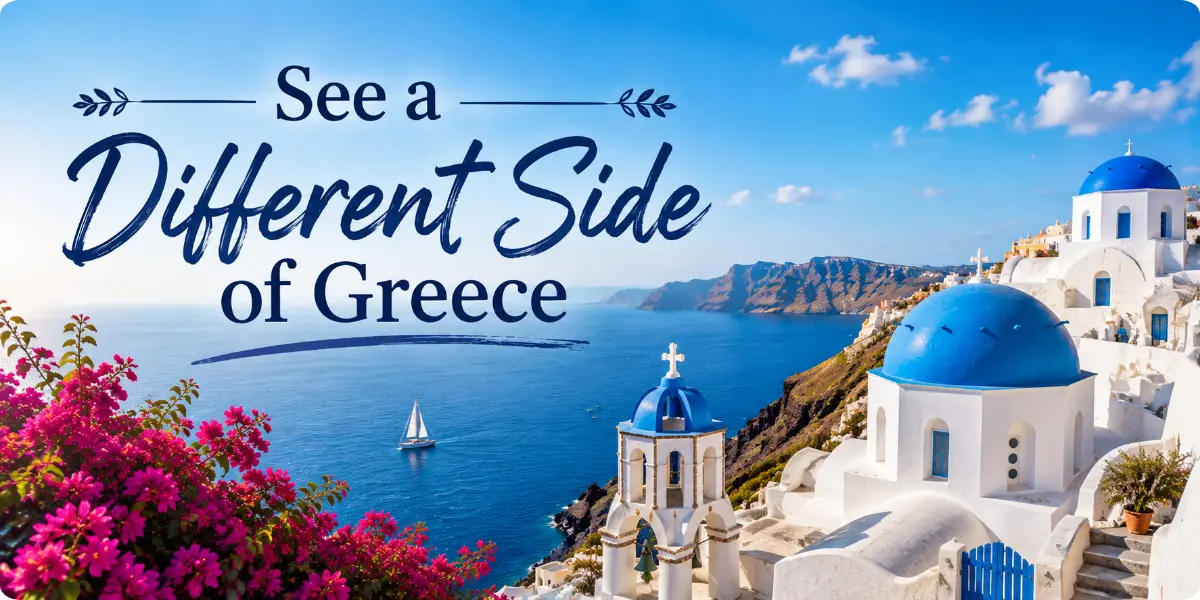
Perhaps the best thing you can do in Greece is avoid trying to see everything. You do not need to visit every famous island. With tourist arrivals hitting a record 37.98 million in 2025, according to the Bank of Greece, the country’s best-known spots are also its most crowded ones, and popularity does not always mean the best experience. Choose a few places and spend enough time in each to experience them properly.
Consider visiting during the shoulder seasons (April–May or September–October), starting sightseeing early to beat both the heat and the crowds, staying in smaller towns instead of major resort hubs, or adding mainland destinations to an itinerary that would otherwise be entirely islands. Visit Greece, the country’s official tourism organization, actively promotes lesser-known destinations, slow travel, nature, culture, and gastronomy routes beyond the country’s most famous attractions, a sign that even Greece’s own tourism authority is steering visitors toward a more spread-out, sustainable way of experiencing the country.
- Best for: Travelers wanting a more relaxed, less crowded, and ultimately more memorable Greece trip
- Time needed: Applies to your entire itinerary planning, not a single visit
- Practical tip: Pick 3 to 4 destinations maximum for a two-week trip rather than chasing a longer list, the time saved on packing, transfers, and check-ins adds up to real hours you’ll actually spend experiencing each place
| Tour Option | Group Size | Duration | Approx. Price* | Best For |
|---|---|---|---|---|
| Self-Guided Trip Planning | N/A | Flexible | Free | Independent travelers wanting to build their own paced itinerary |
| Custom Itinerary Planning Consultation | 1 (per booking) | 1–2 hrs | €50–100 per session | Travelers wanting expert help narrowing down destinations |
| Small-Group Slow Travel Tour | 8–15 people | 7–10 days | €900–1,500 per person | Travelers wanting a curated, unhurried multi-destination trip |
| Private Multi-Destination Tour | 1–8 people | Custom | €250–400 per day | Families or groups wanting a fully tailored, paced itinerary |
Prices are approximate 2026 market averages for licensed tour operators in Greece and should be verified against current listings before publishing.
Best Things to Do in Greece by Destination
1. Things to Do in Athens
Athens is the best starting point for travelers interested in ancient history and urban culture.
Prioritize:
- Acropolis
- Acropolis Museum
- Plaka
- Monastiraki
- Ancient Agora
- National Archaeological Museum
- Greek food tours
- Lycabettus Hill
2. Things to Do in Santorini
Focus on:
- Oia
- Fira
- Imerovigli
- Akrotiri
- Caldera cruises
- Beaches
- Local wine
- Sunset viewpoints
3. Things to Do in Mykonos
Try:
- Mykonos Town
- Little Venice
- Windmills
- Beaches
- Boat trips
- Local restaurants
- Nightlife
4. Things to Do in Crete
Consider:
- Knossos
- Chania
- Rethymno
- Heraklion
- Samaria Gorge
- Beaches
- Traditional villages
- Cretan food
5. Things to Do in Corfu
Add:
- Corfu Old Town
- Beaches
- Coastal villages
- Local food
- Boat trips
6. Things to Do in Rhodes
Don’t miss:
- Medieval Old Town
- Lindos
- Lindos Acropolis
- Beaches
- Historic sites
7. Things to Do in Naxos
Prioritize:
- Portara
- Chora
- Beaches
- Villages
- Hiking
- Local food
8. Things to Do in Thessaloniki
Try:
- Waterfront walks
- White Tower
- Historic monuments
- Food markets
- Local restaurants
- Nightlife
Best Things to Do in Greece for Different Travelers
1. For Couples
Santorini’s caldera sunsets remain the classic choice, but couples looking for something quieter often do better in Oia’s back streets, Pyrgos, or the villages of Folegandros and Milos, where the crowds thin out considerably. A private or small-group sailing trip around the caldera or through the Cyclades adds a sense of romance that land-based touring can’t match, especially with a sunset stop for swimming. Wine tasting is worth building into the itinerary too, since Santorini’s volcanic soil produces distinctive whites like Assyrtiko that pair naturally with a slow, unhurried afternoon. Couples who want intimacy over spectacle should also consider Hydra, where cars are banned entirely and the pace of the island forces a slower rhythm.
2. For Families
Family trips work best when the day’s plan doesn’t hinge on long transfers or rigid schedules. Beaches with easy, gently sloping access matter more with young kids than dramatic scenery, so islands like Naxos or Corfu tend to outperform cliffside destinations like Santorini for this purpose. Short boat trips keep children engaged without the fatigue of a full-day excursion, and archaeological sites that allow some running-around room, such as Knossos in Crete or Ancient Olympia, tend to hold kids’ attention better than dense, indoor museum visits. The best family days usually combine one low-key sightseeing stop in the morning with swimming in the afternoon, rather than trying to pack in multiple attractions.
3. For First-Time Visitors
Greece rewards depth over breadth, especially on a first trip. Trying to string together Athens, Crete, Santorini, Mykonos, and the mainland in one visit usually means spending more time on ferries and in transit than actually exploring. A more satisfying approach is Athens paired with one or two islands, giving enough time in each place to settle in rather than rush through. Athens alone justifies two to three days for the Acropolis, Plaka, and the National Archaeological Museum, and adding a nearby island like Santorini, Naxos, or Paros afterward rounds out the trip without overextending it.
4. For History Lovers
History-focused travelers should build their route around Greece’s core archaeological sites rather than treating them as day-trip add-ons. Athens is the natural starting point with the Acropolis and its museum, but the real depth comes from venturing out to Delphi, once considered the center of the ancient world and home to the Temple of Apollo; Olympia, birthplace of the ancient Olympic Games; Mycenae, with its Bronze Age citadel and the Lion Gate; Epidaurus, known for its remarkably preserved ancient theater; and Meteora, where monasteries perch atop dramatic rock pillars. Spacing these out across a mainland-focused itinerary, rather than squeezing them into single-day trips from Athens, allows more time to actually absorb each site.
5. For Adventure Travelers
Greece’s terrain and coastline support a wider range of adventure activities than its reputation for beach holidays might suggest. Hiking routes through the Samaria Gorge in Crete or the trails of the Pindus mountains offer serious terrain for experienced hikers, while sailing through the Ionian or Cycladic islands appeals to those who want to combine movement with exploration. Coastal waters are well suited to snorkeling and diving, particularly around Crete, the Ionian islands, and parts of the Aegean where visibility is strong, and kayaking along sea caves and hidden coves adds a slower, more intimate way to experience the coastline. Inland, mountain routes in regions like the Peloponnese and northern Greece reward travelers willing to go beyond the standard island-hopping circuit.
6. For Food Lovers
Greek cuisine varies significantly by region, so food-focused travelers get more out of the trip by spending real time in a handful of places rather than sampling quickly across many. Crete has its own distinct culinary identity, built around olive oil, wild greens, and dishes rarely found elsewhere in the country. Athens offers everything from traditional tavernas to a growing modern dining scene, while Thessaloniki is widely regarded as Greece’s food capital, shaped by Ottoman and Sephardic Jewish influences that show up in its street food and bakeries. Smaller villages, particularly in Crete and the Peloponnese, are often where regional dishes are still made the way they always have been, as part of daily life rather than for tourists, which makes them worth seeking out even off the main circuit.
Best Things to Do in Greece Besides Beaches
Greece is absolutely worth visiting even if you are not interested in spending every day on the sand.
Some of the best alternatives include:
- Exploring the Acropolis
- Visiting Delphi
- Discovering Meteora
- Walking through Ancient Olympia
- Touring Knossos
- Hiking in Crete
- Exploring Greek villages
- Taking food tours
- Visiting archaeological museums
- Touring wineries
- Exploring medieval towns
The country’s UNESCO listings alone show how broad its cultural attractions are, with sites covering ancient, Byzantine, medieval, and archaeological heritage.
Best Free Things to Do in Greece
Traveling in Greece does not mean every memorable experience has to cost money.
Depending on the destination, you can:
- Walk through historic neighborhoods
- Explore traditional villages
- Watch the sunset
- Walk along waterfronts
- Hike public trails
- Visit public beaches
- Explore local markets
- Photograph historic streets
Always check current admission rules before assuming an attraction is free.
Best Time to Visit Greece for Different Activities
1. Spring
Spring, roughly March through May, is a strong choice for sightseeing, walking, and hiking. Temperatures are generally more comfortable for spending long periods outdoors, without the intense midday heat that makes summer touring exhausting. Archaeological sites like the Acropolis or Delphi are far more enjoyable to explore at a walking pace when temperatures sit in the mild range rather than climbing into the 30s Celsius. Wildflowers are in bloom across the countryside during this period, which makes it a particularly good window for hiking routes in Crete and the Peloponnese. Crowds are also noticeably thinner than in summer, so major sites can be visited without the long queues that build up later in the year.
2. Early Summer
Early summer, generally June, works well for combining sightseeing with beach time before the hottest and busiest part of the season sets in. The sea has usually warmed up enough for comfortable swimming by this point, while daytime temperatures haven’t yet reached the peak-summer extremes that can make walking tours uncomfortable. Islands and mainland destinations alike tend to be less crowded than in July and August, which means better availability for accommodation and a more relaxed pace at popular attractions. This makes June a favored window for travelers who want a taste of both island life and cultural sightseeing without competing with the busiest crowds of the year.
3. Peak Summer
Peak summer, July and August, is the classic season for island trips, swimming, sailing, and nightlife, and it’s when Greece sees its highest volumes of visitors. Popular destinations like Santorini, Mykonos, and the more accessible Cycladic islands can be extremely busy during these months, with higher prices, fuller ferries, and reservations often needed well in advance for restaurants and popular excursions. The heat can also be intense, particularly inland and in cities like Athens, so this period suits travelers whose plans center on beaches, boats, and water-based activities rather than long days of walking or sightseeing. Booking accommodation and transport early is especially important during this stretch, since availability tightens considerably as the season peaks.
4. September and October
Early autumn can be a great compromise for travelers who want warm weather while avoiding some of the intensity of peak summer. Sea temperatures remain warm enough for swimming well into October in many parts of Greece, while the crowds and prices that define July and August begin to ease noticeably. This period also tends to bring more comfortable conditions for combining beach days with sightseeing, since the extreme heat of midsummer has typically passed by mid-September. Many travelers consider this one of the best overall windows for a Greece trip, since it offers a balance of good weather, lower costs, and a calmer pace without sacrificing much in terms of what’s open or accessible.
5. Winter
Winter, roughly November through March, is better suited to Athens, mainland cities, museums, cultural attractions, and mountain destinations than a classic Greek island beach holiday. Many smaller islands scale back significantly during this period, with reduced ferry schedules and seasonal businesses closed until spring, which makes island-hopping considerably harder to plan. Athens, on the other hand, stays fully active year-round, and its museums, archaeological sites, and neighborhoods can be explored comfortably without summer crowds. Mountain regions such as the Pindus range or areas near Meteora also come into their own in winter, appealing to travelers interested in cooler-weather activities rather than swimming and sailing.
How Many Days Do You Need in Greece?
1. 3 Days
With only three days, stay mostly in Athens rather than trying to squeeze in a day trip that eats up most of a morning or afternoon in transit. Focus on the Acropolis and its museum, historic neighborhoods like Plaka and Monastiraki, and one or two additional museums such as the National Archaeological Museum. This is also enough time to settle into the city’s food scene, from traditional tavernas to modern Athenian dining, and to fit in one extra attraction, whether that’s the Panathenaic Stadium or a sunset at Lycabettus Hill. Three days won’t allow for an island add-on without feeling rushed, so it works best as a focused city trip rather than an attempt to see multiple regions.
2. 5 Days
Five days opens up the option of combining Athens with one nearby island or a carefully selected second destination, without the trip becoming overly compressed. A common approach is two to three days in Athens followed by two to three days on an island like Hydra, Aegina, or a short-ferry Cycladic destination such as Paros. This length also works well for pairing Athens with a mainland site like Delphi, especially for travelers more drawn to history than beach time. The key at five days is choosing one add-on rather than several, since splitting the time further tends to leave every stop feeling too brief.
3. 7 Days
A week gives you enough time to combine Athens with one or two islands without turning the trip into a constant travel day. This is often considered the minimum length for a well-rounded first visit, since it allows two to three days in Athens followed by four to five days split across one or two islands, such as Santorini and Naxos, or a single island explored more slowly. Seven days is also long enough to absorb some downtime between activities, rather than treating every day as a checklist of sights, which makes for a more relaxed overall pace.
4. 10 Days
At ten days, you can build a more balanced route with Athens, two islands, or Athens plus mainland destinations such as Delphi or Meteora. This length supports a genuine mix of experiences, city time in Athens, history-focused stops on the mainland, and a slower, more immersive stretch on one or two islands, without needing to rush between them. Ten days is often the point where travel time stops feeling like a tax on the trip and starts feeling like a reasonable trade-off for covering more ground.
5. 14 Days
Two weeks gives you the most flexibility, and it’s the length most suited to travelers who want depth rather than a highlights-only tour. You can combine mainland Greece with several islands, working in Athens, Delphi or Meteora, and two or three islands across different island groups such as the Cyclades and the Ionian. Alternatively, fourteen days is enough time to take a slower road trip through regions such as the Peloponnese, stopping in places like Nafplio, Mycenae, and Olympia at a pace that allows for genuine exploration rather than a series of quick photo stops.
How to Choose Where to Go in Greece
| If You Want | Consider |
|---|---|
| Ancient history | Athens, Delphi, Olympia |
| Romantic scenery | Santorini |
| Nightlife | Mykonos, Athens, Thessaloniki |
| Beaches | Crete, Naxos, Zakynthos |
| Hiking | Crete, Meteora, mainland mountains |
| Quiet island life | Naxos, Hydra, smaller Cycladic islands |
| Medieval history | Rhodes, Corfu |
| Food | Crete, Athens, Thessaloniki |
| Mainland road trip | Peloponnese |
| First Greece trip | Athens + one or two islands |
Greece Travel Tips for First-Time Visitors
1. Don’t Try to See Everything
Greece is larger and more diverse than it may look on a map, and it’s easy to underestimate how spread out the islands and mainland regions actually are. Moving between islands and mainland destinations takes time, whether that’s a multi-hour ferry crossing, a domestic flight, or a long mountain drive on the mainland. First-time visitors often try to combine Athens, Santorini, Mykonos, and Crete into a single week, only to find that transit days eat up nearly half the trip. A more satisfying approach is to pick two or three regions and give each one real time, rather than treating Greece as a checklist to complete in one visit.
2. Give Athens Enough Time
Do not treat Athens as only an airport stop or a one-night stopover on the way to the islands. The city has ancient monuments like the Acropolis and Ancient Agora, world-class museums including the Acropolis Museum and the National Archaeological Museum, and distinct neighborhoods such as Plaka, Monastiraki, and Kolonaki that each offer a different side of the city. Athens also has a genuinely strong food and nightlife scene, from traditional tavernas to modern wine bars, that rewards travelers who stick around for at least two or three nights rather than rushing straight to an island.
3. Check Ferry Connections Carefully
Island hopping can be fantastic, but ferry schedules and travel times should be part of your itinerary from the very beginning, not an afterthought booked once you’ve already committed to a route. Ferry frequency varies enormously by season, with far more sailings in summer than in shoulder or winter months, and some island connections require an indirect route through a hub island rather than a direct crossing. Building in a buffer day before a flight home is also worth considering, since ferries can be delayed or canceled due to weather, particularly in the Aegean.
4. Think Beyond Santorini and Mykonos
The Cyclades alone offer many other islands, such as Naxos, Paros, Milos, and Folegandros, each with a distinct character and generally fewer crowds than the two most famous names. Mainland Greece, meanwhile, has archaeological sites, mountains, villages, and historic towns that rarely make it onto a first-time visitor’s radar, from Nafplio’s Venetian architecture to the monasteries of Meteora. Visit Greece lists a wide range of destinations across both the mainland and islands, and exploring even one or two of these lesser-known spots often ends up being a trip highlight precisely because they’re less saturated with tourists.
5. Start Outdoor Sightseeing Early
During hot periods, particularly peak summer, early mornings can be far more comfortable for archaeological sites and long walks, since many of these locations offer little shade and temperatures climb quickly after mid-morning. Arriving at a site like the Acropolis shortly after opening also tends to mean smaller crowds and better conditions for photos, before tour groups and midday heat both build up. This approach can be applied to most outdoor sightseeing across Greece, not just in Athens, since exposed archaeological sites and hiking trails alike are more pleasant to tackle before the heat of the day sets in.
6. Leave Room for Unplanned Stops
Some of the best Greek experiences happen when you leave the schedule open for a village, beach, viewpoint, or local restaurant that was not on your original list. A rigid itinerary packed with back-to-back reservations leaves little room for the kind of spontaneous detour that often becomes a trip’s most memorable moment, whether that’s stopping in an unplanned hillside village or following a local’s recommendation for a taverna off the main tourist path. Building in some unstructured time, especially during a longer trip, tends to pay off more than trying to maximize the number of sights checked off each day.
Frequently Asked Questions About Things to Do in Greece
What are the top 10 things to do in Greece?
The top experiences include visiting the Acropolis, watching a Santorini sunset, exploring Meteora, visiting Delphi, discovering Crete, exploring Mykonos Town, visiting Ancient Olympia, enjoying Greek beaches, tasting local food, and taking an island-hopping trip.
What is Greece most famous for?
Greece is famous for its ancient history, mythology, archaeological sites, Greek islands, beaches, Mediterranean food, traditional villages, and cultural heritage. The Acropolis, Delphi, Olympia, Meteora, and several historic island centers are internationally recognized heritage sites.
What should you not miss in Greece?
First-time visitors should strongly consider Athens and the Acropolis, one or two Greek islands, traditional Greek food, and at least one major mainland attraction such as Delphi or Meteora.
Is Greece worth visiting for the first time?
Yes. Greece offers a wide mix of history, beaches, islands, food, outdoor activities, and culture. You can build a trip around ancient sites, relaxation, adventure, or a combination of all three.
How many days are enough for Greece?
Five to seven days can work for a focused first trip, while 10 to 14 days gives you more room to combine Athens, islands, and mainland destinations. Trying to cover the entire country in one short trip usually leads to too much travel time.
Which Greek island is best for first-time visitors?
Santorini is a popular choice for dramatic scenery and caldera views, while Crete and Naxos offer a broader mix of beaches, food, culture, and outdoor activities. The best island depends on what you want from the trip.
What can you do in Greece besides going to the beach?
You can explore archaeological sites, visit museums, hike through mountains and gorges, tour monasteries, explore villages, taste regional food, visit wineries, and discover historic towns.
What is the most beautiful place in Greece?
There is no single answer because Greece has very different landscapes. Santorini is famous for caldera scenery, Meteora for its dramatic rock formations, Crete for its combination of mountains and coastline, and many smaller islands for quieter coastal views.
Is Greece expensive to visit?
Costs vary significantly by destination, season, accommodation, transportation, and activities. Popular islands during peak summer can cost more than less-touristed mainland destinations or smaller islands.
What is the best month to visit Greece?
The best month depends on your plans. Late spring and early autumn can be excellent for sightseeing and outdoor activities, while summer is ideal for travelers focused on beaches, swimming, sailing, and island life.
Final Thoughts
The best things to do in Greece are not limited to the places that appear on every postcard. Yes, you should see the Acropolis. Santorini is worth experiencing. Mykonos can be fun. But Greece becomes much more interesting when you combine those famous stops with places such as Delphi, Meteora, Olympia, Nafplio, Naxos, Crete, Corfu, or the Peloponnese. If it is your first trip, start with Athens and choose one or two destinations that match your interests. If you have more time, slow down and explore beyond the famous islands. Greece is at its best when you give yourself enough time to move beyond the checklist and actually experience the food, history, landscapes, villages, and people that make each region different.
Similar Travel-Related Articles
- 50+ Best Things to Do in Tulum: Family, Kids & Nightlife Guide
- Where to Stay in Tulum | 30 Best Places, Hotels & Resorts Guide 2025
- 50+ Best Things to Do in San Diego: Top Activities & Attractions 2025
- 30 Best Places to Stay in San Diego: Top Areas & Hotels Prices Guide 2025
- 25+ Best Things to Do in Boston (2025 Guide) | Must-See Attractions
- 50+ Unique Things to Do in Key West: Free, Fun, Must-See Activities Guide
- 25+ Best Things to Do in Belize: A Guide for Adults, Couples & Family
- 30+ Things to Do in St. Thomas: Best Guide for Families, Couples & Adults

Arman Ashraf is a content writer focused on travel and tourism. He creates practical, well-researched travel guides, destination articles, and travel tips designed to help readers plan trips with greater confidence. His work combines clear, engaging writing with SEO best practices, covering destinations, things to do, travel planning, and useful advice for travelers. Arman is committed to producing helpful content that makes discovering and planning travel easier.