

Istanbul Hotel Guide? Istanbul is the only major city in the world that sits on two continents, with Europe on one side of the Bosphorus and Asia on the other. That geography is exactly why the hotel you choose matters. The city is huge, traffic is heavy, and a hotel that looks close on a map can mean a long uphill walk or a ferry ride between you and the sights you came to see.
In practice, Istanbul hotels fall into three broad settings. Historic districts such as Sultanahmet put you beside the great Byzantine and Ottoman monuments. Modern neighborhoods such as Beyoglu, Taksim and Besiktas offer restaurants, shopping and strong transport links. Waterfront areas such as Karakoy and Kadikoy trade major sights for atmosphere, cafes and sea views.
This guide compares seven popular areas, sorts hotels by budget and by traveler type, explains what rooms really cost in 2026, and shows how to get around from your front door. By the end you will know which area fits your trip and how to book it with confidence.
Where Should You Stay in Istanbul?
For most first-time visitors, Sultanahmet is the best area to stay in Istanbul because Hagia Sophia, the Blue Mosque and Topkapi Palace are within walking distance. Choose Beyoglu or Taksim for nightlife and transport, Karakoy or Galata for romance, and Kadikoy for a relaxed local stay.
The right answer depends on your budget, sightseeing plans, transport needs and travel style. If you want a deeper walkthrough before you decide, our guide to where to stay in Istanbul covers every major district for different travelers.
| Area | Best For | Atmosphere |
|---|---|---|
| Sultanahmet | First-time visitors | Historic |
| Beyoglu | Nightlife and culture | Lively |
| Taksim | Shopping and transport | Busy |
| Karakoy | Restaurants and couples | Trendy |
| Besiktas | Local experiences | Residential |
| Kadikoy | Food and local culture | Relaxed |
| Galata | Scenic city stays | Charming |
Best Areas to Stay in Istanbul
Each neighborhood below has a different personality. For an even closer look at how they compare, read our breakdown of the best areas to stay in Istanbul.
1. Sultanahmet – Best for First-Time Visitors
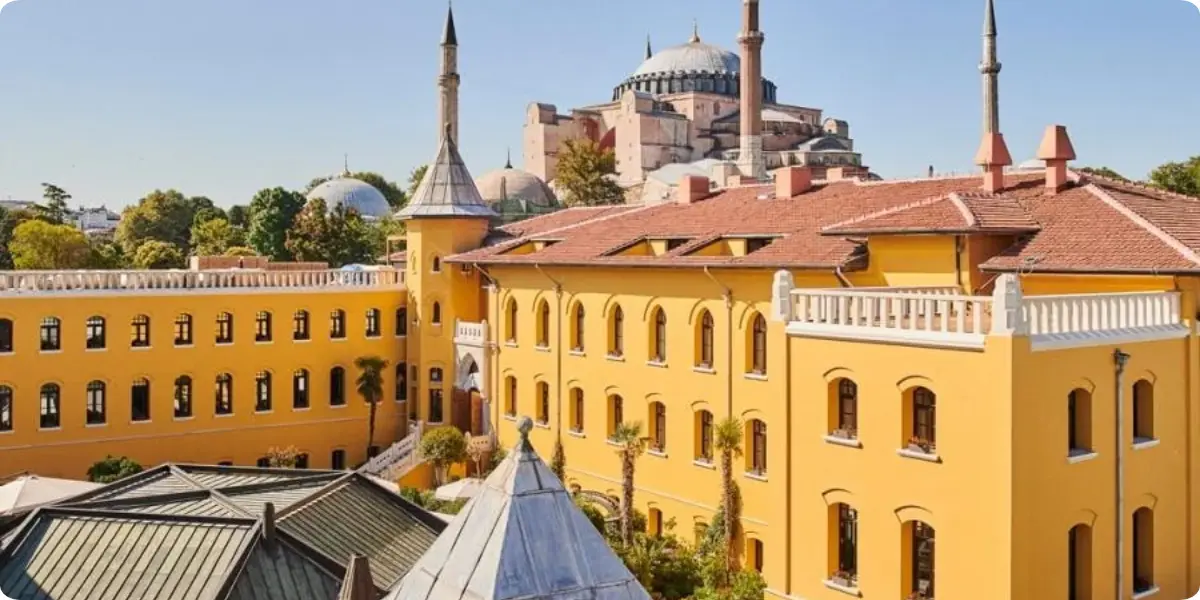
Sultanahmet is the historic heart of the old city. It sits inside the Historic Areas of Istanbul, a property that UNESCO has listed as World Heritage since 1985, and its archaeological park is home to the monuments most visitors fly in to see. Hagia Sophia and the Blue Mosque face each other across a park, and Topkapi Palace and the Basilica Cistern are a short walk away. Foreign visitors currently pay a 25-euro fee for the Hagia Sophia upper gallery, so plan that into your sightseeing budget.
Hotels here are mostly small and mid-sized converted townhouses, family-run boutique properties and rooftop-terrace hotels with views of the Sea of Marmara. If you want to build your whole stay around the major sights, see our guide to hotels near Istanbul attractions.
- Advantages: walk to major landmarks, T1 tram on your doorstep, early-morning sightseeing before the crowds.
- Disadvantages: quiet after dark, tourist-priced restaurants, limited nightlife, and pushy street sellers around the main squares.
2. Beyoglu – Best for Nightlife and Culture
Beyoglu is where Istanbul gets lively. Istiklal Avenue, the long pedestrian street running toward Taksim, is lined with bookshops, galleries, cafes and historic passages, and the side streets hide rooftop bars, meyhanes (traditional taverns) and live-music venues. Accommodation ranges from budget guesthouses to design hotels inside restored nineteenth-century apartment buildings.
- Who should stay here: nightlife lovers, culture seekers, foodies, and anyone who prefers a modern, walkable city feel over a museum-district feel.
- Keep in mind: weekend noise is real, and the streets that slope toward the Golden Horn are steep.
3. Taksim – Best for Shopping and Transport
Taksim Square is the city’s main transport crossroads. The M2 metro runs through it, the F1 funicular drops down to Kabatas for the tram and ferries, and airport buses call here. Around the square you will find big hotel brands, shopping streets, theaters and a huge choice of restaurants.
- Hotel availability: the widest range of mid-range and upscale international-style hotels in the city center.
- Potential drawbacks: crowds, traffic and noise at all hours, and a busier, less characterful feel than Galata or Sultanahmet.
4. Karakoy – Best for Couples and Food Lovers
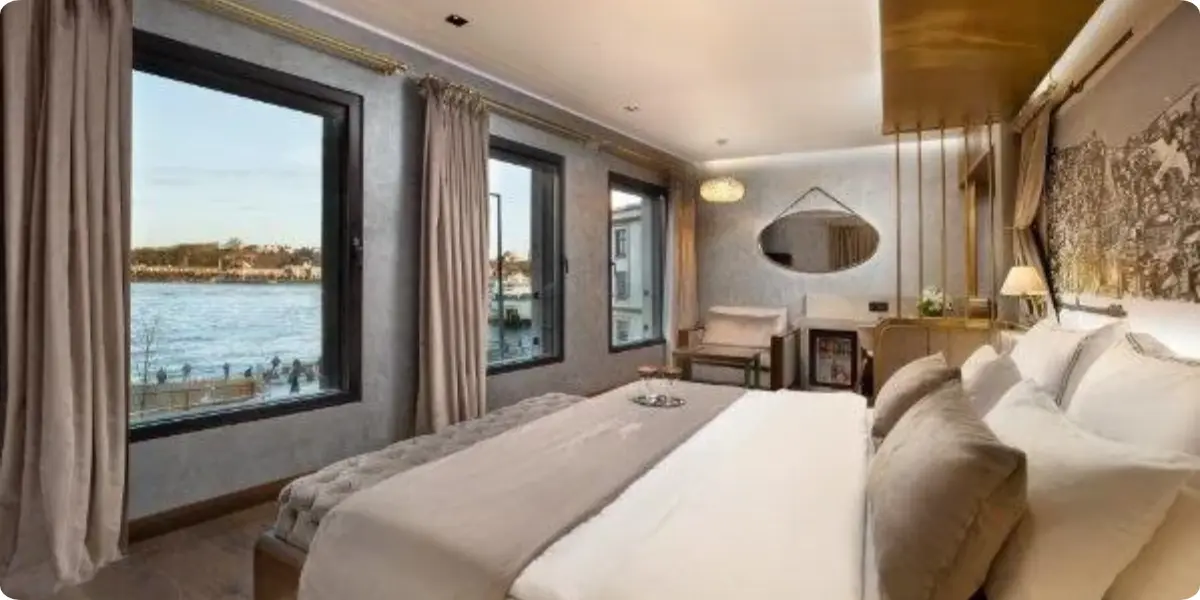
Karakoy is a former port district turned creative quarter, sitting right at the Galata Bridge on the Golden Horn. Expect specialty coffee shops, bakeries, galleries, cocktail bars and some of the city’s most talked-about restaurants, all within a few minutes’ walk of the water.
- Accommodation: mostly boutique hotels in renovated historic buildings, often with rooftop breakfast terraces.
- Connections: the T1 tram stops here, the Tunel funicular climbs to Beyoglu, and ferries cross to the Asian side, so you are never stranded.
5. Galata – Best for Scenic City Views
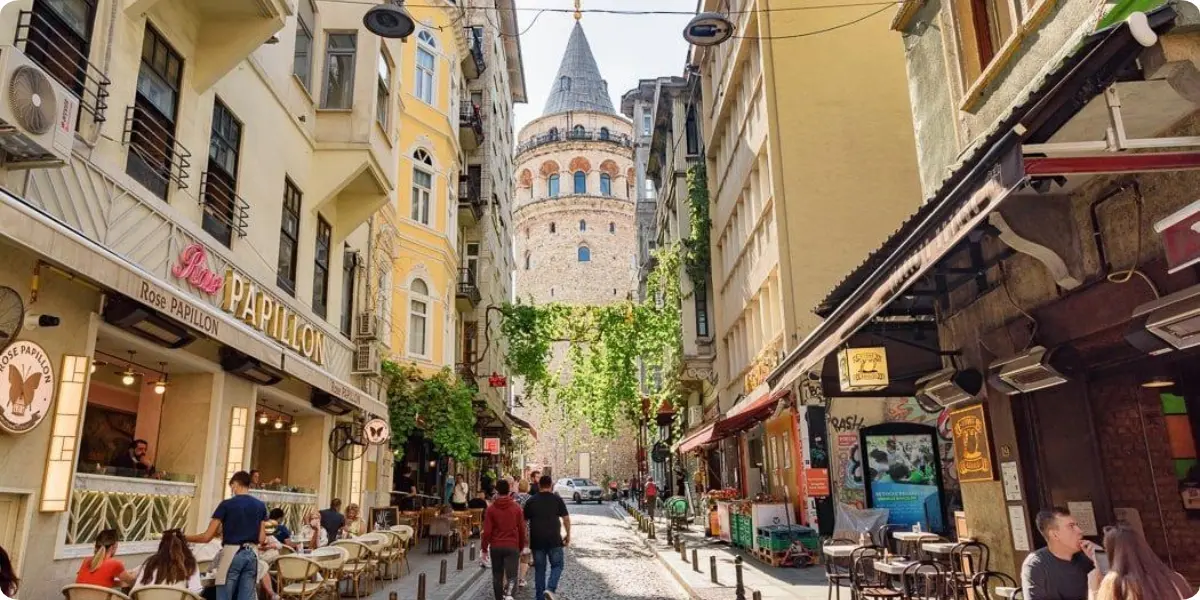
Galata wraps around the medieval Galata Tower, up the hill above Karakoy. Its cobbled lanes, tiny cafes and design shops make it one of the most photogenic corners of Istanbul, and boutique hotels here often offer views over the Golden Horn and the old city skyline.
- Atmosphere: romantic, creative and slightly bohemian, especially at sunset.
- Hills to consider: the streets are steep and cobbled. If you travel with heavy bags, limited mobility or a stroller, check the exact route from the nearest tram stop before booking.
6. Besiktas – Best for Local Experiences
Besiktas is a residential, mostly local district on the European shore of the Bosphorus. Its waterfront promenade, lively fish and produce market, and neighborhood cafes feel far from the tourist trail, yet Dolmabahce Palace is on its doorstep and the ferry pier gives direct crossings to Kadikoy.
- Who it suits: repeat visitors, business travelers, couples wanting Bosphorus views, and anyone who likes living like a local.
- Keep in mind: it is farther from the old city, so expect a tram or taxi ride to reach Sultanahmet.
7. Kadikoy – Best for a Relaxed Local Experience
Kadikoy is the cultural heart of the Asian side. Its food market is a magnet for locals and visitors alike, with fishmongers, delis, pickle stalls and tiny restaurants, and nearby Moda has a seaside park and an easygoing cafe scene. Many travelers find that rooms here cost noticeably less than in the old city for the same comfort.
- Ferry connections: ferries link Kadikoy with Eminonu, Karakoy and Besiktas, making the commute part of the fun.
- Who should consider it: food lovers, longer stays, budget-conscious travelers, and visitors who want a break from tourist crowds.
Best Hotels in Istanbul by Budget
Hotel quality, ownership and rates change quickly, so instead of ranking individual properties, this section explains what to expect from each tier and where to look.
1. Best Luxury Hotels in Istanbul

Luxury in Istanbul means five-star service, spas, fine dining and, above all, the Bosphorus. The top properties cluster along the water in Besiktas and Ortakoy, with several historic palace-style hotels and a handful of modern towers around Taksim and Nisantasi. A well-known example is the waterfront Ciragan Palace Kempinski in Besiktas, a former Ottoman palace turned hotel.
- Expect Bosphorus-view rooms, spa and hammam facilities, multiple restaurants and concierge-level service.
- Confirm which rooms have the view, because a standard room often faces the street.
2. Best Mid-Range Hotels in Istanbul
Mid-range hotels offer the best value in Istanbul. Three- and four-star properties in Sultanahmet, Sirkeci, Karakoy and around Taksim usually give you clean, comfortable rooms, a Turkish breakfast and a short walk to a tram or metro stop.
- Prioritize location and transport access over extras like a gym or pool.
- Read recent reviews on noise, air-conditioning and lift size, which vary widely in older buildings.
3. Best Budget Hotels in Istanbul
Budget travelers can choose from hostels, guesthouses and simple two- and three-star hotels. The best-value neighborhoods are Kadikoy, Laleli and the edges of Beyoglu. For a fuller list of cheaper neighborhoods and booking tips, see our guide to budget accommodation in Istanbul.
- Essentials to check: air-conditioning, hot water, lift access, breakfast and a 24-hour front desk.
- Choose a hostel with private-room options if you want social areas without dorm sleeping.
Best Istanbul Hotels for Different Types of Travelers
1. Best Hotels in Istanbul for Families
Families need space and simplicity. Look for family rooms or connecting rooms, a breakfast that kids will actually eat, a working lift (many historic buildings have very small ones) and an easy walk to sights and parks. Sultanahmet works well for sightseeing with children, while Besiktas is calmer and more residential. Our detailed guide to family hotels in Istanbul compares the best areas for staying with kids.
2. Best Hotels in Istanbul for Couples
Couples usually do best in Galata, Karakoy or on the Bosphorus shore. Look for boutique properties with rooftop terraces, rooms with a view, and a cluster of good restaurants within a short walk. If romance is the priority, our guide to the best area to stay in Istanbul for couples narrows down the most atmospheric neighborhoods.
3. Best Hotels in Istanbul for Solo Travelers
Solo travelers should prioritize a central location, public transport and well-lit, busy streets for evening walks. Sultanahmet and Beyoglu are the easiest bases, and social hostels or small guesthouses with shared breakfast areas make it simple to meet other travelers. Check that the front desk is staffed late and that the route from the nearest tram or metro stop is straightforward.
4. Best Hotels in Istanbul for Business Travelers
Business travelers should look at the Gayrettepe, Sisli, Nisantasi and Besiktas areas. Gayrettepe is the city-end station of the M11 airport metro and is also on the M2 line, which makes airport transfers simple. Confirm meeting rooms, desk space, reliable internet and flexible check-in and check-out times.
Sultanahmet vs Beyoglu: Which Area Is Better for Hotels?
Sultanahmet is better for first-time visitors who want to walk to the major historic sights, while Beyoglu is better for travelers who want nightlife, dining and a modern city feel. Sultanahmet is quiet in the evening, Beyoglu stays busy until late, and hotel prices depend more on quality than on the area.
| Factor | Sultanahmet | Beyoglu |
|---|---|---|
| Main appeal | Historic monuments | Culture, dining, nightlife |
| Hotel style | Small boutique and family-run | Design hotels, apartments, hostels |
| Restaurants | Traditional, tourist-oriented | Varied, trendy, local |
| Nightlife | Limited | Extensive |
| Transport | T1 tram | M2 metro, Tunel and F1 funiculars |
| Best for | First-time visitors | Repeat visitors, nightlife lovers |
The split also comes down to timing. If you have only two or three days, staying in Sultanahmet saves hours of commuting. If you have longer, or have seen the main sights before, Beyoglu gives a more current, local feel. Our full side-by-side analysis of Sultanahmet vs Beyoglu walks through the trade-offs in detail.
How Much Does a Hotel in Istanbul Cost?
In 2026, Istanbul hotels typically cost about US$45 to 90 per night for budget stays, US$90 to 210 for mid-range three- and four-star hotels, and US$240 to 450 or more for luxury and Bosphorus-view properties, according to one 2026 Istanbul cost guide. Rates change by date, area and season, so treat them as planning ranges.
| Category | Approx. Price per Night (TL) | Approx. Price per Night (USD) |
|---|---|---|
| Budget (hostels, guesthouses) | TL 1,500 – 3,000 | US$45 – 90 |
| Mid-range (3–4 star) | TL 3,000 – 7,000 | US$90 – 210 |
| Luxury (5 star, Bosphorus view) | TL 8,000 – 15,000+ | US$240 – 450+ |
These are indicative ranges only. Always check live rates for your exact dates before booking.
1. What Affects the Price
- Season: spring and autumn are the busiest and most expensive periods, while winter (outside the New Year peak) brings the softest rates.
- Location: Sultanahmet, Galata and the Bosphorus shore cost more than Kadikoy or the Asian side for similar quality.
- Room type: a Bosphorus-view room can cost far more than a street-facing room in the same hotel.
- Extras: breakfast is included at many hotels but not all, so compare the full rate.
- Taxes: Turkey’s accommodation tax is normally 2 percent, but it was temporarily cut to 1 percent through December 31, 2026. Check whether your booking quote is tax-inclusive, and look out for a possible change in the new year.
Because the lira moves quickly, it helps to see costs in your own currency. Our currency converter calculator makes that easy, and if you want to build a full budget that includes hotels, food and transport, try the trip cost calculator.
Best Time to Book a Hotel in Istanbul
The best time to book depends on when you travel. For spring and autumn, book about two to three months ahead. For winter and shoulder dates, one to four weeks is usually enough. Always choose a free-cancellation rate if your plans are still flexible.
- Spring (April to May): pleasant weather and high demand make this one of the priciest periods.
- Summer (June to August): hot and crowded, though rates ease slightly compared with spring and autumn.
- Autumn (September to October): excellent weather and strong demand, so book early.
- Winter (November to March): the cheapest time to visit, with the best deals outside the New Year period, but colder and wetter.
- Holidays and events: religious holidays, Turkish national holidays and New Year’s Eve push rates up, and religious holiday dates shift each year, so check the calendar before choosing dates.
For help sequencing flights, hotels and activities, see our travel planning section.
How to Choose the Right Hotel in Istanbul
Use this checklist before you confirm any booking:
- Check the hotel’s exact neighborhood. Istanbul has dozens of districts, and a hotel’s marketing name may not match its real location.
- Compare walking distance to attractions. Use a tool like our distance calculator to measure how far you are from the places you plan to visit, and remember that hills add effort.
- Check public transport connections. A tram, metro or ferry stop within ten minutes saves time and money.
- Read recent guest reviews. Focus on the last six months and on comments about noise, cleanliness and staff.
- Confirm room size and facilities. Rooms in historic buildings can be small, so check air-conditioning, lifts and bathroom type.
- Check cancellation policies. Flexible rates cost a little more but protect you from plan changes.
- Compare the total booking price. Include breakfast, taxes and any service fees.
- Verify airport transfer options. Ask whether the hotel arranges pickups and what a taxi or shuttle will cost from your airport.
If you are still browsing, our hotels section collects more guides to help you compare areas and properties.
Istanbul Hotel Booking Mistakes to Avoid
- Booking from photographs alone. Wide-angle shots can hide small rooms and busy streets, so cross-check with recent guest photos.
- Choosing accommodation far from public transport. A cheap room that adds an hour of commuting each day is not a bargain.
- Ignoring steep streets. Galata, parts of Beyoglu and the lanes around Sultanahmet slope sharply, which matters with luggage.
- Confusing hotels in different Istanbul districts. Some listings say “Old City” or “Taksim” when they are in a different neighborhood altogether.
- Overlooking additional charges. Check taxes, breakfast, resort or service fees and airport transfer prices.
- Not checking recent reviews. Older reviews may not reflect renovations or management changes.
- Booking non-refundable rooms too early. Confirm flights and dates first, or pick a free-cancellation rate.
Getting Around Istanbul From Your Hotel
Istanbul has a connected transport network, and the easiest way to use it is with an Istanbulkart, a reusable contactless card that works on metro, tram, bus, funicular and city ferries. A practical transport guide explains how to buy and load one.
- Metro: the M2 serves Taksim and Beyoglu, the M11 links Istanbul Airport to Gayrettepe, and the M4 runs from Kadikoy to Sabiha Gokcen Airport.
- Tram: the T1 is the most useful line for visitors, linking Kabatas, Karakoy, Sultanahmet and the Grand Bazaar area.
- Public buses: useful for neighborhoods without rail, but they require an Istanbulkart and are slower in traffic.
- Ferries: city ferries cross between Europe and Asia, with popular routes linking Eminonu, Karakoy and Besiktas with Kadikoy, usually in around 20 to 30 minutes.
- Taxis and ride options: use the meter or a ride-hailing app, especially around tourist areas and airports.
- Airport transfers: Istanbul Airport has metro, Havaist bus and taxi services, and the airport’s official transport page lists the metro stops, fares and Havaist routes serving areas such as Sultanahmet, Taksim and Kadikoy. Sabiha Gokcen Airport is linked to Kadikoy by the M4 metro and by shuttle buses.
Allow extra time for airport journeys, because both airports are far from the city center.
Frequently Asked Questions About Istanbul Hotels
What is the best area to stay in Istanbul for first-time visitors?
Sultanahmet is the best area for first-time visitors because Hagia Sophia, the Blue Mosque, Topkapi Palace and the Basilica Cistern are within walking distance. The T1 tram connects the area to Karakoy and Kabatas. The trade-off is limited nightlife, so first-timers wanting evening entertainment may prefer Beyoglu.
Is it better to stay on the European or Asian side of Istanbul?
The European side is better for most visitors because the main historic sights, shopping and nightlife are there. The Asian side, especially Kadikoy, suits travelers who want a quieter local atmosphere and often lower prices. A ferry makes the Asian side easy to reach, so it works well as a base for longer stays.
How many nights should you book in an Istanbul hotel?
Book at least three nights to see the main sights in Sultanahmet, Beyoglu and along the Bosphorus without rushing. Four to five nights allows a relaxed pace, a trip to the Asian side and a day for shopping or a cruise. A weekend trip is possible but will feel packed.
Are hotels in Istanbul generally expensive?
Compared with many Western European capitals, mid-range hotels in Istanbul are usually good value. Budget rooms are inexpensive, while Bosphorus-view luxury hotels carry premium prices. Costs rise in spring and autumn and in Sultanahmet and Galata, so your total depends heavily on season and location.
Is Sultanahmet a good place to stay for families?
Yes, Sultanahmet suits families who want to walk to major sights, and many hotels offer family rooms. The area is quiet at night and has fewer playgrounds than residential districts. Check for lifts, as some older buildings have none or very small ones, and ask about connecting rooms before booking.
Can you stay in Istanbul without using taxis?
Yes. The T1 tram, metro lines, funiculars and ferries cover most visitor routes, and an Istanbulkart works on all of them. Taxis are still useful with heavy luggage, late at night or for destinations without rail. Choose a hotel within a short walk of a tram, metro or ferry stop.
Do Istanbul hotels usually include breakfast?
Many Istanbul hotels, especially boutique and mid-range properties, include a Turkish breakfast with cheeses, olives, eggs, bread and tea, and rooftop breakfast rooms are common. However, it is not universal, and some budget rates and apartment stays exclude it. Always confirm what the room rate includes before you book.
Which Istanbul neighborhoods have the best Bosphorus views?
Besiktas, Ortakoy and other waterfront areas along the European shore offer the most direct Bosphorus views. Upper-floor rooms in Karakoy and Galata look over the Golden Horn and the old city skyline. Sultanahmet rooftops often show the Sea of Marmara, and Kadikoy and Uskudar offer skyline views from the Asian side.
Conclusion: Find the Right Hotel for Your Istanbul Trip
Istanbul rewards travelers who match their hotel to their trip. Sultanahmet is the easiest base for first-time sightseeing, Beyoglu and Taksim suit travelers who want energy and transport, Karakoy and Galata are made for couples, Besiktas offers Bosphorus calm, and Kadikoy delivers relaxed local life at friendlier prices.
Whatever you choose, three things matter most location, budget and transport access. Check the exact neighborhood, compare the total price including taxes and breakfast, and make sure a tram, metro or ferry stop is within an easy walk. Before booking, compare several options, read recent reviews and pick a flexible rate.
Ready to plan the rest of your trip? Explore our main Istanbul travel guides for attractions, food and itineraries.
