

London attractions pack almost a thousand years of history into one city: a Norman fortress guarding the Crown Jewels, a working royal palace, a medieval abbey where monarchs are crowned, some of the world’s best free museums, and modern landmarks like the London Eye and the Shard. In a single day you can start in 11th-century stone and finish on a glass-floored walkway high above the Thames.
What keeps visitors coming back is how well the city suits different travellers. History fans can spend days inside palaces and war rooms. Families get zoos, aquariums and hands-on museums. Couples can choose river cruises, secret gardens and rooftop views. Budget travellers can fill a week with free galleries, parks and markets without opening their wallet at a ticket desk.
The numbers back up the appeal. According to figures from the Association of Leading Visitor Attractions, the Natural History Museum recorded 7,116,929 visits in 2025, an all-time record for any UK museum or gallery, while the Tower of London was the country’s most-visited paid attraction with 2,817,852 visits (ALVA figures reported by the Museums Association).
This guide covers the famous landmarks, the hidden spots, the free attractions and the practical details that make a trip run smoothly tickets, transport, timing, seasons and ready-made itineraries.
How we researched this guide: We used official attraction websites for ticket and opening information, ALVA for visitor numbers, and Transport for London for transport details. Where something varies by season or changes often, we say so rather than guess.
Quick Answer: What Are the Best Attractions in London?
Some of the best attractions in London include the Tower of London, Buckingham Palace, Westminster Abbey, the British Museum, the London Eye, Tower Bridge, and the Natural History Museum. These attractions offer a mix of history, architecture, culture, and entertainment for different types of visitors.
1. Famous London Attractions You Shouldn’t Miss
These five landmarks are the ones people picture when they think of London. Four of them sit within a short walk or Tube ride of each other, which makes them easy to combine.
i) Tower of London
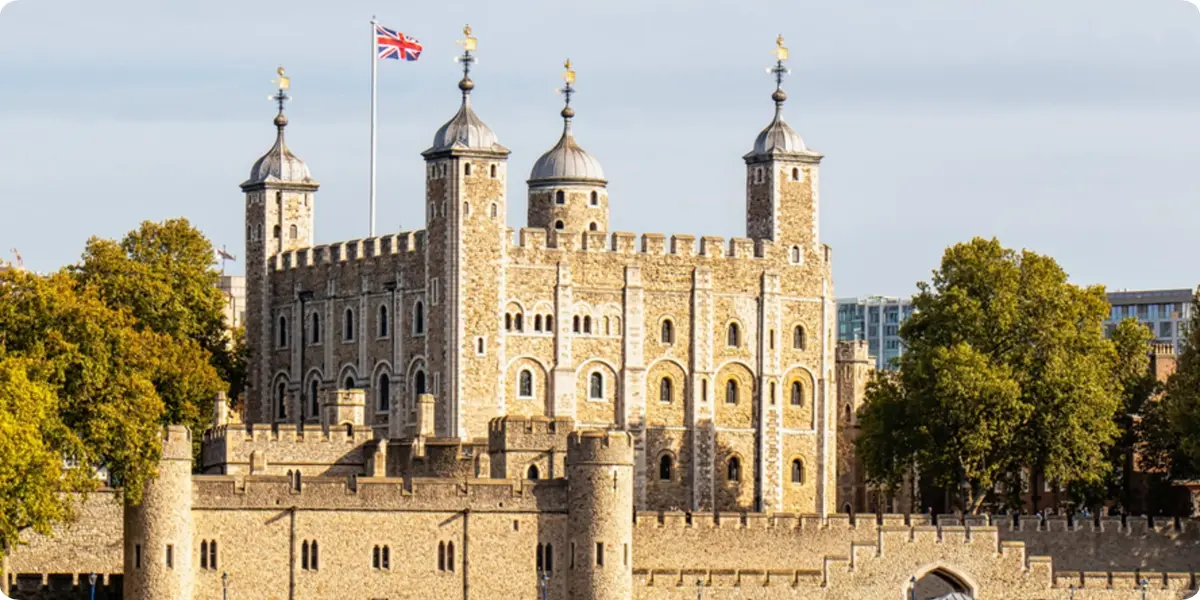
The Tower dates back to the Norman Conquest and has been a fortress, royal palace, prison and treasury. Its main draw is the Crown Jewels, which include St Edward’s Crown, used at the 2023 coronation. Beyond the jewels, you can join a Yeoman Warder (Beefeater) tour, climb through the White Tower’s arms collection and walk the medieval walls. Historic Royal Palaces recommends at least two hours; the Crown Jewels alone take about an hour. Adult tickets were £37 at last check, with child tickets (ages 5 to 15) at £18.50, and Historic Royal Palaces lists the current prices and timed slots. Arrive at opening to reach the jewels before the queues build.
ii) Buckingham Palace
Buckingham Palace has been the monarch’s London residence since Queen Victoria moved in during 1837. Its 19 State Rooms, with their gilded ceilings and royal art, are open to ticketed visitors only during a summer opening, so check dates before building a trip around them. Most people come for the Changing of the Guard, which takes place on selected days (usually Monday, Wednesday and Friday at 11am), and the Household Division calendar publishes confirmed dates because the schedule shifts for weather and events. Aim to be at the railings 45 minutes early, or watch the procession along The Mall for a calmer view.
iii) Big Ben and the Houses of Parliament
“Big Ben” is really the nickname of the Great Bell inside the Elizabeth Tower, but the whole Westminster skyline has taken the name. The Palace of Westminster is part of a UNESCO World Heritage Site alongside Westminster Abbey. The classic photograph is from Westminster Bridge, while Parliament Square and the riverside walk near Victoria Tower Gardens offer quieter angles. Whitehall, Horse Guards Parade, St James’s Park and the Churchill War Rooms are all a few minutes away on foot.
iv) Tower Bridge
Often mistaken for London Bridge, Tower Bridge opened in 1894 and pairs Victorian engineering with Gothic towers. The high-level walkways sit about 42 metres above the river, and the glass floor panels let you look straight down at traffic and boats. Inside, the exhibition explains how the bascules lift and shows the original engine rooms. For photographs, try Potters Fields Park and Shad Thames on the south bank, or the riverside path by the Tower of London on the north side. Lift times are published online if you want to see the bridge open.
v) London Eye
The London Eye opened in 2000, stands 135 metres tall and takes about 30 minutes for one full rotation in a glass capsule. On a clear day the view stretches for miles over Westminster, St Paul’s and the river bends. Late afternoon into sunset gives the best light and lets you see London switch from day to night. Pre-booking a timed slot saves queuing, and flexible or fast-track tickets cost more, so decide whether the extra speed matters for your schedule. A heavy overcast sky mutes the view, so check the forecast before paying.
2. Best Historical and Cultural Attractions in London
If your idea of a perfect day involves stories, stonework and royal gossip, these five places deliver.
i) Westminster Abbey
Every coronation since 1066 has taken place at Westminster Abbey, and royal weddings and funerals have shaped its walls and floors. Inside you will find the Coronation Chair, Poets’ Corner and tombs of monarchs including Elizabeth I. The Gothic architecture is the real star, especially the fan-vaulted Henry VII Lady Chapel. Adult admission is typically around £30, and the Abbey generally closes to sightseers on Sundays for worship, so check the official Westminster Abbey site before you go.
ii) St Paul’s Cathedral
Sir Christopher Wren’s masterpiece was completed in 1710 and its dome still dominates the City skyline. Climb 257 steps to the Whispering Gallery, where a murmur against the wall carries across the dome, then continue to the Stone Gallery and the Golden Gallery (528 steps in total) for panoramic views. The crypt holds the tombs of Nelson and Wellington. Sightseeing is normally closed on Sundays for services, and the cathedral is a short walk from the Millennium Bridge and Tate Modern.
iii) Kensington Palace
Princess Victoria was born at Kensington Palace in 1819 and later became queen, and the building was Princess Diana’s home for years. The State Apartments and exhibitions explore royal fashion and family stories, and the Sunken Garden is a pleasant stop in warmer months. It sits inside Kensington Gardens, so pair it with a walk through the park or a visit to the Diana Memorial Playground if you are travelling with children.
iv) Churchill War Rooms
This underground bunker beneath Whitehall served as Britain’s command centre during the Second World War. The Cabinet War Rooms are preserved almost exactly as they were left in 1945, and the Churchill Museum alongside tells the Prime Minister’s story with documents, recordings and interactive displays. It rewards slow reading, so plan at least two hours, and it makes a strong rainy-day choice. Book ahead for popular times.
v) Hampton Court Palace
Henry VIII’s riverside palace in south-west London is the best way to step into Tudor England. The Great Hall, the enormous Tudor kitchens and the Astronomical Clock are highlights, and the formal gardens and the famous maze (planted around 1700) fill an afternoon. Trains from Waterloo reach Hampton Court station in roughly 35 minutes. Give it at least half a day, and consider it a good alternative to a day trip to Windsor.
3. Best Museums and Art Galleries in London
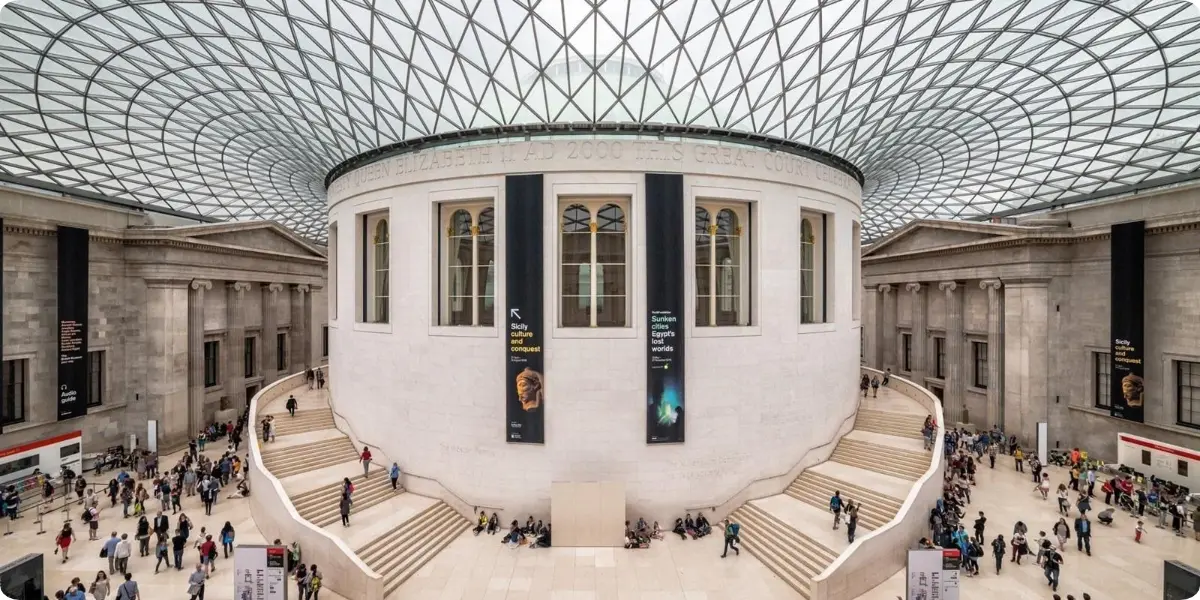
London’s national museums are a highlight for a reason. General admission to the major ones is free, funded by donations and the shop and café, while temporary exhibitions and some interactive galleries carry a ticket price. A free visit still deserves a plan, since several of these museums are large enough to take a full day.
i) British Museum
The British Museum holds around eight million objects, including the Rosetta Stone, Egyptian mummies and the Parthenon sculptures. It welcomed 6,440,120 visits in 2025. General entry is free, special exhibitions are ticketed, and weekday mornings are calmer than weekends. Pick two or three galleries instead of trying to see everything, because the building is too large to cover in a single visit.
ii) Natural History Museum
The Natural History Museum is the UK’s most visited attraction, with 7.1 million visits in 2025. Hintze Hall greets you with the blue whale skeleton, and the dinosaur, mineral and earth galleries are popular with children and adults. Entry to the permanent collection is free, with charges for special exhibitions. Arrive at opening to enjoy the main hall before the crowds, and see the Natural History Museum website for current galleries and events.
iii) Victoria and Albert Museum
The V&A in South Kensington is one of the world’s great museums of art and design, covering fashion, ceramics, furniture, jewellery, sculpture and architecture across thousands of years. It is free to enter, and the courtyard café and gardens make a pleasant midday break. Visitors who like to browse rather than march through a checklist usually enjoy it most.
iv) Science Museum
The Science Museum is next door to the Natural History Museum and V&A, so these three can form a museum-hopping day. Free galleries cover space exploration, medicine, energy, computing and transport. Wonderlab, the interactive science gallery, and the IMAX cinema are paid extras. It was among the UK’s ten most-visited attractions in the latest ALVA data.
v) National Gallery
On Trafalgar Square, the National Gallery houses Western European painting from the 13th to the early 20th century, with works by Van Gogh, Turner, Constable and Leonardo. Admission is free, and the central location means it fits easily between Covent Garden, Westminster and the West End. Evening openings on selected days feel quieter than daytime.
vi) Tate Modern
Tate Modern is a converted power station on the south bank that ranked among the UK’s top four attractions in 2025, with 4,514,266 visits. Its collection displays are free, and the Turbine Hall hosts large commissions. The viewing level of the Blavatnik Building offers free views across the city. Temporary exhibitions need tickets.
Which museum suits you? Choose the Natural History Museum or Science Museum for children, the British Museum for ancient history, the V&A for design and fashion, the National Gallery for classical painting and Tate Modern for contemporary art.
4. Best Free Attractions in London
London is expensive, but many of its best experiences cost nothing. Free admission does not always mean walk-in access, so a few of these places need a reservation.
i) Hyde Park
Hyde Park covers around 350 acres of lawns, tree-lined paths and the Serpentine lake. You can walk, rent a rowing boat in summer, visit Speakers’ Corner on Sundays or simply sit with a coffee. Each winter it also hosts Winter Wonderland. The Royal Parks website lists opening hours and events.
ii) Trafalgar Square
Nelson’s Column, the fountains and the lions make Trafalgar Square one of the city’s most recognisable gathering points, and the Fourth Plinth hosts rotating contemporary art. It is free, open all day and surrounded by the National Gallery and St Martin-in-the-Fields. It is also a handy hub for reaching Westminster, Covent Garden and Leicester Square on foot.
iii) Sky Garden (free entry with advance booking)
On the top floors of the “Walkie Talkie” building, the Sky Garden offers free panoramic views over the City, but only if you book a timed slot in advance. Free tickets are released each week, roughly three weeks ahead, and each visit is limited to one hour. Weekend and sunset slots go quickly, so set a reminder. Photo ID is required, and booking details are on the official Sky Garden site. Reserving a table in one of its restaurants is the other way in.
ii) Borough Market
Borough Market near London Bridge is one of the city’s oldest food markets, with roots stretching back around a thousand years. Wandering the stalls costs nothing, and sampling cheese, fresh bread and street food costs as much as you decide to spend. Go on a weekday for space and a relaxed pace, and check opening days before you visit since they vary through the week.
iii) Greenwich Park
Greenwich Park is a Royal Park inside the Maritime Greenwich UNESCO World Heritage Site. The climb to the viewpoint beside the Royal Observatory rewards you with a classic view of Canary Wharf, the Thames and the Old Royal Naval College. The park is free, and the National Maritime Museum has free galleries, while the Royal Observatory and the Cutty Sark are ticketed.
iv) Leake Street Arches
Leake Street is a legal graffiti tunnel beneath Waterloo station, constantly repainted by street artists. It is free, open at all hours and a short walk from the South Bank. Visit in daylight if you want a good look at the art, and expect the pieces to change from week to week.
Free or booking required? Hyde Park, Trafalgar Square, Greenwich Park, Borough Market and Leake Street need no reservation. The Sky Garden does. Free museum entry is generally walk-in, although timed slots are sometimes introduced during busy periods. For budget travellers, the combination of the major museums, the parks and the Sky Garden can fill several days at no entry cost.
5. Best London Attractions for Families and Children
London offers plenty of ways to keep children entertained, from animals and aquariums to wizarding sets and playgrounds. Most major family attractions work best when you book in advance and avoid school holidays where possible.
i) ZSL London Zoo
ZSL London Zoo in Regent’s Park was founded in 1828 and is home to animals including gorillas, tigers, lions and penguins. Walk-through habitats, daily keeper talks and a children’s farm suit ages from toddlers to teenagers. Allow three to four hours, and pack a picnic to enjoy in Regent’s Park afterwards.
ii) SEA LIFE London Aquarium
Beside the London Eye in County Hall, SEA LIFE London Aquarium houses sharks, rays, turtles and seahorses across themed zones. It works well for younger children and on wet days, and combining it with the Eye makes an easy South Bank half-day. Expect crowds in school holidays, so choose a weekday morning if you can.
iii) Warner Bros. Studio Tour London
The Making of Harry Potter at Leavesden Studios lets fans walk through the Great Hall, Diagon Alley and the original sets and props. It sits outside central London, reached by train to Watford Junction followed by a shuttle bus, and entry is by timed ticket only, so book well ahead through the official Studio Tour site. Allow about four hours. It suits school-age children and up, and fans of any age.
iv) Diana Memorial Playground
Inside Kensington Gardens, this free playground has a large wooden pirate ship, sensory trails and sandpits, and is aimed at children under 12. Adults are admitted only when accompanied by a child. Combine it with Kensington Palace and the Peter Pan statue nearby for an easy half-day.
v) Science Museum
For families, the Science Museum’s free galleries, hands-on exhibits and the paid Wonderlab make it one of the strongest wet-weather options. Younger children enjoy the dedicated play zone, while older ones can explore space, flight and technology. Book timed activities in advance during school holidays.
vi) London Transport Museum
In Covent Garden, the London Transport Museum lets children climb aboard vintage buses, trams and Tube carriages and try driving simulators. It reflects the city’s story from horse-drawn omnibuses to modern rail. Children generally enter free with a paying adult, though it is worth confirming the current policy. It is ideal for ages three to ten and pairs naturally with Covent Garden’s street performers.
6. Unique and Unusual Attractions in London
If you have already seen the headline sights or want something different, these lesser-known places show another side of the city. For a longer list of secret spots, see our guide to hidden gems in London.
i) Leadenhall Market
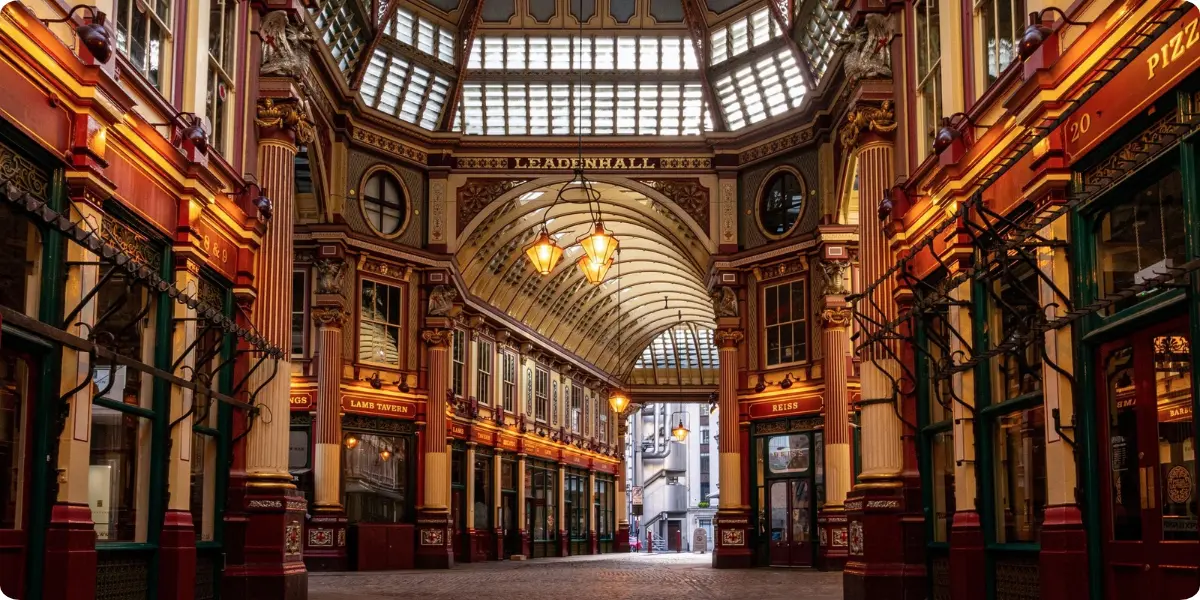
This Victorian covered market, designed by Horace Jones and completed in 1881, has a painted iron-and-glass roof and cobbled lanes. It appeared in the first Harry Potter film as the entrance to Diagon Alley. Go on a weekday morning for photographs and quiet, or after work when the City’s pubs and restaurants fill with locals.
ii) Little Venice
Little Venice is a canal basin where the Regent’s Canal meets the Grand Union Canal, lined with houseboats, cafés and tree-shaded towpaths. It is peaceful and photogenic, and canal boats run from here toward Camden Lock. Weekday mornings are especially quiet.
iii) God’s Own Junkyard
In Walthamstow, God’s Own Junkyard is a warehouse crammed with neon signs, vintage lights and film props, collected by the late neon artist Chris Bracey. It is free to enter and includes a café, but opening days are limited, so confirm times before making the trip east.
iv) Dennis Severs’ House
At 18 Folgate Street in Spitalfields, Dennis Severs’ House is a candlelit Georgian house presented as a “still-life drama”, as if the occupants have just left the room. Visitors move silently through the rooms, which makes the experience feel more like theatre than a museum. Entry is ticketed and timed, so book ahead.
v) Kyoto Garden
Hidden in Holland Park, the Kyoto Garden is a small Japanese garden with a waterfall, koi pond and resident peacocks. It was created in 1991 and is free to enter. Visit early in the day for stillness, and go in autumn for the maple colour.
vi) The Seven Noses of Soho
Artist Rick Buckley attached these small sculpted noses to buildings around Soho in 1997 as a protest against the spread of CCTV cameras. Finding them makes a playful treasure hunt through Covent Garden and Soho. It costs nothing and takes about an hour if you do it between other stops.
7. Best Attractions in London for Couples
London suits couples who like scenery, atmosphere and a little romance. These five experiences work for anniversaries, weekend trips or simply a slow day together.
i) The Shard Viewing Gallery
At 310 metres, the Shard is Western Europe’s tallest building, and its viewing levels (68 to 72) show London from above in every direction. Go at golden hour, when the river lights up and the city’s landmarks begin to glow. It is a ticketed attraction, and booking ahead usually saves money compared with buying on the day. If your budget is tight, the free Sky Garden offers a similar skyline.
ii) Kew Gardens
Royal Botanic Gardens, Kew became a UNESCO World Heritage Site in 2003 and spreads across 300 acres of glasshouses, lakes and tree-lined walks. The Temperate House, the Treetop Walkway and the Palm House are the standouts. It changes character with the seasons, from spring blossom to autumn colour and winter light shows, and you can check what is on at Kew’s official website. Allow half a day, and consider a picnic by the lake.
iii) Regent’s Canal
Walking the Regent’s Canal from Little Venice to Camden Lock takes you past painted narrowboats, hidden bridges and leafy corners for roughly two kilometres. It is free, relaxed and easy to turn into a day out with a coffee stop and a market at the end. Early evening is lovely when the light softens on the water.
iv) Royal Observatory Greenwich
Stand with one foot in each hemisphere on the Prime Meridian Line at the Royal Observatory. The ticketed observatory buildings explore astronomy and timekeeping, while the surrounding park is free. Pair it with the Cutty Sark and a riverside pub for a full Greenwich day. The best sunset view in the area is from the hill beside the Observatory.
v) Thames River Cruise
A boat trip offers a calm perspective on landmarks like Tower Bridge, the Houses of Parliament and the Tower of London. Commuter river services run between Westminster and Greenwich in roughly an hour, while sightseeing cruises add commentary and sometimes dinner. Late afternoon departures reward you with golden light, and evening cruises show the city illuminated.
8. Best Attractions in London for First-Time Visitors
If this is your first trip, build the plan around these six anchors, then add smaller stops as time allows. Our London first time visitor guide covers planning and logistics in more depth.
- Westminster and Big Ben: the political heart of London, with Westminster Abbey, Parliament Square and Westminster Bridge within a few minutes’ walk.
- Buckingham Palace: the royal icon, easily linked with St James’s Park and the Mall.
- Tower of London: the best-value history stop, where the Crown Jewels and 900 years of royal stories reward a half-day.
- Tower Bridge: a short walk from the Tower, with strong photography and the glass walkway experience.
- British Museum: the best free introduction to world history, ideal for a morning or a rainy afternoon.
- London Eye: an easy, scenic overview, best done at sunset or on a clear day.
Why these come first: they are the landmarks that define London, and they cluster neatly. Pair Westminster, Big Ben and Buckingham Palace on one half-day, add the London Eye along the South Bank for the evening, then spend a second half-day on the Tower of London and Tower Bridge. The British Museum fits any morning that suits you, and it sits near Covent Garden and the West End.
9. Best Areas in London for Sightseeing
Thinking by area instead of by attraction saves hours of travel time. Each of these neighbourhoods has enough to fill a half-day or more.
i) Westminster
Westminster holds Parliament, Big Ben, Westminster Abbey, Whitehall, the Churchill War Rooms and St James’s Park. Buckingham Palace is a pleasant walk through the park. You can see most of the area on foot in a day, and it is the obvious base for first-time sightseeing.
ii) South Bank
The South Bank stretches along the Thames from the London Eye through the Southbank Centre and National Theatre to Tate Modern, Shakespeare’s Globe and Borough Market. It is great for a riverside walk with food, street performers and views of St Paul’s across the water. It works in any season, but it is most lively on summer evenings.
iii) Covent Garden
Covent Garden combines street performers, boutiques, the Royal Opera House and the London Transport Museum. Nearby are the National Gallery, Trafalgar Square and the West End theatres. It is a good late-afternoon and evening area, when the lights, restaurants and shows are at their best.
iv) Kensington
Kensington is a calm, elegant district that includes the Natural History Museum, V&A, Science Museum, Kensington Palace and Hyde Park. A museum day here pairs naturally with a walk through Kensington Gardens, and the neighbourhood suits families especially well.
v) Greenwich
Greenwich sits east of the centre and has its own maritime character: the Cutty Sark, the Old Royal Naval College, the Royal Observatory, Greenwich Park and a covered market. Travel by river from central London for scenery, or take the DLR for speed. Plan half a day at minimum.
vi) City of London
The historic City brings together the Tower of London, Tower Bridge, St Paul’s Cathedral, Leadenhall Market, the Sky Garden and the Monument. It is busiest on weekday lunchtimes and quieter at weekends, when you can walk streets that are otherwise packed with office workers.
10. London Attractions by Season
London works year-round, but each season changes what is best to do.
i) London Attractions in Spring
Spring brings blossom to the parks, daffodils in Kew and longer days. Outdoor attractions like Hyde Park, Regent’s Park and Kew come alive, and the Chelsea Flower Show lands in late May. Weather swings between sun and showers, so carry a light waterproof and keep a museum in reserve.
ii) London Attractions in Summer
Summer is peak season, with long evenings, open-air events and the Buckingham Palace State Rooms opening for visitors. Expect Trooping the Colour in June, Wimbledon at the end of June and in July, the BBC Proms at the Royal Albert Hall and Notting Hill Carnival over the August bank holiday weekend. It is also the busiest and most expensive time, so book popular attractions early and start your days at opening.
iii) London Attractions in Autumn
Autumn brings golden light in the parks, smaller crowds after early September and cultural events such as Open House London, when many notable buildings open their doors. Kyoto Garden and Kew look especially good, and November sees the Lord Mayor’s Show and the first Christmas lights. Temperatures cool, so layers help.
iv) London Attractions in Winter
Winter is cold and damp, but atmospheric. Christmas lights decorate Regent Street, Oxford Street and Covent Garden, Hyde Park hosts Winter Wonderland, and ice rinks open at places like Somerset House and the Natural History Museum. The Tower of London runs its own Christmas programme from late November into early January. Daylight is short, so schedule outdoor sights for the middle of the day and use evenings for markets, theatres and warm pubs. Check opening times for 24 to 26 December, when many attractions close.
11. Practical Tips for Visiting London Attractions
A few simple decisions save time and money. For wider planning, including visas, accommodation areas and day trips, see our London tourist information guide.
i) How to Get Around London
The London Underground is the fastest way to cross the city, and most attractions sit in Zones 1 and 2. Buses are cheaper and scenic, and since 1 November 2026 a single bus journey costs £1.85 according to TfL’s published fare schedule. Walking is often quicker than the Tube in the centre, because Westminster, Trafalgar Square, Covent Garden and the South Bank are close together. River transport offers a scenic alternative, especially between Westminster, the Tower and Greenwich. Pay with a contactless card or Oyster card, use the same card for every journey and the daily cap will limit your spend. At last check the Zone 1 to 2 daily cap was £8.90, and you can confirm current fares on the TfL fares page.
ii) Do You Need to Book London Attractions in Advance?
For some, yes. Book ahead for the Sky Garden (free but timed), the Warner Bros. Studio Tour, Dennis Severs’ House, Buckingham Palace State Rooms and special exhibitions at the major museums. The Tower of London, Westminster Abbey, St Paul’s, the London Eye and the Shard are all easier with timed tickets, particularly on weekends and in school holidays. Free museums and parks generally do not require booking.
iii) How Much Do London Attractions Cost?
The headline paid sights, such as the Tower of London, Westminster Abbey, St Paul’s, the London Eye and the Shard, typically cost somewhere between £25 and £45 per adult each, and the Tower was £37 at last check. Free attractions include the major national museums (general admission), the parks, Trafalgar Square and the Sky Garden with a booked slot. Families should check child, family and under-5 policies, because many attractions give young children free entry.
iv) How to Save Money on Sightseeing
Mix paid and free days, so a Tower of London morning is followed by a free museum afternoon. Book online in advance, where it is cheaper. Use contactless payment with fare capping, walk between nearby sights, picnic in the parks and eat at markets instead of tourist-heavy restaurants. A short list of paid priorities will stretch your budget further than trying to do everything.
v) What Is the Best Time of Day to Visit Popular Attractions?
Go early. The first hour after opening is usually the calmest at the Tower of London, the British Museum, Westminster Abbey and the Natural History Museum, and queues for the Crown Jewels can grow sharply by midday. Late afternoon is often quieter at the Tower, Sky Garden slots are good around sunset, and the London Eye is at its best around golden hour. Weekdays are quieter than weekends almost everywhere.
vi) Is the London Pass Worth Buying?
It can be, if you plan to visit roughly three or more paid attractions each day. Passes bundle entry to dozens of sights, including the Tower of London, Westminster Abbey, St Paul’s and Hampton Court, but they do not cover free museums or public transport. If your itinerary relies on free museums, parks and just a couple of paid highlights, buying individual tickets is usually cheaper. Add up the actual prices of your shortlist before you buy, and remember that timed-entry attractions still need a booked slot.
12. Suggested London Sightseeing Itineraries
These plans group attractions geographically so you spend more time looking and less time on the Tube.
i) One-Day London Attractions Itinerary
Start at Buckingham Palace, ideally for the Changing of the Guard on a scheduled day, then stroll through St James’s Park toward Horse Guards Parade and Whitehall. Continue to Parliament Square for Big Ben and Westminster Abbey, cross Westminster Bridge and walk the South Bank to the London Eye. Finish with a sunset ride or a riverside dinner. This route keeps nearly everything within walking distance.
ii) Two-Day London Attractions Itinerary
Follow the one-day Westminster plan for day one. On day two, begin at the Tower of London when it opens, then walk across Tower Bridge to the south bank. Continue along the river to Borough Market for lunch, then visit Tate Modern and cross the Millennium Bridge to St Paul’s Cathedral. End with sunset at the Sky Garden if you have a booked slot.
iii) Three-Day London Attractions Itinerary
Use days one and two as above. On day three, head to South Kensington for the Natural History Museum and the V&A (or the Science Museum if you have children), then walk through Kensington Gardens to Kensington Palace and Hyde Park. In the evening, take the Tube to Covent Garden for dinner and a West End show. If museums are not your thing, swap day three for Hampton Court Palace or Kew Gardens.
Frequently Asked Questions About London Attractions
What is the number one tourist attraction in London?
By visitor numbers, the Natural History Museum ranked first in the UK for 2025 with 7.1 million visits, ahead of the British Museum at 6.4 million. Among paid attractions, the Tower of London led with 2.8 million visits. Which one is your own number one depends on whether you prefer free museums or ticketed landmarks.
Which London attractions are worth paying for?
The Tower of London, Westminster Abbey and St Paul’s Cathedral repay the entry fee with history and architecture you cannot see elsewhere. Hampton Court and Kew suit visitors with time to spare. The London Eye and the Shard are worth it mainly on clear days, since free alternatives like the Sky Garden offer a similar skyline.
Can you explore London’s main attractions without a car?
Yes, and a car is a disadvantage in central London because of traffic, parking costs and congestion charges. The Tube, buses, trains and river boats link nearly every major attraction. Most Westminster and South Bank sights are walkable. Hampton Court, Kew and the Warner Bros. Studio Tour are reached by train, with a shuttle bus for the Studio Tour.
Are London’s major attractions open on Sundays?
Most are, but not all, and hours often shorten. Westminster Abbey and St Paul’s usually close to sightseers on Sundays for worship, while museums, the Tower of London and Tower Bridge tend to open. Market and event schedules vary, and ceremonial events like the Changing of the Guard follow their own calendar, so always check the attraction’s website the day before.
Which London attractions are best for rainy days?
The national museums are the obvious choice: the British Museum, Natural History Museum, V&A, Science Museum and National Gallery. The Churchill War Rooms, Kensington Palace and the Tower of London’s interiors also suit wet weather, and covered spots like Leadenhall Market and Covent Garden keep you dry while you wander.
Are there attractions in London that require advance reservations?
Yes. The free Sky Garden needs a timed booking, the Warner Bros. Studio Tour requires pre-booked tickets, and Dennis Severs’ House and Buckingham Palace State Rooms are timed-entry experiences. Busy sights like the Tower of London and the London Eye are much easier with a pre-booked slot, and special exhibitions at museums often need tickets even where general entry is free.
Can you visit multiple London attractions in one day?
Yes, if you group them by area. Westminster, Big Ben, Buckingham Palace and the London Eye can be combined in a day, as can the Tower of London, Tower Bridge and the Sky Garden. Two or three major attractions plus one lighter stop is a realistic pace. Crossing the city repeatedly wastes time, so plan by neighbourhood.
Which London attractions are accessible for wheelchair users?
Many major sights offer step-free routes, lifts and wheelchair loans, though historic buildings can have limits. The Tower of London lists wheelchair hire and access facilities, the Sky Garden is step-free, and the national museums are generally accessible. Check each attraction’s access page and TfL’s step-free Tube map before you go, and see Visit London for broader accessibility information.
Final Thoughts on Exploring London Attractions
London attractions range from palaces and cathedrals to free museums, secret gardens, markets and riverside walks, so there is something for every kind of traveller. The strongest trips balance the famous landmarks with a few quieter places: pair the Tower of London with a wander through Leadenhall Market, or follow a morning at the British Museum with an evening stroll along the Regent’s Canal.
Plan by location, budget and time instead of trying to see everything. Group attractions by neighbourhood, book the timed ones in advance, mix paid highlights with free museums and parks, and leave room for the unplanned moments that often become the best memories. With a realistic plan and a little flexibility, London attractions will keep rewarding you long after the trip ends.
