
What is Yukevalo Island? Few travel names have spread as quickly as Yukevalo Island. Search for it and you will find dozens of “ultimate guide” pages promising white-sand beaches, coral reefs and hidden lagoons somewhere in the South Pacific. Yet the more of those pages you read, the less they agree with each other.
That is why so many people are typing the name into search bars. It sounds like a real, undiscovered tropical escape, but nobody can point to a reliable map, an airport or an official tourism board. Some pages place it near Fiji, others in an archipelago that does not appear in any atlas we could find, and others give no location at all.
TripGuiderz is a travel guide platform that checks destination claims before they reach readers, so this article takes a careful approach. You will learn what online sources claim, what can and cannot be verified, how the name may be confused with a real Fijian island, which genuine remote islands are worth planning around, and how to check any island before you book.
What Is Yukevalo Island?
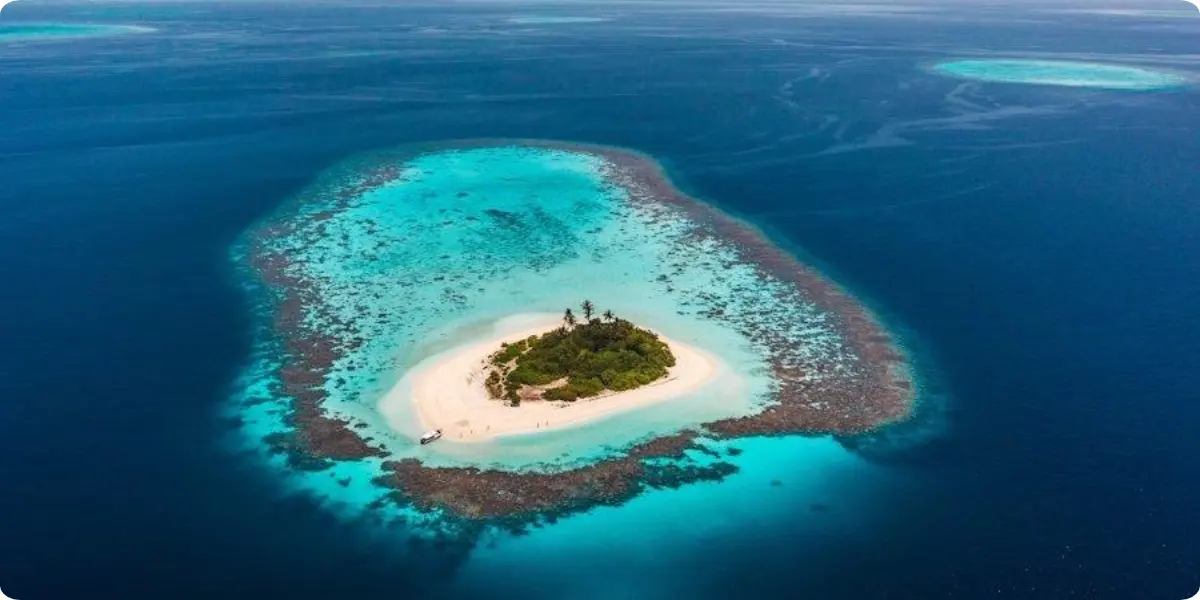
Yukevalo Island is a name that appears on many travel-style web pages as a tropical South Pacific destination, but we could not find a government, mapping, UNESCO or tourism-authority source that confirms it as a real, visitable island. In short, the name is widely repeated online while the place itself remains undocumented.
1. The Meaning and Background of Yukevalo Island
We could not trace a documented meaning, origin or local-language source for the name. It has the rhythm of Fijian place names, particularly the “-levu” ending found in real names such as Vanua Levu, but that resemblance proves nothing on its own. Pages that describe a rich history, archaeology or island culture rarely name a researcher, museum, village or publication, which is the first sign that a background story may be invented or recycled.
2. Why Is Yukevalo Island Gaining Attention?
The name combines two things that search results reward: travel curiosity and a mystery hook. Phrases like “hidden paradise” attract clicks, and once a handful of pages rank, more pages copy the angle. Readers then search the name to check whether it is real, which pushes it even higher.
3. What Do Online Sources Say About Yukevalo Island?
Online sources describe white beaches, coral reefs, dense forest, stargazing and boat or seaplane access, yet they disagree on the basics. One page places the island roughly 230 miles southeast of Fiji, another calls it part of a “Nuvanian Archipelago”, and a third says it is a short boat ride from an unnamed mainland port. Others mention international hotel chains and an airport name we could not connect to any real location, with no booking pages or official listings to back them up.
4. What Facts About Yukevalo Island Are Verified?
Very few. After reviewing the search results, this is where things stand:
- The name is widely circulated across travel-style articles and video descriptions.
- We found no confirmed coordinates, official name record, tourism board page or independent news report describing the island.
- A real Fijian island with a similar-sounding name, Yaukuve Levu, does exist and is listed by Tourism Fiji (covered below).
Treat everything else, including beaches, wildlife, hotels and entry rules, as unverified until an authoritative source says otherwise.
Does Yukevalo Island Really Exist?
There is currently no verifiable evidence that Yukevalo Island exists as a mapped, governed and visitable island. That does not prove it can never be found, but it does mean nobody should book travel on the strength of what appears online.
1. What Geographic Records Tell Us
Official gazetteers exist for exactly this purpose. The U.S. Board on Geographic Names maintains the Geographic Names Server, which describes itself as the official repository of standard spellings for foreign geographic names. We could not confirm an entry for Yukevalo Island in official-style sources, so the safest step is to run the search yourself and try alternate spellings. A missing record is not absolute proof, because tiny features and variant spellings can slip through, but a supposedly famous island absent from every authoritative source is a strong warning sign.
2. Why Its Exact Location Remains Unclear
Every real island has coordinates, a named island group or country, and usually a port, airstrip or landing point. Yukevalo Island has none of these in a consistent form. Because different pages give different distances, directions and neighbouring islands, it is impossible to place a single pin on a map.
3. Is Yukevalo Island a Real Place or an Internet Mystery?
On the evidence available, it behaves more like an internet mystery than a documented destination. Two explanations are plausible: the name could be a garbled version of a real place, or it could have been invented and then amplified by repetitive content. Neither can be confirmed, and an honest guide has to say so rather than fill the gap with made-up detail.
4. Common Misconceptions About Yukevalo Island
- “Many websites mention it, so it must be real.” Repetition is not verification, especially when pages share near-identical wording.
- “Hotels are listed, so it exists.” A hotel name without a booking page, address or official brand listing is just text.
- “It must be part of Fiji.” Some pages say so, but we found no confirmation from Fijian authorities.
- “A map search proves it.” Map apps can return fuzzy matches or user-added labels, so always check coordinates and satellite imagery.
Where Is Yukevalo Island Located?
Nobody can say with confidence. The claims cluster around the South Pacific, but they conflict with each other and no authoritative source confirms any of them. For comparison, a verifiable destination has a clear country, coastline and map, as our Belize location and geography guide shows, and that is the standard Yukevalo Island currently fails to meet.
1. Claims About Its Location in the South Pacific
The South Pacific is a believable setting because it holds thousands of small islands, which makes a hidden one seem plausible. The claims range from a spot about 230 miles from Fiji to an unnamed archipelago and a vague mainland port. When the same island is placed in three different locations, the safest conclusion is that none of the placements has been verified.
2. Is Yukevalo Island Connected to Fiji?
A connection is claimed, not confirmed. Fiji is an island nation made up of hundreds of islands, and we found no listing for Yukevalo Island from Fijian authorities. The closest real match is Yaukuve Levu in the Kadavu group, which is covered in its own section below.
3. Can You Find Yukevalo Island on Google Maps?
We cannot point to a verified map listing. Typing a name into a map app can return a nearby match, a business pin or a user-submitted label, and none of these confirms a real island. If you try it yourself, switch to satellite view and look for land, a shoreline, a jetty or a settlement, then compare the result with a second map provider.
4. Why Its Geographic Coordinates Matter
Coordinates are the one fact that separates a place from a story. Ships, pilots and official gazetteers all rely on them, and a pair of latitude and longitude figures can be checked independently. Once you have verified coordinates for any island, you can sanity-check travel distances with the TripGuiderz distance calculator without coordinates, any distance figure is meaningless.
How Did Yukevalo Island Become Popular Online?
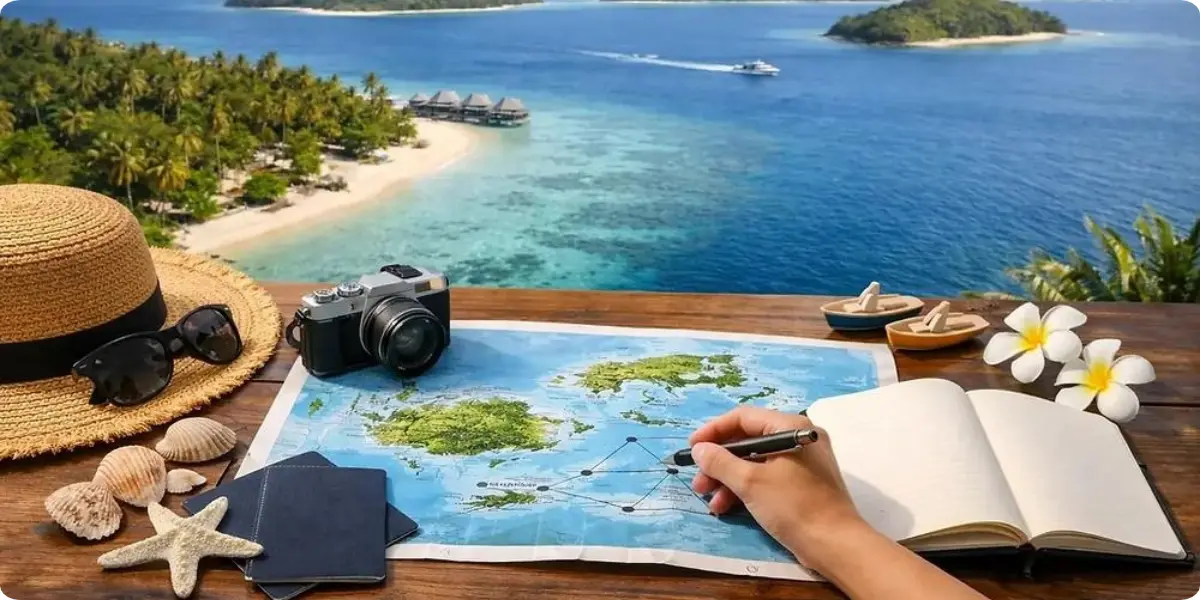
It spread the way many online mysteries do: a few pages ranked, many copied them, and curiosity did the rest. We found no tourism campaign, news report or official announcement behind it.
1. The Role of Travel Blogs and Websites
Many of the pages describing the island follow the same template: a “how to visit” headline, a getting-there section, hotel tiers and a closing push to start planning. They often sit on websites with no apparent connection to travel, a pattern typical of low-quality or opportunistic content. Real destination guides, by contrast, tend to name specific operators, schedules and authorities.
2. Social Media and Online Travel Discussions
Video titles, forum posts and short summaries echo the same phrases, which makes the island appear to have broad coverage. In practice it is one small set of claims copied across many places. When you cannot find a single traveller sharing original photos with a traceable location, that silence is informative.
3. Why Mysterious Destinations Attract Travellers
People are drawn to places that feel undiscovered, remote and just out of reach, which is also why genuinely isolated places such as Tristan da Cunha fascinate readers. A question like “where exactly is it?” is a powerful search trigger. The risk is that a mystery with no facts behind it is easy to exploit, because readers click first and verify later.
4. How Unverified Travel Information Spreads
A confident claim gets rewritten, sometimes by software, and each rewrite adds more specific-looking detail: a distance, a percentage of forest cover, a hotel tier, an entry law. These details are rarely sourced, yet they make a page feel authoritative. Search engines see the repetition and treat it as demand, so the cycle strengthens itself.
What Is Yukevalo Island Known For?
Online, it is described as a quiet tropical retreat with beaches, reefs and untouched nature. None of that is verified, so every item below is a claim to be tested, not a fact to be repeated.
1. Online Claims About Tropical Beaches
Pages describe soft white sand, clear blue water and calm swimming. This is generic language that fits thousands of Pacific beaches, and it comes with no beach names, photographs with location data or local tourism references. Without those anchors, the description tells you nothing about this particular place.
2. Stories About Remote Island Landscapes
Descriptions of dense forest, hidden trails and stargazing under dark skies are common, sometimes with precise-looking figures such as a percentage of forest cover or a width in kilometres. Precise numbers without a surveyor, agency or study behind them are decoration, not data.
3. Claims About Wildlife and Natural Beauty
Coral reefs, whale watching and unusual wildlife are mentioned, but we found no species list, conservation designation or scientific survey. Real biodiversity hotspots leave a paper trail; Socotra, covered below, has detailed UNESCO documentation for its endemic species. The absence of any such trail here is a significant gap.
4. Separating Travel Stories From Verified Information
A simple four-part test helps: does the claim name a source, give coordinates, identify a responsible authority, and can you confirm it somewhere independent? If a statement fails all four, treat it as a story. Apply the test to every list of “facts” you see about Yukevalo Island, including the ones that sound most convincing.
Can You Visit Yukevalo Island?
We cannot confirm that you can. No verified route, accommodation or official visitor information turned up in the sources we found, so booking anything based on current online claims would be a gamble.
1. Are Flights or Ferry Services Available?
Pages mention seaplane transfers, boat rides and a regional hub airport, but none we found named a real operator with a published schedule or booking page. Real remote destinations publish how to get there, and once you have a verified destination you can compare actual routes and journey times with TripGuiderz’s flights and time tools.
2. Are Hotels and Accommodation Available?
Claims of luxury resorts, mid-range hotels and guesthouses appear, some using well-known brand names, but we found no independent confirmation. A legitimate property has an address, a direct website and a presence in the brand’s own channels. For stays in destinations that can be verified, browse our resort guides.
3. Is There an Official Tourism Website?
We found none. Even very remote nations maintain one; Tuvalu’s government, for example, runs an official tourism site (covered below). An island that promises visitors but has no authority-run website, contact details or entry rules deserves suspicion, and mentions of entry laws we could not match to any official source reinforce that concern.
4. What Travellers Should Verify Before Booking
Confirm the location with coordinates, confirm the transport operator directly, confirm accommodation through the property’s own channels, and check entry requirements with the relevant government. Keep payments refundable until each step checks out. Our travel planning hub covers the wider checklist for real trips.
Is Yukevalo Island Related to Yaukuve Levu in Fiji?
The two names may be confused, but no link has been established. Yaukuve Levu is a real island in Fiji, while Yukevalo Island is not documented in any reliable source we found.
1. Where Is Yaukuve Levu Located?
Yaukuve Levu sits in the Kadavu group in southern Fiji. Tourism Fiji lists Kokomo Private Island Fiji with an address on Yaukuve Levu Island, Kadavu, which places it firmly within the country’s official tourism information.
2. What Makes Yaukuve Levu Different?
It is a small island occupied by a private-island resort, so it is closer to a luxury retreat than an island you can wander freely. Travel-trade listings describe access by seaplane or helicopter transfer from the Nadi area, and its setting beside the Great Astrolabe Reef is documented across several sources. Everything about it can be checked, which is exactly the contrast with Yukevalo Island.
3. Could the Two Names Be Confused?
Possibly. The names share many sounds and the “levu” element, a Fijian word meaning “big”, as in Vanua Levu, Fiji’s second-largest island. A traveller mishearing, mistyping or machine-translating Yaukuve Levu could plausibly arrive at something like Yukevalo. That is a hypothesis, not a finding, and no source we found makes the connection.
4. How to Identify the Correct Island
Check the exact spelling, the province or island group (Kadavu for Yaukuve Levu), the coordinates, and whether an official tourism or government source lists the place. If a name only appears in articles without these anchors, do not treat it as a destination. If Yaukuve Levu is what you actually want, deal directly with the resort named in official listings and confirm availability before planning.
Real Island Destinations to Explore Instead
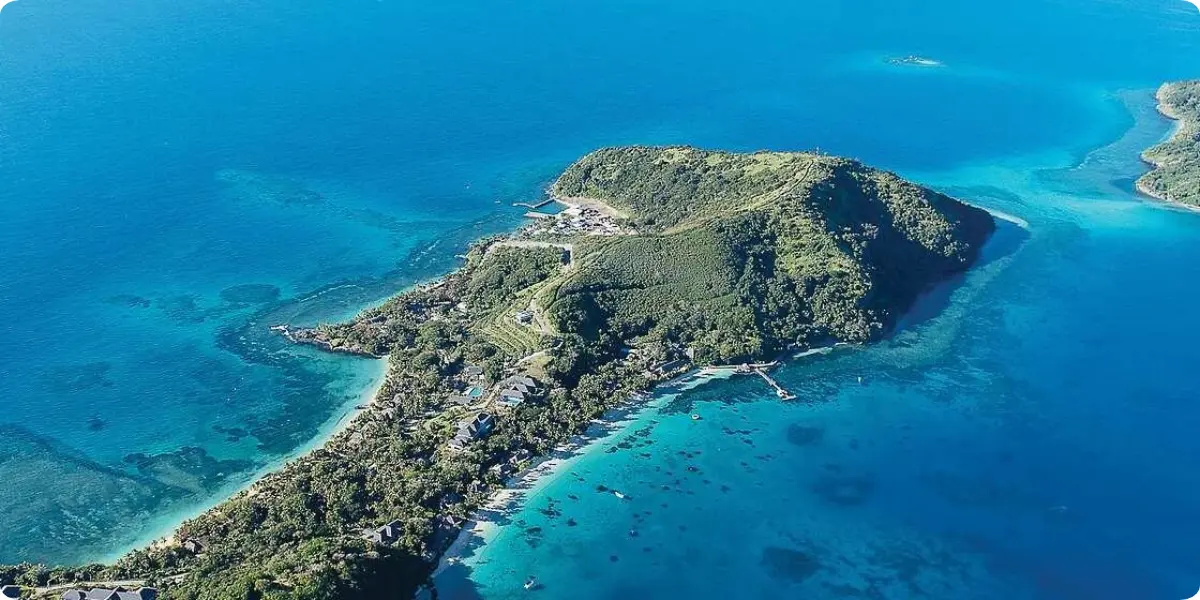
If the appeal of Yukevalo Island is remoteness and untouched scenery, these four places are documented, mapped and reachable with planning.
1. Fiji – Tropical Beaches and Island Experiences
Fiji delivers what the Yukevalo Island pages promise: warm water, reef-edged beaches and island-hopping across hundreds of islands. Most travellers arrive at Nadi on the main island, Viti Levu, and continue by boat or small aircraft. Our beach guides are a good place to start comparing coastal destinations.
2. Tuvalu – Remote Pacific Islands
Tuvalu is a real nation of nine islands and atolls with only about 26 square kilometres of land in total. The official Timeless Tuvalu website, run by the Government of Tuvalu, covers the atolls, accommodation and travel, and lists scheduled flights between Suva and Funafuti on certain days of the week. Expect very limited tourism infrastructure and plan well ahead.
3. Socotra – Unique Natural Landscapes
Socotra, in the Indian Ocean near the Horn of Africa, was inscribed on the UNESCO World Heritage List in 2008. According to the UNESCO World Heritage Committee decision, 307 of its 825 plant species, or 37 percent, occur nowhere else, and the same is true of 90 percent of its reptiles and 95 percent of its land snails. The dragon’s blood tree is its best-known icon. Conditions need careful research, though: the IUCN World Heritage Outlook rates current threats as high and notes that local management is constrained by insecurity in mainland Yemen, so check current government travel advice first.
4. Tristan da Cunha – One of the World’s Most Remote Communities
Tristan da Cunha is a volcanic island in the South Atlantic and part of a British Overseas Territory. The UK government has described the main island as about 11 kilometres across with a permanent population of 275, though figures vary by year. Its only settlement, Edinburgh of the Seven Seas, has no airstrip and is reached by sea, and visits generally require advance permission, so the island’s official site, tristandc.com, is the place to begin.
How to Verify an Island Before Planning a Trip
Verify an island by confirming its name, coordinates, official recognition and transport before you spend anything. The five checks below take less than an hour and would have exposed the gaps around Yukevalo Island immediately.
1. Check Official Geographic Databases
Search the island’s name and its spelling variants in an official gazetteer such as the Geographic Names Server mentioned earlier, or in your own country’s national mapping agency. Look for coordinates, feature type and the administrative region. If nothing appears under any spelling, move on to the other checks before drawing conclusions.
2. Verify the Island on Reliable Maps
Check at least two map providers, switch to satellite view and look for real-world signs of life such as a shoreline, a landing point or buildings. Make sure the coordinates agree across sources. If they place the island hundreds of kilometres apart, the data is not reliable.
3. Look for Government Tourism Information
Search for the national or provincial tourism board, ideally on a government-run domain, and look for entry requirements, health rules and visitor contacts. Fiji and Tuvalu both maintain this kind of official presence, which is what a genuine destination looks like.
4. Confirm Flights, Ferries, and Accommodation
Find the actual operator, a published timetable and a way to contact them directly. Book accommodation through the property’s own channels, favour refundable rates, and use a budgeting resource such as our guide on how to plan an international trip on a budget to keep costs transparent.
5. Avoid Fake Travel Offers and Booking Scams
Fake offers imitate real airlines and agencies and rely on urgency, such as claims that only a few seats remain, as a Consumer Council of Fiji feature on cheap flight deals explains. A notice shared by the Fiji Hotel and Tourism Association likewise urges travellers to book through trusted sites. A bargain package to an island nobody can verify is a textbook risk, so never pay an unknown seller by bank transfer.
Is Yukevalo Island Worth Visiting?
Not as a trip plan. Yukevalo Island cannot be verified as a real place, so there is nothing reliable to visit. It may be worth reading about as a case study in how travel myths spread, but it is not worth booking.
1. What Travellers Should Know
The essentials are short: the location is unverified, no official tourism channels exist that we could find, online claims contradict each other, and a real island with a similar name lies in Fiji. Anything beyond that is speculation, however confidently it is written.
2. Is There Enough Information to Plan a Visit?
No. You cannot confirm where to fly, how to transfer, where to sleep or what rules apply. You also cannot budget, because a trip cost calculator only works when you feed it real flight, lodging and transfer costs.
3. Choosing a Verified Island Destination
Pick a destination whose location, transport and lodging can be confirmed. Fiji, Tuvalu, Socotra and Tristan da Cunha show that remote can still be well documented, and our things to do guides offer more verified ideas. If an authoritative source ever confirms Yukevalo Island, this picture will change; until then, treat it as a mystery rather than a destination.
Frequently Asked Questions About Yukevalo Island
Why Is Yukevalo Island Trending Online?
It trends because the name pairs tropical-island curiosity with a mystery hook, and many near-identical pages repeat it. Searchers then look it up to check whether it is real, which keeps the name circulating. We found no official campaign or news event behind the interest.
Can You Find Yukevalo Island on Google Maps?
We cannot confirm a verified listing. Map searches can return approximate matches or user-added labels that do not prove an island exists. Check satellite imagery, compare at least two map providers and look for consistent coordinates before trusting any result.
Is Yukevalo Island Part of Fiji?
Some pages claim it is, but no Fijian authority source we found confirms it. A real island with a similar name, Yaukuve Levu, lies in Fiji’s Kadavu group, which may explain the confusion. Treat the connection as an unproven possibility.
Are There Official Photos of Yukevalo Island?
We found none from a government, tourism board or recognised agency. Photos on blogs may be stock, edited or AI-generated, so reverse-search any image and look for credited photographers or location data before believing it shows this island.
Is It Safe to Book a Trip to Yukevalo Island?
No, it is not safe to book. Without a verified location, transport, accommodation or official contact, you risk losing money to misleading or fake offers. Choose a documented destination, book through official channels and keep refundable options where possible.

Arman Ashraf is a content writer focused on travel and tourism. He creates practical, well-researched travel guides, destination articles, and travel tips designed to help readers plan trips with greater confidence. His work combines clear, engaging writing with SEO best practices, covering destinations, things to do, travel planning, and useful advice for travelers. Arman is committed to producing helpful content that makes discovering and planning travel easier.