
Puglia, Italy, sits at the heel of Italy’s boot, squeezed between the Adriatic and the Ionian seas. Whitewashed hill towns cling to limestone ridges. Turquoise water laps at coves few travelers outside Italy could name a decade ago. Olive trees, some documented as over a thousand years old, twist across groves that predate the towns around them. And the trulli of Alberobello, those odd cone-roofed houses built without mortar using a centuries-old drystone technique, remain so unusual that visitors often assume they’re staged until they’re standing beside one.
The numbers confirm what repeat visitors and locals have been noticing on the ground. According to preliminary 2025 tourism data from Pugliapromozione, the region logged over 6.7 million arrivals and 22.7 million overnight stays, up roughly 13% and 10% over the previous year. The same regional tourism data shows particularly strong growth in international visitors, with foreign arrivals increasing by 25.1% in 2025.
That growth has pushed Puglia into serious conversation alongside Tuscany and the Amalfi Coast as a must-visit region, even as it retains a slower, less commercialized character that longtime travelers still prize. The region’s official tourism resources also highlight its coastline, food and wine, cultural heritage, and growing international appeal.
Whether you’re planning a Puglia road trip through the Itria Valley, exploring beach towns along the Salento coast, planning a honeymoon, or taking your first real look at southern Italy beyond Rome, Puglia rewards people willing to slow down, eat locally, and wander past the postcard towns into the countryside where the real texture of the region lives. Understanding the latest tourism trends in Puglia and which towns are absorbing the growth well can help travelers plan trips that feel timely rather than crowded, and choose the right season, region, and pace for their own visit.
Where Is Puglia?
It’s the heel. Literally. Bordered by the Adriatic to the east, the Ionian to the south and southwest. Bari is the capital, but most people spend their time chasing the smaller towns scattered around it Alberobello, Polignano a Mare, Ostuni, Monopoli, Lecce, Otranto, Gallipoli.
What sets Puglia apart is how easily one kind of day turns into another. Walk a hill town in the morning. Swim by early afternoon. Sit down for pasta that night. No forcing it, no packed schedule required that’s more or less the pitch, and Italy’s own tourism board leans on the same combination when they talk up the region: coast, history, trulli, food.
Location on Map:
Why Visit Puglia?
Compared to the big northern cities, Puglia runs slower. Less museum-hopping, more just sitting somewhere and letting the afternoon pass.
People come for the trulli in Alberobello, the white streets of Ostuni, the Baroque stone of Lecce, the cliffs above Polignano a Mare. Two coastlines to choose from depending on your mood that day. Seafood that actually tastes like the sea it came from. The option to sleep in a converted trullo or an old farmhouse rather than a hotel chain.
If your version of a good trip is culture plus beaches plus food plus small towns, rather than a list of famous landmarks, this is your region.
Best Places to Visit in Puglia
The place is bigger than it looks on a map. Trying to see all of it in a week usually just means rushing between towns without really being in any of them. Pick a few and give them time instead.
1. Alberobello
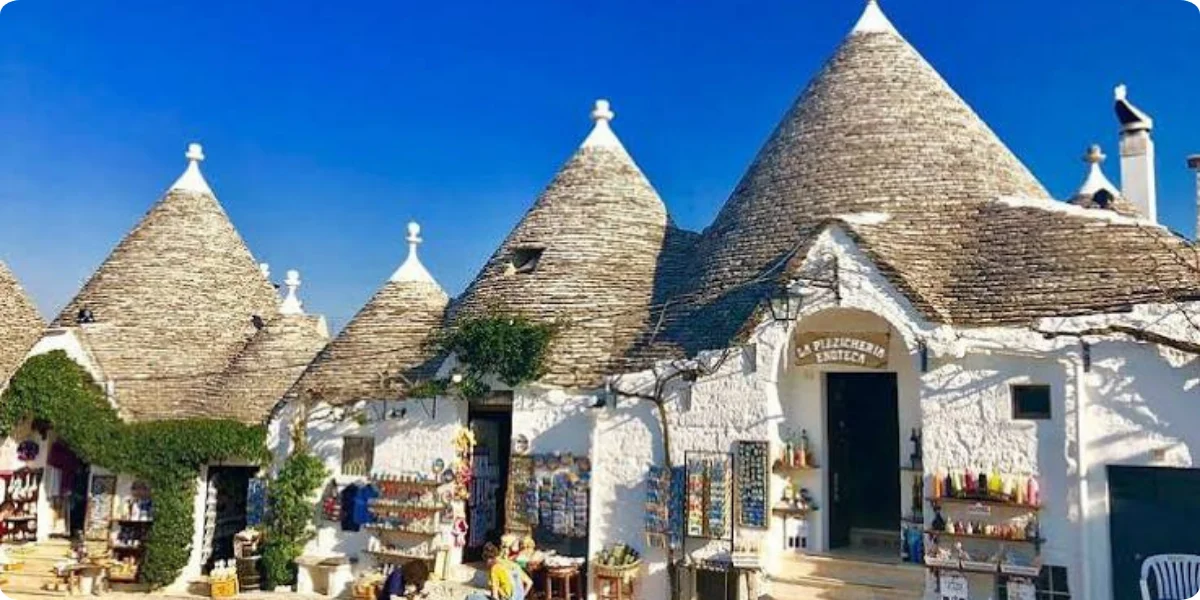
This is the postcard shot of Puglia. A hillside crowded with trulli, whitewashed, dry-stone buildings capped with conical grey roofs found nowhere else in Italy in this concentration. The technique dates back centuries, when local builders reportedly stacked the stones without mortar so roofs could be dismantled quickly to dodge taxes on permanent structures, and the result is a townscape that still feels improbable in person.
Things to Do in Alberobello
Start in Rione Monti, the larger and more photographed of the two trullo districts, where narrow lanes wind past more than a thousand cone-roofed houses, many now converted into small shops selling local ceramics, wine, and olive oil. Step inside several trulli; many are open to visitors for a small fee or free with a purchase, and the cool, single-room stone interiors explain why the design suited centuries of Puglian summers so well. Across the main road, Aia Piccola holds a smaller, quieter cluster where people still actually live, making it far better suited to an unhurried walk than a rushed photo stop. For the clearest rooftop panorama of the whole district, climb to Belvedere Santa Lucia, ideally in the late afternoon light.
Beyond the two districts, Trullo Sovrano, the only two-story trullo in town, now a small museum, offers a closer look at how a wealthier household would have lived inside these structures. Nearby, the Casa d’Amore, the first trullo legally built with mortar after an 18th-century royal decree, marks the moment Alberobello shifted from tax dodge to town. Rounding out a visit, the Chiesa di Sant’Antonio, a trullo-style church built in the 1920s, and the town’s small local markets are worth a stop for anyone who wants to see the architecture applied beyond housing. For broader historical context, Alberobello’s UNESCO World Heritage listing provides useful background on the town’s trulli and their traditional construction.
Nearby Towns Worth Folding In
Locorotondo and Martina Franca, both a short drive through the Valle d’Itria, pair naturally with an Alberobello stop. Locorotondo’s circular old town of whitewashed houses is easy to loop through in an hour. At the same time, Martina Franca’s baroque center and Thursday market give the day a different rhythm worth folding into the same trip rather than treating as a separate outing.
2. Polignano a Mare
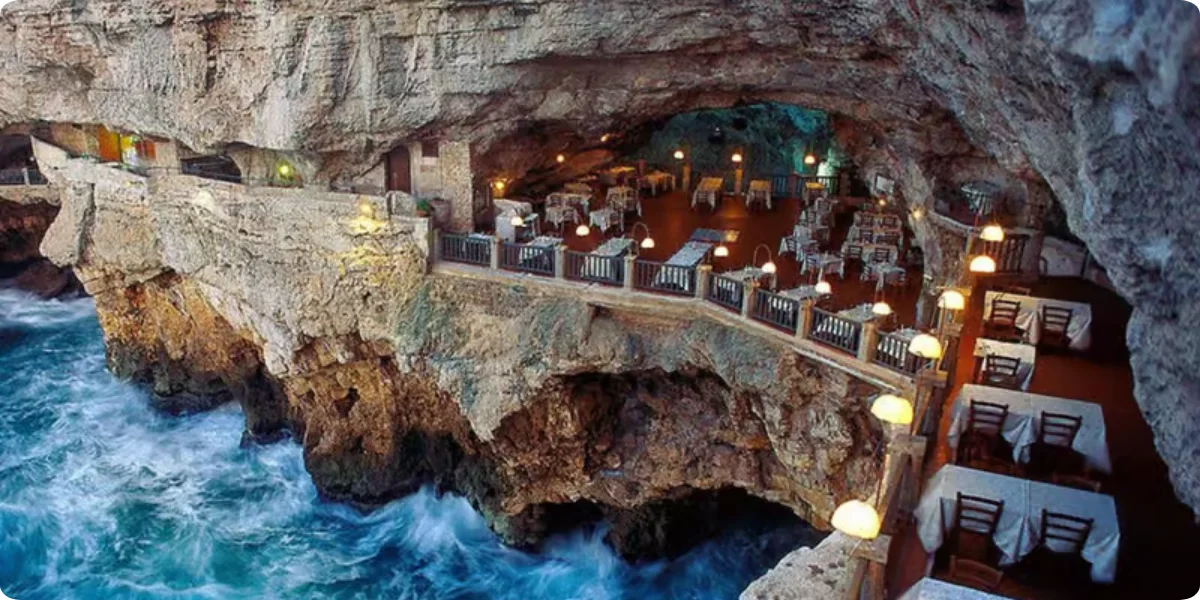
Built straight into the cliffs above the Adriatic, this is one of Puglia’s most striking coastal towns a tangle of narrow whitewashed streets and small piazzas that end abruptly at sheer drops down to the sea.
Things to Do in Polignano a Mare
Everyone comes for Lama Monachile, a tiny cove beach wedged between limestone walls just below the old town’s main bridge, and it earns the hype—the water’s a striking turquoise against the pale rock. Go early, though, since by midday in summer it’s packed shoulder to shoulder. Beyond the beach, the historic center itself rewards slow wandering: balconies hang directly over the water, and several viewpoints along Via Santa Chiara and Via San Vito offer some of the best cliffside panoramas in town without needing to pay for anything. Cliff-diving fans may recognize Polignano as a regular stop on the Red Bull Cliff Diving World Series, held from the bridge above Lama Monachile.
Food is worth building time around here too—the town is known for its orecchiette and fresh seafood, and gelato at Come Il Latte, tucked into the old center, is a local favorite. For a quieter look at the coastline, a short walk or boat trip along Polignano’s sea caves reveals limestone caves cut into the cliffs that aren’t visible from street level.
Small bit of trivia: this is Domenico Modugno’s hometown, the singer behind “Volare,” and a statue of him stands near the cliffside overlooking the sea if you’re curious.
3. Ostuni
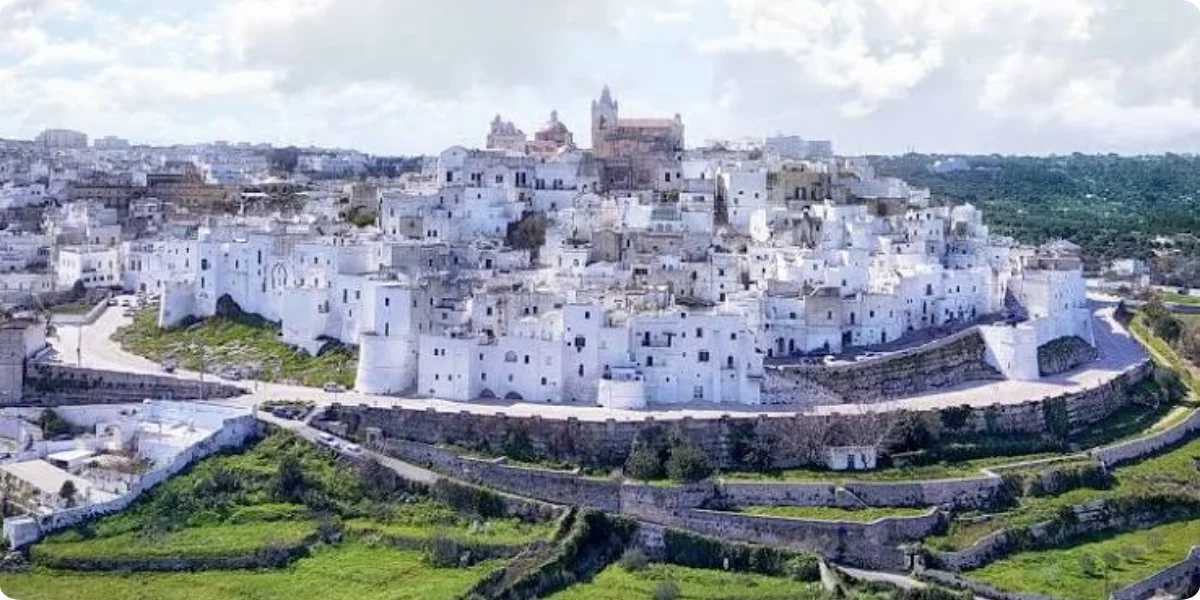
The White City, and it earns the name every building is limewashed to a near-glow, a tradition originally meant to reflect heat and, as legend has it, help ward off plague. Ostuni sits perched above a sea of olive groves, some containing trees said to be centuries old, so the climb up from the coastal plain is half the reason to visit in itself.
Things to Do in Ostuni
This is a town built for wandering rather than checking off a list. The old town’s lanes are steep, narrow, and winding by design, looping and doubling back in ways that reward getting mildly lost rather than following a fixed route. The Cathedral of Santa Maria Assunta, with its distinctive rose window and unusual Gothic-Romanesque facade, anchors the old town and is worth a stop, but Ostuni’s real draw is simply moving through the streets themselves past whitewashed archways, sudden staircases, and small piazzas that open up without warning.
For views, several points along the old town’s historic walls look straight out over the olive groves toward the Adriatic in the distance, and the walk up from the newer lower town frames the White City rising ahead in a way that’s hard to capture from any single spot. Evening is when Ostuni is at its best the heat breaks, alleys fill with the smell of dinner cooking, and the restaurants tucked into the old center, many with terrace seating overlooking the countryside, start to fill up. Some small artisan shops and ceramic studios are also worth ducking into during the day, tucked into corners of the old town that are easy to miss if you’re moving too quickly.
For travelers building a wider Puglia itinerary, Ostuni works particularly well as a base or stop between the coast and the inland towns of the Itria Valley. The town’s official tourism information is also useful for checking Ostuni attractions and local experiences before your visit.
4. Lecce
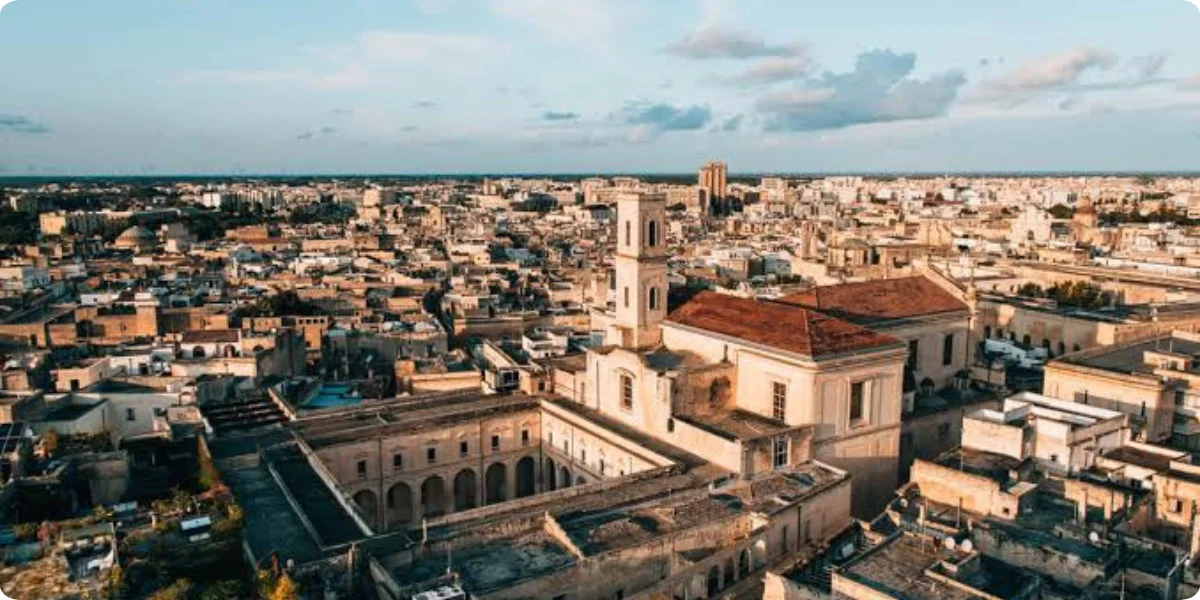
Sometimes called the Florence of the South, Lecce owes the nickname to its baroque architecture, carved almost entirely from the local honey-colored Lecce stone, a soft limestone that’s easy to work when first quarried and hardens over time, which is why the city’s facades are so ornately detailed. Grand old palaces line streets that open onto a Roman amphitheater sitting right in the middle of everything, sunk below current street level and still largely intact, treated with the same everyday familiarity as any other landmark in town.
Things to Do in Lecce
Piazza del Duomo is the obvious starting point, a closed-in square ringed by the cathedral, bishop’s palace, and seminary, and one of the more theatrical baroque piazzas in Italy, best seen lit up in the evening. From there, the Basilica di Santa Croce is the city’s architectural showpiece, its facade so densely carved with figures, flowers, and animals that it rewards a slow, close look rather than a passing glance. The Roman amphitheater in Piazza Sant’Oronzo, along with the Roman theater tucked into the old town, is a reminder that Lecce’s history runs well before its baroque period.
Beyond the landmarks, the old town itself is compact and walkable, its narrow streets lined with small workshops still practicing cartapesta, the local papier-mâché art tradition Lecce is known for, and it’s worth ducking into a few for a look at pieces being made rather than only finished ones for sale. The city’s cafe culture is also part of the experience—pausing for a caffè leccese, iced coffee with almond milk, is as much a local ritual as any monument on the list.
Lecce works just as well as a base for exploring Salento as it does a destination on its own. Its central position and rail and road connections make it an easy jumping-off point for day trips to the coastal towns and countryside further south. If you’re planning a wider Puglia itinerary, Lecce is one of the strongest places to combine historic sightseeing with easy access to the southern peninsula.
5. Monopoli
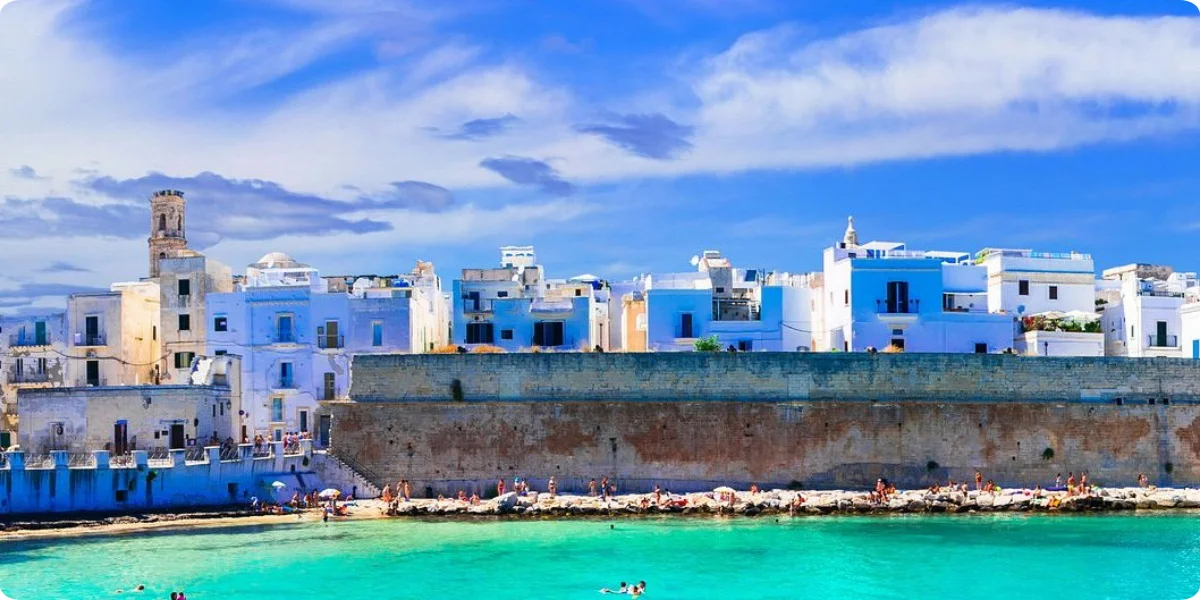
Quieter than its neighbors, and better for it in some ways. Monopoli trades the crowds of Alberobello or Polignano for a working old harbor still lined with fishing boats, centuries-old defensive walls that once protected the town from raids along this stretch of coast, and a historic center that feels lived-in rather than staged for visitors.
Things to Do in Monopoli
The old harbor of Monopoli is the natural place to start, especially early or late in the day when fishermen are unloading the day’s catch and the waterfront restaurants are just setting up. From there, walking the city walls and bastions gives a sense of Monopoli’s defensive history and opens up some of the better views back over the port and the old town’s rooftops. The historic center itself is worth losing an afternoon to a tighter, quieter maze of streets than Polignano’s, with small churches, weathered palazzi, and far fewer crowds to navigate around.
What sets Monopoli apart is how easy it is to fold the beaches near Monopoli’s historic center into the same visit. Several small, walkable coves sit right at the edge of the old town, so it’s possible to go from wandering historic streets to swimming without needing a car. The Castello Carlo V, a 16th-century fortress on the water’s edge, is worth a stop for its own views and now hosts occasional exhibitions inside.
If Alberobello or Polignano start to feel like too much, this is the reset. Monopoli runs at a slower pace, with room to actually sit at a harbor-side table rather than fight for one. It’s also an easy addition to a wider Puglia itinerary, particularly if you’re combining the coast with nearby towns such as Alberobello and Ostuni.
6. Bari
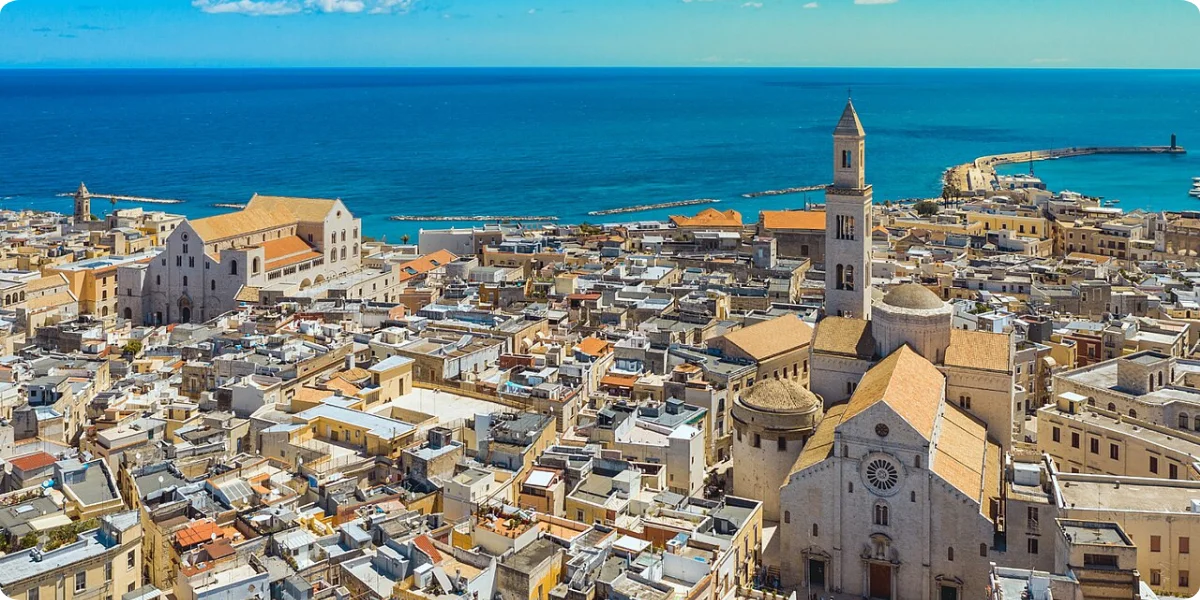
Most trips through Puglia start or end here, largely thanks to the airport and rail links that make it the region’s main gateway. But Bari is worth more than a layover Bari Vecchia, the old town, is a tangle of narrow streets and everyday life, much of it not built with tourists in mind, which is exactly what makes it worth slowing down for.
Things to Do in Bari
Bari Vecchia rewards aimless wandering more than any checklist. Locals still hang laundry between balconies, play cards in small piazzas, and in certain streets, women can be seen making orecchiette by hand right outside their front doors, a scene that’s become one of the neighborhood’s most recognizable sights. Bari Vecchia and its historic lanes The Basilica of Saint Nicholas, built to house the saint’s relics and an important pilgrimage site for both Catholic and Orthodox visitors, anchors the old town and is worth stepping into even for a short visit. Nearby, the Cattedrale di San Sabino offers a quieter, less-visited counterpart in the same Apulian Romanesque style. Bari’s Cathedral of Saint Sabinus
The waterfront promenade along Lungomare Nazario Sauro is one of the longest in Italy and makes for an easy evening walk, with the old town’s walls rising on one side and the Adriatic on the other. Bari’s waterfront and ancient walls Bari’s Norman-Swabian Castle, built and rebuilt across several centuries of rulers, sits at the edge of the old town and is open to visitors for a closer look at the city’s layered history. Norman-Swabian Castle in Bari
And no stop in Bari is complete without grabbing a slice of focaccia barese, soft, olive-oil-soaked focaccia topped with tomatoes and olives, from one of the old town’s bakeries on your way somewhere else. Bari’s traditional food and focaccia experience
7. Otranto
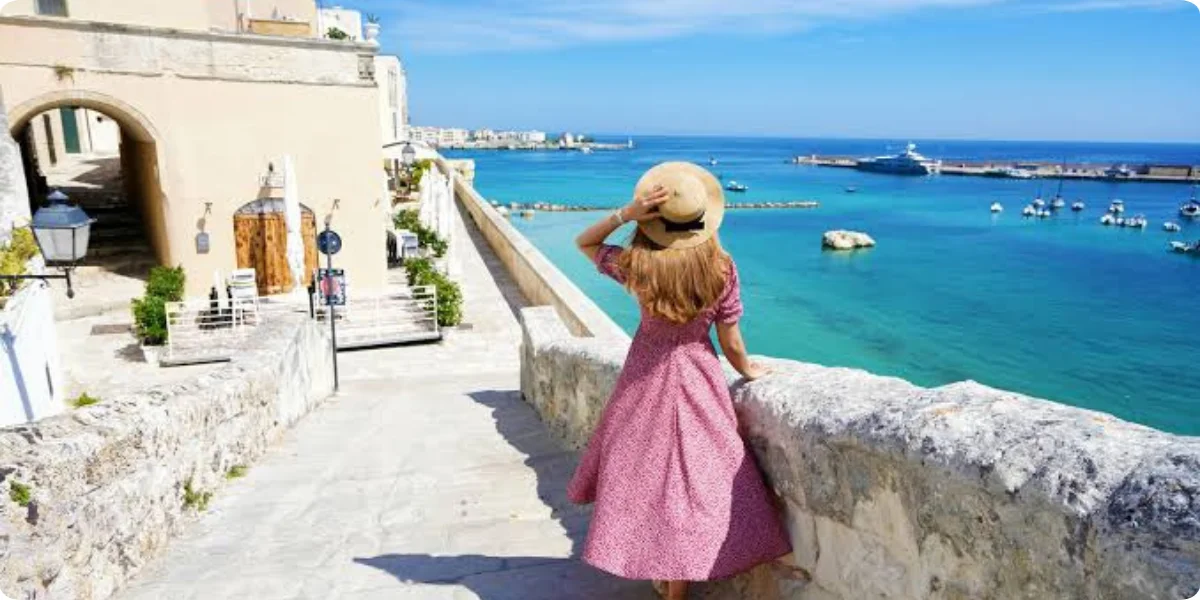
Set on the Adriatic in southeastern Puglia, Otranto marks Italy’s easternmost point, close enough to Albania that on a clear day the coastline across the sea is visible. The cathedral and the old fortress are worth the stop on their own, but the coastline stretching south of town is arguably the bigger draw.
Things to Do in Otranto
The Cattedrale di Otranto is the old town’s centerpiece, home to one of the largest surviving medieval mosaic floors in Europe, a sprawling 12th-century work depicting the Tree of Life alongside biblical and mythological scenes. Otranto Cathedral Beneath it, the crypt, held up by dozens of columns salvaged from earlier structures, is worth the extra few minutes underground. Nearby, the Aragonese Castle, a squat, moated fortress built to defend the town after a brutal 15th-century Ottoman siege, anchors the other side of the old town and offers good views from its ramparts. Aragonese Castle of Otranto
Beyond the historic core, the coastline south of Otranto is where the town earns its reputation: a run of clear water and rocky coves stretching toward Santa Cesarea Terme and Castro, with spots like Baia dei Turchi and Grotta della Poesia drawing swimmers for their strikingly clear, turquoise water. Baia dei Turchi, Grotta della Poesia, and Otranto’s compact old town, wrapped almost entirely by defensive walls, are easy to cover on foot in an afternoon, leaving the rest of a visit free for the coast.
The town also works well as a base for exploring further into Salento, with easy access south to the smaller coastal towns and inland villages that make up the rest of the peninsula’s tip. For a broader route, you can pair Otranto with other destinations in our Puglia travel guide, particularly if you’re planning a road trip through Salento.
8. Gallipoli
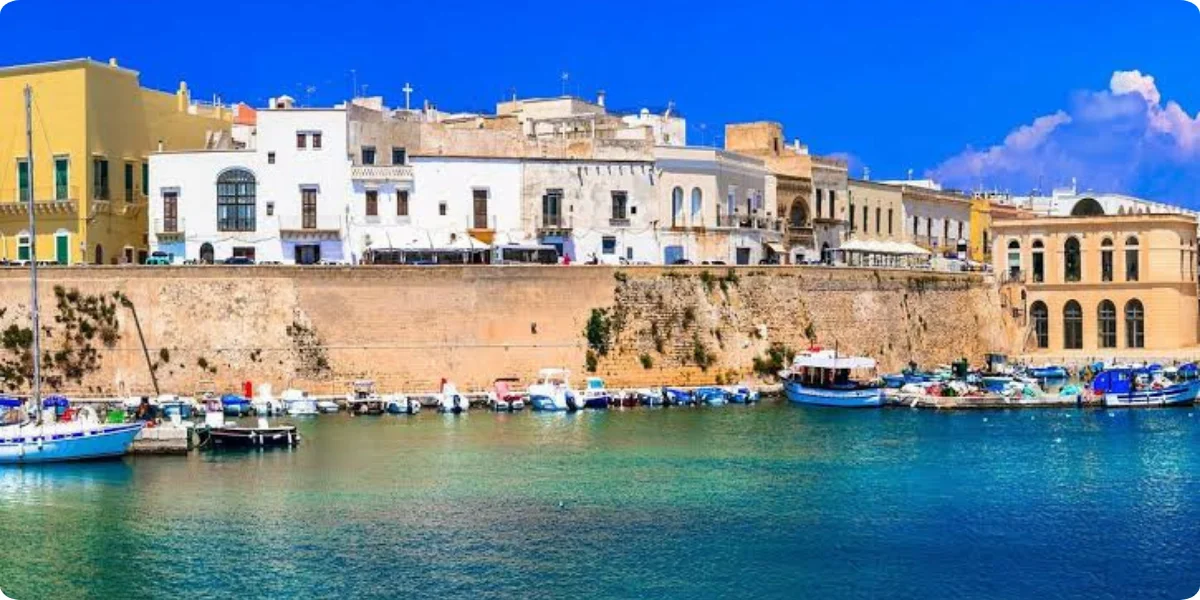
Over on the Ionian side of the Salento peninsula, Gallipoli’s old town sits on a small island linked to the mainland by a stone bridge, giving it a self-contained feel that’s different from the cliffside or hilltop towns on the Adriatic side. The result is a compact core almost entirely surrounded by water, with the newer part of town spreading out on the mainland behind it.
Things to Do in Gallipoli
The old town is easy to circle on foot, its perimeter wrapped in defensive walls that once protected the island from raids and now double as a scenic waterfront walk, with the sea visible on nearly every side. Gallipoli’s historic center and fortifications At its edge, the Castello Angioino, a squat medieval fortress guarding the bridge into town, is worth a stop for its views back across the water. Castello Angioino Inside the old town, the Cattedrale di Sant’Agata, built in a baroque style similar to Lecce’s, and the narrow surrounding streets make for an easy wander between stops at the water. Cattedrale di Sant’Agata
Gallipoli’s real strength, though, is its beaches the Ionian side of Salento tends to have calmer, shallower water than the Adriatic, and a run of sandy beaches south of town, including Baia Verde and Punta della Suina, makes Gallipoli a solid pick if beach time is the priority for this leg of the trip. Gallipoli beaches In the evening, the old town’s seafood restaurants, many perched right along the waterfront with views back toward the bridge and castle, are where the town’s rhythm really shows.
For a wider route through southern Italy, you can also pair Gallipoli with Otranto, Lecce, and other stops in our Puglia travel guide.
Best Things to Do in Puglia
You don’t need a packed schedule here. Some of the best moments come from doing very little, on purpose.
Walk Alberobello’s trulli district before the tour buses arrive. Split your beach days between the coasts cliffs and rocky coves on the Adriatic side, and longer sandy stretches once you get down into Salento (conditions shift a lot by spot, worth checking ahead). Pick one town a day Ostuni, Monopoli, Polignano, Lecce, Otranto and just be in it instead of trying to see all five.
Consider making your accommodation part of the trip a trullo out in the Valle d’Itria, or a masseria, one of the old fortified farmhouses now running as guesthouses, if you’d rather wake up in the countryside than in a town center. And find a food tour, or just wander into a bakery and ask questions. Puglia rewards eating slowly more than it rewards eating a lot.
Best Beaches in Puglia
Two coastlines mean two very different kinds of beach day, and Puglia’s heel-of-Italy shape means you can chase either the Adriatic or the Ionian depending on your mood.
Lama Monachile (Polignano a Mare) is the postcard shot a narrow limestone ravine with a tiny pebble beach wedged between cliffs, right under the town’s Roman bridge. Lama Monachile is compact, dramatic, and famously crowded in summer, so aim for early morning (before 9 am) or golden hour if you want the view without fighting for towel space. Cliff diving is a local sport here (the Red Bull Cliff Diving World Series has stopped in Polignano), and the beach sits a short walk from the historic center of Polignano a Mare, so it pairs naturally with a lunch or dinner stop.
Torre dell’Orso, down in Salento, is the opposite mood a wide, sandy bay backed by pine trees and dunes, with the “Due Sorelle” (Two Sisters) sea stacks marking its edges. It’s family-friendly, with plenty of lidos (beach clubs) alongside free stretches of sand, and shallow water that makes it easy for kids. Best visited midweek in July–August to dodge the weekend crowds from nearby towns.
Baia dei Turchi, just north of Otranto, mixes pine forest, red cliffs, and turquoise water it’s often ranked among Italy’s best beaches. It pairs naturally with a day in Otranto itself, since the beach is only a short drive or bike ride from the town’s cathedral and castle. Go early or late afternoon in peak season; midday parking near the beach fills up fast.
On the Ionian side, Punta Prosciutto and the beaches around Porto Cesareo deliver that shallow, sandy, postcard-summer look most people picture when they think “Italian beach” pale sand, skinny-shallow turquoise water you can wade into for 50 meters before it deepens, and low dunes instead of cliffs. The Porto Cesareo coastline and Punta Prosciutto are also easy to explore by boat, with routes running along Punta Prosciutto, Torre Lapillo, and the surrounding coast. This coast tends to be calmer and less touristy than the Adriatic side, making it a good pick for sunset swims or a quieter alternative to Polignano.
Timing tip: June and September give you warm water without the August crush. Ferragosto (mid-August) is when Italians themselves flood these beaches, so plan around it if you can.
What Food Is Puglia Famous For?
Nothing overworked here. Just good ingredients, treated simply.
Orecchiette, the little ear-shaped pasta, usually turns up with vegetables or a light tomato sauce. Burrata, creamy, soft, better here than almost anywhere, shows up on menus constantly, and for good reason. In Bari specifically, get the focaccia barese soft, soaked in olive oil, topped with tomatoes and olives. Panzerotti make a good grab-and-go meal, fried or baked pockets stuffed with tomato and mozzarella. Taralli, the crunchy little rings, seem to appear at every table whether you ordered them or not.
With two coastlines, seafood is a given in the towns along the water ask what’s seasonal instead of ordering the same dish everywhere you go. And if you have time, a countryside detour to see the olive groves adds real context to everything you’ve been eating.
Best Time to Visit Puglia
May, June, September, early October. That’s the stretch that balances good weather against manageable crowds.
Spring keeps things comfortable for walking and exploring without summer’s crush. June through August is peak best if beach time is non-negotiable, worst if you hate crowds and rising prices. September tends to be the sweet spot: warm enough to swim, noticeably calmer than August. October leans more toward food and culture than guaranteed beach weather. Winter goes quiet, some coastal businesses scale back, but Bari and Lecce still hold up fine as year-round cultural stops.
How Many Days Do You Need in Puglia?
Five to seven days is a reasonable start. Ten to fourteen lets you actually slow down.
Three days: pick one area, don’t spread yourself thin. Bari and Monopoli on day one, Polignano and Alberobello on day two, Ostuni and the Valle d’Itria on day three.
Five days: add Lecce and a stretch of the Salento coast. A full week gets you a fairly balanced loop Bari, the Valle d’Itria, Ostuni, Polignano, Monopoli, Lecce, a coastal stop or two. Ten days: slow way down, add Otranto, Gallipoli, and whatever rural detour catches your eye along the way.
A 7-Day Puglia Itinerary
- Day 1: Bari. Bari Vecchia, the Basilica of Saint Nicholas, the waterfront, the food.
- Day 2: Polignano a Mare, then Monopoli. Morning in one, afternoon in the other leave room for both the old towns and the coast.
- Day 3: Alberobello, then Locorotondo. Take the drive through the Valle d’Itria slowly if the countryside is doing anything for you.
- Day 4: Ostuni. The whole day, ending with dinner somewhere in the alleys.
- Day 5: Lecce. Baroque churches, old piazzas, Roman ruins it deserves the full day.
- Day 6: Otranto. Adriatic coast, the cathedral, the fortress, the beaches nearby.
- Day 7: Leave it open. Go back to whatever beach you liked best, find a local food producer, or just have a long lunch and let the trip end slowly instead of rushing the last day.
Do You Need a Car in Puglia?
If you’re chasing small towns, rural beaches, or countryside stays, yes, pretty much. Trains cover the bigger destinations reasonably well, but public transport starts falling apart once your itinerary gets more specific than “the main towns.”
One warning: a lot of historic centers have ZTL zones, areas where driving without authorization gets you fined. Check the rules before you drive into any old town, or you’ll be paying for that parking mistake later.
Where to Stay in Puglia
Depends what you’re building. Bari if you want transport links and a bit of city energy. Polignano a Mare for cliffside views and something more romantic. Monopoli for a quieter coastal base with a real historic center. Ostuni for romance, countryside views, and easy access to the Valle d’Itria. Lecce if architecture matters most, or you’re using it as a base for Salento. A trullo or masseria if you want the stay itself to be part of the memory, not just somewhere to sleep.
Is Puglia Expensive to Visit?
Not especially middle of the pack compared to other Italian regions, according to the region’s own tourism data, though prices climb in summer along the coast like everywhere else in Italy.
What you actually spend comes down to accommodation type, when you travel, whether you rent a car, and how touristy your meals get. Staying slightly inland instead of directly on a popular beach usually opens up cheaper options too.
Puglia Travel Tips
Book summer accommodation early, coastal towns fill up fast. Start your days early, especially in Alberobello and Polignano both get crowded by late morning. Bring shoes that can handle uneven stone and steep lanes, because your feet will notice by day three otherwise. Check ZTL rules before driving into any historic center. And don’t over-plan. Long lunches and the occasional wrong turn are part of what makes this place work a packed itinerary kind of defeats the purpose.
Puglia for Different Types of Travelers
Couples tend to do especially well here Ostuni, Polignano, Monopoli, or a countryside masseria all lean romantic without trying too hard. Families are usually better off basing in one beach town with easy restaurant access rather than switching hotels every night. Solo travelers will find Bari and Lecce lively enough on their own, and food tours make it easy to meet people without needing a car. Food lovers basically have the whole region to work with. And if beaches are the actual point of the trip, spend more time in Salento and less time forcing in inland stops.
Is Puglia Worth Visiting?
Yes. If beaches, historic towns, real food, countryside, and a slower pace sound like your kind of trip, Puglia delivers on all of it.
It’s not flawless summer crowds, some beaches get overrun, and getting around without a car takes more planning. But the trade-off is real range in a single day: trulli in the morning, pasta at lunch, a swim by afternoon, dinner on a historic street by evening. And the numbers suggest more people are figuring this out 2025’s preliminary data shows arrivals up sharply, foreign visitors especially, around 25% growth for the year.
Frequently Asked Questions About Puglia
What is Puglia famous for?
Trulli houses, whitewashed towns, two coastlines, olive groves, and Baroque architecture in places like Lecce.
Where exactly is Puglia in Italy?
Southeastern Italy, the heel of the boot, between the Adriatic and Ionian seas.
Is Puglia expensive?
Middle of the road for Italy, pricier in summer along the coast.
How many days are enough?
Five to seven for a first trip, ten or more if you want to actually slow down.
Best month to visit?
May, June, September, or early October for the balance. July and August if beach time matters more than crowds.
Do you need a car?
Not strictly, but it makes a real difference once you go past the main towns.
Prettiest towns in Puglia?
Alberobello, Ostuni, Polignano a Mare, Monopoli, Locorotondo, Lecce, Otranto.
Best beaches?
Lama Monachile, Torre dell’Orso, Baia dei Turchi, Punta Prosciutto, and the beaches near Porto Cesareo.
Good for a honeymoon?
Yes, boutique hotels, trulli, masserie, beaches, and slow dinners make it an easy fit.
Can you visit without a car?
Yes, if you stick mostly to the bigger towns connected by rail or bus. A car helps once rural spots and hidden beaches enter the picture.
Final Thoughts on Puglia
This isn’t a checklist kind of place. What makes it work is the combination old towns, striking coastline, real food, olive groves everywhere, and enough breathing room to actually slow down.
Keep a first trip simple: Bari, Polignano a Mare, Monopoli, Alberobello, Ostuni, Lecce. If there’s time left, push further to Otranto, Gallipoli, and the beaches of Salento.
The tourism numbers say people are catching on. But the region hasn’t really changed to meet them it’s still built around local food, small towns, and everyday life rather than one attraction after another. Plan loosely, leave room to get a little lost, and pick your season carefully. Do that, and Puglia holds up as one of the better reasons to go south in Italy.
Read More Related Articles:
- Places of Singapore to Visit | Best Attractions and Experiences
- Best Time to Visit Thailand | Weather, Seasons & Travel Tips
- Best Places to Visit in August | 28 Amazing Destinations in 2026
- Best Places to Visit in June | Top Destinations for Summer Travel
- Best Places to Visit in June | Top Destinations for Summer Travel

Arman Ashraf is a content writer focused on travel and tourism. He creates practical, well-researched travel guides, destination articles, and travel tips designed to help readers plan trips with greater confidence. His work combines clear, engaging writing with SEO best practices, covering destinations, things to do, travel planning, and useful advice for travelers. Arman is committed to producing helpful content that makes discovering and planning travel easier.