

Quick answer: The London travel tips that matter most are to pay for transport with contactless, stay close to a Tube or rail station, group sights by area, book a few headline attractions ahead, wear shoes you can walk in all day, and carry a light rain layer. Get those six right and most of the trip takes care of itself.
London is huge, and first-timers usually lose the most time and money on the same three things: crossing the city repeatedly, paying more than they need to for transport, and turning up at popular sights without a ticket. With around 9 million residents, 11 Underground lines and more than 20 million international visits a year, the capital rewards planning far more than improvisation. The Underground alone carries more than 1 billion passengers a year, so peak-hour crowding is a real factor in how smoothly your days run. In our experience planning London itineraries, grouping sights by neighborhood can cut daily transit time by an hour or more, while using contactless payment with daily fare capping stops you from overspending on the Tube and buses. Booking timed entry for headline attractions such as the Tower of London also avoids the longest queues, particularly in summer and during school holidays.
Many of the city’s best museums, including the British Museum and the National Gallery, offer free general admission, so extra days cost less than most visitors expect. Everything below is organised around avoiding those mistakes, using practical routes, realistic budgets and checked opening hours. Every recommendation is based on firsthand testing and cross-checked against official sources such as Transport for London and Visit London, so the advice stays current. If you are still choosing dates, start with our guide to the best time to visit London. If you are deciding how long to stay, read how many days in London first. Pairing the two helps you match weather, crowd levels and trip length before you book anything.
London Travel Tips at a Glance
| Travel Tip | Why It Matters |
|---|---|
| Use contactless or Oyster | Simplest way to pay for the Tube, buses and trains |
| Stay near a Tube station | Saves daily travel time |
| Book major attractions early | Avoids sold-out time slots |
| Walk between nearby sights | Free, and often quicker than changing lines |
| Check zones before booking | Helps you judge accommodation and fare costs |
| Carry a light rain jacket | Weather can change within a day |
Know How London’s Transport System Works
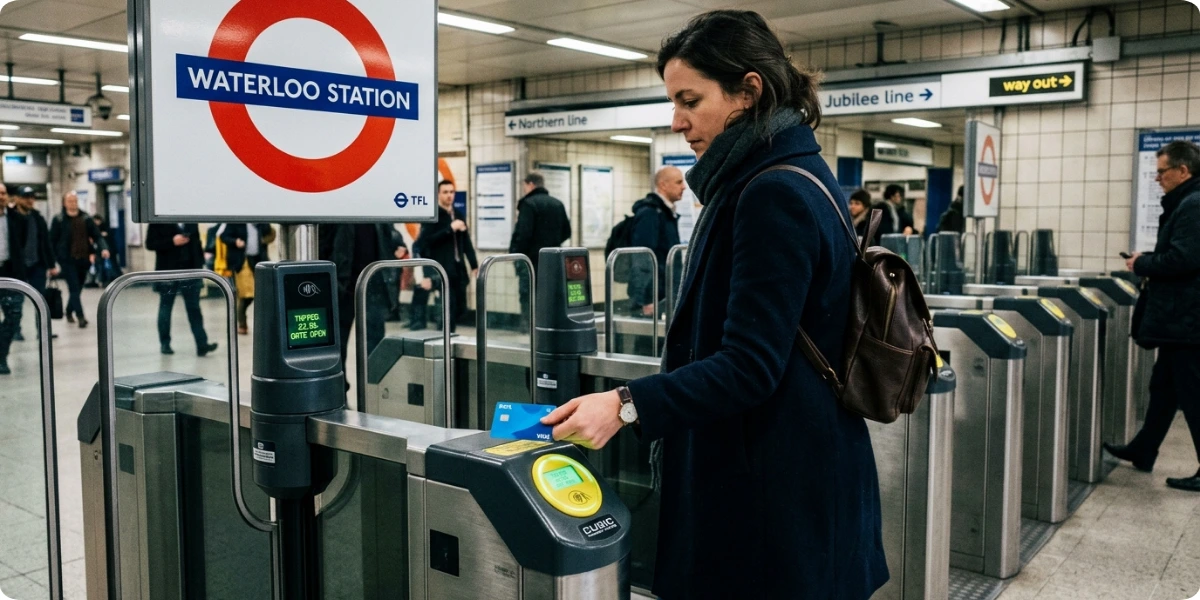
1. London Underground and the Tube
The Tube is London’s metro network and the backbone of most sightseeing days. The network is divided into fare zones, with Zone 1 covering the centre. Most major sights sit in Zone 1, and the farther out you travel, the more a single journey costs. Fares are also cheaper outside peak hours, which roughly means weekday mornings and late afternoons. You can check current fares and the zone map on the Transport for London fares page.
2. Contactless vs. Oyster Card
For most visitors, contactless is easier. You tap in and out with the same bank card or phone you already carry, and fares cap daily and weekly, so you don’t need to work out the cheapest ticket yourself. Make sure to tap the same card or device every time, otherwise your journeys will not be added together for capping. An Oyster card can still make sense if your home bank charges foreign-transaction fees on every small tap, or if you do not want to use your own card. Check the latest details on TfL’s contactless and Oyster pages.
3. Buses, Overground and the Elizabeth Line
Buses are slower than the Tube but are very good for short hops and for seeing the city as you go. They also help when a Tube line is closed at the weekend. The Elizabeth line is the fastest route between Heathrow and central London, with stops including Paddington, Bond Street and Tottenham Court Road. See the Elizabeth line overview and Heathrow’s transport guide for current journey times. Not every Tube station is step-free, so if you use a wheelchair, travel with a pushchair or carry heavy luggage, check TfL’s step-free information before you plan your route.
Practical tip: Skip unnecessary taxis. In the middle of the day, central traffic often makes the Tube or a bus faster.
Choose Your London Location Carefully
1. Best Areas for First-Time Visitors
Each area gives you a different kind of trip.
- Westminster puts you beside Big Ben, the Abbey and the palace, but it can feel quiet in the evening.
- Covent Garden and Soho are the classic theatre-and-restaurant base, with excellent Tube links and a lively night scene.
- South Bank is good for river walks and the London Eye.
- Kensington is calmer, close to the big museums and Hyde Park, and a popular choice for families.
- Paddington is handy for the Elizabeth line and Heathrow.
- King’s Cross is a strong transport hub with many rail and Tube connections.
2. Stay Near a Tube or Rail Station
A famous neighbourhood matters less than a short walk to a station. A hotel ten minutes from a well-connected Tube stop will usually save you more time, and more stress, than a more central room that needs a bus and a change of line.
3. Don’t Choose a Hotel Only by Price
Cheaper rooms often hide costs elsewhere. Weigh transport time into the centre, whether breakfast is included, room size (London rooms are often small), how easy it is to get back late at night, and whether there are restaurants and shops nearby. Our guide to where to stay in London goes deeper on each area.
Plan Your Sightseeing by Area

Which London attractions are close to each other? Most of the big names cluster in three groups: Westminster and the South Bank, the West End, and the City of London near the river. Grouping your days this way means less time underground and more time at the sights.
- Westminster and South Bank: Big Ben, Westminster Abbey, Buckingham Palace and St James’s Park sit within walking distance of each other. Cross the river for the London Eye, the Thames riverside and, farther east, the Tower Bridge area.
- Central London: Soho, Covent Garden, Leicester Square and Trafalgar Square are all a short walk apart, which makes this a good half-day without any transport.
- City of London: St Paul’s Cathedral, the Tower of London and the Sky Garden work well together because they are close to each other and the river.
For a ready-made plan, see our London itinerary guide.
Book Popular London Attractions in Advance
1. Attractions Worth Booking Ahead
Book the Tower of London, the London Eye, Westminster Abbey, busy observation decks and major West End shows before you arrive, especially in school holidays and summer. Timed tickets can sell out, and booking directly with the attraction usually gives you the clearest cancellation terms. The Sky Garden is free to enter but needs a reserved slot, so plan that early too.
2. Attractions You Can Often Visit More Flexibly
Parks, public squares, markets and many museums and galleries can be visited on the day, which gives you room to change plans when it rains.
3. Don’t Overbook Your Days
Leave gaps. A booked slot at 10:00 and another at 14:00 with nothing in between gives you lunch, a walk and a rest. Three tight bookings in a row just turns the day into a race.
Learn When to Walk Instead of Taking the Tube
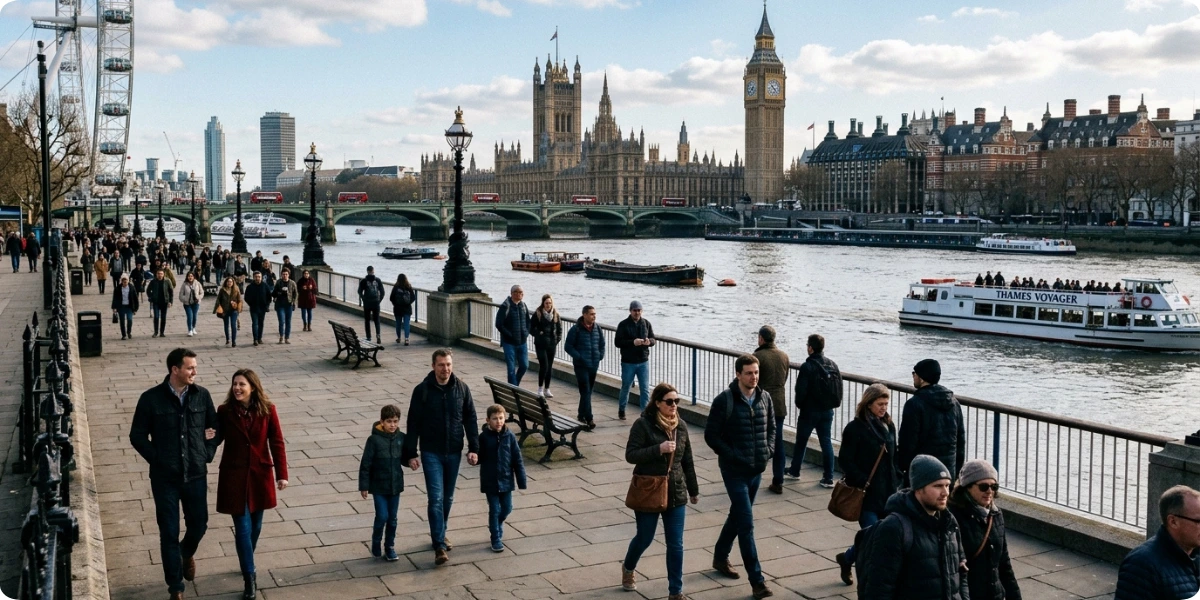
1. Short Distances Can Be Faster on Foot
On the Tube map, stations look far apart in some places and close together in others, and the map is not drawn to scale. Some central stations are only a few minutes’ walk from each other, and you can spend longer on platforms and escalators than you would on the street.
2. Scenic Walks Worth Considering
- Westminster to South Bank, crossing Westminster Bridge.
- Covent Garden to Trafalgar Square, through the West End.
- Tower Bridge to St Paul’s, along the river and into the City.
3. Use a Map App
Before you head underground, check the walking time on a map app. If it shows 15 minutes or less, walk.
Understand London’s Payment and Money Tips
1. Card and Contactless Payments
Cards and phone payments are accepted almost everywhere in London, including cafés, pubs, shops and transport. Many small businesses prefer cards.
2. Do You Need Cash?
Not much. A small amount helps for the odd market stall, a tip jar or an emergency, but you can comfortably spend a whole trip with a card. Notify your bank before you travel so your card is not blocked.
3. Tipping in London
Tipping is appreciated, not mandatory. In many restaurants a service charge of around 12.5% is added to the bill, so check before adding more. In pubs you order and pay at the bar and tipping is not expected. With taxis, people often round up. In hotels, a small tip for porters or housekeeping is a courtesy, not a rule.
Prepare for London’s Changeable Weather
1. What to Pack
Pack a lightweight waterproof jacket, comfortable walking shoes, a small umbrella, and layers you can add or remove. The weather can go from sun to rain and back within a few hours.
2. Don’t Let Rain Ruin Your Plans
Keep a list of indoor options handy museums, galleries, historic buildings, covered markets and cafés. The Natural History Museum, the British Museum and the National Gallery all offer free general entry.
3. Check the Forecast Before Leaving
Look at the same-day forecast from the Met Office rather than relying on what the season is supposed to be like.
Wear Comfortable Shoes
London is best experienced partly on foot. Between big attractions, long station corridors, sightseeing days and park or riverside walks, you can easily cover many miles without noticing. Avoid brand-new shoes, fashion footwear that rubs, and anything that slips on wet pavements.
Learn London’s Peak-Hour Reality
1. Morning Rush Hour
Commuters fill Tube trains, mainline stations and the biggest interchanges on weekday mornings. If you are carrying luggage, avoid travelling at this time.
2. Evening Rush Hour
Late afternoon and early evening bring packed trains, busy central streets and heavy demand for restaurant tables.
3. Better Times for Sightseeing
Start early, then use the busiest commuter windows for lunch, a park break or a museum visit close to where you are.
Don’t Try to See Everything in One Day
A realistic pace is two or three major attractions a day, with nearby free sights and breaks in between. London rewards slow exploring, and the best moments are often unplanned, such as a street market you stumble across or a pub you stop in to dry off. Leave room for them.
Use London’s Free Attractions to Save Money
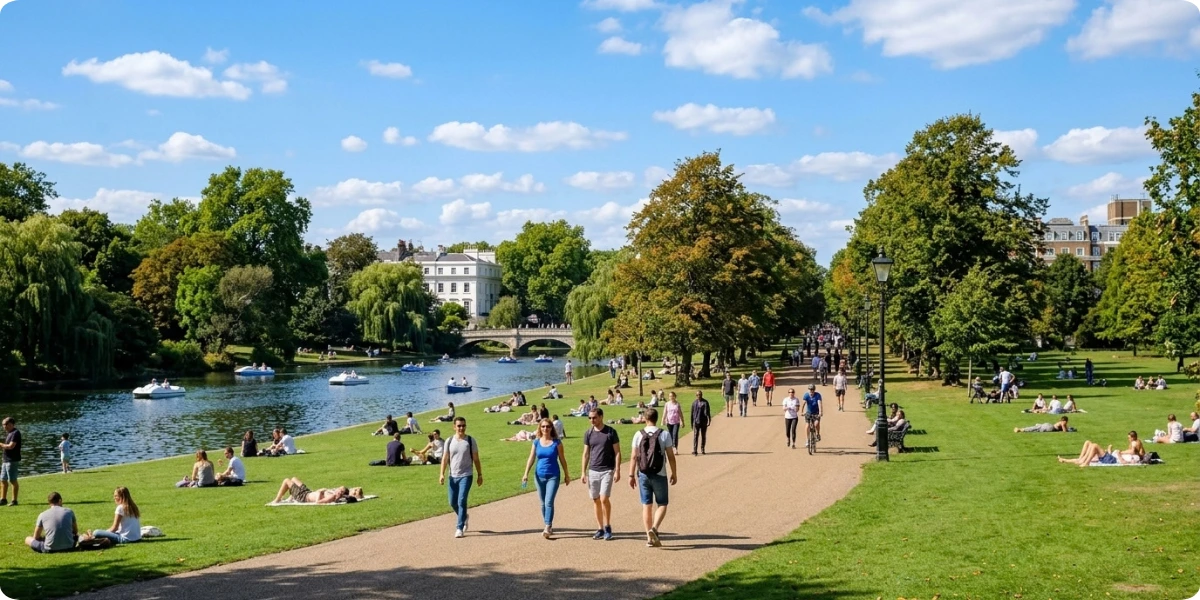
1. Free Museums and Galleries
Many of the city’s major museums and galleries have free general entry, which makes London on a budget very achievable. Special exhibitions usually cost extra, so check before you go.
2. Free Parks and Public Spaces
Hyde Park, Regent’s Park and St James’s Park are free, as is Hampstead Heath, which is a good choice for a quieter afternoon.
3. Free Views and Walks
The riverside, the bridges and many of the walks listed above cost nothing, so a good free things to do in London day is easy to build. For more ideas, see our guide to free things to do in London.
Know How London Restaurant and Pub Culture Works
1. Meal Times
Lunch is usually around midday to 2 p.m. and dinner starts from about 6 p.m., though many places serve food all day.
2. Restaurant Reservations
Book ahead for popular restaurants, Friday and Saturday dinners, and pre-theatre meals.
3. Pubs vs. Restaurants
In a pub, you usually order and pay at the bar, and you often seat yourself. In a restaurant, you wait to be seated and a server brings the bill.
4. Don’t Eat Only in Tourist Hotspots
Walk a few streets away from the main attractions for better value and more choice.
London Safety Tips for Tourists
London is generally a safe city to visit, and a few habits cover most of the risk.
1. Watch Your Belongings in Crowded Areas
Pickpockets operate in busy Tube stations, around major attractions and on crowded streets.
2. Keep Your Phone and Wallet Secure
Use a zipped bag or inside pocket, and avoid holding your phone near the edge of a platform or at a street kerb.
3. Know What to Do in an Emergency
Call 999 in an emergency. For non-emergency police matters, call 101, or see the Metropolitan Police website.
4. Avoid Common Tourist Scams
Be cautious of anyone offering unexpected “free” items, unlicensed taxis, or deals on the street that seem too good to be true.
London Travel Tips for Families
Use public transport strategically, and check whether children travel free or at reduced fares on TfL’s child fares page. Plan regular breaks, choose family-friendly accommodation, and don’t overload the itinerary. Keep indoor options ready for rainy days.
London Travel Tips for Solo Travelers
Choose convenient accommodation near a station. Stay aware around busy transport areas, keep your passport and documents secure, and plan your return journey at night before you set off. Organised walking tours and activities are a good way to meet people.
London Travel Tips for First-Time International Visitors
1. Check Entry Requirements Before Flying
Check your passport validity and whether you need a visa or an Electronic Travel Authorisation (ETA) for your nationality on the official UK government ETA page. Requirements change, so confirm them before you book.
2. Understand UK Currency
The currency is the pound sterling (£).
3. Know the Electrical Plug Standard
The UK uses Type G plugs, so pack an adapter.
4. Check Your Mobile Roaming
Check your roaming charges, or look at a UK eSIM before you travel. Consider travel insurance as well.
Common London Travel Mistakes to Avoid
- Staying too far from public transport
- Packing an overloaded itinerary
- Taking a taxi everywhere
- Ignoring travel zones
- Visiting attractions without checking opening times
- Forgetting to reserve popular attractions
- Carrying too much cash
- Wearing uncomfortable shoes
- Assuming the weather will stay the same all day
How to Save Money in London
Use public transport and contactless capping. Mix paid and free attractions, compare accommodation locations rather than just nightly rates, and book major attractions early. Eat away from the tourist hotspots, take advantage of free museums, and walk when it is practical.
A Simple London Travel Strategy
- Before you go: check entry requirements → book accommodation → reserve major attractions → download transport and map apps.
- When you arrive: get connected → use contactless on transport → learn your route → start with nearby attractions.
- During your trip: group attractions by area → walk when practical → keep flexible time → check the weather daily.
London Travel Tips FAQ
What are the best London travel tips for first-time visitors?
Use contactless for transport, stay near a Tube station, group sights by area, book the big attractions ahead, and wear comfortable shoes. Pack a light waterproof layer, because the weather changes quickly.
What is the easiest way to get around London?
The Tube combined with walking and buses is the easiest for most visitors. Pay with contactless and use a map app to compare walking and transport times for each journey.
Is contactless better than an Oyster card in London?
For most tourists, yes. It needs no separate card, and fares are capped daily and weekly. An Oyster card is useful if you would rather not use your bank card for small taps.
How many days are enough for a first trip to London?
Three to five days works well for the major sights without rushing. See our how many days in London guide for plans by trip length.
Should I book London attractions in advance?
Yes, for the busiest ones, such as the Tower of London, the London Eye, Westminster Abbey and West End shows. Parks, markets and many museums can be visited more flexibly.
What should I avoid doing in London?
Avoid staying far from a station, packing too many sights into a day, taking taxis everywhere, and arriving at popular attractions without a ticket.
Is London expensive for tourists?
It can be, especially accommodation and eating out. Free museums, parks, contactless fare capping and eating away from the hotspots keep costs down.
How can I save money while visiting London?
Use public transport and walk short distances, mix free and paid sights, book early, and compare accommodation by transport access as well as price.
Is London safe for tourists?
Yes, generally. Watch your belongings in crowds and on the Tube, and call 999 in an emergency.
Do I need cash in London?
Very little. Cards and phone payments are widely accepted, so cash is only useful for a few small purchases or emergencies.
Should I stay in central London?
Not necessarily. A well-connected area near a Tube or rail station can be better value than a room in the centre.
What should I pack for London?
A light waterproof jacket, comfortable walking shoes, a small umbrella, layers, and a UK plug adapter if you need one.
Is London easy to explore on foot?
Yes, especially along the river and between clustered central sights. Use a map app to check walking times first.
What time should I avoid the London Tube?
Weekday rush hours, roughly morning and late afternoon, are the busiest, especially if you have luggage.
How much should I tip in London?
Tipping is not mandatory. Check whether a service charge has already been added to your restaurant bill, and round up or leave a small tip if the service was good.
Final Takeaway: The London Tips That Matter Most
- Stay near public transport
- Use contactless where appropriate
- Group attractions by location
- Book popular attractions ahead
- Wear comfortable shoes
- Check the weather daily
- Mix free and paid attractions
- Protect your belongings
- Leave room for flexibility
- Don’t try to see all of London at once
London rewards a relaxed, well-planned trip far more than a packed one. For the next step in planning, see our best time to visit London guide.
