
Quick Answer: Yes, London is worth visiting for most travelers, especially first-time visitors who enjoy history, free world-class museums, diverse food, theatre, and distinct neighborhoods. It can be expensive and crowded, so plan 3–4 days, group sights by area, and use public transport to get the most from your trip.
London at a Glance
- Best for: history lovers, museum fans, food lovers, theatre-goers, and first-time visitors to the United Kingdom
- Ideal length of stay: 3–4 days for a first visit
- Main downsides: high accommodation costs, crowds, and unpredictable weather
- Money-saving tip: mix free museums and parks with a few paid attractions
- Visitor numbers: about 20.9 million international visits and around 36 million total visits in 2024
Is London worth visiting? Yes, for most travelers, London is absolutely worth the trip. The city combines centuries of history with world-class museums, famous landmarks, diverse food, green spaces, shopping, theatre, and one of the world’s most extensive public transport networks.
But London is not perfect for every traveler. It can be expensive, crowded, and overwhelming if you try to see too much in a short time. The key is knowing what you want from the city and planning your days around a few main areas rather than trying to check every attraction off a list.
London’s popularity isn’t just about its reputation. The city recorded 20.9 million international visits in 2024, up from 20.3 million in 2023 and close to the 21.7 million recorded in 2019. Including domestic tourism, London received about 36 million visits in 2024.
So, is London worth visiting? If you enjoy history, culture, food, museums, architecture, shopping, and big-city experiences, it is one of Europe’s strongest choices.
Is London Worth Visiting?
Yes, London is worth visiting, especially for a first trip to the United Kingdom.
The biggest advantage is variety. You can see a medieval fortress in the morning, visit a world-class museum in the afternoon, eat food from almost any part of the world in the evening, and finish the day with a West End show.
London also works for different travel styles. Families can find museums and parks, couples can enjoy restaurants and riverside walks, solo travelers can explore neighborhoods independently, and history lovers can spend days moving between palaces, churches, museums, and historic streets.
The main trade-off is cost. Accommodation and popular attractions can quickly increase the price of a trip. London is also a large city, so choosing the right neighborhood and grouping attractions by location can make a noticeable difference.
Why Is London Worth Visiting?
1. London Has World-Famous Landmarks
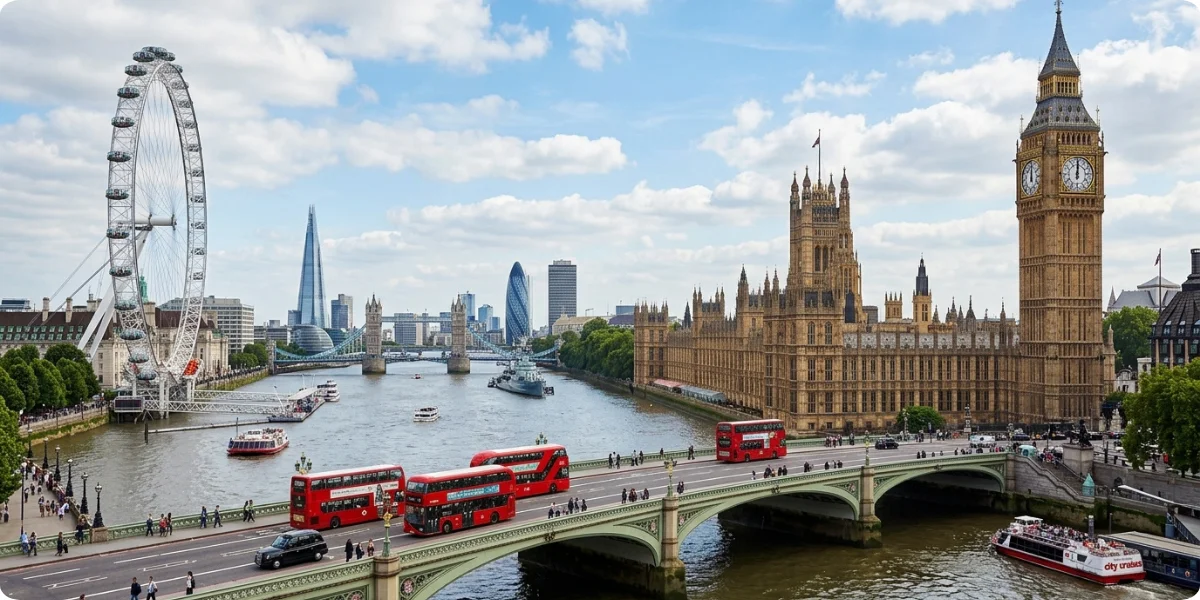
London has no shortage of recognizable sights.
You can see Big Ben and the Palace of Westminster, walk around Westminster, visit Buckingham Palace, cross Tower Bridge, explore the Tower of London, or admire St Paul’s Cathedral.
The important thing is not to treat all of these as items on one long checklist. Many of London’s landmarks are in different parts of the city, so grouping nearby attractions together makes your days much easier.
For example, Westminster works well as one sightseeing area, while the Tower of London, Tower Bridge, and Borough Market can form another.
2. Its History Is Everywhere
One reason London feels different from many modern cities is the mixture of old and new.
Historic buildings stand beside modern offices. Ancient streets lead toward contemporary restaurants and shops. Royal history, Roman history, Victorian architecture, wartime stories, literature, and modern culture all overlap.
This makes London particularly rewarding if you enjoy understanding the story behind a destination rather than simply taking photographs.
3. London Has Exceptional Museums

Museums are one of London’s biggest advantages, particularly for travelers watching their budget.
The British Museum, for example, offers free entry to its permanent collection and has more than 60 free galleries. The museum’s collection covers around two million years of human history and culture. Advance booking is recommended, especially during busy periods.
Other major museums and galleries include:
Some temporary exhibitions and special experiences require paid tickets, so always check the attraction’s current information before visiting.
4. London’s Food Scene Is Extremely Diverse

You do not have to limit yourself to traditional British food in London.
The city’s restaurants reflect its international population, with strong options for Indian, Pakistani, Middle Eastern, Chinese, Japanese, Italian, African, Caribbean, and many other cuisines.
You can also find everything from inexpensive street food to high-end restaurants.
For travelers on a budget, food markets, casual restaurants, bakeries, supermarkets, and neighborhood cafés can help keep daily costs under control.
5. Every Neighborhood Has a Different Character
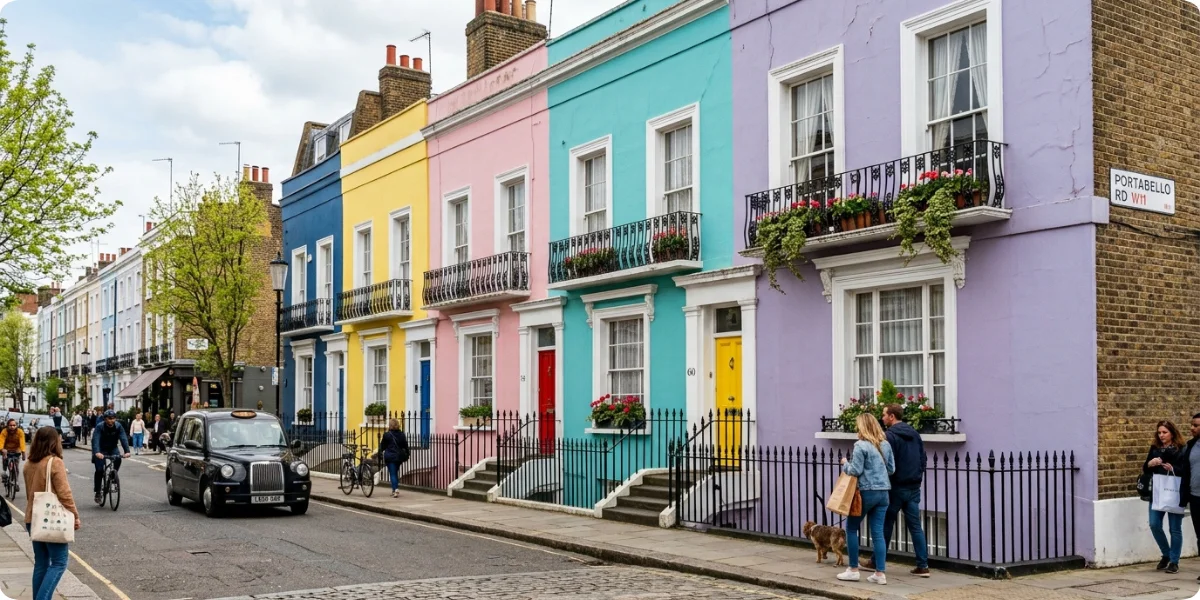
London does not feel like one uniform city.
- Westminster is ideal for major landmarks and political history.
- Soho is known for restaurants, nightlife, and central-city energy.
- Covent Garden combines shopping, restaurants, street entertainment, and access to theatres.
- Camden has markets, music, and a more alternative atmosphere.
- Notting Hill is known for colorful streets and its famous market.
- South Bank offers riverside walks and cultural attractions.
- Shoreditch is popular for street art, nightlife, and independent businesses.
That variety is one of the strongest reasons London is worth visiting more than once.
6. London Has Plenty of Green Space

A trip to London does not have to mean spending every hour among buildings and traffic.
Hyde Park, Regent’s Park, St James’s Park, Greenwich Park, and Hampstead Heath provide places to slow down.
A park can also be a useful break between major attractions. Instead of moving from one indoor attraction to another all day, you can combine sightseeing with a walk and a coffee.
7. Public Transportation Makes a Large City Easier to Explore
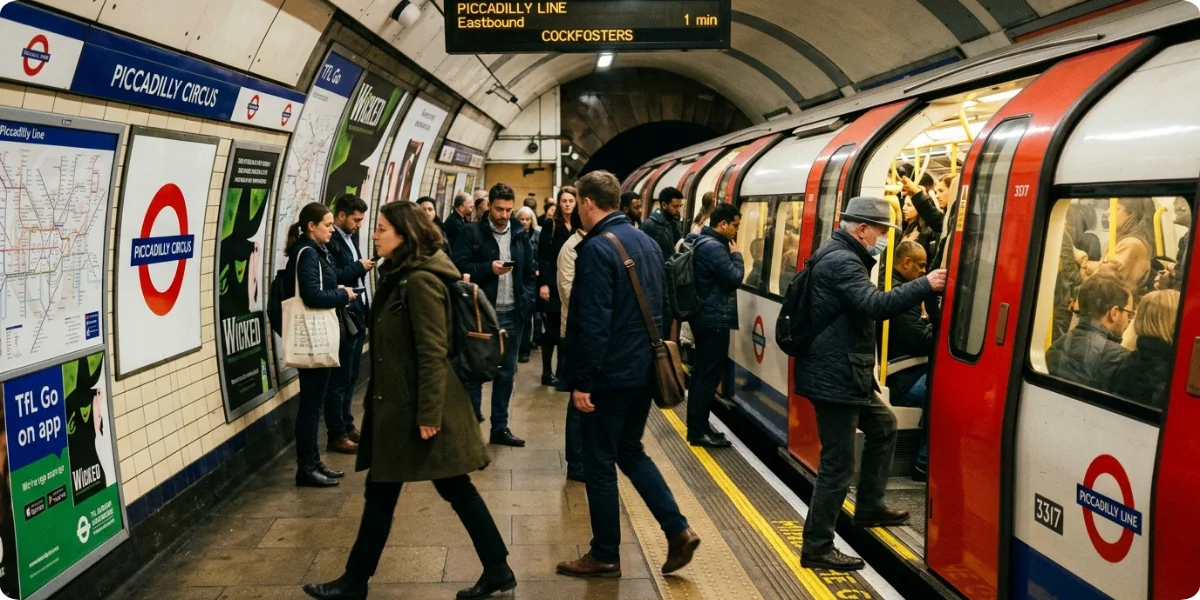
London’s size can look intimidating on a map, but the public transport network makes getting around considerably easier.
The Underground, buses, Elizabeth line, London Overground, DLR, and National Rail services connect different parts of the city.
For adults using pay-as-you-go bus and tram travel, TfL currently lists a £1.75 single fare and £5.25 daily cap. Tube and rail fares depend on zones and journey times; for example, the Zone 1 adult pay-as-you-go fare is currently £3.10 at peak times and £3.00 off-peak.
Fares can change, so check Transport for London’s current information before your trip.
What Are the Best Things About Visiting London?
If you are deciding whether the city deserves a place on your itinerary, these are some of its strongest advantages:
- Famous historic landmarks
- Large collections of museums and galleries
- Many free cultural attractions
- Diverse international food
- Excellent public transportation
- Royal and political history
- West End theatre
- Major shopping areas
- Large parks and green spaces
- Distinct neighborhoods
- Easy access to UK day-trip destinations
The biggest strength is the combination. London is not famous for just one attraction. It offers many different experiences within the same trip.
What Are the Downsides of Visiting London?
London has real disadvantages, and understanding them before booking can help you decide whether it suits your travel style.
1. London Can Be Expensive
Accommodation is usually one of the biggest expenses.
Central hotels, popular restaurants, major attractions, shopping, and transportation can add up quickly. A traveler who focuses only on famous paid attractions can spend considerably more than someone who mixes free museums, parks, walking routes, and casual dining.
The good news is that you do not need a luxury budget to experience the city.
2. London Can Be Crowded
Popular places can become busy, particularly during holidays and peak travel periods.
The busiest areas often include major landmarks, central shopping streets, popular museums, and transport hubs.
Starting early and visiting major attractions outside the busiest periods can make the experience much more comfortable.
3. The Weather Is Unpredictable
London is not the place to visit expecting guaranteed sunshine.
Rain and cloudy conditions can occur throughout the year. Even when the forecast looks good, carrying a light waterproof layer can be useful.
The advantage is that London’s museums, galleries, cafés, theatres, shops, and restaurants give you plenty of alternatives when the weather changes.
4. The City Is Bigger Than It Looks
First-time visitors sometimes underestimate the distances involved.
Seeing Buckingham Palace, the Tower of London, Camden Market, the British Museum, and Greenwich in one day may look possible on a map, but it can leave very little time to actually enjoy each place.
A better approach is to build your itinerary around geographical areas. If you are unsure how far apart two places are, our distance calculator shows the straight-line distance between any two locations, which helps you judge which sights to group together.
Is London Expensive to Visit?
London can be expensive, but it does not have to be an unnecessarily expensive trip.
Your total budget depends heavily on accommodation, dining style, attractions, and the length of your stay.
| Expense | Budget Approach | Mid-Range Approach | Higher-End Approach |
|---|---|---|---|
| Accommodation | Hostel or affordable outer-area hotel | Comfortable central/near-central hotel | Luxury hotel |
| Food | Markets, cafés, casual restaurants | Mix of restaurants and casual meals | Fine dining |
| Transport | Public transport and walking | Public transport | Public transport + taxis |
| Attractions | Free museums and parks | Mix of free and paid sights | Premium experiences |
| Shopping | Markets and high-street stores | Moderate shopping | Designer shopping |
How to Visit London on a Budget
You can reduce your costs by:
- Staying outside the most expensive central areas
- Choosing accommodation near a convenient Tube or rail station
- Visiting free museums
- Walking between nearby attractions
- Using public transportation
- Eating at casual restaurants and food markets
- Booking popular attractions in advance when useful
- Avoiding an itinerary packed with paid attractions
London’s free museums are especially valuable. The British Museum’s permanent collection, for example, is free to enter, although advance booking is recommended.
How Many Days Do You Need in London?
For most first-time visitors, 3 to 4 days is a good starting point.
1. 2 Days in London
Two days can work for a short city break, but you will need to prioritize.
Focus on major areas such as Westminster, central London, and the Tower of London area.
2. 3–4 Days in London
This is probably the best balance for a first visit.
You can see major landmarks while leaving time for a museum, neighborhood exploration, food, shopping, or an evening activity.
London’s tourism data also supports the idea that visitors generally stay for several days. In 2024, the estimated average stay was 5.6 days for international visitors and 2.5 days for domestic visitors.
3. 5–7 Days in London
A longer stay allows you to slow down.
You can explore more neighborhoods, spend longer in museums, visit markets, see a show, and potentially take a day trip outside London.
What Can You Do in London in 3 Days?
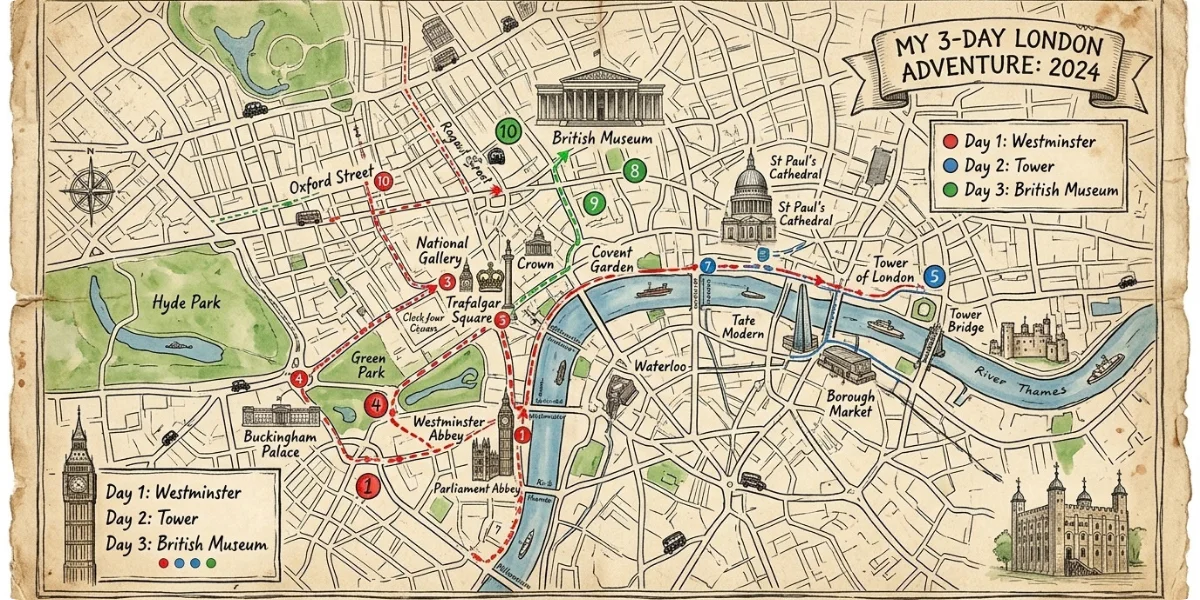
A simple first-time itinerary could look like this:
Day 1: Westminster and Central London
Start with Buckingham Palace and St James’s Park.
Continue toward Westminster to see Big Ben, the Palace of Westminster, and Westminster Abbey. Later, walk along the South Bank or visit the London Eye area.
Keep the evening flexible for dinner or a West End show.
Day 2: Historic London
Begin around the Tower of London.
Walk toward Tower Bridge and continue along the Thames. Depending on your interests, you could then visit St Paul’s Cathedral or explore Borough Market.
This keeps most of your day in eastern central London rather than wasting time crossing the city.
Day 3: Museums and Neighborhoods
Spend the morning at the British Museum or another museum that matches your interests.
Then explore Covent Garden and Soho.
If you prefer something less central, replace part of the afternoon with Camden, Notting Hill, or another neighborhood.
Is London Good for First-Time Visitors?
Yes. London is particularly well suited to first-time visitors who are comfortable navigating a large city.
English is widely spoken, tourist information is readily available, and the public transportation network connects the main areas.
However, first-time visitors should remember a few basics:
- London uses the British pound.
- Cars drive on the left.
- Attractions can be spread far apart.
- Public transportation is usually more practical than relying on taxis.
- Walking can be a major part of sightseeing.
- Prices vary significantly between neighborhoods and businesses.
- Popular attractions can have queues or timed entry.
- Most visitors who do not need a visa still need a UK Electronic Travel Authorisation (ETA) before they travel, so check the UK entry requirements well before departure.
The biggest mistake is trying to do everything.
Choose a few priorities and leave room for unexpected discoveries.
Is London Worth Visiting for Different Types of Travelers?
1. Is London Worth Visiting for Couples?
Yes.
Couples can combine historic sightseeing with restaurants, theatre, riverside walks, parks, markets, and evening activities.
You do not need to build the entire trip around expensive experiences. A walk through St James’s Park, dinner in Soho, or an evening around the Thames can be just as memorable as a major attraction.
2. Is London Worth Visiting for Families?
Yes, particularly for families interested in museums, history, science, parks, and interactive attractions.
The British Museum also provides family-oriented activities, trails, workshops, and explorer missions.
The main challenge is energy management. Children may not enjoy several hours of sightseeing without breaks, so combining museums with parks or food stops works better.
3. Is London Worth Visiting for Solo Travelers?
London is a strong option for solo travelers.
You can choose your own schedule, spend as much time as you want in museums, take walking tours, eat at casual restaurants, and move around independently using public transport.
4. Is London Worth Visiting for Young Travelers?
London offers plenty for younger travelers, including music, nightlife, shopping, markets, street art, food, sports, and cultural events.
Neighborhood choice can make a major difference because different parts of London have very different atmospheres.
5. Is London Worth Visiting for History Lovers?
Definitely.
Few cities offer such a broad mix of royal history, political history, architecture, museums, churches, monuments, and historic neighborhoods.
The British Museum alone provides access to collections spanning around two million years of human history and culture.
Best Time to Visit London

There is no single best month for everyone.
| Season | What to Expect | Best For |
|---|---|---|
| Spring | Milder conditions and parks in bloom | Sightseeing |
| Summer | Longer days and busy attractions | Outdoor activities |
| Autumn | Cooler weather and changing scenery | Museums and city breaks |
| Winter | Shorter days and colder conditions | Christmas atmosphere and indoor attractions |
For a first visit, prioritize the weather and crowd levels that suit you rather than chasing one supposedly perfect month.
If you dislike crowds, avoid building your trip entirely around the busiest travel periods.
Is London Safe for Tourists?
London is a major international tourist destination, but visitors should use normal big-city precautions.
Keep valuables secure in crowded areas, pay attention to your belongings on public transport, and be more cautious late at night in unfamiliar areas.
You should also save emergency contact information and know how to reach your accommodation before heading out for the day.
Safety is not a reason to automatically avoid London, but it is a reason to stay aware.
How Does London Compare With Other European Cities?
London is difficult to compare directly with cities such as Paris, Rome, or Amsterdam because each offers a different experience.
| City | Particularly Strong For | Overall Feel |
|---|---|---|
| London | History, culture, museums, theatre | Huge and diverse |
| Paris | Art, architecture, food | Elegant and compact in feel |
| Rome | Ancient history and food | Historic and atmospheric |
| Amsterdam | Canals, cycling, museums | Compact and relaxed |
1. London vs Paris: Which Is Better?
There is no universal winner.
Choose London if you want a huge mix of museums, theatre, royal history, neighborhoods, international food, and English-speaking travel.
Choose Paris if your priorities are French cuisine, art, architecture, romantic atmosphere, and a more compact sightseeing experience.
The better destination is the one that matches your interests.
Who Should Visit London?
London is especially worth considering if you enjoy:
- History
- Museums
- Architecture
- Food
- Shopping
- Theatre
- Parks
- Royal attractions
- Diverse neighborhoods
- Big-city energy
- Cultural experiences
It is also a good choice if you want a destination where every day can feel different.
Who Might Not Enjoy London?
London may not be the best fit if you:
- Have a very limited budget
- Strongly dislike crowds
- Prefer quiet small towns
- Want consistently warm weather
- Prefer destinations where most attractions are within a short walk
- Do not enjoy navigating busy cities
That does not mean London is a bad destination. It simply means the city’s strengths may not match your travel preferences.
Tips to Make a London Trip More Worthwhile
1. Plan Around Areas
Do not spend half your day crossing London.
Group nearby attractions together.
2. Mix Free and Paid Attractions
London’s free museums, parks, markets, and public spaces can balance the cost of paid experiences.
3. Do Not Overload Your Schedule
Three meaningful experiences are usually better than eight rushed stops.
4. Use Public Transportation
TfL’s pay-as-you-go system can make transportation straightforward, particularly when you use the same contactless card or device consistently.
5. Leave Time for Neighborhoods
Some of the best parts of London are not individual landmarks.
Give yourself time to walk, stop for coffee, browse a market, or explore a neighborhood without a strict checklist.
6. Check Attraction Information Before You Go
Opening times, ticket requirements, exhibitions, and fares can change. The British Museum, for example, currently recommends advance booking for its free permanent collection during busy periods.
Is London Worth Visiting? Final Verdict
Yes, London is worth visiting for most travelers.
Its strongest advantage is variety. You can combine famous landmarks, centuries of history, major museums, diverse food, green spaces, shopping, theatre, and different neighborhoods within one trip.
The biggest disadvantages are equally clear London can be expensive, crowded, and tiring if you plan too much.
For a first visit, 3–4 days is a practical starting point. Prioritize the attractions that genuinely interest you, group sights by location, use public transportation, and leave some space in your itinerary.
The city’s continuing tourism demand also tells part of the story. London recorded about 20.9 million international visits and around 36 million total domestic and international visits in 2024, while tourism spending reached about £22.8 billion when domestic and international spending are combined.
So if your idea of a good trip includes history, culture, food, museums, architecture, and the energy of a major international city, London is more than worth visiting—it is a destination that can justify returning to more than once.
Frequently Asked Questions
Is London worth visiting for the first time?
Yes. London offers an unusually broad combination of historic landmarks, museums, food, culture, shopping, parks, and entertainment. First-time visitors should simply avoid trying to see the entire city in a few days.
How many days in London is enough?
Three to four days is a good starting point for a first visit. Two days works for a short break, while five to seven days allows you to explore more neighborhoods and take your time.
Is London expensive to visit?
London can be expensive, especially for accommodation and popular attractions. However, free museums, public parks, walking routes, casual dining, and public transportation can help reduce costs.
What is London best known for?
London is best known for its historic landmarks, royal heritage, museums, architecture, theatre, diverse food scene, shopping, and distinctive neighborhoods.
What are the disadvantages of visiting London?
The main disadvantages are high accommodation costs, crowds, unpredictable weather, and the city’s large size. Poor planning can also result in spending too much time traveling between attractions.
Is London good for a 3-day trip?
Yes. Three days is enough to experience several major areas if you plan efficiently. Westminster, historic London, museums, and selected neighborhoods can form a strong first-time itinerary.
What is the best time to visit London?
The best time depends on your priorities. Spring and early autumn can be attractive for sightseeing, summer offers longer days, and winter can appeal to travelers interested in festive experiences and indoor attractions.
Is London safe for tourists?
London is a major tourist city, and visitors should use normal big-city precautions. Keep valuables secure, remain aware in crowded areas, and take extra care when traveling late at night.
Is London better than Paris?
Neither city is universally better. London is particularly strong for museums, theatre, royal history, diverse neighborhoods, and English-speaking travel, while Paris may appeal more to travelers focused on French food, art, architecture, and romance.

Arman Ashraf is a content writer focused on travel and tourism. He creates practical, well-researched travel guides, destination articles, and travel tips designed to help readers plan trips with greater confidence. His work combines clear, engaging writing with SEO best practices, covering destinations, things to do, travel planning, and useful advice for travelers. Arman is committed to producing helpful content that makes discovering and planning travel easier.