
Most cities give you a centre and a few famous sights. Istanbul gives you two continents, three empires’ worth of leftovers, and a strait that you can cross for the price of a bus ride. The Bosphorus splits the city into a European side and an Asian side, and the fun part is that you will probably cross it more than once without planning to.
That is what makes the list of things to do in Istanbul feel different from, say, Rome or Prague. Yes, the historic landmarks are staggering. But the city’s real character shows up in the ferry queues, the tea glasses, the cat asleep on a bakery step, and the way a neighbourhood changes completely after a ten-minute walk. In this guide you will find the big historical sites, local experiences, food, Bosphorus activities, neighbourhoods and a few quieter corners worth your time.
If you only want to know what to do, first start in Sultanahmet early in the morning, see Hagia Sophia and the Blue Mosque before the crowds build, then spend the afternoon at the Basilica Cistern and Grand Bazaar. Save the Bosphorus and the Asian side for day two. If you are still deciding how long to stay, our guide on how many days to spend in Istanbul will help you narrow it down.
Quick Answer: What Are the Best Things to Do in Istanbul?
The best things to do in Istanbul are visiting Hagia Sophia, the Blue Mosque, Topkapı Palace, and the Basilica Cistern in Sultanahmet, shopping at the Grand Bazaar, taking a Bosphorus ferry, exploring Galata and Karaköy, eating Turkish street food, crossing to Kadıköy on the Asian side, and watching the sunset over the water.
Here is the short version, in the order most first-time visitors do it:
- Explore Sultanahmet, the old-city heart of Byzantine and Ottoman Istanbul
- Visit Hagia Sophia, nearly 1,500 years old and still astonishing
- See the Blue Mosque for its tiled interior and six minarets
- Explore Topkapı Palace, the Ottoman sultans’ home and seat of government
- Walk through the Grand Bazaar and its maze of covered lanes
- Cruise the Bosphorus by public ferry or a sightseeing boat
- Discover Galata and Karaköy for views, cafés and independent shops
- Try Turkish food, from simit at breakfast to baklava at midnight
- Visit the Asian side, especially Kadıköy and Moda
- Experience an Istanbul sunset from the water, a hilltop or a rooftop
Best Things to Do in Istanbul
1. Explore Istanbul’s Historic Old City
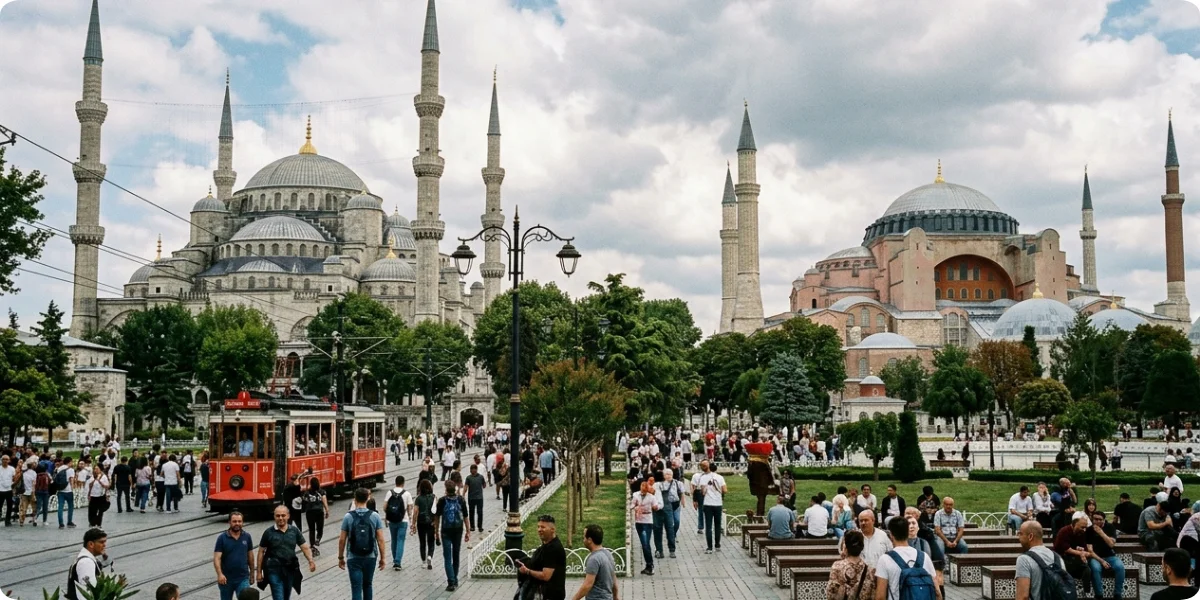
The old city is centred on Sultanahmet Square, a long, tree-lined space that sits on top of the ancient Hippodrome, where chariot races once drew huge crowds. Hagia Sophia faces the Blue Mosque across the square, with Topkapı Palace just behind. The whole district is part of the UNESCO-listed Historic Areas of Istanbul, which is a good clue to how much history is packed into so few streets.
What you are really looking at here is two layers of the same city. The Byzantine layer includes Hagia Sophia, the Hippodrome’s surviving obelisks and the Basilica Cistern. The Ottoman layer includes the Blue Mosque, Topkapı Palace, and the fountains and tombs tucked between them.
- How much time to allow: half a day is the minimum for the square and its main buildings. A full day lets you enter two or three of them properly without rushing.
- Best time of day: early morning, when the light is soft, and the tour groups have not arrived. The square also looks lovely at dusk once the mosques are lit.
2. Visit Hagia Sophia
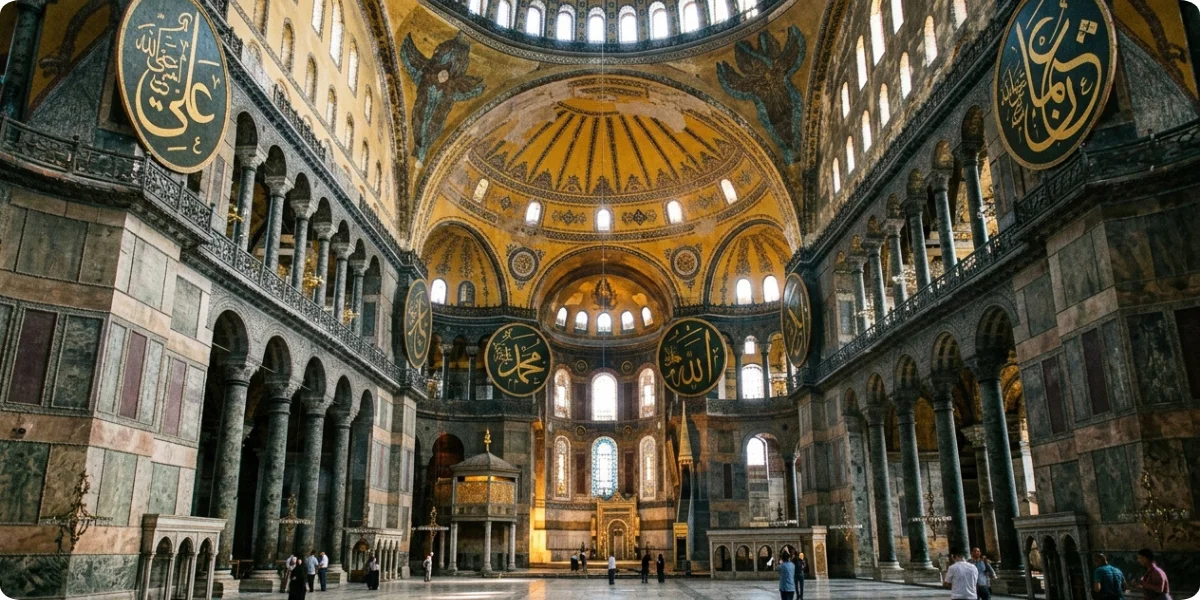
Hagia Sophia was completed in 537 under Emperor Justinian I and has been a cathedral, a mosque, a museum and, since 2020, a mosque again. Its dome was an engineering marvel when it was built and still makes people stop mid-sentence. Inside, gold mosaics, giant calligraphic roundels and a soft, hazy light give it a feeling no photograph really captures.
What to know before you go:
- It is an active mosque, so dress modestly: shoulders and knees covered, and women need a head covering. Shoes come off in carpeted prayer areas (istanbul.com).
- Visiting works in two tiers. Foreign visitors currently buy a separate ticket for the upper gallery, where the Byzantine mosaics are, and the entrance for tourists is on the eastern side of the building (hagiasophia.com). Rules and prices change, so check before you travel.
- Tourist access pauses around prayer times, so plan around them.
Location and nearby attractions: it sits right on Sultanahmet Square, a short walk from the Blue Mosque, Topkapı Palace and the Basilica Cistern.
Suggested duration: 1 to 1.5 hours, longer if you want to study the mosaics.
3. See the Blue Mosque
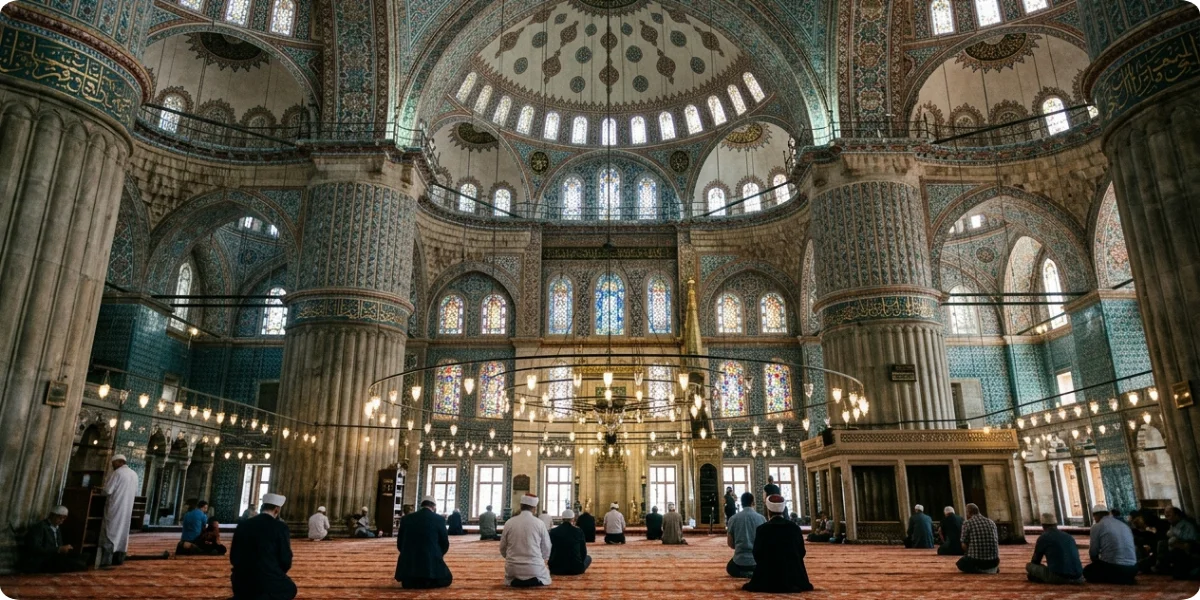
The Blue Mosque (Sultanahmet Mosque) was built in the early 17th century and is famous for its cascade of domes, its six minarets and the thousands of blue-toned İznik tiles that give the interior its nickname. Stand under the central dome and look up; the painted and tiled surfaces glow in the afternoon light.
- Visiting etiquette: it is a working mosque, so cover shoulders and knees, women should cover their hair, and shoes are removed at the entrance. Keep your voice low and avoid walking in front of anyone who is praying.
- When to visit: the mosque closes to sightseers during the five daily prayers, with the midday prayer on Fridays being the longest closure. Aim for mid-morning or late afternoon and check the day’s schedule.
- What to combine it with: Hagia Sophia is directly across the square, and the Hippodrome monuments are right outside the door. A short break at a terrace café with a view of the domes makes a nice pause between the two.
4. Explore Topkapı Palace
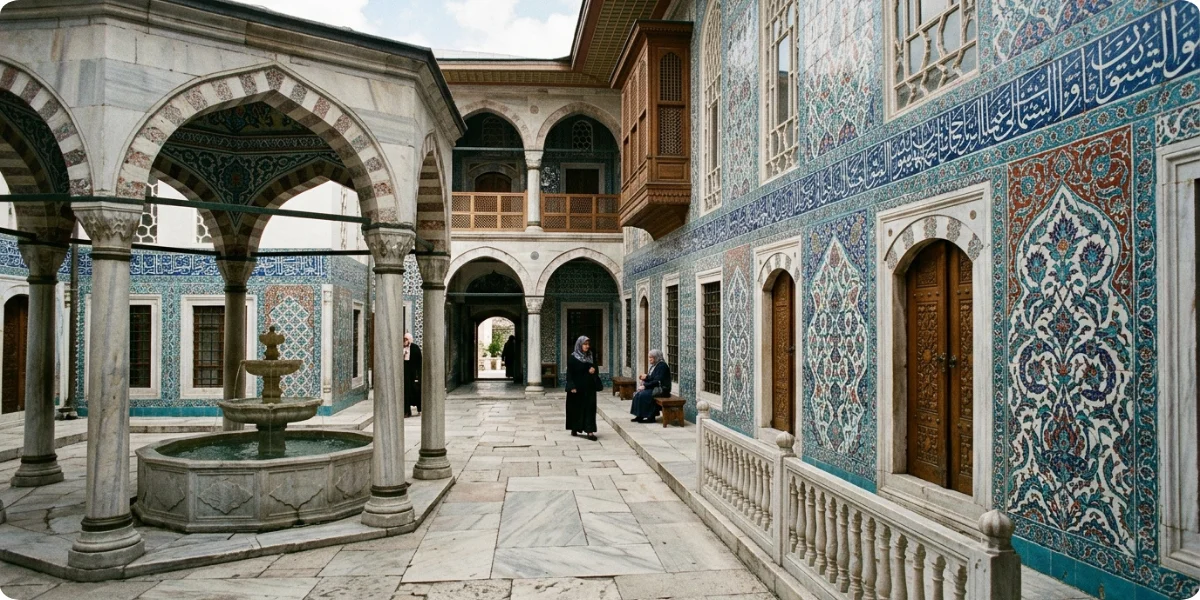
For roughly four centuries, from 1478 to 1856 according to museum summaries, Topkapı Palace was the administrative and living centre of the Ottoman Empire. It is less a single building than a series of courtyards, pavilions and gardens stepping down toward the Bosphorus.
- Palace courtyards: the sequence of courtyards is part of the story, moving from public ceremony to private life.
- Imperial collections: treasury rooms hold jewelled objects, ceremonial items and sacred relics.
- Harem section: the private quarters of the sultan’s household are a separate ticketed or combined entry depending on current rules, and they are worth the time for the tilework alone.
How long to spend: plan 2.5 to 3.5 hours. Note that the palace is closed on Tuesdays (istanbul.com), so build your sightseeing days around that.
5. Walk Through the Grand Bazaar
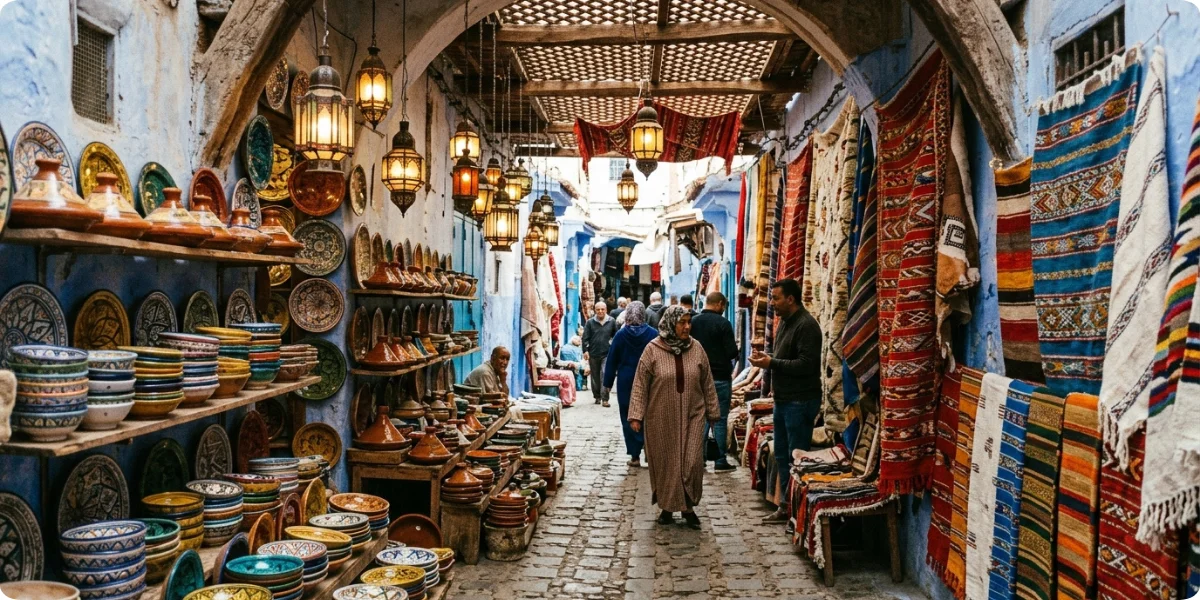
The Grand Bazaar is one of the oldest and largest covered markets in the world, with thousands of shops spread across a maze of vaulted lanes. It is touristy, loud and wonderful, and getting lost is part of the experience.
- What to shop for: ceramics, hand-painted tiles, leather goods, carpets and kilims, brass lanterns, jewellery, linen towels (peştemal) and Turkish textiles.
- Traditional Turkish products: look for real Turkish delight (lokum), spices, dried fruit and nuts, evil-eye charms and hand-woven rugs.
- Bargaining etiquette: haggling is expected in many shops, but it should be friendly. Start by asking the price, counter at a reasonable level, and smile if you walk away. Never agree to a price you do not intend to pay.
- How to avoid spending too much: decide your budget before you go in, compare two or three shops for the same item, and be cautious with anyone steering you into a “cousin’s shop”. Avoid buying anything expensive on your first pass through the bazaar. The market is closed on Sundays (AAA TripCanvas), so schedule it for another day.
6. Visit the Basilica Cistern
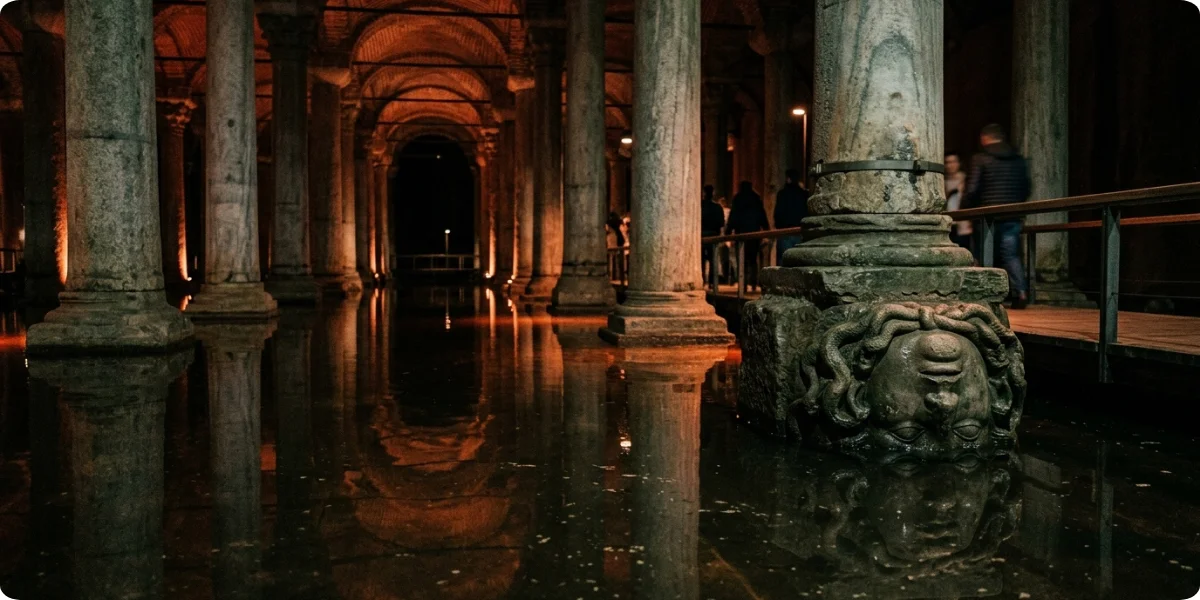
Under the pavements of Sultanahmet sits a sixth-century Byzantine water reservoir, the Basilica Cistern, held up by a forest of marble columns. It is dim, cool and strangely quiet, with soft lighting and walkways just above the water.
- The Medusa heads: two column bases at the back are carved with Medusa heads, one sideways and one upside down. Historians still debate why they were placed that way, which is half the charm.
- Why it is different: almost every other major sight in Istanbul is about domes, towers and views. This one is about going down instead of up, and the temperature drop on a hot day is a bonus.
- Recommended visiting time: go early or later in the day to avoid queues, and allow 45 minutes to an hour.
Best Istanbul Experiences Beyond the Main Attractions
1. Take a Bosphorus Cruise
You can see a surprising amount of Istanbul from the water, so a Bosphorus trip earns its place on almost every itinerary.
- Public ferry vs. sightseeing cruise: the public ferries run by Şehir Hatları are cheap, authentic and part of daily life, including a longer Bosphorus line that runs up the strait. Sightseeing cruises are more comfortable and often include commentary, but cost more and feel more tourist-focused.
- Daytime vs. sunset: daytime gives you clear views of palaces, waterfront mansions and the two big bridges. Sunset adds colour and a calmer atmosphere, which is why it is popular with couples.
- European and Asian shores: pick a seat near the rail and look both ways. On one side you will see the domes and palaces of the old city, and on the other the villages and wooded slopes of Asia.
- What travellers can see from the water: Dolmabahçe Palace, Ortaköy Mosque, the Bosphorus bridges, wooden waterfront mansions called yalı, and fortresses guarding the narrows.
2. Watch Istanbul From Galata Tower
Galata Tower is a medieval stone tower built by the Genoese, and it has been one of the city’s best lookouts for centuries. From the top you get a sweeping view of the Golden Horn, the Old City skyline and the Bosphorus.
Best time for photography: late afternoon into golden hour, when the light turns the minarets amber. Queues tend to build near sunset, so arrive early or buy a timed ticket if available.
3. Explore Galata and Karaköy
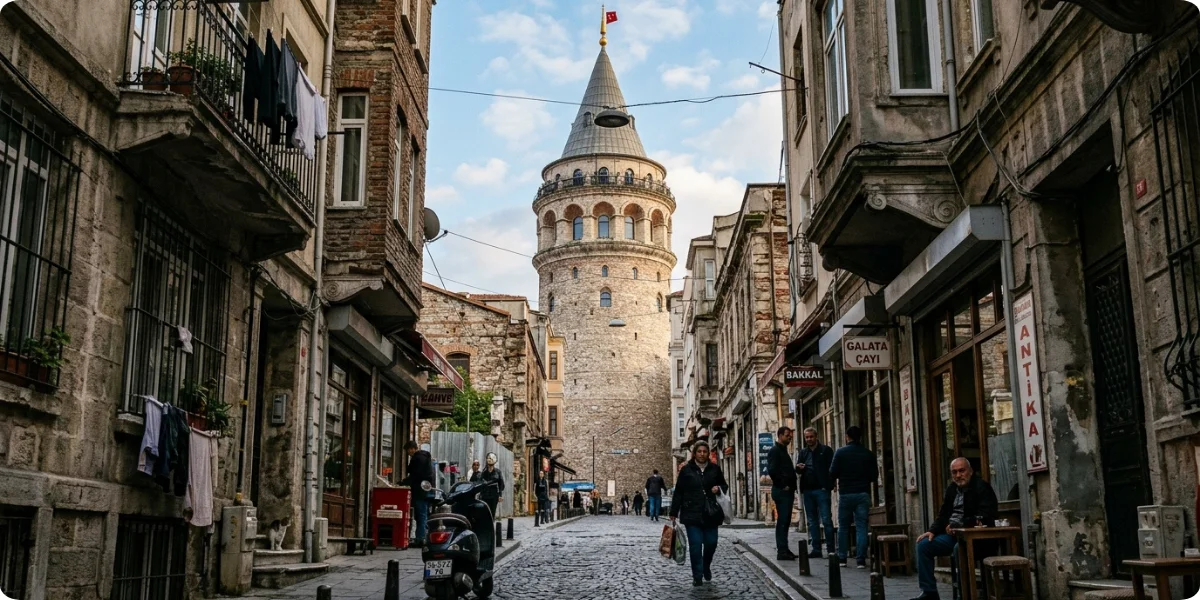
The streets around Galata Tower slope down toward the water into Karaköy, one of the city’s most pleasant areas to wander.
- Cafés: third-wave coffee shops and old-school tea houses sit side by side.
- Independent shops: small design stores, galleries and vintage dealers fill the side streets.
- Street atmosphere: street art, narrow stairways and the sound of ferry horns from the waterfront.
Easy walking route: climb to Galata Tower, then drift downhill through side streets to Karaköy, stopping where something smells good.
4. Walk Along İstiklal Avenue
İstiklal Avenue is Istanbul’s best-known pedestrian street, running from Taksim Square toward Galata. A historic red tram rattles up and down the middle, and the street is lined with shops, bookstores, cafés and restaurants.
Side streets worth exploring: the lanes branching off İstiklal are where it gets interesting old passages, meyhane-style taverns, music shops, and quieter cafés. Go in the evening for the energy, or mid-morning for fewer crowds.
5. Discover Balat and Fener
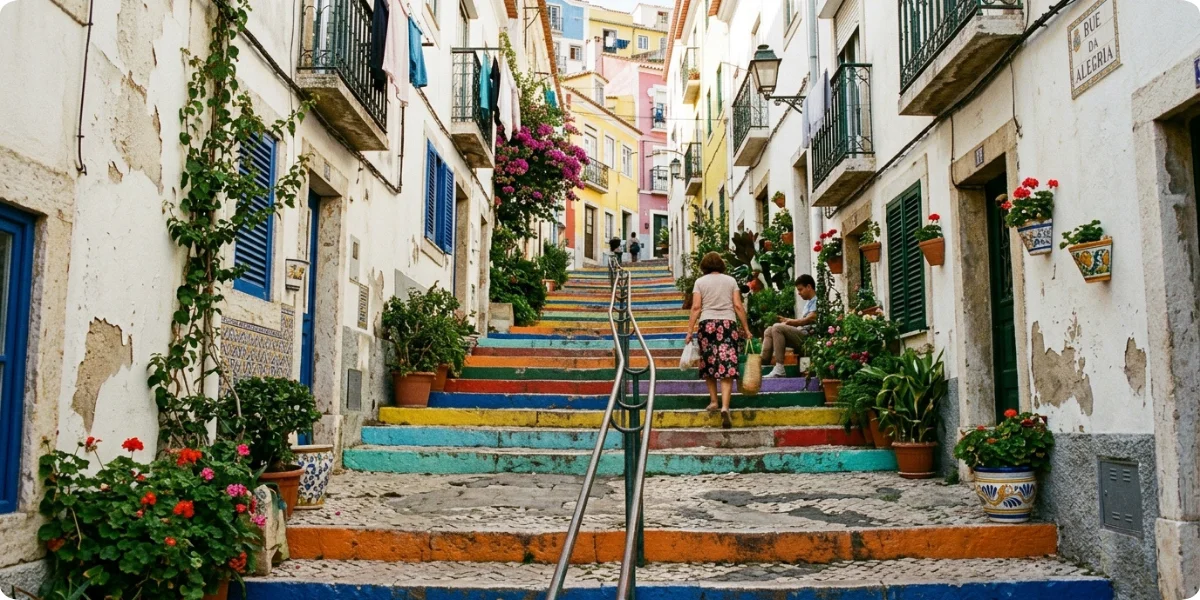
Balat and Fener sit along the Golden Horn and are known for steep streets, pastel-painted houses and old churches and synagogues that reflect the area’s mixed history.
- Colourful streets: the staircase streets are the ones that end up in everyone’s photos.
- Historic buildings: look for the red-brick Greek school and old religious sites in Fener.
- Cafés: small, creative cafés and breakfast spots are tucked into former shopfronts.
- Photography: soft morning light works best, when the streets are quiet.
Responsible tourism: these are lived-in neighbourhoods. Keep noise down, do not photograph people without asking, avoid blocking doorways, and spend money at local businesses rather than just taking photos.
Things to Do on Istanbul’s Asian Side
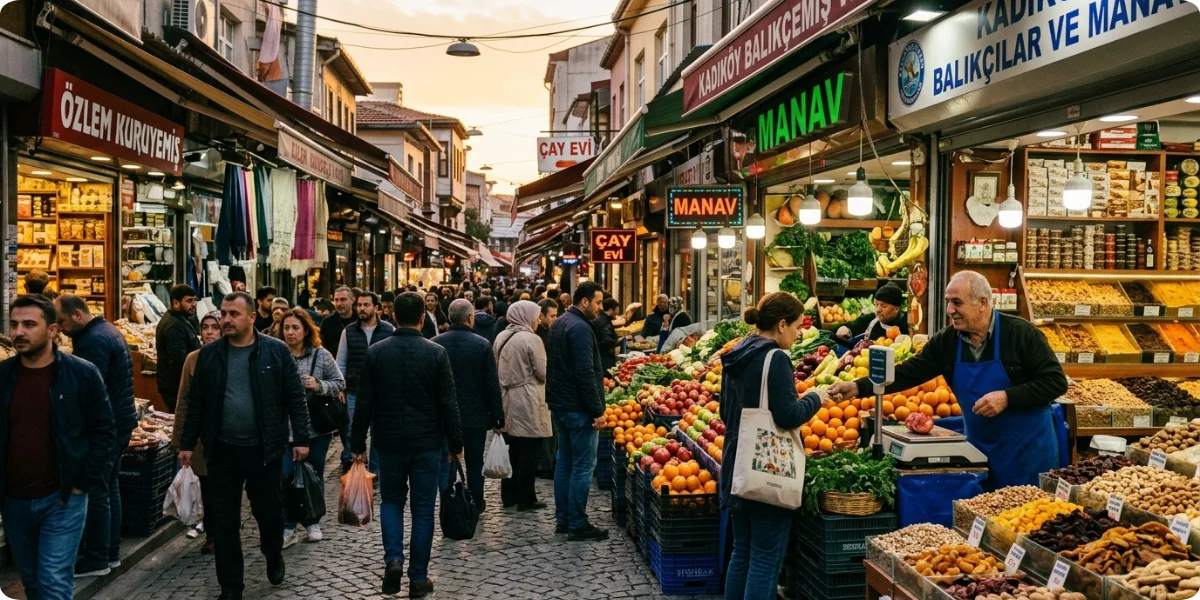
Many visitors never leave the European side, which is a shame. The Asian side is calmer, more local and noticeably less touristy.
1. Explore Kadıköy
Kadıköy is the Asian side’s liveliest district and a favourite with locals.
- Food markets: the covered market streets are packed with fishmongers, cheese sellers, pickle stalls, olives and spice shops.
- Cafés: a big café culture, with plenty of places to settle with a book.
- Local atmosphere: less polished than Sultanahmet, and that is exactly the appeal.
- Shopping: independent bookstores, record shops, vintage stores and small boutiques.
2. Walk Around Moda
A short walk from central Kadıköy, Moda is a leafy, seaside neighbourhood with a relaxed pace.
- Waterfront: a sea-facing promenade with benches and fishing spots.
- Parks: Moda’s green spaces are popular for picnics and people-watching.
- Cafés: ice cream, tea gardens and slow coffee stops.
- Sunset views: the water faces west, which is why the evenings here draw a crowd.
3. Take a Ferry Between Europe and Asia
Crossing the Bosphorus by ferry is more than transport. It is a 20 to 30 minute mini-cruise, and one of the best-value things you can do in the city. Typical routes link Eminönü, Karaköy and Beşiktaş on the European side with Kadıköy and Üsküdar on the Asian side (istanbul.com).
Best viewpoints: stand on the outer deck and look back at the old-city skyline as you leave. Grab a tea and a simit from the onboard seller and sit by the window. On the return trip, the light at golden hour is hard to beat.
Best Food Experiences in Istanbul
1. Try Traditional Turkish Breakfast
A Turkish breakfast (kahvaltı) is a spread rather than a plate: white cheese, olives, tomatoes, cucumbers, honey and kaymak (clotted cream), jams, eggs, sucuk (spiced sausage), fresh bread and endless tea. It is best shared, slowly, on a weekend.
Where it fits in your itinerary: make it your late-morning meal after an early start, or the reward after a sunrise walk. Neighbourhoods like Karaköy, Beşiktaş and Kadıköy are well known for breakfast spots.
2. Eat Turkish Street Food
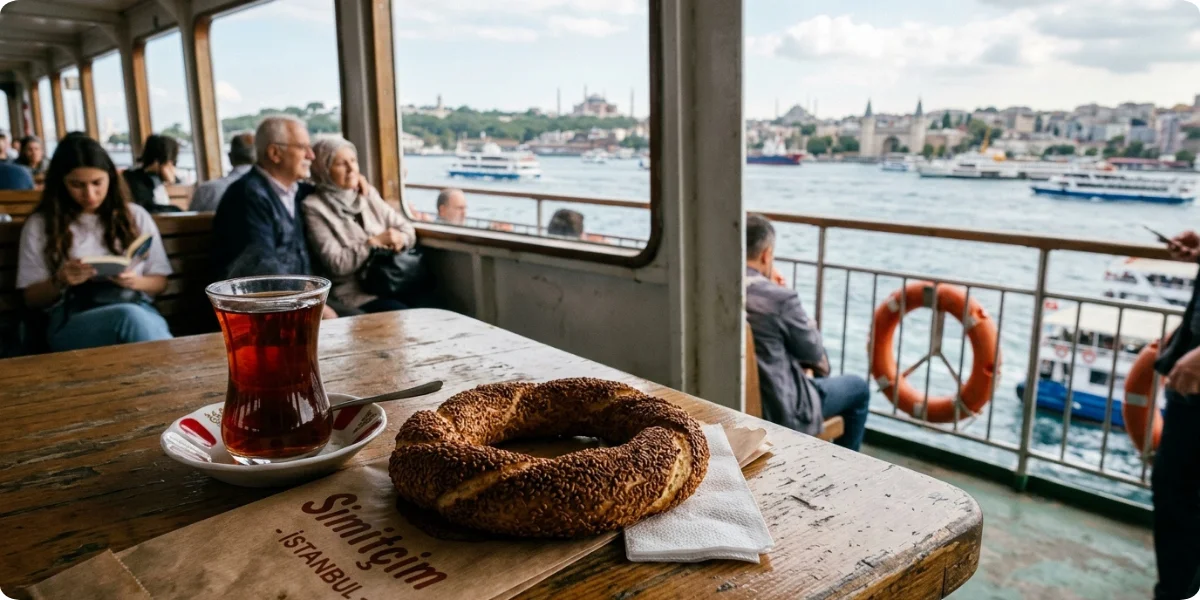
Street food is where Istanbul shines. A few to look for:
- Simit: a sesame-crusted bread ring, ideal for a quick bite or ferry snack.
- Balık ekmek: grilled fish in bread, best eaten by the water.
- Döner: sliced meat in bread or on a plate, a staple of Turkish fast food.
- Kumpir: a huge baked potato stuffed with cheese and toppings of your choice.
- Midye dolma: stuffed mussels with spiced rice, squeezed with lemon. Choose busy, clean stalls and eat them fresh.
3. Try Turkish Desserts
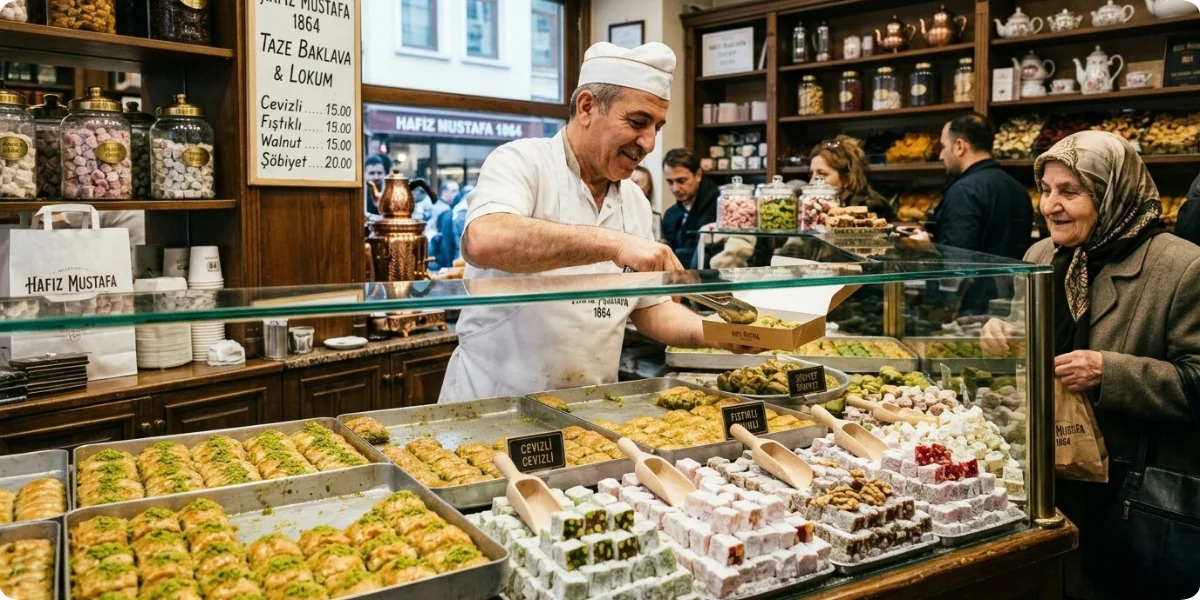
Turkish desserts range from delicate to deeply indulgent:
- Baklava: layers of thin pastry with nuts and syrup.
- Turkish delight (lokum): soft, chewy sweets in flavours like rose, pistachio and lemon.
- Künefe: a hot, cheesy dessert topped with syrup and pistachios, served fresh and best eaten immediately.
- Lokum is a good gift to take home, especially in a small box from a reputable shop.
4. Experience Turkish Coffee and Tea Culture
- Where to try them: coffee houses in Karaköy and Kadıköy, old-school kahvehane in the older districts, and tea gardens along the water.
- What makes Turkish coffee different: it is ground extremely fine and simmered in a small pot called a cezve, not filtered, which gives it a thick, rich texture. The grounds settle at the bottom, so do not drink the last sip. Turkish coffee culture is recognised by UNESCO as intangible cultural heritage.
- Cultural etiquette: tea (çay) arrives in tulip-shaped glasses and refills are common. Accepting a glass is a friendly gesture, and sitting for a while is part of the point.
Unique Things to Do in Istanbul
1. Visit a Traditional Turkish Hamam
A hamam is a bathhouse tradition that dates back centuries, and a few historic ones in the old city welcome visitors.
- What the experience involves: you relax in a warm marble room, then get a scrub and foam wash from an attendant, followed by an optional massage.
- What first-time visitors should expect: it is steamy and sociable, and swimwear or a wrap is provided or allowed, depending on the venue. Treatments are usually separated by gender at traditional hamams.
- Booking and etiquette tips: book ahead in peak season, read reviews carefully, confirm what is included before you pay, and be polite about privacy. Ask how long the session takes so you can fit it into your day.
2. Watch the Sunset Over the Bosphorus
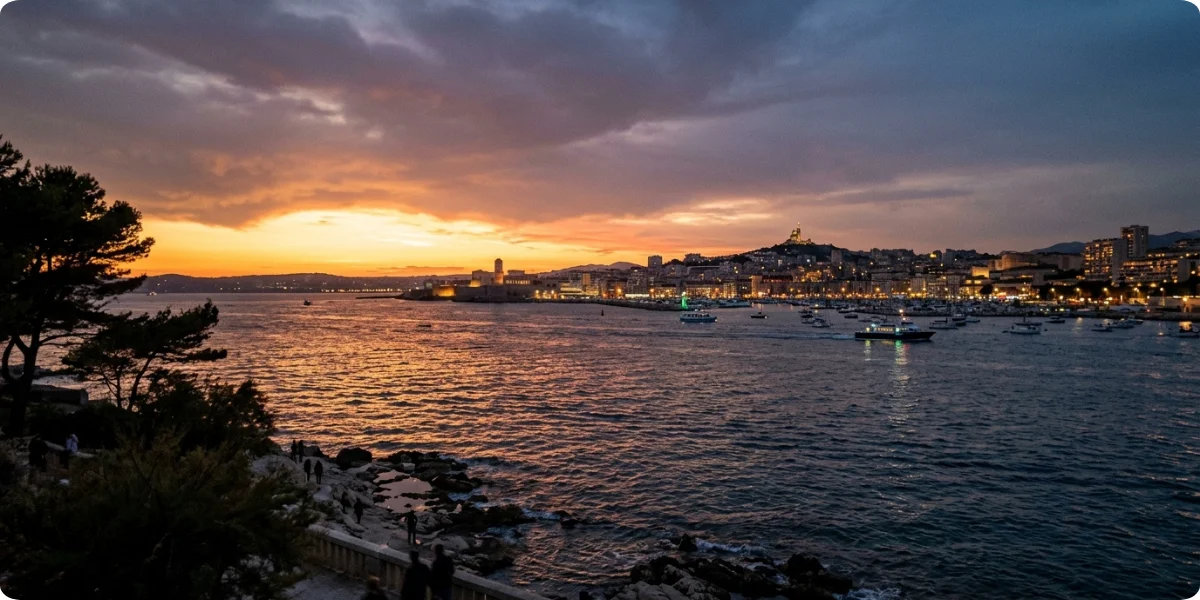
- Best waterfront areas: Ortaköy, Karaköy, Moda and the ferry decks on the evening crossings. Hilltop viewpoints like Çamlıca Hill give a wide panorama over the strait.
- Photography tips: arrive about 30 to 45 minutes before sunset, shoot into the light with the minarets in silhouette, and stay for the blue hour after.
- Why sunset works well for couples and families: it is easy, mostly free, and the pace is relaxed. Kids like the boats and gulls, and couples tend to like the view.
3. Explore Istanbul by Ferry
Ferries are the city’s most underrated experience. Best routes for sightseeing: Eminönü to Kadıköy, Beşiktaş to Üsküdar, and Karaköy to Kadıköy. Check live timetables on the official Şehir Hatları site and travel with a transport card rather than paying cash. Our Istanbul travel tips guide explains how cards and fares work.
4. Visit a Local Food Market
- What to look for: fresh produce, olives, cheeses, spices, dried fruits, honey, pickles and seasonal specialities.
- Seasonal products: summer brings stone fruit and tomatoes, autumn brings figs, grapes and chestnuts, and winter is when citrus and hearty greens dominate. Hours and stalls vary, so go in the morning.
- The local shopping experience: shop owners will often offer a taste, so try before you buy and ask for small amounts if you are travelling.
5. Explore Istanbul After Dark
- Evening walks: the waterfront at Karaköy and the old city’s lit mosques are especially pretty at night.
- Rooftop viewpoints: many hotels and restaurants have rooftop terraces overlooking the skyline, usually best booked for just before sunset.
- Neighbourhood cafés: Kadıköy and Beyoğlu stay lively late into the evening.
- Night-time safety: Istanbul’s busy areas are generally active into the night. Stay in well-lit, populated streets, keep valuables secure and use licensed taxis or ride apps. For a fuller look at safety, see our practical guide on whether Istanbul is safe.
Best Neighborhoods to Explore in Istanbul
| Neighborhood | Best For |
|---|---|
| Sultanahmet | History & major landmarks |
| Galata | Architecture & views |
| Karaköy | Food & cafés |
| Beyoğlu | Shopping & nightlife |
| Balat | Colorful streets & photography |
| Kadıköy | Local food & atmosphere |
| Moda | Waterfront walks |
| Ortaköy | Bosphorus views |
| Beşiktaş | Food & local life |
Things to Do in Istanbul by Traveler Type
1. Best Things to Do for First-Time Visitors
Stick with the classics in Sultanahmet, add a Bosphorus ferry and one neighbourhood like Galata. Our first-time visitor guide to Istanbul covers the basics in more detail.
2. Best Things to Do for Couples
Sunset on the Bosphorus, a rooftop dinner, a hamam session and a slow wander through Balat or Moda.
3. Best Things to Do With Kids
Ferry rides (kids love the gulls), the Basilica Cistern’s walkways, Gülhane Park, simit stops, and the Istanbul Archaeology Museums. Keep days short and flexible.
4. Best Things to Do for Families
Mix one major sight per day with a long, relaxed meal and a park or waterfront stop. A ferry across to Kadıköy gives everyone room to move and a fun journey.
5. Best Things to Do for History Lovers
Hagia Sophia, Topkapı Palace, the Basilica Cistern, the Hippodrome, and the Istanbul Archaeology Museums, plus the old Byzantine walls and churches in Fener and Balat.
6. Best Things to Do for Food Lovers
Join a street-food crawl, spend a morning in Kadıköy’s market streets, try a proper Turkish breakfast and finish with künefe or baklava.
7. Best Things to Do for Budget Travelers
Walk the old city, ride public ferries, eat simit and balık ekmek, explore markets and enjoy the free viewpoints. Use our trip cost calculator to plan a realistic budget.
8. Best Things to Do for Photographers
Balat’s streets at dawn, Galata Tower at golden hour, the Süleymaniye and Sultanahmet skyline from the water, and ferry decks at sunset.
Best Free Things to Do in Istanbul
Istanbul can be explored on a tight budget if you choose well:
- Walk around Sultanahmet and soak up the exteriors of the major landmarks.
- Explore neighbourhoods like Balat, Karaköy and Moda on foot.
- Visit public squares, including Sultanahmet Square and Taksim Square.
- Walk along the Bosphorus at Ortaköy, Bebek or Moda.
- Explore local markets just to browse and people-watch.
- Take selected public ferry routes, which are low-cost rather than free but give you a cruise at transit prices.
- Enjoy the street atmosphere: buskers, tea sellers and neighbourhood life cost nothing.
Best Things to Do in Istanbul at Night
- Explore İstiklal Avenue, still buzzing well after dark.
- Visit Karaköy for waterfront cafés and restaurants.
- Enjoy a Bosphorus evening by ferry or along the shoreline.
- See Istanbul from a rooftop, ideally around sunset.
- Explore Kadıköy, where bars, cafés and live music fill the side streets.
- Try Turkish restaurants and cafés that stay open late.
Evening activities vary a lot by neighbourhood, season and day of the week, so check current opening hours and transport availability before heading out, especially late ferries and metro services.
Things to Do in Istanbul Depending on How Many Days You Have
1. 1 Day in Istanbul
Focus on Sultanahmet: Hagia Sophia, the Blue Mosque, the Basilica Cistern and the Grand Bazaar. It is a full day, so do not add more.
2. 2 Days in Istanbul
Keep day one as above, then add Topkapı Palace, Galata, Karaköy and a Bosphorus experience on day two.
3. 3 Days in Istanbul
Add Kadıköy, Moda, Balat/Fener, and some extra food and cultural experiences, like a market morning or a coffee tasting.
4. 4–5 Days in Istanbul
Slow down. Explore the Asian side properly, book a Turkish hamam, visit the museums you skipped, and spend time in quieter, less-touristy neighbourhoods. For help deciding, see our guide on how many days to spend in Istanbul.
Best Time to Do Things in Istanbul
Rather than repeating a generic best-time article, here is how the seasons change what you can actually do. For month-by-month weather and crowd details, see our guide to the best time to visit Istanbul.
1. Spring
Mild weather and long days make it ideal for walking, ferry rides and neighbourhood exploring. Parks and gardens are at their best, but popular sights get busy, so go early.
2. Summer
Hot and busy. Plan sightseeing early in the morning, take a midday break, and use the evenings for waterfront walks. Ferries and sunset cruises are especially pleasant.
3. Autumn
Comfortable temperatures, golden light and fewer crowds than summer. It is a great season for photography, outdoor cafés and long walks through Balat and Kadıköy.
4. Winter
Cooler and often grey or rainy, but also the quietest season. Museums, hamams, cafés and indoor markets work well, and the skyline can look dramatic in moody weather. Daylight is shorter, so start early.
How Much Does It Cost to Visit Istanbul Attractions?
Prices change, sometimes quickly, so always check current official prices before you go. Use this table as a guide to budget levels, not exact fares.
| Experience | Budget Level | Typical Time |
|---|---|---|
| Historic neighborhood walk | Free | 1–3 hours |
| Grand Bazaar | Free to enter | 1–2 hours |
| Bosphorus ferry | Low | 1–2 hours |
| Major museum/palace | $$ | 2–4 hours |
| Turkish hamam | $$–$$$ | 1–2 hours |
| Rooftop experience | $$ | 1–2 hours |
Practical Istanbul Travel Tips
For a more detailed checklist, see our full Istanbul travel tips and the broader Istanbul tourist information guide.
1. How to Get Around Istanbul
- Metro: useful for longer distances and airport links.
- Tram: the T1 tram connects Sultanahmet, Eminönü and Karaköy, which is handy for sightseeing.
- Ferry: the best way to cross between Europe and Asia.
- Bus: extensive but can be confusing, so use a map app.
- Walking: the old city and Karaköy-Galata area are best explored on foot, though hills and cobbles add up.
- Taxi considerations: use metered taxis or trusted ride apps, and agree on the route if you are unsure.
2. What to Wear at Religious Sites
Cover shoulders and knees, bring a scarf for covering hair if needed, and wear shoes that are easy to slip off.
3. How to Avoid Tourist Traps
Be cautious of anyone who is overly eager to guide you, avoid restaurants with aggressive touts, check menu prices before ordering and be wary of shops that insist on tea before negotiating.
4. How to Handle Crowded Attractions
Go early, book timed tickets where available, avoid weekends and cruise-ship days if you can, and have a Plan B for each major attraction.
5. What to Carry While Sightseeing
A light scarf, comfortable shoes, a refillable water bottle, sunscreen, a small day bag with a zipper, a portable charger and a transport card.
6. How to Plan Around Prayer Times
Mosque visits pause during daily prayers, particularly the Friday midday prayer. Check the day’s timings before you head out and visit other sights in the gaps.
7. How to Use Istanbul Public Transportation
Istanbul’s public transport uses a prepaid, contactless card called the Istanbulkart, accepted across metro, tram, bus and ferry lines. Visitors can also choose an Istanbul City Card or limited-use passes, and should note that bank card acceptance can vary by line (istanbul.com). Top up at machines with English menus, and check Şehir Hatları for ferry schedules.
Common Mistakes When Visiting Istanbul
- Trying to see everything in one day. The city is bigger than it looks.
- Staying only around Sultanahmet. You will miss the best neighbourhoods.
- Ignoring the Asian side. It is easy to reach and a highlight for many travellers.
- Underestimating walking distances. Hills and crowds slow everything down.
- Not checking attraction schedules. Some places close on specific days.
- Taking taxis without understanding the route or fare. Use meters and trusted apps.
- Visiting popular attractions at the busiest times. Go early or late.
- Packing too many activities into one day. Two or three highlights is plenty.
For a deeper look, read our guide to Istanbul travel mistakes, the Istanbul travel tips checklist and our honest take on whether Istanbul is safe.
Is Istanbul Worth Visiting?
Yes, for most travellers. The history is world-class, the food is varied and affordable, the culture feels alive rather than preserved, and the architecture ranges from Byzantine domes to Ottoman mosques to Art Nouveau apartments. Add the Bosphorus and a huge variety of neighbourhoods, and you get a city that works for couples, families, solo travellers and budget travellers alike. It is busy and sometimes chaotic, but that is part of its character. For a longer answer, read Is Istanbul Worth Visiting?
Frequently Asked Questions About Things to Do in Istanbul
What are the top 5 things to do in Istanbul?
Visit Hagia Sophia, see the Blue Mosque, explore Topkapı Palace, walk through the Grand Bazaar and take a Bosphorus ferry. These five cover history, culture, shopping and the city’s famous waterfront in one simple plan.
What should I not miss in Istanbul?
Do not miss Hagia Sophia, the Basilica Cistern and a Bosphorus crossing. If you have time, add Galata Tower views and an evening in Kadıköy. Together they give you both the big monuments and the local side of the city.
Is 3 days enough for Istanbul?
Three days is enough for the main highlights and a good taste of local life. You can cover Sultanahmet, the Bosphorus, Galata and Karaköy, and the Asian side without rushing, though you will still leave with a list for next time.
What is Istanbul best known for?
Istanbul is best known for sitting on two continents, for landmarks like Hagia Sophia and the Blue Mosque, for the Grand Bazaar and the Bosphorus, and for its food, from simit and kebabs to baklava and Turkish tea.
What can you do in Istanbul for free?
You can walk around Sultanahmet, explore neighbourhoods like Balat and Karaköy, stroll the Bosphorus waterfront, browse markets and enjoy the city’s street life. Entering the Grand Bazaar is also free, though most museums and palaces charge admission.
What is the best area to explore in Istanbul?
Sultanahmet is best for first-timers because most major landmarks are there. For atmosphere, food and views, Galata, Karaköy and Kadıköy are the best next stops, and Moda is great for a slow waterfront walk.
What should I do in Istanbul at night?
Walk İstiklal Avenue, have dinner in Karaköy, take a rooftop view over the skyline or head to Kadıköy for cafés and live music. Check late transport options before you go so you are not stuck.
Is Istanbul expensive for tourists?
It depends on how you travel. Public transport, street food and neighbourhood exploring are good value, while major attractions, guided tours, hamams and rooftop venues cost more. Prices change, so check current rates before you go.
Can you see Istanbul in 2 days?
You can see the highlights in two days: Sultanahmet’s main sights on day one, then Topkapı Palace, Galata, Karaköy and a Bosphorus trip on day two. It will be busy, so choose a few priorities rather than everything.
Which side of Istanbul is better for tourists?
The European side has most major attractions, so it suits first-time visitors best. The Asian side is calmer, more local and great for food and waterfront walks, so it is a rewarding add-on, especially for a second or third day.
Final Thoughts
Istanbul is much more than a checklist of landmarks. The mosques and palaces are unforgettable, but the city is just as memorable for its ferry decks, tea glasses, market lanes and hillside streets that open onto sudden views.
The best trips mix the famous with the local: a morning in Sultanahmet, an afternoon on the water, an evening in Karaköy or Kadıköy. If you have one day, stay in the old city. With two or three days, add the Bosphorus, Galata and the Asian side. With four or five days, slow down, go deeper, and let the city surprise you.
Pick a couple of anchors for each day, leave room for wandering, and let the rest happen. Browse more Istanbul travel guides on Trip Guiderz when you are ready to plan the details.

Arman Ashraf is a content writer focused on travel and tourism. He creates practical, well-researched travel guides, destination articles, and travel tips designed to help readers plan trips with greater confidence. His work combines clear, engaging writing with SEO best practices, covering destinations, things to do, travel planning, and useful advice for travelers. Arman is committed to producing helpful content that makes discovering and planning travel easier.