

London travel tips can save a first-time visitor hours of confusion and a surprising amount of money. The city covers roughly 1,572 square kilometres and welcomes around 20 million international visitors in a typical year, so planning ahead matters more than most people expect. The transport network has its own rules: contactless payment on the Tube and buses is capped daily, which means tapping the same card or phone each time is usually cheaper than buying single paper tickets. Many famous attractions, including the Tower of London and the London Eye, regularly sell out at peak times, and booking online ahead is often cheaper than paying at the gate. Based on years of reviewing visitor itineraries and cross-checking official sources such as Transport for London and Visit London, this guide walks through the planning decisions that matter most when to go, how to pay for transport, where to stay, what to budget, which sights to reserve, and how to stay safe.
Spring and early autumn typically offer milder weather and thinner crowds than July and August, while central areas such as Westminster, Covent Garden and South Bank put the main sights within walking distance. It is written for first-time visitors, families and anyone planning a short city break who wants clear answers instead of a list of a hundred things to do. For a wider overview of the city, start with the TripGuiderz London travel guide.
1. Know the Best Time to Visit London
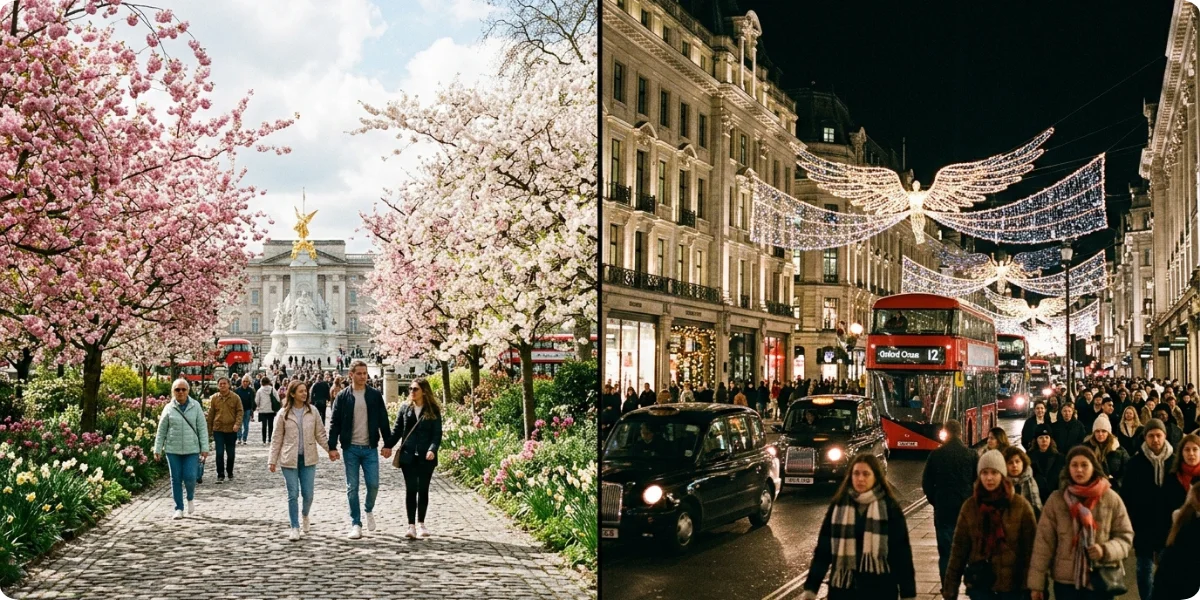
Quick answer: The best time to visit London depends on what you value. Late spring and early autumn usually balance mild weather with manageable crowds, summer brings long days and events but the longest queues, and winter trades short daylight for festive atmosphere and, outside the holidays, lower hotel demand.
i) London in Spring: Mild Weather and Fewer Crowds
- Parks come into bloom and daylight stretches noticeably.
- Showers are common, so keep a light waterproof in your bag.
- School holidays, including Easter, push up crowds and hotel prices.
ii) London in Summer: Festivals, Long Days, and Busy Attractions
- Long evenings leave time for a riverside walk after sightseeing.
- Outdoor events, markets and park life are at their peak.
- Major sights such as the Tower of London and Westminster Abbey are at their busiest, and many Tube lines get hot, so plan indoor breaks.
iii) London in Autumn and Winter: What to Expect
- Autumn is cooler and quieter, with changeable weather and good value on rooms.
- December brings lights and Christmas markets, but daylight is short and public transport runs a reduced service or stops on Christmas Day, so check the TfL website before you travel.
- January and February are often the cheapest months, though cold, wet days are likely.
iv) How to Choose Your Travel Dates Based on Budget and Weather
No season is best for everyone, so decide your priority first:
- Lowest cost: shoulder months and the weeks after the New Year.
- Best weather odds: late spring through early autumn.
- Fewest crowds: weekdays outside school holidays.
London sees some rain in every month, from roughly 10 wet days in July to around 16 in January, according to Weather2Travel’s climate averages, so a flexible plan beats a perfect forecast. Our best time to visit London guide compares the seasons in more detail.
2. Understand London’s Public Transport Before You Arrive
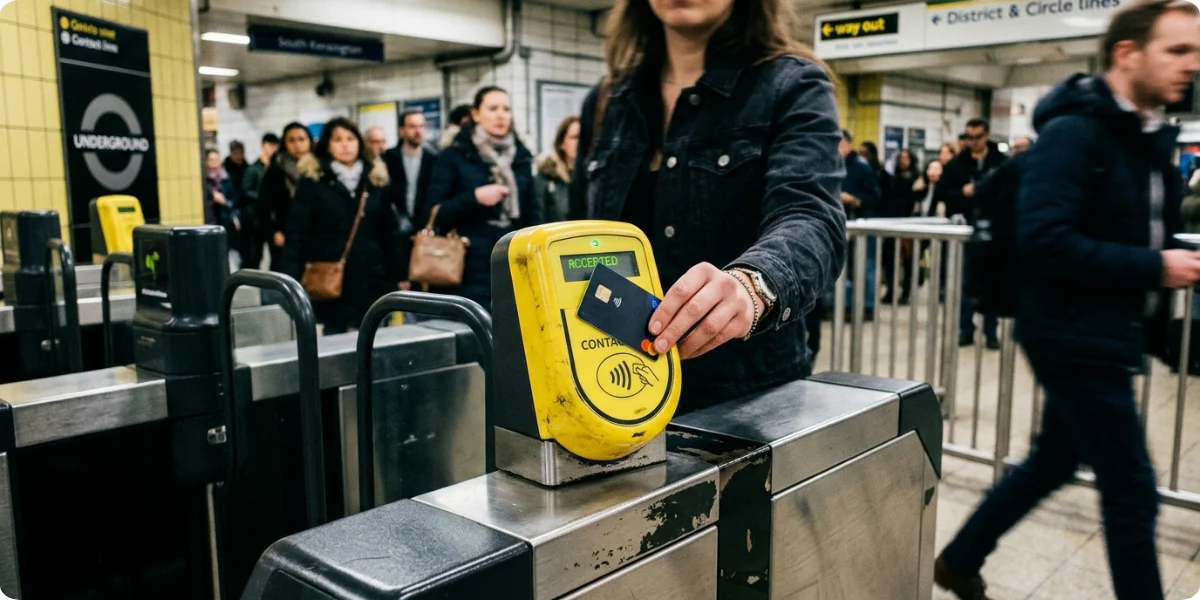
Quick answer: For most visitors, tapping a contactless card or phone on the Tube, Elizabeth line, buses and trams is the simplest option. Fares are capped each day and week automatically, so you never pay more than the cap as long as you use the same card or device.
i) How to Use the London Underground (Tube)
- Touch in at the start and touch out at the end of every Tube or rail journey; missing a touch-out can trigger a maximum fare.
- Most central sights sit in Zones 1 and 2.
- Check the TfL Journey Planner for step-free routes, because not every station has lifts.
ii) Oyster Card vs. Contactless Payment: Which Is Better?
- Oyster and contactless use the same adult pay-as-you-go fares and caps, so contactless saves you buying a separate card.
- Always use the same card or device. TfL explains that switching between a phone and a card means journeys will not count toward your cap, in its pay-as-you-go caps guide.
- The daily cap runs from 04:30 to 04:29, and weekly caps run Monday to Sunday.
- At the time of writing, the adult Zones 1-2 daily cap is about £8.90 and a standard bus journey is £1.75. Always confirm current fares with TfL.
- Overseas cards may add foreign transaction fees, so check with your bank. An Oyster card is a fallback if your card has no contactless function.
iii) When to Take a Bus, Train, or Elizabeth Line
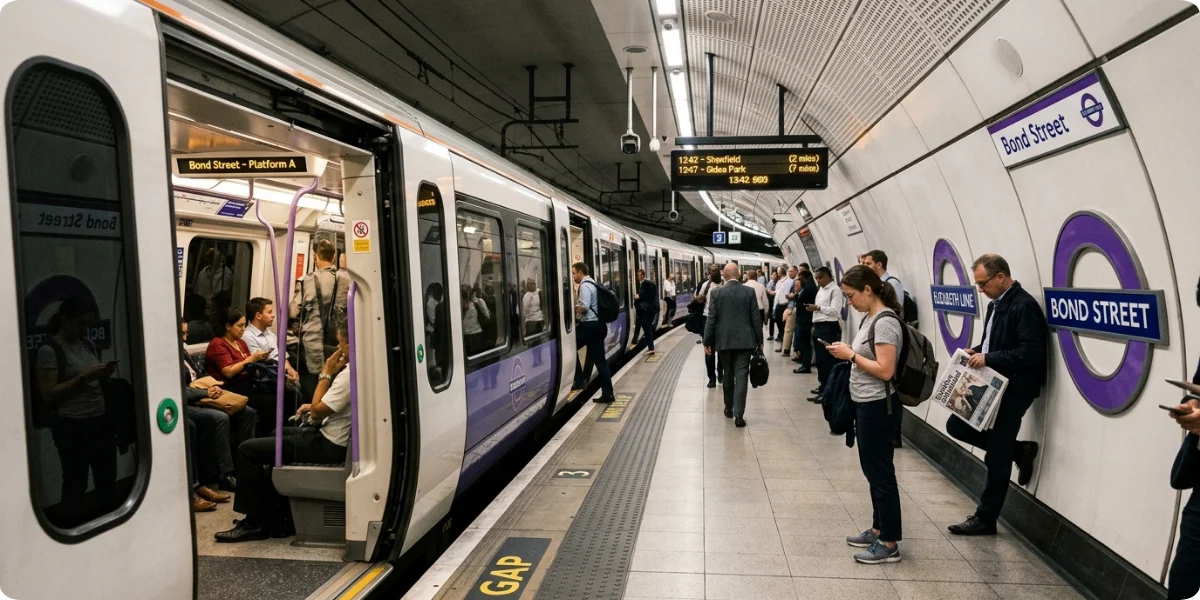
- Bus: cheap and scenic, but slower in traffic.
- Elizabeth line: fast east-west travel through Paddington, Bond Street, Tottenham Court Road, Farringdon, Liverpool Street and Canary Wharf.
- National Rail: useful for day trips beyond the Tube map.
iv) How to Avoid Peak-Time Travel and Unnecessary Costs
- Weekday peak hours are roughly 06:30-09:30 and 16:00-19:00; off-peak journeys can cost less.
- Walk short hops in central London; some Tube stations are only minutes apart on foot.
- Plan one area per half-day to cut repeat journeys.
v) Why You Should Stand on the Right on Escalators
On Tube escalators, people stand on the right so those in a hurry can walk up the left. It is an unwritten rule, so follow any signs that say otherwise and keep luggage out of the walking lane.
3. Choose Your London Accommodation Strategically
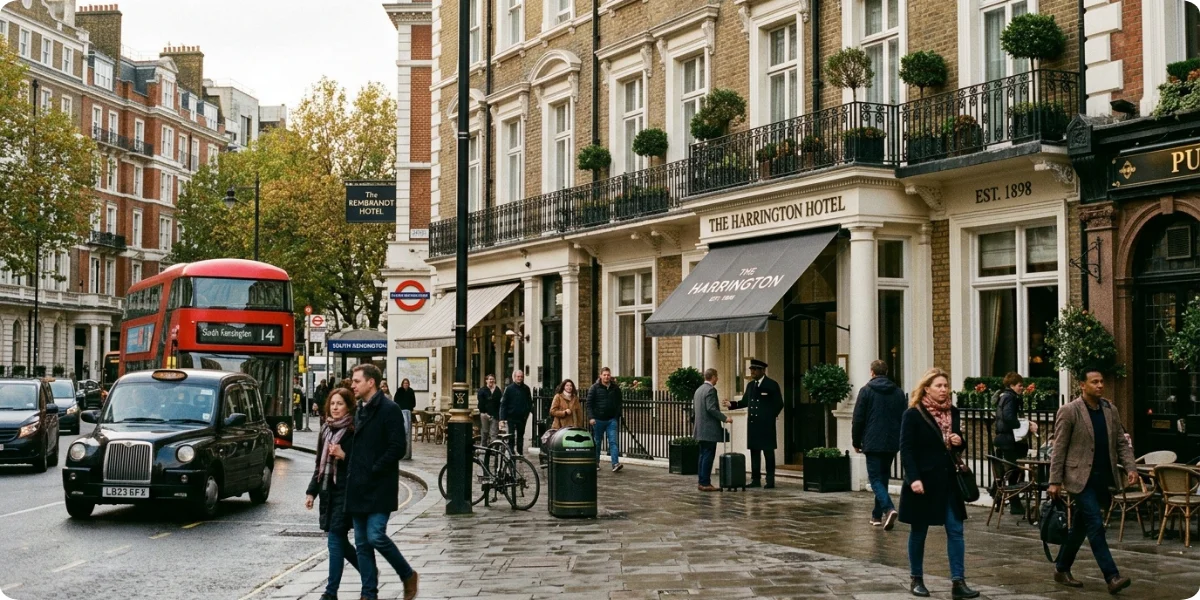
Best Areas to Stay for First-Time Visitors
- Westminster and South Bank: close to major landmarks.
- Covent Garden and the West End: theatres, restaurants and many Tube lines.
- South Kensington: museums and parks, with a calm feel.
- King’s Cross and Bloomsbury: strong rail links, including Eurostar at St Pancras.
- London Bridge and Southwark: food markets and riverside walks.
i) Staying in Central London vs. Outer London
Central rooms cost more but save travel time and fares. Outer zones can offer better value and larger rooms, as long as a fast line, such as the Elizabeth line or a direct Tube route, gets you into the centre in under 30 minutes.
ii) How to Compare Hotel Prices and Transport Links
- Compare the total cost, adding daily transport to the nightly rate.
- Check the walking time from the station, especially with luggage.
- Look for step-free access if you need it.
iii) What to Check Before Booking a London Hotel
- Cancellation terms and whether breakfast is included.
- Luggage storage for check-in and check-out days.
- Lift access, room size and air conditioning in summer.
Browse our hotel guides for more accommodation ideas.
4. Plan Your London Budget Before You Travel
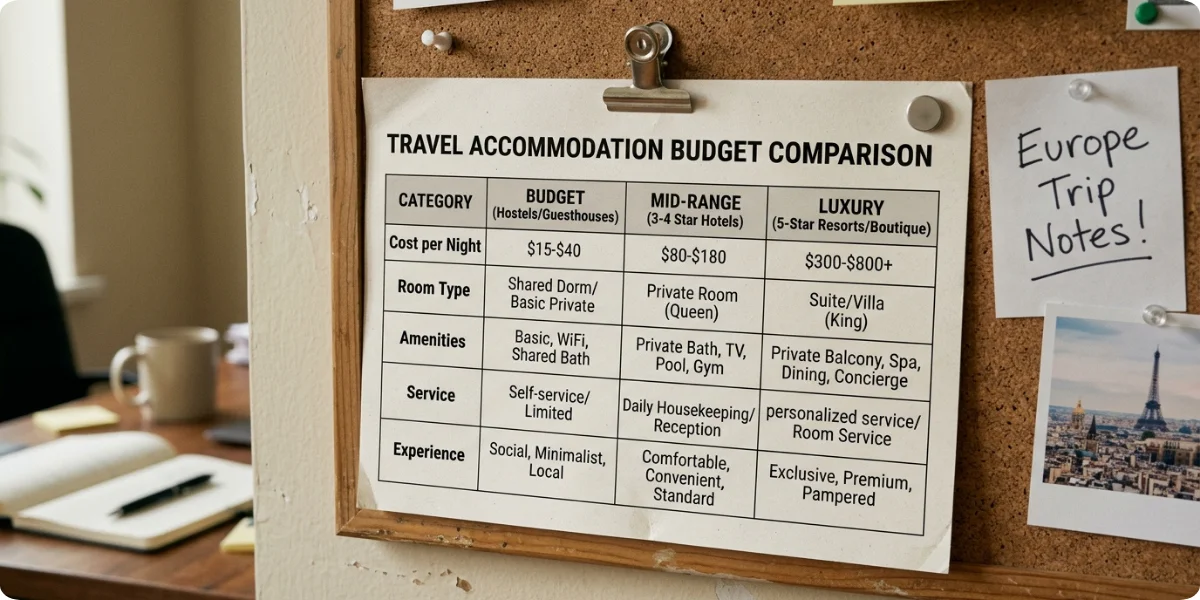
i) Daily Costs for Budget, Mid-Range, and Luxury Travelers
These are planning estimates for food, local transport and attractions, not official fares, and they exclude your hotel.
| Travel style | Estimated daily spend | Typical choices |
|---|---|---|
| Budget | £50-£80 | Free sights, supermarket meal deals, buses and the Tube |
| Mid-range | £100-£170 | One paid attraction, sit-down meals, mixed transport |
| Luxury | £250+ | Fine dining, private transfers, premium experiences |
Use our trip cost calculator to adapt these numbers to your own plan.
ii) Free Attractions That Help You Save Money
- Many national museums and galleries have free permanent collections.
- Royal Parks, riverside walks and street markets cost nothing to enjoy.
- VisitBritain lists more ideas in its free things to do in London guide.
iii) How to Save on Food, Transport, and Accommodation
- Eat your main meal at lunch, when set menus are often cheaper.
- Rely on contactless caps rather than single tickets.
- Book rooms early and compare refundable and non-refundable rates.
iv) When a London Pass or Attraction Bundle Is Worth It
Add up the gate prices of the paid sights you really plan to visit. A pass usually pays off only if you visit several paid attractions in a few days and use the entry deals fully; otherwise single tickets are cheaper and more flexible.
5. Book Popular London Attractions in Advance
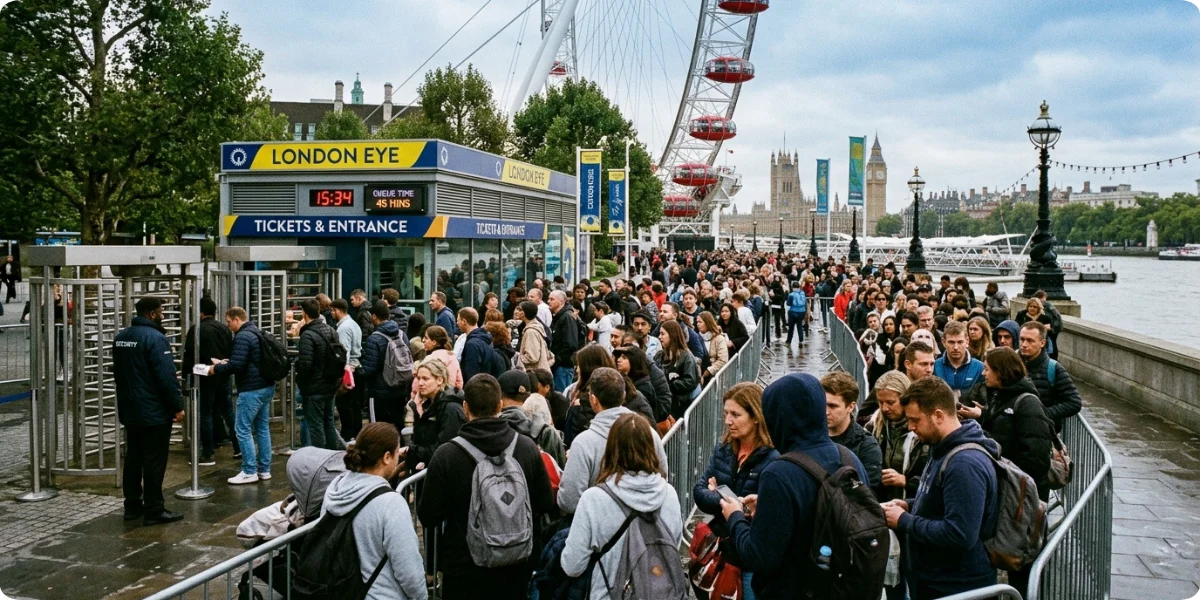
i) Attractions You May Need to Reserve Ahead
- The London Eye uses timed tickets that must be pre-booked online.
- The Tower of London recommends advance booking at busy times.
- Some free museums ask you to reserve a free timed ticket.
ii) How to Plan Visits to the Tower of London, London Eye, and Westminster Abbey
- Tower of London: book via Historic Royal Palaces and allow a half-day for the Crown Jewels, White Tower and battlements.
- London Eye: choose a timed slot on the official ticket page; a rotation takes about 30 minutes.
- Westminster Abbey: check the prices and entry times page, because the Abbey is a working church and hours change for services.
iii) Which Museums and Galleries Can You Visit for Free?
General admission is free at many major institutions, including the British Museum, Natural History Museum, Science Museum, V&A, National Gallery and Tate galleries. Temporary exhibitions, special tours and some experiences are paid, so check each museum’s website.
iv) How to Avoid Long Queues and Overpacked Days
- Arrive at opening time or book the first slot of the day.
- Limit yourself to two major sights per day.
- Leave gaps for meals, weather and transport delays.
6. Learn These Essential London Money Tips
i) Understand Pounds Sterling and Card Payments
London uses pounds sterling (£), and contactless cards and phones are accepted almost everywhere, including markets and small cafés. Our currency converter calculator helps you compare prices with your home currency.
ii) Should You Carry Cash in London?
A small amount of cash is a useful backup for rare cash-only stalls or tips, but most visitors rarely need more than a few notes.
iii) How to Avoid Dynamic Currency Conversion
If a card machine offers to charge you in your home currency, decline and choose pounds. Wise shows how dynamic currency conversion can add costs compared with paying in local currency.
iv) Tipping in Restaurants, Cafés, and Taxis
- Check the bill first; many restaurants add a service charge of around 12.5%, which is discretionary.
- If no service charge is added, 10-15% is common for good table service.
- Cafés, counter service and pubs do not require tips, and taxi riders commonly round up.
See Visit London’s tipping guide for more detail.
7. Know What to Pack for London Weather

i) Why Layers and a Lightweight Waterproof Jacket Help
London has a temperate oceanic climate, as described in this climate overview, with changeable weather in most seasons. Layers let you adapt from a chilly morning to a warm afternoon.
ii) Comfortable Shoes for Walking Around the City
Expect to walk several miles a day on pavements and Tube stairs, so choose broken-in, supportive shoes with a good grip.
iii) What to Pack for Summer vs. Winter
- Summer: breathable clothes, sunscreen, a refillable water bottle and a light rain layer.
- Winter: a warm coat, hat, gloves and waterproof footwear.
iv) Useful Travel Essentials for Day Trips and Sightseeing
- A power bank and a small day bag with a zip.
- Contactless card or payment phone for transport.
- A paper or offline copy of tickets and bookings.
8. Understand Local Customs and Everyday Etiquette
i) Queueing Etiquette in Shops and Attractions
Londoners queue in an orderly line and expect you to do the same. Do not jump ahead, and wait for the person in front to finish before approaching a counter.
ii) Restaurant Service Charges and Tipping
Read the bill before adding a tip, because a service charge may already be included. Under the Employment (Allocation of Tips) Act, qualifying tips and service charges must be passed on to staff.
iii) Pub Etiquette and Ordering Drinks
- Order and pay at the bar, then take your drinks to the table.
- Tipping at the bar is not expected.
- In rounds, each person takes a turn buying drinks for the group.
iv) Driving on the Left and Using Pedestrian Crossings
Traffic drives on the left, so look both ways at every crossing. Many crossings have Look Right or Look Left painted on the road, and you should stay alert for cyclists and buses.
v) Useful British Expressions for Visitors
- Cheers: thanks.
- The loo: the toilet.
- A fiver / a tenner: a £5 or £10 note.
- Mind the gap: watch the space between the train and platform.
9. Stay Safe While Exploring London
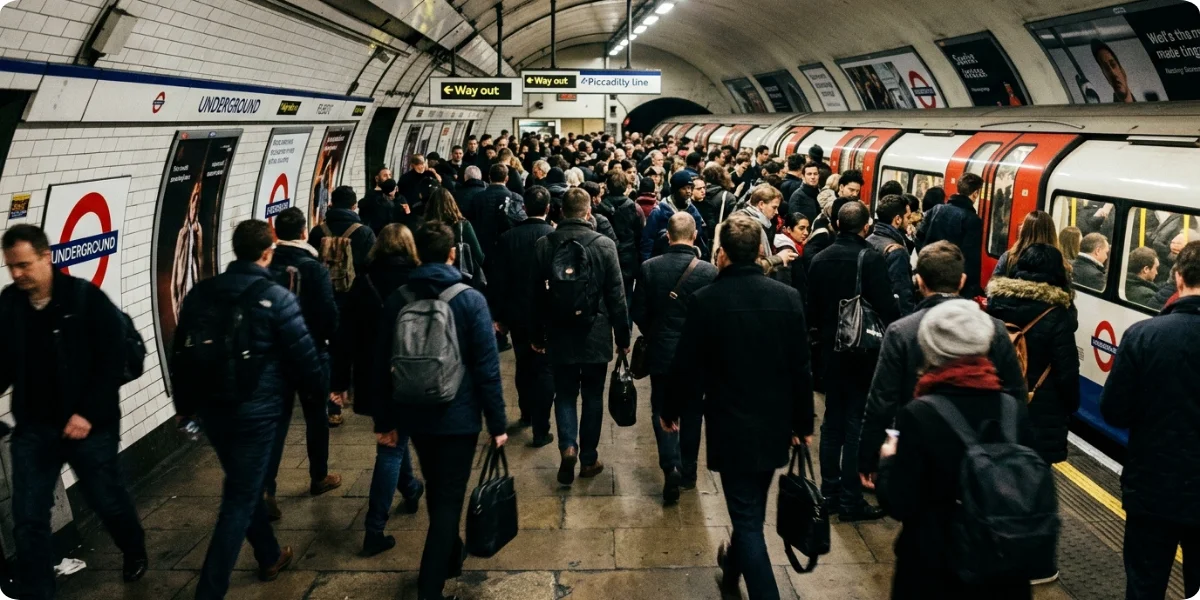
London is generally safe for visitors who take ordinary big-city precautions. Our Is London safe? guide covers areas, nights and solo travel in more depth.
i) How to Protect Your Phone and Valuables in Crowded Areas
- Keep your phone in a zipped pocket or inside bag, not in your back pocket.
- Avoid holding it near the platform edge or by the road, where thieves on bikes can snatch it.
- Use a cross-body bag and keep it in front of you in crowds.
ii) Staying Aware on Public Transport
- Keep bags closed and on your lap on busy trains.
- Stay alert around doors, when thieves may grab and leave.
iii) Common Tourist Scams and How to Avoid Them
- Decline unsolicited offers to carry or tie something, such as friendship bracelets.
- Be careful with ticket touts and use official sellers.
- Use licensed black cabs, TfL-licensed minicabs or booked apps rather than touts.
iv) What to Do If You Lose Your Belongings
- For items lost on the Tube, buses, Elizabeth line or black cabs, use TfL’s lost property service.
- Report stolen cards to your bank immediately, then report theft to police.
- Keep copies of your passport and insurance details.
v) Emergency Numbers and Useful Official Resources
Call 999 in an emergency, such as danger to life or a crime in progress. For non-urgent crime, call 101 or use the Met Police online reporting service.
10. Avoid These Common London Travel Mistakes
Our London travel mistakes guide goes deeper; these are the essentials.
i) Trying to Visit Too Many Attractions in One Day
Two major sights plus a meal and a walk is realistic. Three or more usually means rushing and queueing.
ii) Underestimating Walking Distances
London maps can mislead. Check walking times in a maps app and combine nearby places.
iii) Choosing a Hotel Without Checking Transport Links
A cheap room far from a station can cost you time and fares. Check the walk to the nearest Tube or Elizabeth line stop.
iv) Assuming Every Museum or Attraction Is Completely Free
Permanent collections are often free, but special exhibitions and tours may not be.
v) Forgetting to Check Opening Times and Holiday Schedules
Verify hours on the official website, and check UK bank holidays, when attractions and transport may run different schedules.
vi) Taking Airport Transfers Without Comparing Options
A rail link is often cheaper and more predictable than a taxi in traffic. Compare time, cost and luggage needs before you land.
11. Plan Your London Sightseeing by Neighbourhood
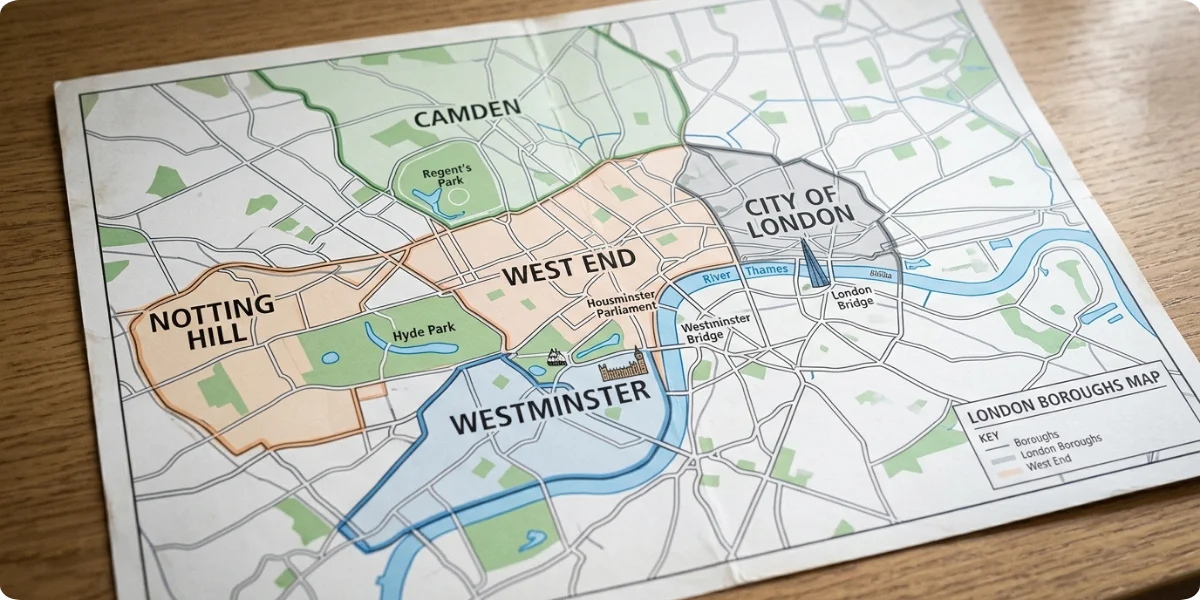
Grouping nearby attractions reduces backtracking, saves transport costs and leaves more energy for the sights themselves.
i) Westminster and South Bank
Big Ben, the Houses of Parliament, Westminster Abbey and the London Eye cluster along the Thames, with Southbank Centre and riverside walks nearby.
ii) Covent Garden, Soho, and the West End
Theatres, shopping, street performers and restaurants are within walking distance of each other.
iii) The City of London and Tower Bridge
Pair the Tower of London and Tower Bridge with St Paul’s Cathedral, Borough Market and the riverside.
iv) Camden and North London
Camden Market, Regent’s Canal and Primrose Hill suit a relaxed, market-focused half-day.
v) Notting Hill and West London
Portobello Road, pastel houses and Hyde Park or Kensington Gardens combine well on a slower day.
12. Essential London Travel Tips for International Visitors
i) Check UK Entry and Visa Requirements Before Departure
- Many visitors who do not need a visa must still hold an Electronic Travel Authorisation (ETA) before travelling.
- The UK government ETA page states the fee is £16 and that each traveller applies separately.
- An ETA permits travel but does not guarantee entry, and you must travel with the passport you used to apply.
- Use the GOV.UK check tool to confirm your own requirements, because rules and fees can change.
ii) Choose the Right SIM, eSIM, or Roaming Plan
Compare your carrier’s roaming charges with a UK SIM or eSIM. Check that your phone is unlocked and supports eSIM before you buy.
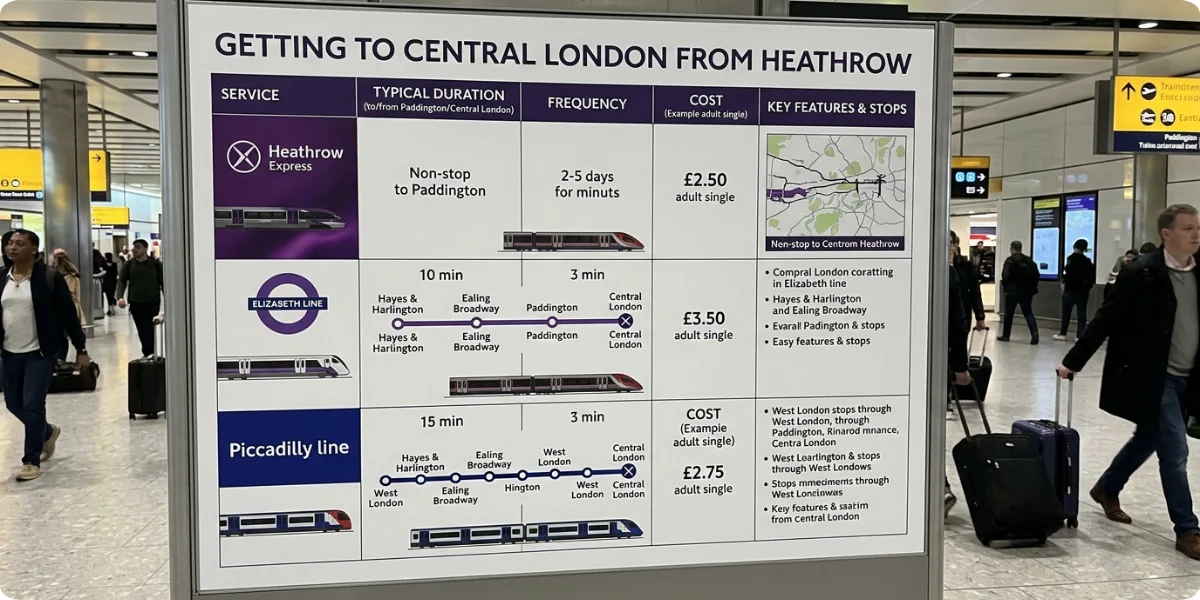
iii) Understand Airport Transfers from Heathrow, Gatwick, and Stansted
| Route | Typical journey | Fare note |
|---|---|---|
| Heathrow Express | About 15 minutes Paddington to Terminals 2 and 3 | Premium fare; check operator |
| Elizabeth line | Under 40 minutes to central stations | Mid-priced; check TfL |
| Piccadilly line | Under an hour to central London | Lowest rail fare; check TfL |
Heathrow’s rail guide lists these options. Gatwick and Stansted also have fast rail links into central London, so compare each airport’s train options before choosing a taxi.
iv) Check Plug Types, Weather Forecasts, and Travel Insurance
- The UK uses Type G sockets at 230V, as this UK plug adapter guide explains.
- Check the forecast before you pack.
- Buy travel insurance that covers medical care and trip changes.
v) Know the Difference Between London Airports and City Centre Stations
London’s airports are outside the centre, and each connects to different terminals, such as Paddington, Victoria or Liverpool Street. Check your hotel’s nearest station before choosing a route.
13. Use These London Travel Tips to Plan a 3-Day Visit
Treat this as a flexible sample itinerary, not a fixed schedule. Our how many days in London guide and trip duration calculator can help you fit it to your own trip length.
i) Day 1: Westminster, Buckingham Palace Area, and South Bank
- Morning: Westminster Abbey and Parliament Square.
- Afternoon: walk through St James’s Park toward Buckingham Palace.
- Evening: South Bank stroll and a London Eye ride.
ii) Day 2: The Tower of London, Tower Bridge, and the City
- Morning: Tower of London.
- Afternoon: Tower Bridge and a riverside walk.
- Evening: Borough Market or a City dinner.
iii) Day 3: British Museum, Covent Garden, and Soho
- Morning: British Museum highlights.
- Afternoon: Covent Garden and Soho.
- Evening: a West End show if tickets are booked.
iv) How to Adjust the Itinerary for Families or Slow-Paced Travelers
- Drop one stop per day and add a park break.
- Choose hands-on museums for children.
- Use buses and the Elizabeth line to avoid long Tube transfers.
Frequently Asked Questions About London Travel Tips
What should I know before visiting London for the first time?
Book major attractions in advance, use contactless payment on public transport, stay near a reliable Tube or Elizabeth line station and keep a flexible budget. Check entry rules, such as the ETA, well before you travel, and allow time for weather changes.
How many days are enough for London?
Three days gives first-time visitors a good introduction to the main sights, while four to five days allows a slower pace, extra neighbourhoods and a day trip. Choose by how much you want to see versus how relaxed you want the trip to feel.
What is the cheapest way to get around London?
Walking is free, and buses are usually the cheapest paid option, with a single fare of £1.75 at the time of writing. For rail and Tube, contactless daily and weekly caps keep costs down. Always check current TfL fares before you travel.
Is London expensive for tourists?
London can be expensive, especially for accommodation, dining and paid attractions. You can control costs with free museums, parks, meal deals, contactless caps and early bookings. Your daily spend depends on travel style, season and how many paid attractions you choose.
Do I need cash in London?
Most visitors need very little cash because contactless cards and phones are accepted almost everywhere, including transport and markets. Keep a small amount for rare cash-only stalls, small tips or emergencies, but you do not need to exchange large sums.
What should tourists avoid doing in London?
Avoid overpacking your days, booking a hotel without checking transport links, paying in your home currency on card machines, and leaving phones exposed near roads or platforms. Also avoid assuming every attraction is free or open every day.
Is London safe for solo travelers?
London is generally safe for solo travelers who use normal city precautions. Keep valuables secure, use licensed transport at night, share your plans with someone you trust, and know the emergency numbers. Stay alert in crowded areas, where phone theft is most common.
What is the best month to visit London?
There is no single best month. Late spring and early autumn often offer a good balance of mild weather and manageable crowds, summer suits long days and events, and winter appeals to travelers who value lower hotel rates and festive lights.
Final Thoughts: Make Your London Trip Easier
The most useful London travel tips come down to five priorities: pay for transport with a capped contactless card, choose accommodation by transport links and not just nightly rate, set a realistic budget, book the headline attractions ahead and keep each day achievable. Get those right, and the rest of the trip becomes easier to enjoy.
For more planning help, explore our London travel hub, see whether the city fits your plans in our Is London worth visiting? guide, or use our travel planning resources to organize the rest of your trip.
