
The best things to do in London combine royal landmarks, free world-class museums, lively markets, green parks and river views, and most of them sit within a short Tube or bus ride of each other. The Underground alone runs 11 lines and 272 stations, so even a first-time visitor can cover several major sights in one day. That variety is why the city, home to roughly 8.8 million residents, can feel overwhelming on a first visit. Most major attractions cluster in Zone 1, and a contactless card or Oyster with daily fare capping keeps transport costs predictable.
This guide is for first-time travelers who want a clear shortlist instead of a thousand open tabs. It is built on route-tested planning, including real transport timings, opening-hour checks and crowd-avoidance tips, and it draws on official sources such as Transport for London, The Royal Parks and the museums’ own websites. For example, the British Museum welcomed around 5.8 million visitors in 2023 yet remains free to enter, while The Royal Parks protect about 5,000 acres of open space across the capital. The Tower of London, begun in the 11th century, still ranks among the most rewarding paid sights.
Booking timed-entry slots for popular attractions, and starting before 9 a.m., can noticeably shorten queues and make each day feel far calmer and easier. You’ll find the must-see sights, free options, family and couple ideas, night-time plans, seasonal tips and ready-made itineraries. Our recommendations are reviewed regularly so prices and timings stay accurate; always confirm details before booking. If you’re still choosing a base or planning the wider trip, start with our London Travel Guide.
What Are the Best Things to Do in London?
The best things to do in London include seeing Big Ben and the Houses of Parliament in Westminster, exploring the Tower of London, spending a morning at the British Museum, wandering Covent Garden and taking a Thames river cruise. Add a South Bank walk and a West End show for a well-rounded first visit.
Explore London’s Famous Landmarks
London’s headline sights are close enough that you can see several in a single day. Most are best admired from the outside first, then visited inside if time and budget allow.
1. Visit Big Ben and the Houses of Parliament
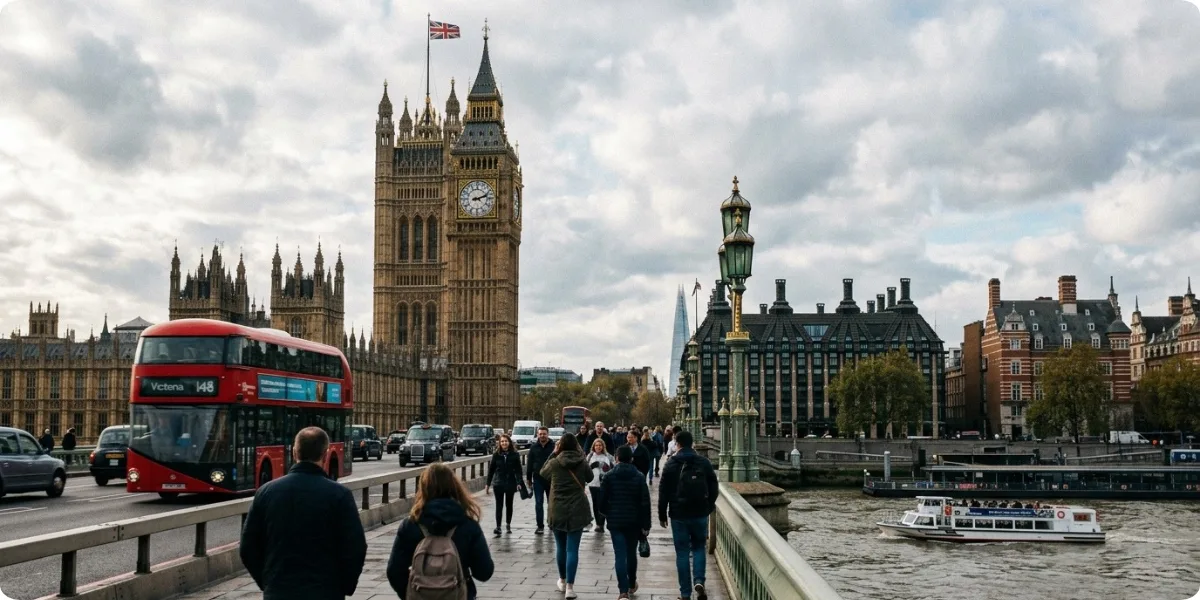
Big Ben is technically the name of the great bell, while the 96-metre tower that houses it is the Elizabeth Tower. The two together sit beside the Palace of Westminster, and the view from Westminster Bridge is the classic photo. Inside access depends on the tour you choose. Official Parliament tours and Big Ben tours are booked through the UK Parliament, so reserve early, and note that the free tours are for UK residents only. If you’re short on time, a walk past the tower and across the bridge costs nothing.
2. Walk Across Tower Bridge
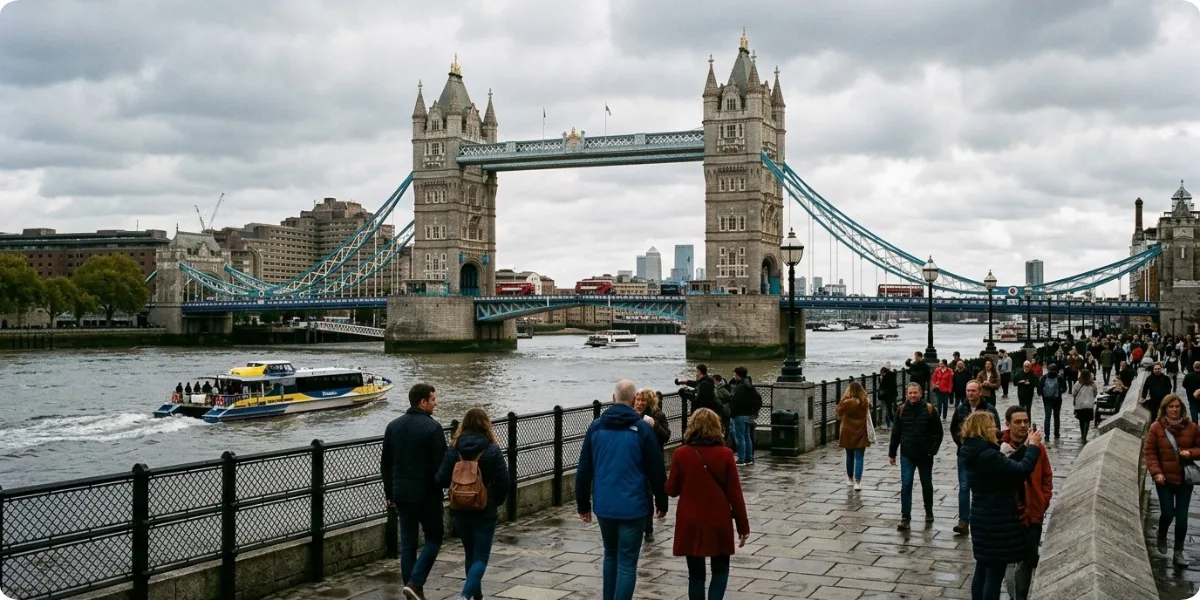
Tower Bridge opened in 1894 and is often mistaken for London Bridge, which is a plainer crossing upstream. Walking across is free and gives you a sweeping view of the Thames, the Tower of London and the City skyline. If you want to go up, the Tower Bridge Exhibition takes you into the high-level walkways, which include glass-floored sections. Early morning is the quietest time for photos.
3. See Buckingham Palace
Buckingham Palace is the King’s London residence and a natural stop between St James’s Park and Green Park. Most visitors admire the gates, the forecourt and the Victoria Memorial from outside. The State Rooms open to ticket holders on selected dates, so check the Royal Collection Trust before you plan around it. Arrive early if you want a clear view of the railings.
4. Explore the Tower of London
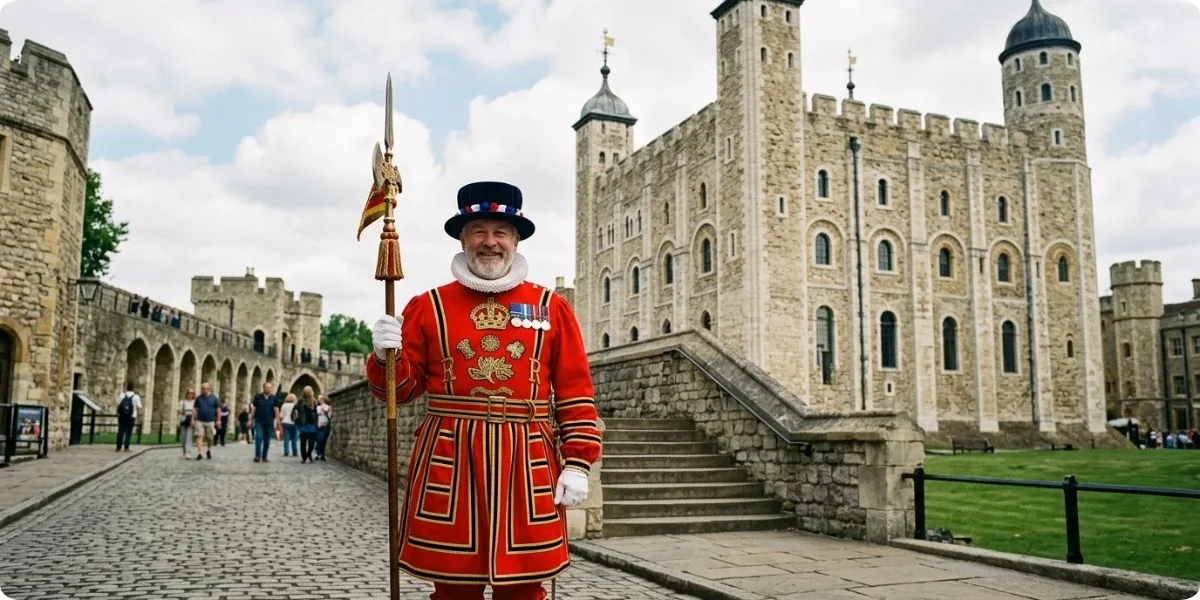
The Tower of London is a UNESCO World Heritage Site with nearly a thousand years of history behind its walls. Highlights include the Crown Jewels, the White Tower’s armour displays and the Yeoman Warders (Beefeaters), who lead entertaining guided tours. Allow at least half a day, and book online through Historic Royal Palaces to skip the longest ticket queues. Go early, because the Crown Jewels line grows through the morning.
5. Photograph Trafalgar Square
Trafalgar Square is London’s great public gathering space, with Nelson’s Column, four bronze lions and lively fountains. The Fourth Plinth hosts rotating contemporary art, which keeps the square interesting for repeat visitors. The National Gallery faces the square and offers free entry to its main collection, which makes it an easy add-on. The square also links Westminster to Covent Garden on foot, so it works as a natural meeting point.
Discover London’s Best Museums and Cultural Attractions
London’s big national museums are a major reason to visit. General admission is free at most of them, though special exhibitions usually need tickets, so check before you go.
1. Explore the British Museum
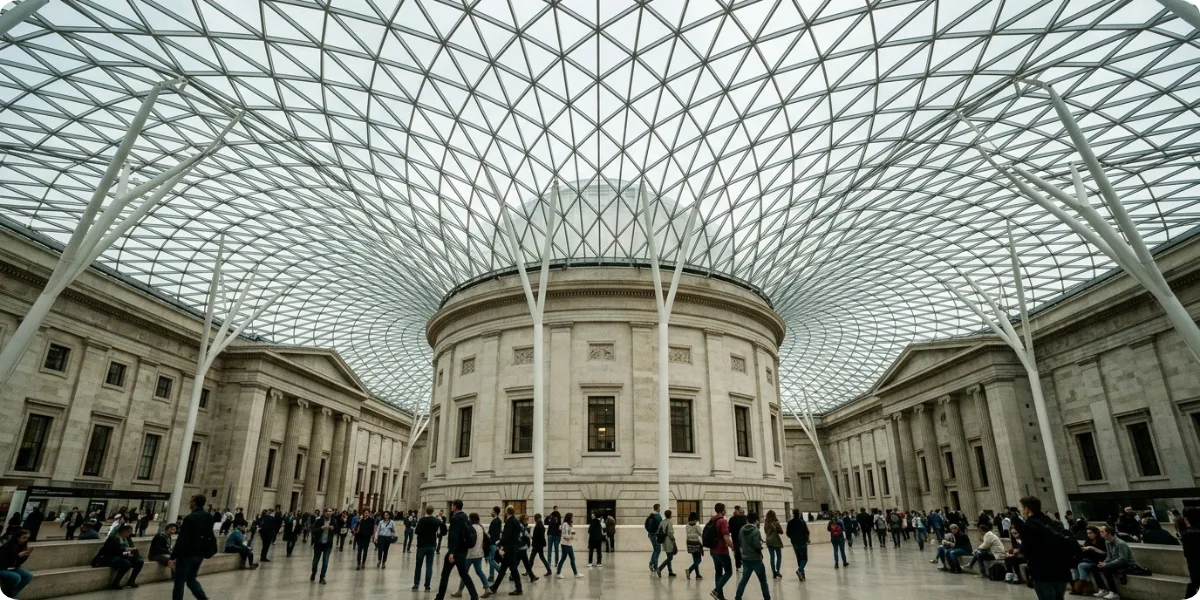
The British Museum holds millions of objects, with the Rosetta Stone, Egyptian mummies and sculptures from ancient Greece among the crowd favorites. The permanent collection is free, but booking a free timed slot is a good idea at busy times. You cannot see it all, so pick two or three galleries and enjoy them properly. Bloomsbury is also a pleasant neighborhood for a coffee afterward.
2. Visit the Natural History Museum
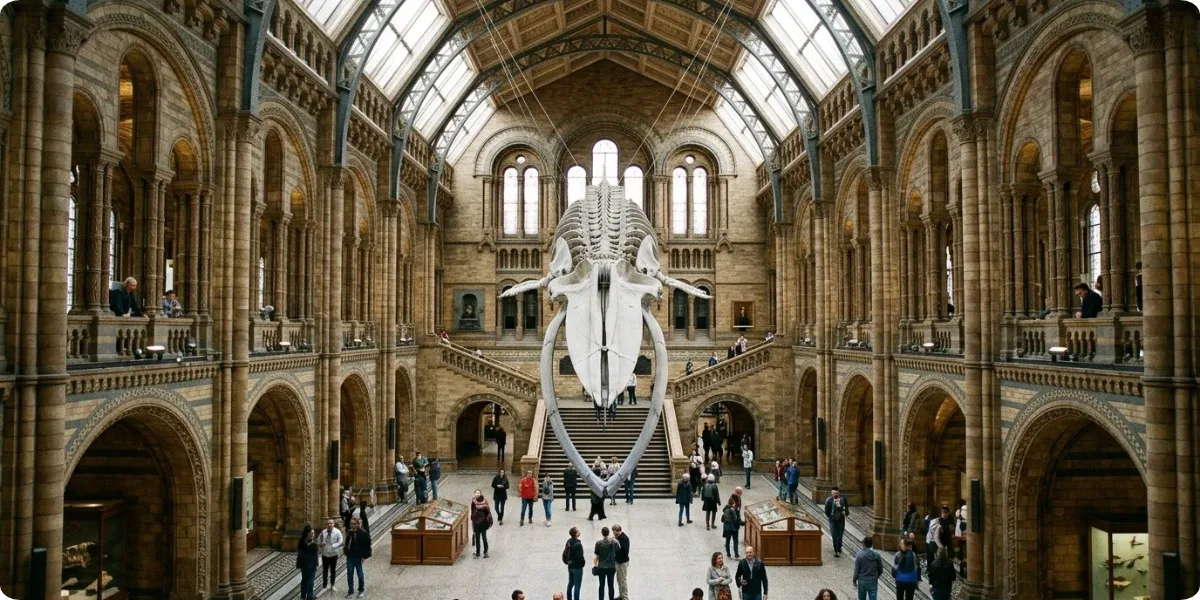
The Natural History Museum in South Kensington is housed in a cathedral-like Victorian building that is a sight in itself. The blue whale skeleton in the main hall and the dinosaur galleries draw the biggest crowds. Entry is free, and weekday mornings are calmer than weekends. It’s an easy pairing with the neighboring V&A and Science Museum.
3. Discover Modern Art at Tate Modern
Tate Modern occupies a converted power station on the South Bank, and its huge Turbine Hall often hosts large-scale installations. Its collection displays are free, though some major exhibitions are ticketed. The building’s viewing level offers a free panorama over the river and St Paul’s. It slots neatly into a South Bank walk.
4. Experience London’s History at the Victoria and Albert Museum
The V&A is the world’s leading museum of art, design and performance, covering fashion, furniture, ceramics, sculpture and more. It’s a good choice if the British Museum feels too vast, because the galleries reward slow browsing. General admission is free, with paid tickets for headline exhibitions. The central courtyard is a calm place to rest tired feet.
Enjoy Unique Experiences in London
These are the experiences that feel distinctly London. Some are free, some are ticketed, and the right mix depends on your travel style.
| Experience | Free or ticketed | Best for |
|---|---|---|
| Changing of the King’s Guard | Free to watch | Pageantry and photos |
| Covent Garden street performers | Free (tips welcome) | Relaxed strolling |
| London Eye | Ticketed | Views, families, couples |
| Thames river cruise | Ticketed | Easy sightseeing |
| West End show | Ticketed | Evenings and culture |
1. Ride the London Eye
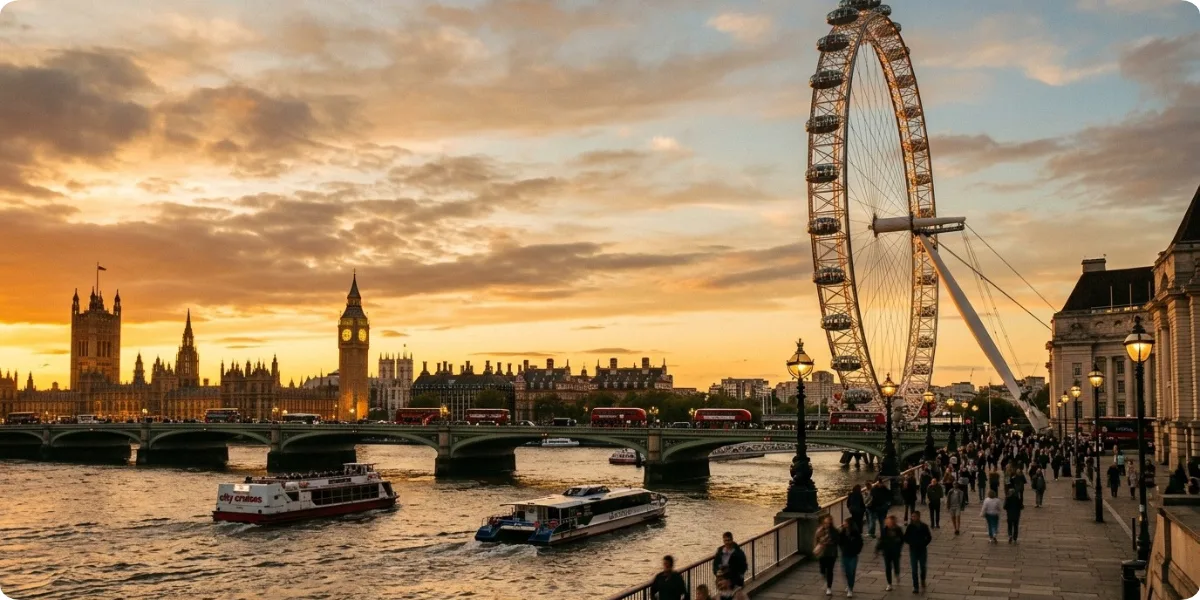
The London Eye stands 135 meters tall and takes about 30 minutes to complete one rotation. Its enclosed capsules make it comfortable in any weather, and the view covers Westminster, the river and, on clear days, much of central London. Book a timed slot online, because walk-up queues can be long in peak season. Late afternoon timing lets you see daylight turn to evening lights.
2. Take a Thames River Cruise
A river cruise shows you London’s landmarks from the water, including Parliament, the South Bank, Tower Bridge and the City skyline. Sightseeing boats offer commentary, while regular river bus services work well if you simply want a scenic way to travel. Check current routes and timetables before choosing a pier. It’s a relaxing option after a day of walking.
3. Watch Street Performers in Covent Garden
Covent Garden’s piazza has long been a stage for jugglers, musicians and living statues. The Covent Garden area also has boutiques, cafés and the Apple Market, so it suits an unplanned hour or two. Watching is free, though performers appreciate a tip. It is busiest on weekend afternoons.
4. Experience the Changing of the King’s Guard
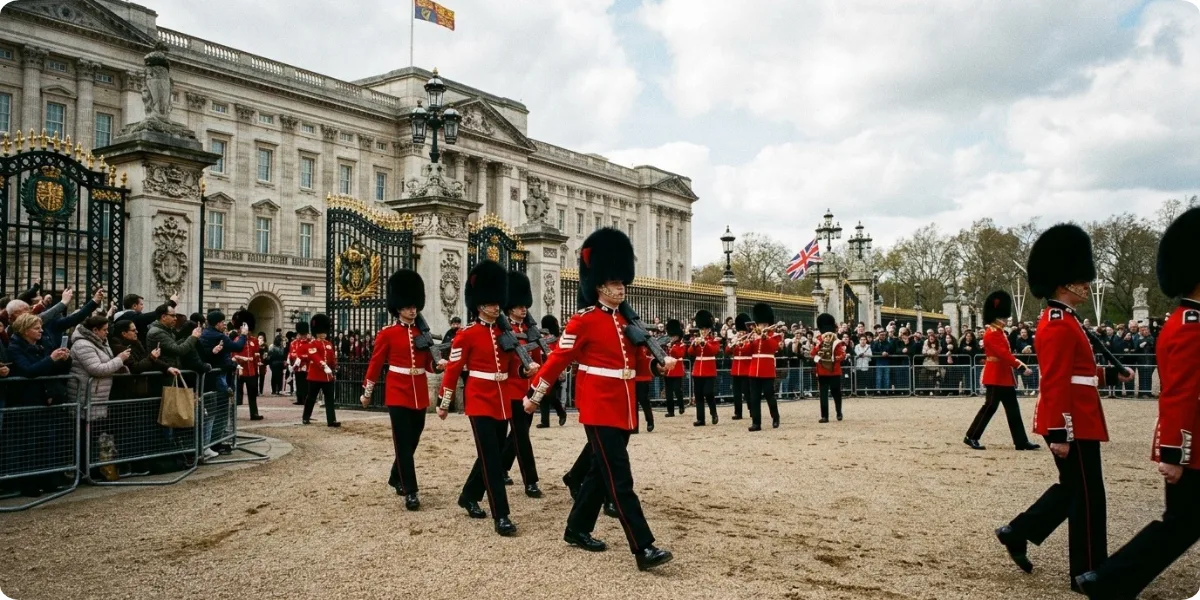
The Changing of the Guard is a free ceremonial handover with soldiers in red tunics and bearskins marching to music. According to the Household Division, it takes place in front of Buckingham Palace at around 10:45am and lasts about 45 minutes. It can be cancelled at short notice, especially in wet weather, so check the schedule before you go. Arrive early for a spot near the railings.
5. See a West End Theatre Show
London’s Theatreland has long-running musicals, plays and new productions most nights of the week. The Official London Theatre site lists what’s on, and the official TKTS booth in Leicester Square sells discounted same-day tickets. Matinees are good for families and early travelers. Book popular shows ahead rather than leaving them to chance.
Best Places to Explore in London on Foot
London is a city of neighborhoods, and walking is the best way to feel the difference between them. Distances between nearby sights are short, but always check a map for the latest route.
1. Wander Through Notting Hill
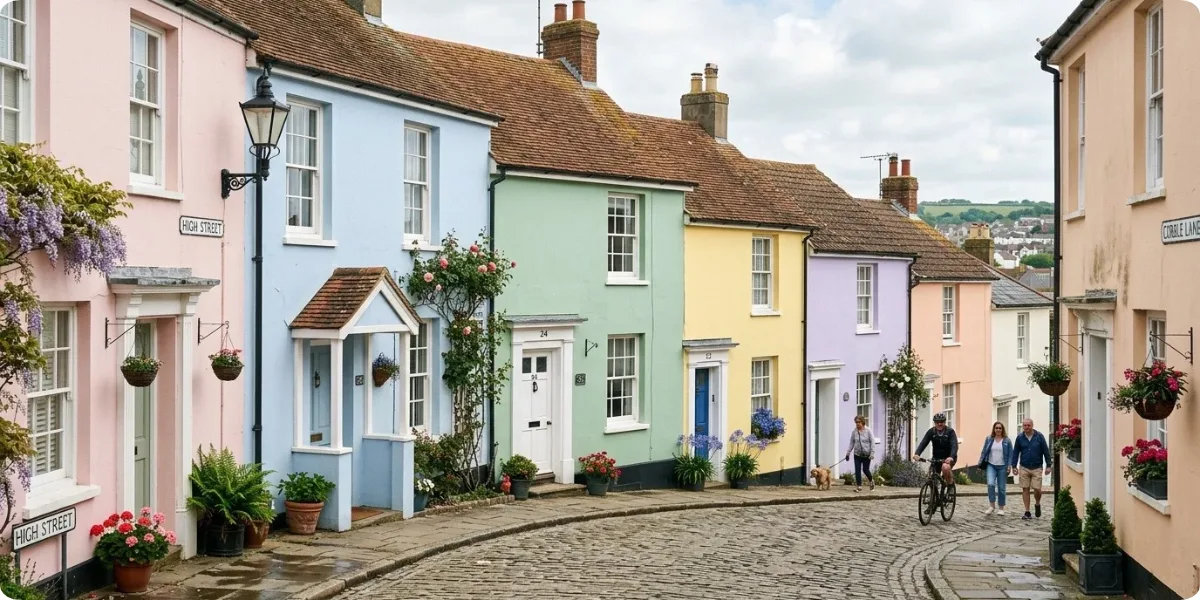
Notting Hill is known for pastel-painted terraced houses, leafy residential streets and Portobello Road, whose market is busiest on Saturdays. Come for photos, antiques, cafés and a slower pace than central London. Go early on Saturday to avoid the thickest crowds. The nearest Tube stations are Notting Hill Gate and Ladbroke Grove.
2. Walk Along the South Bank
The South Bank is a riverside path lined with theatres, galleries, street food and skyline views. Starting at Westminster Bridge and heading toward Tower Bridge, you’ll pass the London Eye, the Southbank Centre, Tate Modern and Borough Market. Allow around an hour of steady walking without stops, or a relaxed half day if you linger. It is lovely at sunset.
3. Explore Leadenhall Market
Leadenhall Market is a covered Victorian market in the City of London with ornate painted ironwork and a glass roof. It’s mostly a lunchtime and after-work destination, so it’s livelier on weekdays and much quieter at weekends. Pair it with a visit to Tower Bridge or the Tower of London, which are a short walk away.
4. Discover the Streets of Soho
Soho packs theatres, independent restaurants, bars and history into a small grid of streets. It borders Chinatown and sits close to Leicester Square, Covent Garden and Carnaby Street. Come hungry, because dining here ranges from quick noodle counters to old-school bistros. Soho is at its liveliest in the evening.
5. Visit Little Venice
Little Venice is a quiet canal basin in west London where the Regent’s Canal meets the Grand Union Canal. Colorful narrowboats, waterside cafés and tree-lined towpaths make it a relaxing contrast to the city center. You can continue along the canal toward Regent’s Park and Camden. It’s a good choice if you want calm rather than crowds.
Best Free Things to Do in London
London is generous to budget travelers. Entry is free in many places, but optional extras such as special exhibitions, guided tours and food stalls can add up.
1. Visit London’s Free Museums
The British Museum, Natural History Museum, Science Museum, V&A and Tate Modern’s collection displays all offer free general admission, as does the National Gallery. Timed entry may be suggested at busy periods, and special exhibitions are paid. Donations are welcome but optional. The Science Museum is a particularly good free choice for curious kids and adults.
2. Walk Through Hyde Park
Hyde Park offers lawns, tree-lined paths and the Serpentine lake, where you can stroll or watch the rowing boats. Next door, Kensington Gardens has Kensington Palace and the Round Pond. Walking and sitting are free, while boat hire and cafés cost extra. It’s a good reset between sightseeing stops.
3. Watch the Street Performers at Covent Garden
Even on a tight budget, an hour in Covent Garden gives you live entertainment and a feel for London’s energy. You can browse the market halls without buying anything and soak up the atmosphere. Visit at different times of day, because the mood changes from morning calm to evening buzz.
4. Explore Borough Market
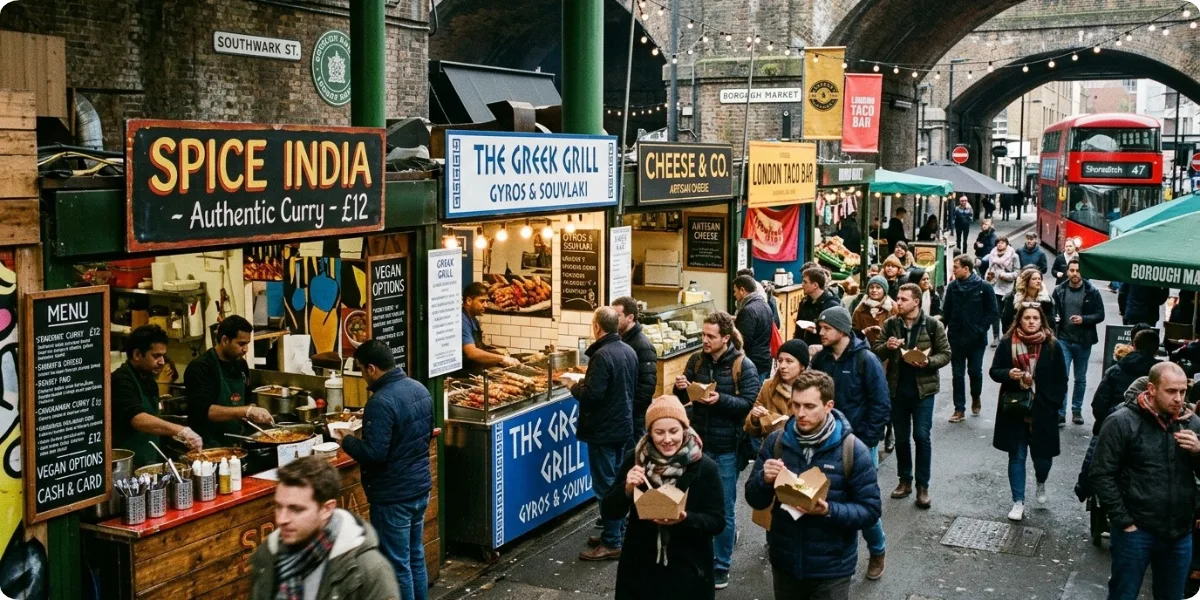
Borough Market is one of London’s best-known food markets, with artisan produce, cheeses, baked goods and street food. Walking through is free, and you can sample on a budget by sharing a few small plates. It’s busiest at lunchtime and on weekends, so check opening days and aim for a weekday if possible.
5. Enjoy the Views from Primrose Hill
Primrose Hill is a short climb on the north side of Regent’s Park with one of the city’s best free skyline views. It’s popular at sunrise and sunset, and it makes a lovely picnic stop. Bring a layer, because it can be breezy at the top.
6. Discover London’s Historic Streets and Public Squares
You can fill a day just walking from square to square, from Trafalgar Square to Leicester Square, Soho Square and Covent Garden’s piazza. Look out for blue plaques marking where famous people lived and worked. It costs nothing, and it often feels the most authentic.
Money-saving tip: Free entry doesn’t always mean everything inside is free. Special exhibitions, audio guides and guided tours are usually extra, so decide in advance what’s worth paying for.
Best Things to Do in London for Families
London is easy with children when you balance big attractions with parks and breaks. Look at age suitability, indoor alternatives for wet weather and advance booking for popular spots.
1. Visit the Natural History Museum
Dinosaurs, a giant blue whale skeleton and hands-on galleries make this a family favorite. It suits most ages, though very young children may do better in shorter visits. Arrive near opening time on weekends and school holidays.
2. Explore the Science Museum
Interactive exhibits, space displays and activity areas keep children engaged for hours. General entry is free, while some simulators and special exhibitions are ticketed. It’s a strong rainy-day plan.
3. Spend Time at ZSL London Zoo
ZSL London Zoo in Regent’s Park is one of the world’s oldest scientific zoos, and it suits children of most ages. Tickets are best booked online in advance, particularly in school holidays. Plan around feeding and keeper talk times, and check what’s open on the day.
4. Take a Ride on the London Eye
The slow, enclosed rotation is easy for kids and comfortable for grandparents. Children under a certain height or age may have different ticket rules, so check the operator’s page when booking. Choose a clear day for the best views.
5. Explore Hyde Park’s Family-Friendly Areas
Hyde Park and neighboring Kensington Gardens have playgrounds, open lawns and paddling opportunities in summer. They’re perfect for letting energy out between museum visits. Pack a picnic to save money.
Romantic Things to Do in London for Couples
Romance in London is less about spending big and more about picking the right moment. These ideas cover different budgets.
1. Take an Evening Walk Along the Thames
A riverside walk at dusk costs nothing and shows London at its most atmospheric, with bridges and landmarks lighting up. The stretch between Westminster and Tower Bridge works well. Finish with dinner on the South Bank.
2. Enjoy a Sunset View from the London Eye
A late-afternoon booking lets you see the city in daylight, golden hour, and early evening lights in a single ride. It’s pricier than many experiences, so it suits couples who want one special splurge. Book a timed slot ahead of time.
3. Have a Picnic in a Royal Park
Pick up sandwiches, fruit and a drink from a nearby shop and head to St James’s Park, Regent’s Park or Hyde Park. It’s a low-cost option with real charm. Check the weather and bring a blanket.
4. Book a West End Theatre Experience
A show followed by a late dinner in Soho or Covent Garden is a classic London date night. Budgets stretch from last-minute discounted seats to premium stalls. Choose a production that suits both of you.
5. Explore Notting Hill’s Charming Streets
Browse Portobello Road, stop for coffee and wander the pastel streets together. It’s an easy daytime date that doesn’t need booking. Go on a weekday for a quieter feel.
Best Markets and Shopping Areas in London
Markets and shopping streets show a different side of London, from food halls to fashion flagships. Each suits a different type of visitor.
1. Try Local Food at Borough Market
Best for food lovers, with fresh produce, cheeses and ready-to-eat dishes from many cuisines. Go hungry, bring cash or a card for small stalls, and avoid peak lunchtimes if you dislike crowds.
2. Discover Camden Market
Camden Market is known for alternative fashion, vintage finds, crafts and a huge street food selection beside the canal. It suits younger travelers and anyone who likes an energetic atmosphere. It gets very busy on weekends, so weekday mornings are calmer.
3. Shop Along Oxford Street
Oxford Street is the city’s best-known high street, lined with major department stores and flagship fashion brands. It’s practical for big-name shopping but crowded on Saturdays and during sales. Side streets such as those around Marylebone feel more relaxed.
4. Browse Independent Shops in Covent Garden
Covent Garden mixes well-known brands with smaller boutiques, craft stalls and cosmetics and gift shops. It suits visitors who prefer browsing to shopping marathons. Visit midweek or before midday to avoid the busiest periods.
Best Things to Do in London at Night
London after dark is full of options, from theatre to river views. Check the latest attraction schedules before you head out, and plan your return journey in advance.
1. Watch a Musical in the West End
Evening performances usually begin around 7:30pm, though times vary by show. Leave time for dinner beforehand, and keep an eye on your return transport afterward.
2. See London’s Illuminated Landmarks
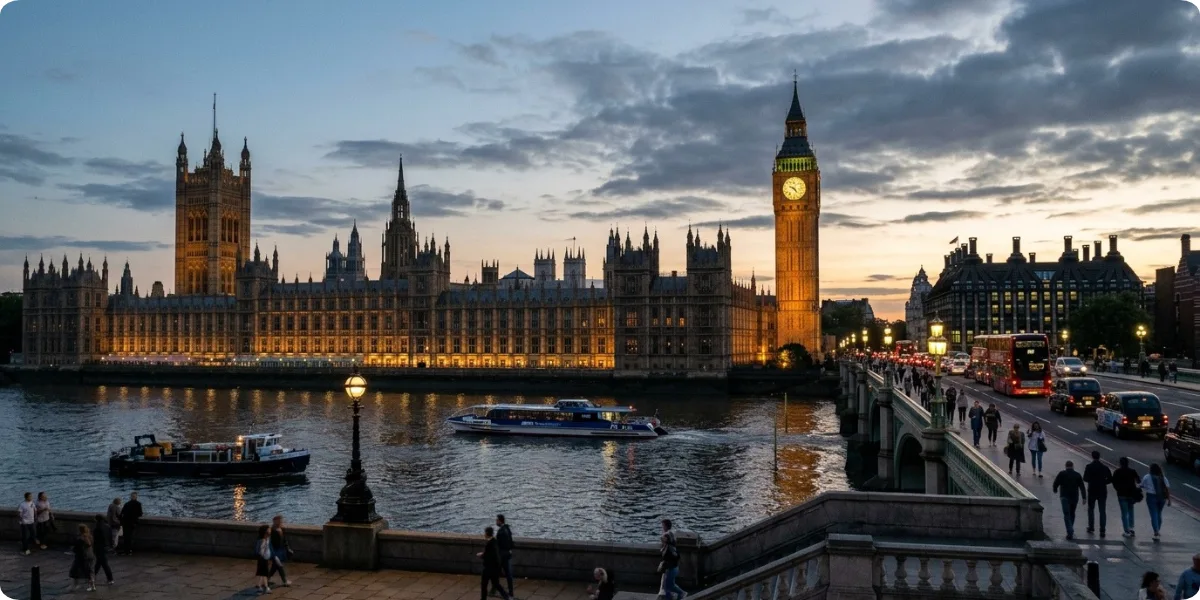
Parliament, Tower Bridge and the riverside look especially dramatic after sunset. A relaxed walk or a bus ride across the center shows the lights without spending much. For safety tips on moving around after dark, see our guide on whether London is safe.
3. Enjoy Dinner Around Soho
Soho’s range of restaurants is hard to beat, from budget noodle bars to long-standing favorites. Booking is wise on Friday and Saturday nights.
4. Take an Evening Thames Cruise
A dusk cruise offers calm, close-up views of the lit-up skyline. Check final departure times and pier locations before you set out.
5. Explore Nighttime Views from the South Bank
The South Bank stays lively into the evening with performers, food stalls and riverside bars. Expect crowds near the big venues on show nights.
Transport reminder: Late-night options include night buses and, on selected lines, limited Night Tube services at weekends. Check Transport for London for current last-train and service times.
Best Things to Do in London by Season
1. London in Spring: Parks and Blossoming Gardens
Spring brings blossom, daffodils and tulips to the royal parks, and longer evenings make walking more enjoyable. Weather can switch from sunny to showery within a day, so pack layers.
2. London in Summer: Outdoor Events and River Walks
Summer means long daylight hours, outdoor events, riverside terraces and picnics in the parks. It’s also peak season, so book major attractions early. If you’re planning around weather and crowds, our guide to the best time to visit London explains each month in more detail.
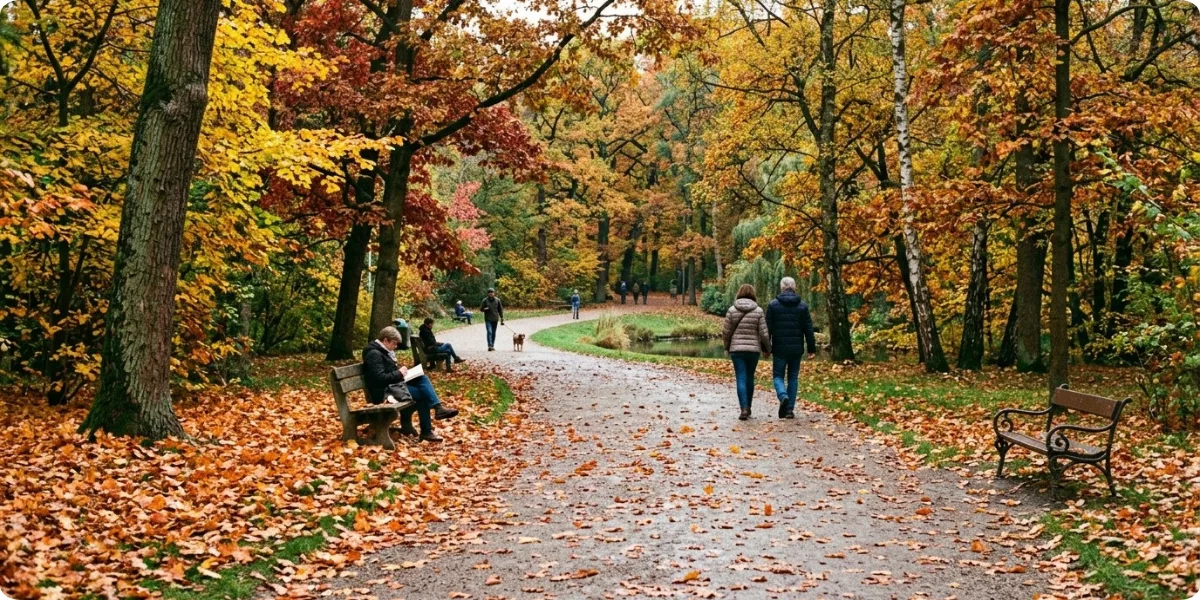
3. London in Autumn: Museums and Colorful Parks
Autumn is a great season for museums, theatre and golden leaves in the parks. Crowds ease after summer, and the weather is cool but often pleasant. Bring a waterproof jacket.
4. London in Winter: Christmas Lights and Indoor Attractions
Winter is for festive lights, seasonal markets and cosy pubs, with museums and theatres providing warm refuge. Days are short, so plan outdoor sights for the middle of the day.
Best Things to Do in London for First-Time Visitors
If you only have a short trip, focus on this prioritized shortlist:
- See Westminster and Big Ben.
- Visit one major museum.
- Explore Covent Garden.
- Walk along the South Bank.
- Visit the Tower of London or Tower Bridge.
- Enjoy a traditional London food experience.
Group attractions by location to reduce travel time. Westminster, St James’s Park and Trafalgar Square sit near each other, as do the Tower of London, Tower Bridge and Leadenhall Market. For more first-timer advice on getting oriented, read our London first time visitor guide.
How to Plan Your London Sightseeing Itinerary
1. London in One Day
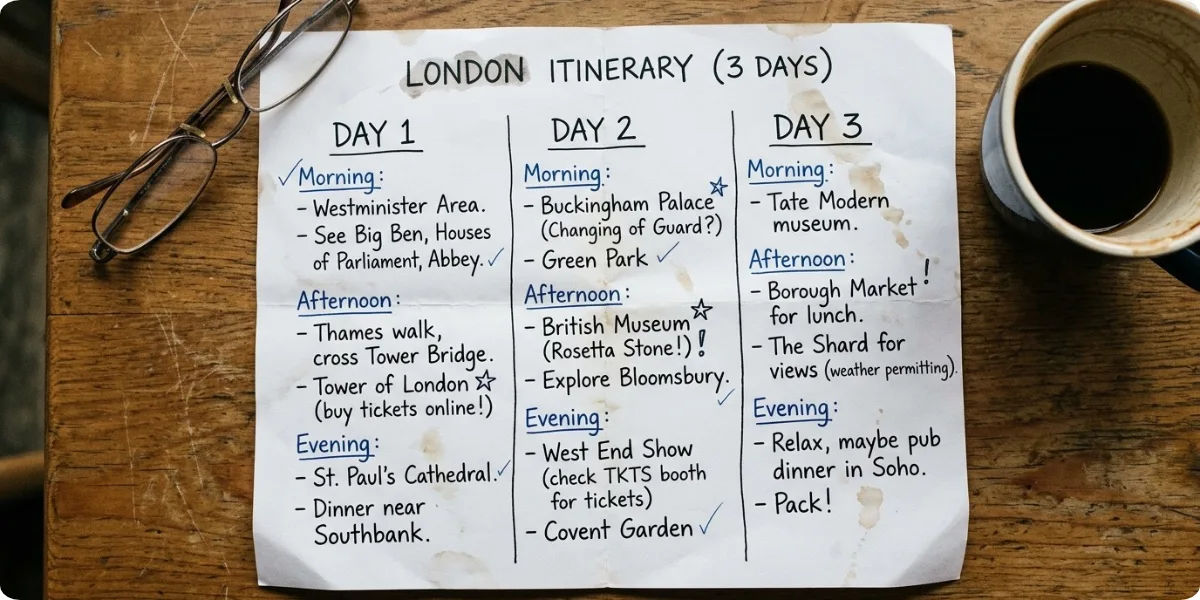
Start in Westminster with Big Ben and the Houses of Parliament, walk through St James’s Park to see the outside of Buckingham Palace, continue to Trafalgar Square and Covent Garden, and finish with a South Bank stroll in the evening.
2. London in Two Days
Keep the first day above, then use day two for the Tower of London, Tower Bridge and a major museum such as the British Museum.
3. London in Three Days
Add a neighborhood walk (Notting Hill or Soho), a market visit (Borough Market or Camden) and an evening West End show. For help choosing how long to stay, see our guide on how many days in London you need.
Always check opening hours, ticket availability and travel times before departure, as these can change.
Practical Tips for Visiting London’s Attractions
1. How to Get Around London
The Underground is the fastest way across the city, and buses are useful for scenery and short hops. Walking is often quickest in the center. You can pay with a contactless card or phone, or use an Oyster card, and daily fare capping stops costs from running away. Buses don’t accept cash. Details are on the TfL website, and our London tourist information guide covers arrival and orientation in more depth.
2. Which London Attractions Need Advance Booking?
Book ahead for the Tower of London, London Eye, ZSL London Zoo, West End shows, Big Ben tours, Buckingham Palace State Rooms and special exhibitions. Use official booking pages rather than third-party resellers wherever possible.
3. How to Save Money on London Sightseeing
Use free museums, walking routes and public transport with daily capping. If you’re thinking about an attraction pass, add up the individual ticket prices for the places you actually plan to visit and compare. To estimate your overall budget, try our trip cost calculator.
4. What Should You Know Before Visiting London?
London’s weather changes quickly, so pack layers and a compact umbrella. Wear comfortable shoes, expect crowds at peak times and check attraction opening days, since some close one day a week. For more practical advice, read our London travel tips and the common London travel mistakes to avoid.
Things to Do in London — Frequently Asked Questions
What Is London Most Famous for?
London is most famous for landmarks such as Big Ben, Tower Bridge, Buckingham Palace and the Tower of London, along with world-class free museums, the West End theatre scene and the River Thames. It is also known for royal history, historic markets, green royal parks and a multicultural food scene that rewards curious visitors.
What Should You Not Miss in London?
Prioritize Westminster for Big Ben and the Houses of Parliament, then add the Tower of London or Tower Bridge, one major museum such as the British Museum, and an evening walk along the South Bank. Add Covent Garden and a West End show if time allows, because together they capture history, culture and everyday London life.
Are There Free Things to Do in London?
Yes. Many national museums, including the British Museum, Natural History Museum, Science Museum, V&A and Tate Modern’s collection displays, offer free general admission, though special exhibitions usually need tickets. Royal parks, Trafalgar Square, Covent Garden’s street performers, South Bank walks and the Changing of the Guard are also free to enjoy.
How Many Days Are Enough to Explore London?
Three full days is a comfortable minimum for first-time visitors, giving time for Westminster, the Tower area, a major museum, a neighborhood walk and an evening show without rushing. Two days can cover the highlights if you stay selective, while five days lets you add markets, day trips and slower afternoons.
What Is the Best Month to Visit London?
May, June and September are often the sweet spot, with milder weather, long daylight and parks at their best. July and August bring the warmest days but also peak crowds and higher prices. Winter is cheaper and festive in December, though days are short and the weather can be cold, grey and wet.
Is London Suitable for Families?
Yes. London has many child-friendly attractions, including the Natural History Museum, Science Museum, ZSL London Zoo, the London Eye and large parks with playgrounds. Many museums are free, which helps budgets. Plan shorter days, build in park breaks, book popular attractions ahead and keep indoor options ready for rainy weather.
Can You Explore London Without a Car?
Absolutely, and it’s usually easier without one. Central London is well covered by the Underground, buses, the Elizabeth line, trains and river services, and many top sights are walkable from each other. Driving adds congestion charges, parking costs and slow traffic, so most visitors do better using contactless payment on public transport.
What Are the Best Things to Do in London for First-Time Visitors?
First-time visitors should combine Westminster and Big Ben, the Tower of London or Tower Bridge, one major museum, Covent Garden, a South Bank walk and a traditional London meal. Group sights by area to reduce travel time, and book timed entry for popular ticketed attractions ahead of your visit.
Final Thoughts on the Best Things to Do in London
The best way to enjoy London is to mix the famous with the local: a landmark in the morning, a museum or market in the afternoon, and a river walk or show in the evening. Free museums, parks and street life keep costs manageable, while a few well-chosen ticketed attractions add the big moments. Choose activities based on your time, interests and budget, and leave room for the unplanned detours that often become the best memories. For official event listings and visitor information, Visit London is a useful companion.

Arman Ashraf is a content writer focused on travel and tourism. He creates practical, well-researched travel guides, destination articles, and travel tips designed to help readers plan trips with greater confidence. His work combines clear, engaging writing with SEO best practices, covering destinations, things to do, travel planning, and useful advice for travelers. Arman is committed to producing helpful content that makes discovering and planning travel easier.