

London is the kind of city where a royal palace, a Roman wall, a street market, and a world-class museum can all fit into one afternoon. Home to roughly 8.8 million residents (ONS 2021 Census) and around 20 million international visitors in 2023 (VisitBritain), it is one of the world’s most visited capitals, so planning matters. This guide pulls together the London tourist information you actually need how the city is laid out across 32 boroughs plus the City of London, which entry documents to check, how to get around the Tube network (11 lines and 272 stations, per Transport for London), what things cost, and what is worth your time. Many top sights, including the British Museum and the National Gallery, are free to enter, which keeps a budget stretch further than most visitors expect. Contactless payment works across the Tube, buses and National Rail with daily fare caps, so you rarely need a paper ticket.
Autumn and spring typically offer milder weather and noticeably thinner crowds than the busy July–August peak. We compiled this guide from official sources, TfL data and repeated on-the-ground research, and we update it as rules and prices change. It suits first-time visitors, families, solo travelers and international tourists alike. If you are still deciding whether the trip is right for you, our take on whether London is worth visiting covers that question, and the wider London Travel Guide gives you the big picture. For official event listings and visitor services, the city’s tourism body, Visit London, is a reliable reference.
Essential London Tourist Information at a Glance
| Travel detail | Information |
|---|---|
| Country | England, United Kingdom |
| Currency | British pound sterling (GBP) |
| Language | English |
| Time zone | GMT in winter, BST in summer |
| Electricity | Type G plug (three rectangular pins) |
| Emergency number | 999 or 112 |
| Driving side | Left |
| Best transport | Underground, buses, Elizabeth line, walking |
Where Is London and How Is the City Divided?
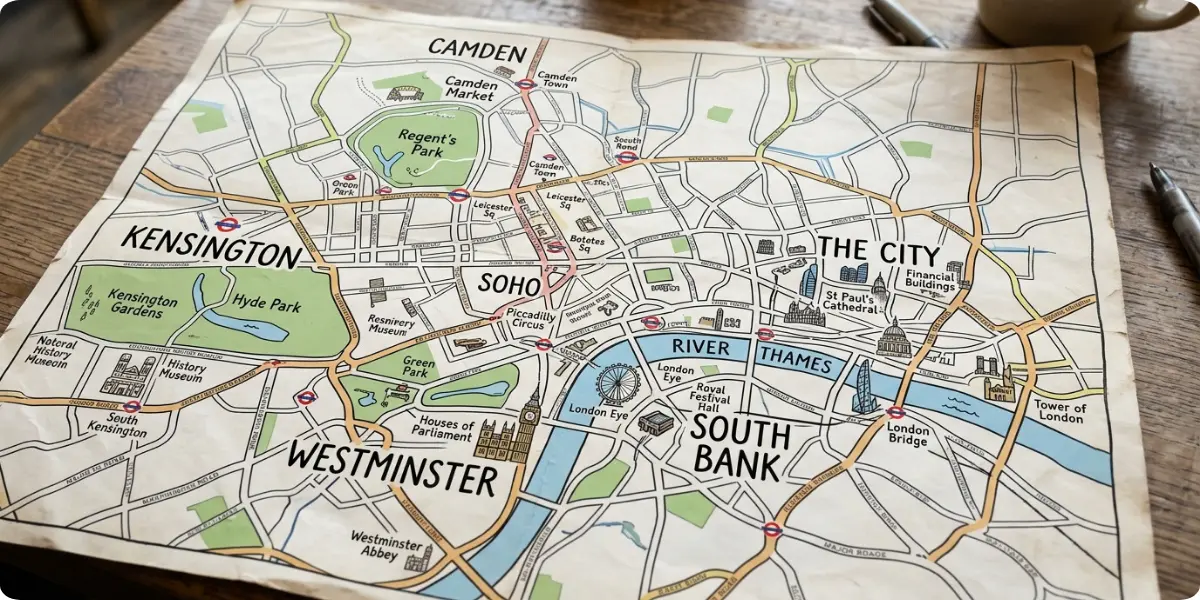
1. London’s location in the United Kingdom
London sits in the southeast of England on the River Thames. It is the capital of both England and the United Kingdom.
Central London vs. Greater London
Central London is the compact core most tourists see, mostly inside Travelcard Zones 1 and 2. Greater London is the much larger metropolitan area of 32 boroughs plus the City of London.
Understanding London’s main tourist areas
- Westminster: Big Ben, Parliament, Westminster Abbey and Buckingham Palace.
- Covent Garden: theaters, street performers and shopping.
- Soho: restaurants, nightlife and the West End.
- South Bank: the London Eye, Tate Modern and riverside walks.
- Kensington: major museums and leafy streets.
- Camden: markets, canal walks and live music.
- City of London: St Paul’s, the Tower area and the historic financial district.
2. Which London neighborhood is best for visitors?
For a first visit, Westminster, Covent Garden or the South Bank put you closest to the headline sights. Kensington suits museum-focused trips, and Camden suits travelers who prefer a more local feel.
What Documents Do Tourists Need to Visit London?
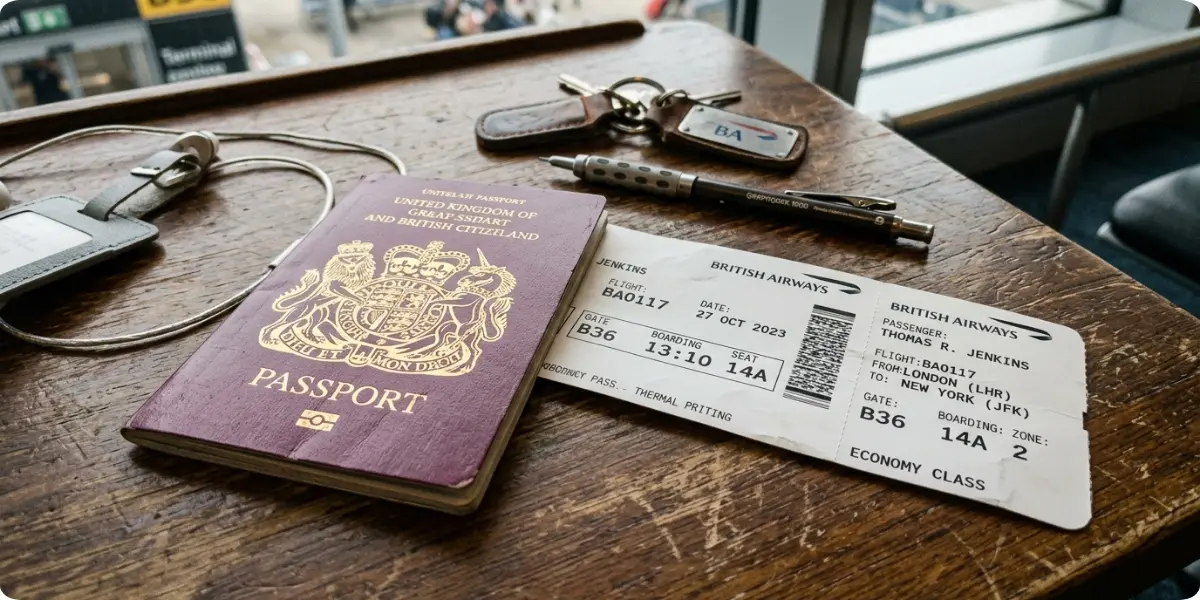
Entry rules depend on your nationality, why you are traveling and the current UK rules. Treat this section as orientation, then confirm everything with official sources.
1. Passport and entry requirements
You need a valid passport for your whole stay. Airlines and border officers can also ask for proof of onward travel and where you will be staying.
2. UK visa requirements for international visitors
Some nationalities can visit without a visa. Others must apply before they travel. The government’s check if you need a UK visa tool gives a definitive answer for your passport and trip purpose.
3. Electronic Travel Authorisation (ETA): Who may need one?
Many visitors who do not need a visa now need an Electronic Travel Authorisation (ETA) before boarding. This includes travelers from Europe, the USA, Australia and Canada. Each person needs their own, including babies. An ETA does not guarantee entry, and the fee has changed since launch, so use the official GOV.UK ETA page rather than third-party sites that charge extra.
4. Travel insurance and important documents
Take travel insurance, hotel confirmations, attraction bookings and a digital copy of your passport. Visitors can use NHS emergency care, but non-residents may be charged for other treatment.
Best Time to Visit London

1. Visiting London in spring
Spring brings blossom in the parks and mild, changeable weather. Pack layers and an umbrella.
2. Summer sightseeing and outdoor activities
Summer has the longest days, outdoor events and river cruises. It is also the busiest and often the priciest season.
3. Autumn weather and cultural attractions
September and October are often pleasant, with theater and museum seasons in full swing and thinner crowds than summer.
4. Winter markets and festive events
Winter means Christmas lights, markets and ice rinks, but short, dark days and cold, damp weather.
5. Best months for fewer crowds or lower costs
Late autumn and late winter, outside holiday periods, tend to be quieter. Prices vary by year, so no month is guaranteed to be the cheapest. Our dedicated best time to visit London guide goes month by month, and the Met Office has current forecasts.
| Season | Weather | Crowds | Events | Accommodation costs |
|---|---|---|---|---|
| Spring | Mild, showers likely | Moderate, busier around Easter | Parks in bloom, Chelsea Flower Show (May) | Moderate |
| Summer | Warmest, occasional heat | High | Open-air theater, festivals, Wimbledon | Often higher |
| Autumn | Cooler, mixed | Moderate to low | Theater and museum seasons, Halloween | Moderate, can dip |
| Winter | Cold, damp, short days | Low, except December | Christmas markets, lights, New Year | Spikes in December, often lower in January |
How to Get to London
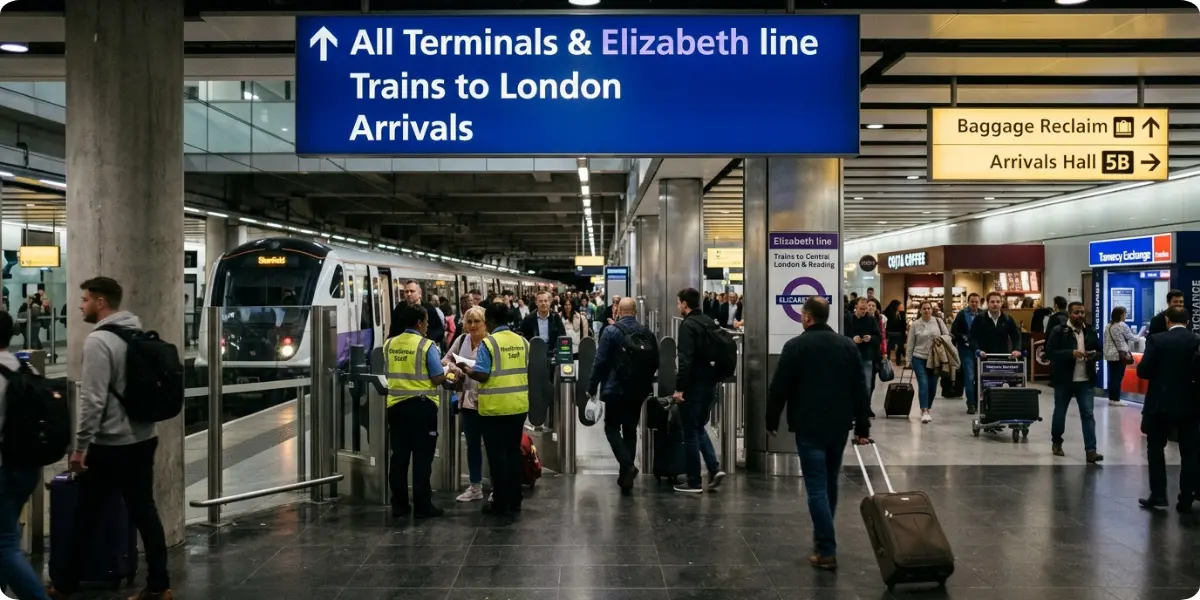
1. International airports serving London
London has six main airports. Heathrow is the largest and the main long-haul gateway. Gatwick, Stansted, Luton and London City handle many short-haul and budget flights.
2. Getting from Heathrow Airport to central London
The three main options are the Elizabeth line (direct, roughly 30 to 40 minutes to central stations), the Heathrow Express (fastest to Paddington, but pricier) and the Piccadilly line (cheapest, slower with luggage). Check Heathrow’s official transport page for current options.
3. Traveling from Gatwick, Stansted, Luton, and London City Airport
Gatwick connects to Victoria and London Bridge by train. Stansted has a direct express service to Liverpool Street. Luton uses a short shuttle to the station, then a train to St Pancras. London City uses the DLR, which is the easiest airport link to the center.
4. Arriving by train, coach, or car
Eurostar services arrive at St Pancras International. Long-distance coaches use Victoria Coach Station. Driving in central London is expensive and congestion zones apply, so most visitors leave the car outside the city. Use National Rail to plan train journeys and check live times.
How to Get Around London as a Tourist
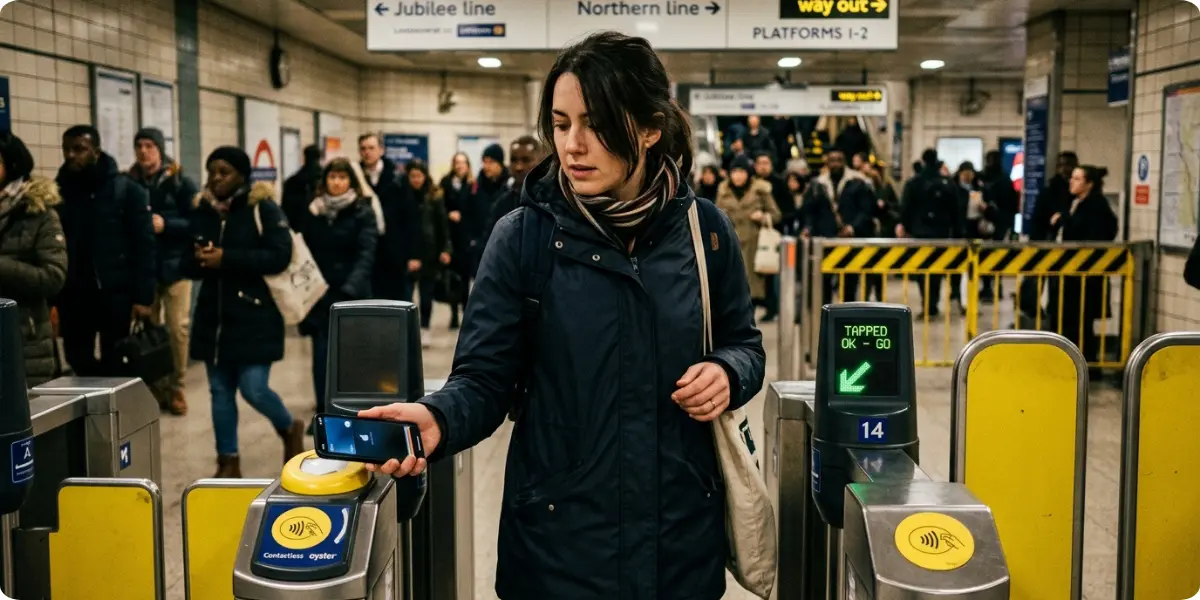
1. London Underground: How the Tube works
The Tube is organized into fare zones, with most sightseeing in Zones 1 and 2. Trains generally run from early morning until around midnight, with some night services at weekends.
2. London buses and contactless payments
Buses are cashless, so you tap a contactless card or phone when you board. They are slower than the Tube but give you a free city tour from the top deck.
3. Elizabeth line and National Rail
The Elizabeth line is a fast east-west route through the center. Some National Rail services use different tickets, so check before you travel.
4. Oyster card vs. contactless payment
Contactless bank cards and phones charge the same fares as an Oyster card and apply the same daily caps. For short stays, contactless is simplest. Use the same card or device for every tap, and read TfL’s guide to contactless and mobile pay as you go for the details. As a rough guide, the Zones 1 and 2 daily cap has recently been about £8.90, but fares change, so confirm with TfL.
5. Walking, cycling, and accessible transport
Central London is walkable, and many landmarks sit within 20 to 30 minutes of each other. Not every Tube station has step-free access, so check TfL’s accessibility information when you plan.
6. Common transport mistakes tourists should avoid
Frequent errors include forgetting to touch out, switching cards mid-trip and buying costly paper singles. Our guide to common London travel mistakes explains how to avoid each one.
Top Tourist Attractions in London
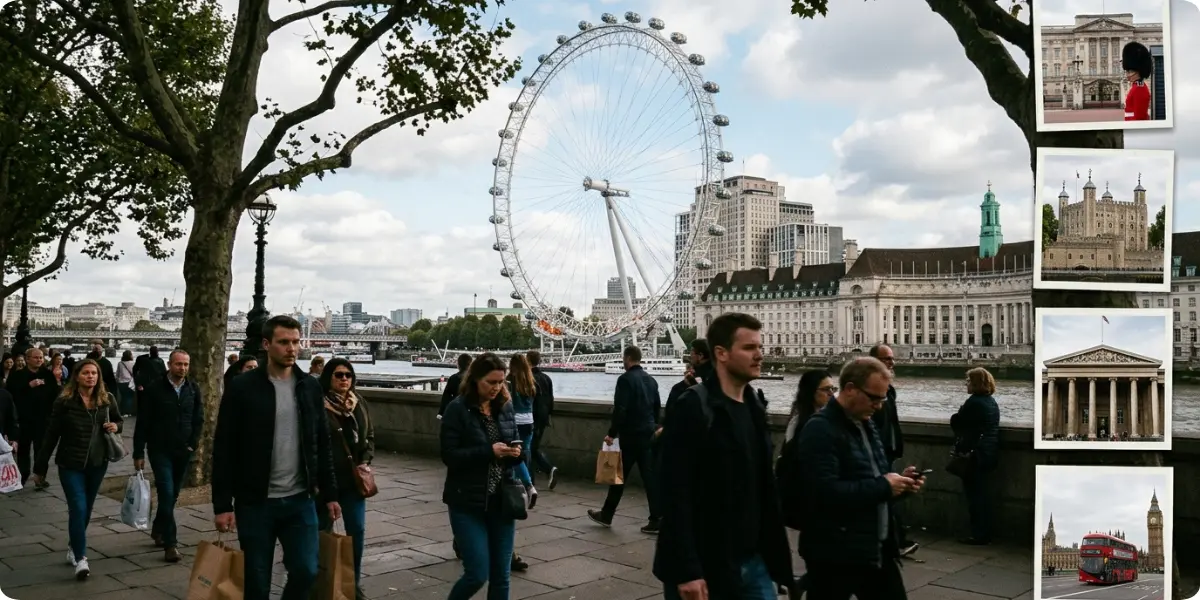
Always check opening hours and book timed tickets ahead for the busiest sights.
1. Buckingham Palace
The King’s London residence is worth seeing for its state rooms (open on selected dates, mainly in summer) and the ceremonial Changing of the Guard, which runs on a published schedule. Allow 2 to 3 hours for a state rooms visit. Nearby stations include Victoria and Green Park. Admission is paid, and the exterior is free to view. See the Royal Collection Trust for dates.
2. Big Ben and the Houses of Parliament
The Elizabeth Tower and Parliament are a classic photo stop, free from outside. Tours inside are paid and need advance booking through UK Parliament. Allow 30 minutes outside or about 90 minutes for a tour. Use Westminster station.
3. Tower of London
A royal fortress with the Crown Jewels, Yeoman Warder tours and nearly a thousand years of history. Allow 3 hours, book ahead and arrive early. Tower Hill is the nearest station. Admission is paid, via Historic Royal Palaces.
4. Tower Bridge
The bridge is free to cross on foot. The paid exhibition includes the high-level walkways and glass floor. Allow 1 to 1.5 hours. Tower Hill and London Bridge are close, and tickets are on the Tower Bridge website.
5. British Museum
It is free to enter, and highlights include the Rosetta Stone and Egyptian galleries. Allow 2 to 3 hours and pick a few galleries rather than trying to see everything. Nearest stations are Tottenham Court Road and Russell Square. Special exhibitions are paid, so see the British Museum for details.
6. Westminster Abbey
The coronation church and resting place of monarchs, poets and scientists. Admission is paid, and sightseeing is limited on Sundays because of services. Allow 1.5 to 2 hours, and book ahead through Westminster Abbey. Use Westminster or St James’s Park stations.
7. London Eye
Rides last about 30 minutes and offer wide river views. Admission is paid and timed tickets are best booked ahead, via the London Eye. Use Waterloo or Westminster.
8. Natural History Museum
Free to enter, with dinosaurs, a huge hall and strong appeal for families. Allow 2 to 3 hours, and expect queues on weekends and school holidays. South Kensington is the closest station. See the Natural History Museum for current exhibitions, some of which are paid.
9. St Paul’s Cathedral
Sir Christopher Wren’s masterpiece has a climbable dome with city views. Admission is paid, and it is closed to sightseers during services. Allow 1.5 to 2 hours. St Paul’s station is the closest, and tickets are at St Paul’s Cathedral.
10. Hyde Park and Kensington Gardens
Both parks are free and open daily. Allow an hour or an afternoon for boating, Kensington Palace’s exterior and the Serpentine. Hyde Park Corner, Lancaster Gate and High Street Kensington are nearby, and the Royal Parks site lists events.
Free Things Tourists Can Do in London
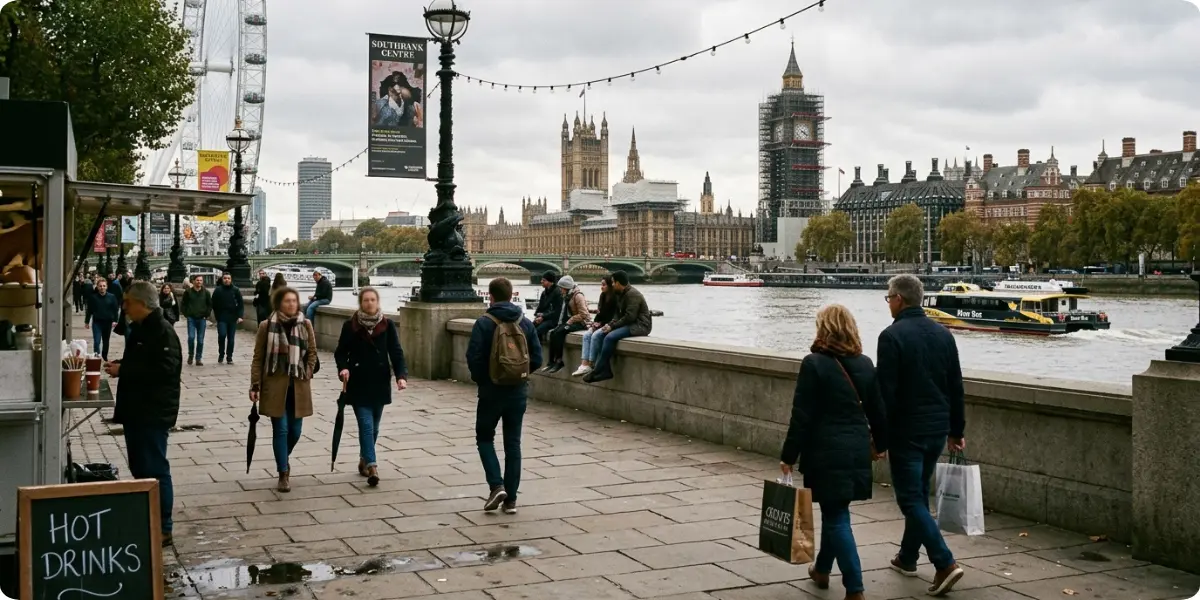
1. Visit London’s major free museums
The British Museum, Natural History Museum, National Gallery, Tate Modern, V&A and Science Museum all have free permanent collections. Special exhibitions usually cost extra.
2. Explore parks and public gardens
Regent’s Park, St James’s Park and Greenwich Park cost nothing and suit a picnic or a long walk.
3. Watch the city from scenic viewpoints
Primrose Hill and Greenwich Park give excellent skyline views. The Sky Garden is free but requires advance booking.
4. Walk along the South Bank
The riverside path from Westminster Bridge to Tower Bridge passes theaters, street performers and the Globe.
5. Explore markets and historic neighborhoods
Wandering Borough Market, Camden Lock or Spitalfields costs nothing unless you buy.
6. Enjoy free galleries and cultural spaces
Many galleries and the Southbank Centre offer free spaces and events. Paid tours and special exhibitions are the exception, so check before you queue.
Where Should Tourists Stay in London?
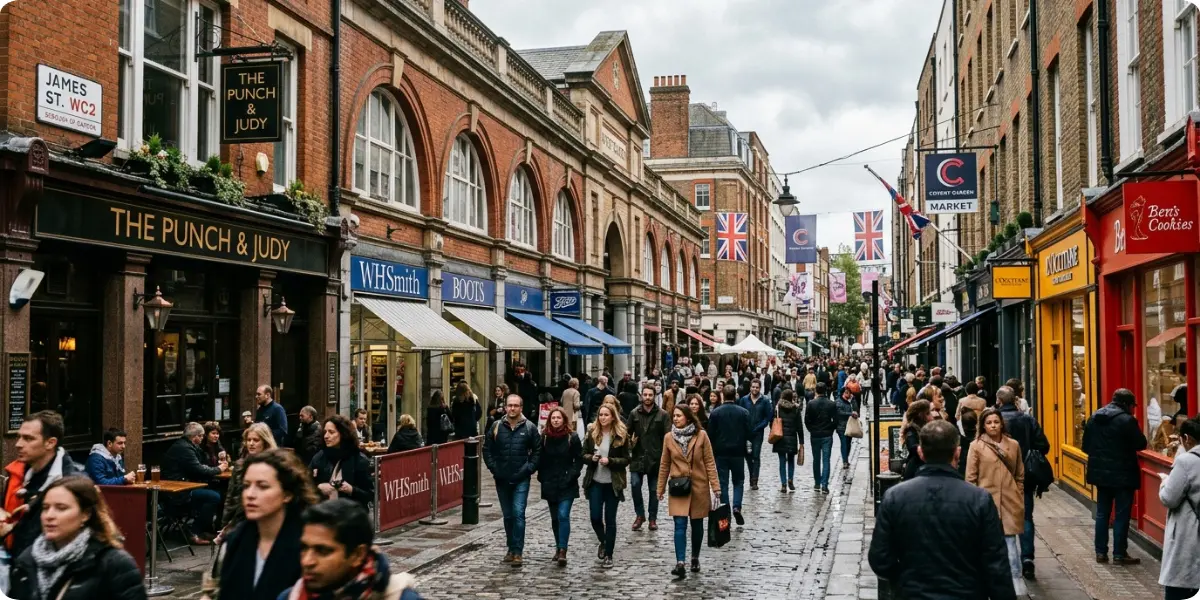
1. Westminster for major landmarks
Ideal for sightseeing on foot, though restaurants can be tourist-oriented and prices high.
2. Covent Garden and Soho for dining and entertainment
Central, lively and well-connected, but noisy at night.
3. South Bank for riverside attractions
Good for the London Eye, theaters and riverside walks, with plenty of modern hotels.
4. Kensington for museums and families
Quieter, more residential and close to major museums and parks.
5. King’s Cross for transport connections
Excellent rail and Tube links, including Eurostar at neighboring St Pancras.
6. Budget-friendly areas with convenient Tube access
Look at neighborhoods slightly outside Zone 1 with direct Tube or Elizabeth line links. Our London hotels and stays section is a good starting point.
| Area | Atmosphere | Best for | Transport access | Price level |
|---|---|---|---|---|
| Westminster | Historic, official | First-timers | Excellent | High |
| Covent Garden/Soho | Lively, central | Nightlife, theater | Excellent | High |
| South Bank | Riverside, cultural | Couples, families | Very good | Medium to high |
| Kensington | Elegant, calm | Families, museum fans | Very good | Medium to high |
| King’s Cross | Modern, practical | Rail travelers | Excellent | Medium |
| Outer Zone 2–3 | Residential | Budget travelers | Good | Lower |
How Much Does a London Trip Cost?
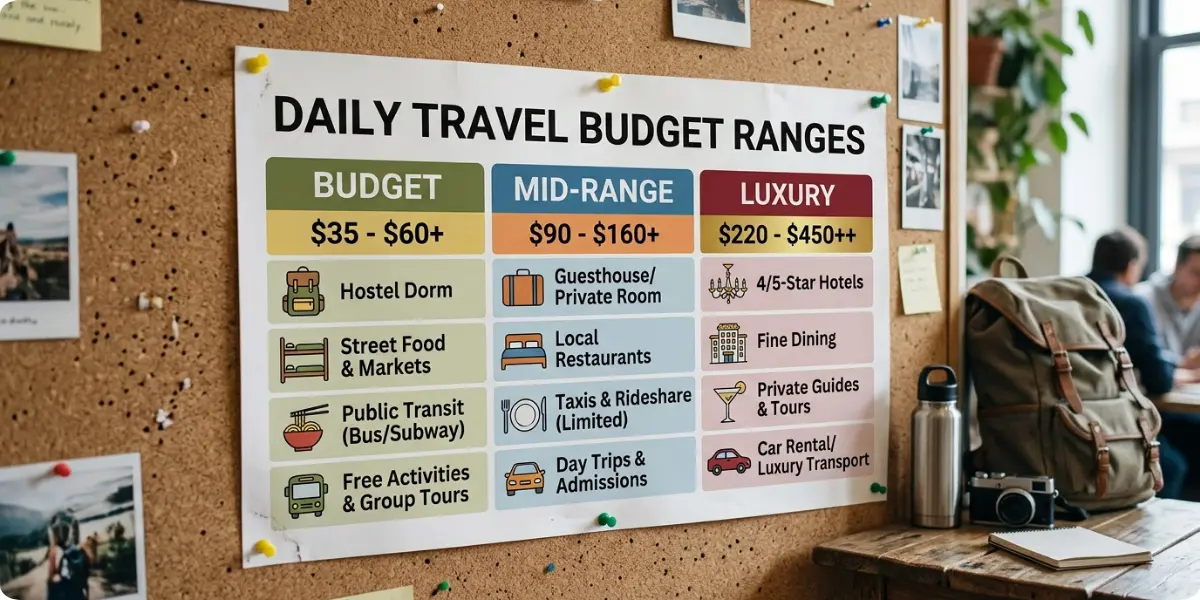
All figures below are rough estimates in GBP, per person per day, and exclude accommodation unless stated. Recheck prices before you book.
1. Budget travel expenses
About £50 to £80 covers cheap meals, public transport and one or two paid sights, plus free museums. A hostel dorm bed adds roughly £30 to £60 a night.
2. Mid-range travel expenses
About £120 to £200 covers sit-down meals, a couple of paid attractions and some taxis. A mid-range hotel can add £150 to £250 a night.
3. Luxury travel expenses
From £300 upward for fine dining, private transfers and premium experiences, with luxury hotels often £350 or more a night.
4. Food, transport, accommodation, and attraction costs
Accommodation is usually the biggest cost, followed by food and paid attractions. Transport is manageable thanks to the daily caps.
5. Practical ways to save money in London
Use free museums, tap contactless to benefit from caps, eat lunch deals and book popular attractions in advance. To plan your own numbers, try our trip cost calculator, and use the currency converter to translate prices into your home currency.
Food and Dining Information for Tourists

1. Traditional British food to try
Try fish and chips, a Sunday roast, a full English breakfast and afternoon tea.
2. London’s international food scene
London’s restaurants span almost every cuisine, from Indian curry houses to Turkish grills and Chinatown dim sum.
3. Where to find affordable meals
Markets, food halls, pubs with lunch menus and meal deals from supermarkets keep costs down.
4. Restaurant reservations and tipping customs
Book popular restaurants in advance. Many add a service charge of around 12.5 percent, so check your bill before tipping again.
5. Vegetarian, vegan, and dietary-friendly options
London is one of the easier cities for vegetarian, vegan and allergy-friendly eating, and most menus mark allergens.
Is London Safe for Tourists?
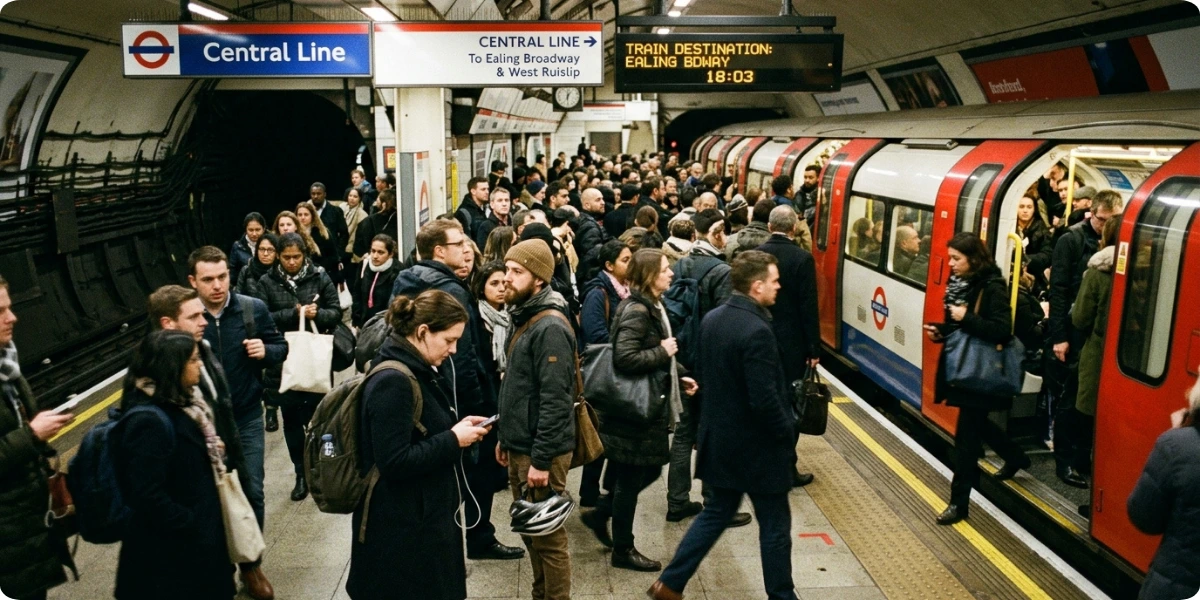
London is generally safe for visitors, and most trips pass without trouble. The advice below is about sensible habits, not alarm. For a longer breakdown, read our guide on whether London is safe.
1. Staying aware in crowded tourist areas
Busy places such as Oxford Street, major attractions and markets are where opportunistic theft happens.
2. Pickpocketing and phone theft prevention
Keep bags zipped in front of you. Avoid using your phone near the curb, where thieves on bikes or scooters can snatch it.
3. Staying safe on public transport at night
The Tube and buses are well used and monitored. Late at night, choose busier carriages and stay alert.
4. Emergency contacts and lost-property advice
Call 999 or 112 in an emergency. Use 101 for non-emergency police matters and see the Metropolitan Police for reporting. Official UK travel advice is also available.
5. Tips for solo travelers and families
Share your plans, keep valuables close, and teach children a meeting point and your hotel’s name.
London Tourist Information for Families and Different Travelers
1. London travel tips for families with children
Choose hands-on museums, parks and short sightseeing days, and take breaks.
2. Accessibility information for travelers with disabilities
Many attractions offer step-free access and assistance, but older Tube stations may not. Plan routes ahead and contact venues directly.
3. Solo travel tips
London suits solo travelers well, with plenty of cafés, walking tours and hostels where it’s easy to meet people.
4. Visiting London as a couple
Consider a river cruise, a West End show, a sunset from a viewpoint and a quiet pub dinner.
5. Tips for older travelers
Pace your days, use buses and taxis for longer hops, and book seated experiences.
Local Customs and Important Things to Know
1. Queueing etiquette and polite expressions
Londoners queue patiently, and “please,” “thank you” and “sorry” are used constantly.
2. Restaurant service charges and tipping
Check whether service is included on the bill. If it is, extra tipping is optional.
3. Public transport etiquette
On escalators, stand on the right and walk on the left. Let passengers off before boarding, and avoid blocking doors.
4. Weather, clothing, and what to pack
Weather changes quickly, so pack layers, a compact umbrella and comfortable walking shoes.
5. Sunday opening hours and public holidays
Large shops usually have shorter Sunday hours, and some attractions change times on bank holidays. For more first-visit advice, see our London travel tips.
6. Plug adapters and mobile connectivity
Bring a Type G adapter. Check roaming costs with your carrier, or consider a local eSIM, and note that free Wi-Fi is common in cafés.
How Many Days Do Tourists Need in London?
1. One day in London: Essential landmarks
Focus on Westminster, the river and one museum or viewpoint.
2. Two days in London: Major attractions and museums
Add the Tower of London, the British Museum and a West End evening.
3. Three days in London: A balanced first visit
Mix landmarks, museums, a market and a neighborhood walk. This is the best minimum for most first trips.
4. Four to five days: Neighborhoods and day trips
Slow the pace, explore areas such as Camden or Greenwich, and add a day trip. Our full guide on how many days in London breaks down each option, and the trip duration calculator can help you decide.
Best Day Trips from London
Journey times are approximate, so check current schedules.
1. Windsor Castle
About 30 to 55 minutes from Paddington or Waterloo. Book castle tickets ahead, as it closes for some royal events.
2. Oxford
About an hour from Paddington. No advance booking is needed to wander the city, though college entry and tours may require tickets.
3. Cambridge
About 50 to 60 minutes from King’s Cross. Punting and college visits are best arranged in advance in busy months.
4. Bath
About 1.5 hours from Paddington. Book the Roman Baths ahead in peak season.
5. Stonehenge
Trains run to Salisbury (about 1.5 hours from Waterloo), then a bus or tour continues. Book entry through English Heritage in advance.
Frequently Asked Questions About London Tourist Information
What do tourists need to know before visiting London?
Check your passport, whether you need a visa or an ETA, and your travel insurance. Plan transport around contactless payment, book popular attractions early and pack layers for changeable weather. London is generally safe, but stay alert in crowded areas. Use official sources for the latest entry and ticket information.
What is the best way to get around London?
Most visitors rely on the Tube, buses and the Elizabeth line, with walking for short central distances. Contactless payment is the simplest way to pay. Buses give good views, and the Tube is usually faster. Plan journeys with a live map app to avoid delays or closures.
Is London expensive for tourists?
London can be costly, especially for accommodation, dining out and paid attractions. You can control spending by using free museums, parks and walking routes, eating at markets or lunch deals, and relying on daily fare caps. A mix of free and paid activities keeps most trips manageable.
How much money do you need per day in London?
As a rough estimate, budget travelers might spend £50 to £80 a day excluding accommodation, mid-range travelers £120 to £200, and luxury travelers £300 or more. Accommodation is extra and varies widely by area and season. Always check current prices before you travel.
What is the best month to visit London?
There is no single best month. May to June and September offer a good balance of mild weather and long days. Summer is busiest, winter is quieter with festive events in December, and spring brings blooming parks. Your priorities, whether weather, price or events, decide the right choice.
Can tourists use contactless cards on the London Underground?
Yes. Most contactless bank cards, phones and smartwatches work on the Tube, buses, Elizabeth line and other TfL services. Fares match Oyster and daily caps apply automatically. Always tap the same card or device on entry and exit, and check with your bank about foreign transaction fees.
Which area is best for first-time visitors?
Westminster, Covent Garden and the South Bank are popular because they put major landmarks within easy reach. Kensington suits museum lovers and families, while King’s Cross is handy for rail connections. Choose based on your budget, interests and how important a quiet neighborhood is to you.
Are London’s museums free?
Many major museums, including the British Museum, Natural History Museum, National Gallery, Tate Modern and V&A, have free permanent collections. Special exhibitions, guided tours and some attractions charge fees. Booking a free time slot is sometimes recommended, so check each museum’s website before you go.
How many days are enough to explore London?
Three days is a good minimum for a first visit, covering major landmarks, a museum and a neighborhood or two. Two days works for a quick trip, and five days lets you slow down and add a day trip. More time means a more relaxed pace.
Do tourists need a visa to visit London?
It depends on your nationality and purpose of travel. Some visitors can enter without a visa but need an Electronic Travel Authorisation, while others must apply for a visa in advance. Use the official GOV.UK tools before booking, as rules and fees can change.
Is London suitable for a family holiday?
Yes. London offers free museums, large parks, river cruises and interactive attractions that suit different ages. Families should plan shorter days, book popular attractions in advance and use buses or the Tube strategically. Many attractions have family tickets, and children often get reduced fares on public transport.
What should tourists avoid doing in London?
Avoid blocking Tube escalators, leaving bags unattended, using your phone by the curb and relying on paper tickets. Skip buying from unofficial ticket sellers, and don’t assume everything is open on Sundays or bank holidays. Check opening times and book ahead for the busiest attractions.
Conclusion: Plan Your London Visit With Confidence
London rewards a bit of preparation. Decide when you want to go, check your entry requirements, work out where to stay, and book the headline attractions in advance. Before you travel, confirm entry rules, transport details, opening times and ticket availability on official websites, since all of them change. For more ideas, browse our full set of London guides on TripGuiderz, and use our travel planning section to organize the rest of your trip.
