
London rewards curiosity. One morning you can stand inside the Tower of London, where royal prisoners once waited, and by evening you can be eating dinner beside a canal that feels like a quiet village. Few cities pack this much history, culture, and variety into so little space. London welcomes around 40 million visitors a year, and the Greater London area holds more than 170 museums and over 40 percent green space, so there is always something worth your time. If you are planning the best places to visit in London, the real challenge is not finding things to see. It is choosing between thousands of options without spending half your trip on the Tube.
This guide is built on repeated on-the-ground research, official visitor information, and hands-on testing of routes, queues, and ticket options, so the advice reflects how London actually works. It covers the famous landmarks first-time visitors expect, the free places that cost nothing to enter, and the lesser-known corners most day-trippers miss. Many national museums, including the British Museum and the National Gallery, offer free general admission, which can save a family of four well over £100 in a single day.
You will also find practical tips on timing, tickets, transport, and how to group attractions by area, so your days run smoothly. Booking popular sights online in advance usually costs less than buying at the gate and helps you skip the longest queues.
What Are the Best Places to Visit in London?
The best places to visit in London include the Tower of London, Buckingham Palace, Westminster Abbey, the British Museum, and the London Eye. First-timers usually start with these landmarks, then add parks, markets, and neighborhoods. The right mix depends on your interests, available time, and budget, since London is large and many attractions need advance booking.
Best Places to Visit in London for First-Time Visitors
If this is your first trip, build your days around the big icons and leave gaps for wandering. Our London first-time visitor guide explains how to pace those early days, and the six stops below form a solid foundation.
1. Tower of London
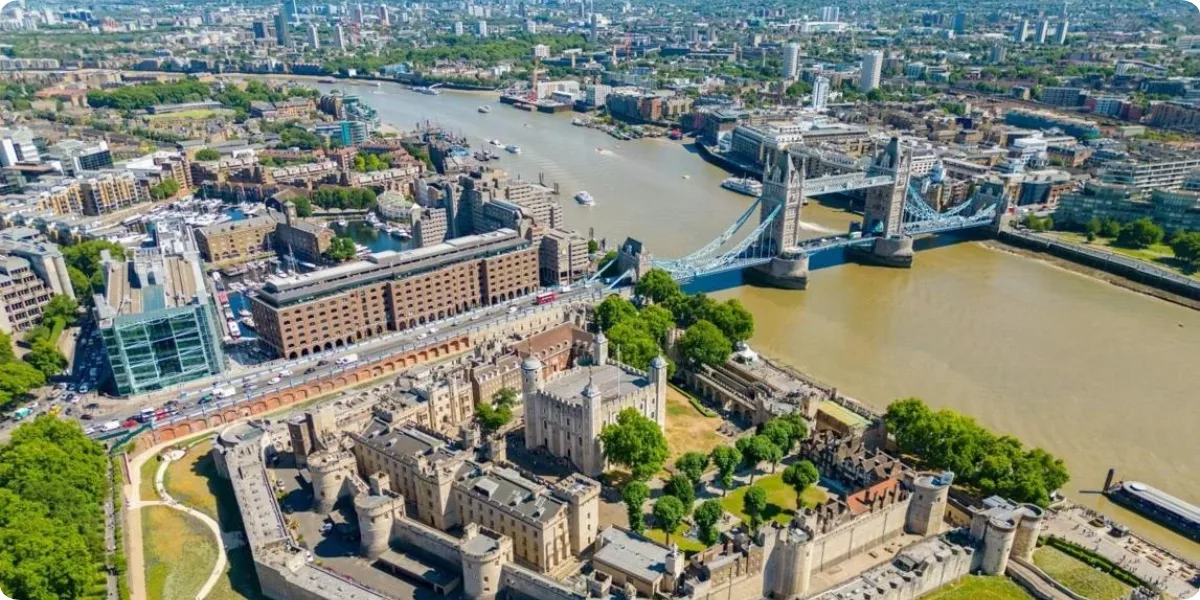
The Tower is worth your time because it packs nearly a thousand years of royal, military, and prison history into one riverside fortress. The Crown Jewels are the headline draw, but the White Tower, the medieval palace rooms, and the tours led by the resident Yeoman Warders give the visit its character. The guided tours are often the most memorable part, thanks to the storytelling.
The Tower stands on the north bank of the Thames, beside Tower Hill station. Allow around three hours, and arrive close to opening to see the Crown Jewels before queues build. Current tickets and opening times are listed on the Historic Royal Palaces website.
2. Buckingham Palace
Buckingham Palace has been the monarch’s London residence since the 1830s, and most visitors admire its famous façade from the gates and the Victoria Memorial. The State Rooms open to ticketed visitors only at certain times of year, so do not assume you can walk inside on any date.
The Changing of the Guard is the main spectacle, but it does not run every day and the schedule can shift because of weather or events. Check the official Household Division schedule before you go. For a calmer view, arrive early or visit the palace on your way through St James’s Park in the late afternoon.
3. Big Ben and the Houses of Parliament
The clock tower, officially the Elizabeth Tower, looks best from across the river. Westminster Bridge gives the classic postcard angle, while the South Bank directly opposite lets you frame the tower and the Parliament façade together in one shot.
A good Westminster walking route runs from Westminster station across the bridge, then along the river toward the London Eye, before looping back via Whitehall to Horse Guards and St James’s Park. Everything on that loop sits within roughly a mile.
4. Westminster Abbey
Westminster Abbey is where coronations have taken place for centuries, and it is also the burial place of monarchs, poets, and scientists. Inside you can see the Quire, the Coronation Chair, Poets’ Corner, and the Lady Chapel, with its remarkable fan-vaulted ceiling.
The Abbey is a working church, so sightseeing is limited during services and on Sundays, and photography is not allowed inside. Book timed tickets through the Westminster Abbey website and allow about ninety minutes with the audio guide.
5. London Eye
The London Eye turns slowly enough that one rotation takes about thirty minutes, giving you time to spot St Paul’s, Parliament, and on clear days even Windsor Castle far off to the west. It sits on the South Bank, so it pairs naturally with a riverside walk.
Daytime flights offer the clearest visibility, while sunset flights deliver the golden light and the first city lights coming on. Pick a sunset slot if your schedule allows, book a timed ticket in advance, and expect a short queue even with a reservation.
6. Tower Bridge
Tower Bridge is a Victorian engineering showpiece, with a bascule section that still lifts for tall ships. The Tower Bridge Exhibition lets you cross the high-level walkways, including glass-floored sections with views straight down to the road and river.
Best photo spots include the riverside path near the Tower of London, the pedestrian approach from the south bank, and Butler’s Wharf on the Bermondsey side. A common mix-up: Tower Bridge is the ornate blue-and-white landmark, while London Bridge, a short walk upstream, is a plain modern crossing. Details on the exhibition are on the Tower Bridge website.
Best Museums and Cultural Places to Visit in London
London’s major national museums are some of the most generous in the world, and general admission to most of them is free.
1. The British Museum
The collection spans two million years of human history, from the Rosetta Stone to Egyptian mummies and the Parthenon sculptures. It is too large to see in one visit, so choose three or four galleries and treat the rest as a bonus.
A shorter two-hour plan works well: start with the Rosetta Stone, move to Egypt, then finish with the Greek galleries. General admission is free, though special exhibitions are ticketed. Opening hours and exhibition details are on the British Museum website.
2. Natural History Museum
The Natural History Museum is as much about the building as the collections. The Hintze Hall greets you with a blue whale skeleton overhead, and the dinosaur gallery remains a reliable hit with children and adults alike. The Earth and mineral galleries are often quieter than the main halls.
Families should arrive at opening, head to the dinosaurs first, then work toward quieter galleries. Entry to the permanent galleries is free, but timed entry or booking may be required during busy periods, so check before you set out. Current information is on the Natural History Museum website.
3. Victoria and Albert Museum
The V&A is the world’s leading museum of art and design, covering fashion, ceramics, jewelry, sculpture, and theatre. The building’s courtyards and cafés make it a pleasant stop even on short visits.
It suits anyone with an eye for craft and design, and it is especially rewarding for fashion fans. Because it sits beside the Natural History Museum in South Kensington, you can comfortably combine both in a single day.
4. Tate Modern
Tate Modern occupies a former power station on the Thames, and the vast Turbine Hall is one of London’s great public art spaces. The permanent collection is free, and the upper-level terrace offers sweeping views across the river toward St Paul’s.
The Millennium Bridge connects the gallery directly to St Paul’s Cathedral, and Borough Market and Shakespeare’s Globe are a short walk along the South Bank.
Beautiful Parks and Outdoor Places in London
London’s Royal Parks are free to enter and open early, and each one has a distinct personality. The official Royal Parks website lists events, cafés, and seasonal highlights.
1. Hyde Park
Hyde Park is the city’s big social park, with rowing and pedal boats on the Serpentine, open-air swimming in summer at the Lido, and Speakers’ Corner on Sundays. Walk the northern edge for shaded tree-lined paths, or cross to Kensington Gardens to reach the Albert Memorial and Kensington Palace.
2. Regent’s Park
Regent’s Park is the most formal of the group. Queen Mary’s Gardens bloom with thousands of roses in early summer, while the Open Air Theatre stages performances in warmer months. London Zoo sits on the northern edge, and Primrose Hill, a short walk away, offers one of the city’s best skyline views.
3. St James’s Park
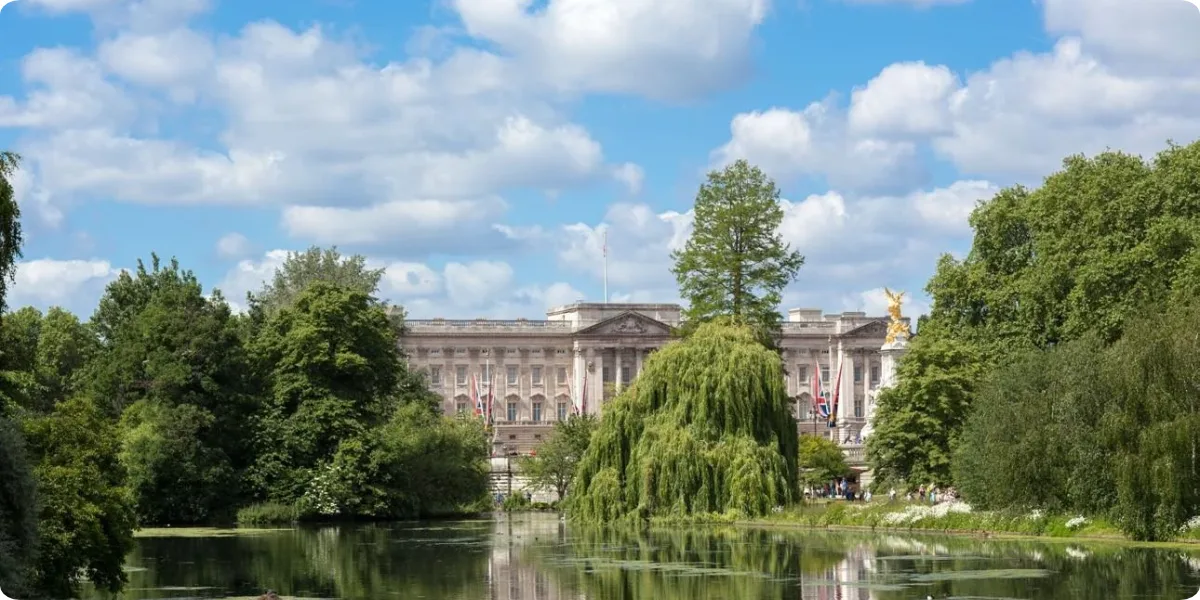
St James’s Park is the most scenic route between Westminster and Buckingham Palace. Its lake is famous for resident pelicans, and the bridge across it gives a fairytale view of Horse Guards and the Whitehall rooftops. It is a good place for a quiet sit-down after a morning in the museums.
4. Greenwich Park
Greenwich Park climbs to the Royal Observatory and the Prime Meridian line, where you can stand with a foot in each hemisphere. The viewpoint in front of the observatory shows Canary Wharf and the Thames curving below. The Cutty Sark, the Painted Hall, and the covered market are all within an easy stroll, and the journey by river boat is half the fun.
Unique Places to Visit in London Beyond the Famous Landmarks
These quieter spots rarely make the top-ten lists, yet they often become the favorite memory of a trip.
1. Leadenhall Market
This Victorian covered market in the City of London has painted ironwork, cobbled lanes, and a glass roof that glows on gray days. It sits among glass towers, and the contrast with the surrounding financial district makes it striking. Visit on a weekday lunchtime, when the market is busy with office workers and the pubs and restaurants are open.
2. Neal’s Yard
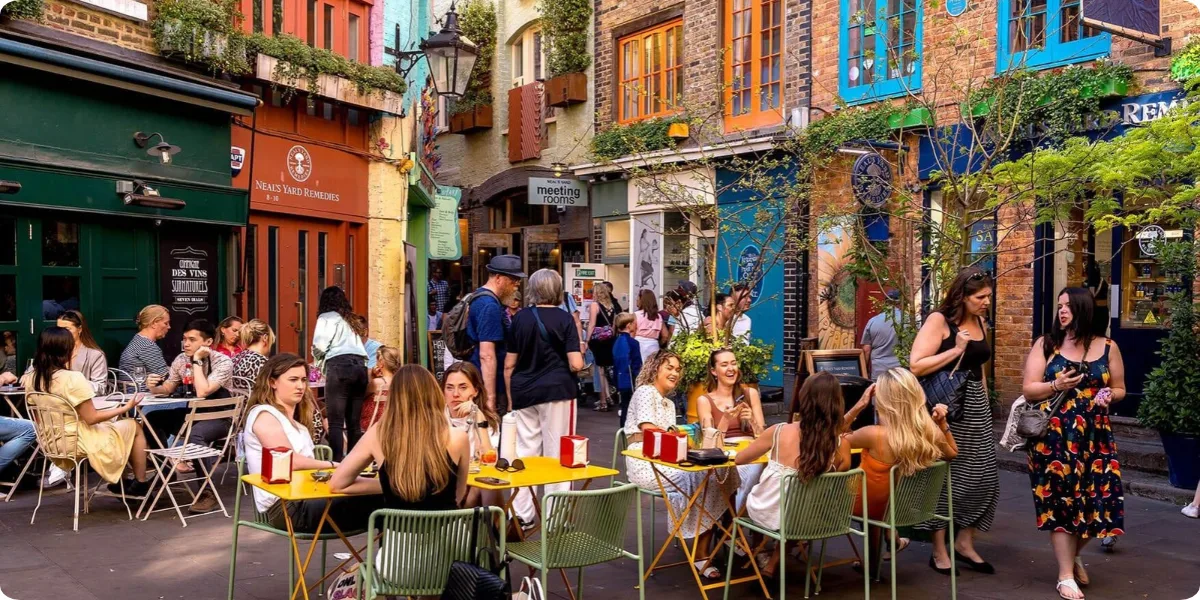
Tucked away in Covent Garden, Neal’s Yard is a tiny courtyard of brightly painted buildings, wholefood cafés, and independent shops. It is ideal for a quick coffee break and a few photos between the busier Covent Garden streets.
3. Little Venice
Little Venice is a leafy canal junction lined with houseboats, waterside cafés, and weeping willows. Walk along the Regent’s Canal toward Camden, or take a canal boat for a relaxed ride that skips the traffic entirely.
4. Kyoto Garden
Hidden inside Holland Park, the Kyoto Garden was a gift from the Japanese Chamber of Commerce and features a waterfall, koi pond, and stone lanterns. Peacocks often wander through, and the garden is at its quietest first thing in the morning.
5. God’s Own Junkyard
This warehouse in Walthamstow is packed with vintage neon signs, cinema props, and glowing sculptures. It is free to enter and typically open on weekends only, so check current access arrangements before you make the trip east. A café inside makes it easy to stay for an hour or two.
6. Daunt Books, Marylebone
Daunt Books occupies a beautiful Edwardian shop with long oak galleries, a skylight, and a stained-glass window. The books are arranged by country, which makes it a particularly rewarding stop for travelers who want a guidebook, a novel, or a memoir set in the place they are visiting next.
Best Places to Visit in London for Free
London is expensive, but a huge share of its best sights cost nothing to enter. Here are the places that are generally free, with notes on what may cost extra.
- British Museum: free general admission; special exhibitions are ticketed.
- Natural History Museum: free permanent galleries; temporary exhibitions and some activities carry a fee.
- Tate Modern: free permanent collection; major exhibitions need a paid ticket.
- Sky Garden: free, but you must reserve a time slot in advance through the Sky Garden website and meet entry conditions.
- Hyde Park and St James’s Park: free to enter and open daily; boat hire and events cost extra.
- Greenwich Park: free to wander; the Royal Observatory itself charges for entry.
- South Bank riverside walk: a public path past the Globe, Tate Modern, and the London Eye.
- Trafalgar Square: open public space, with the National Gallery next door offering free general entry.
Timed tickets can apply even to free attractions during busy periods, so a quick check on the official site saves a wasted trip. To see how these savings affect your overall plan, try the trip cost calculator.
Best Places to Visit in London at Night
London at night shifts from museums and parks to riverfront lights and theatre crowds. Each area below has a different mood, so pick one per evening rather than trying them all.
1. South Bank
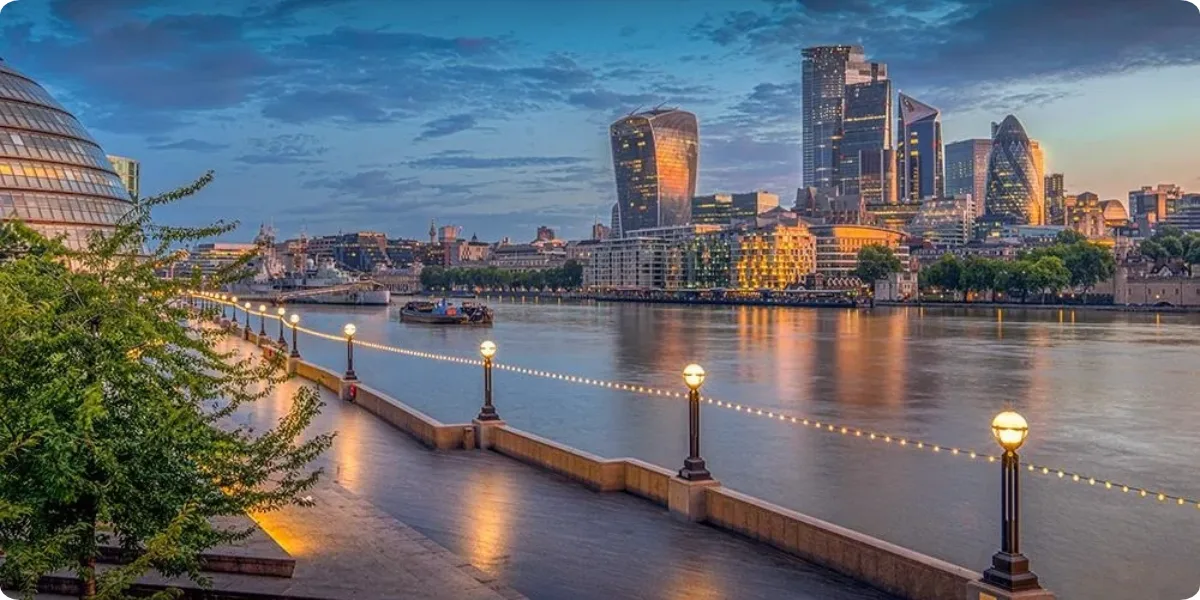
The South Bank is easily the best after-dark walk. The river path runs past the London Eye, the Southbank Centre, the National Theatre, and Tate Modern, with street performers, food stalls, and pubs along the way.
2. Piccadilly Circus
Piccadilly Circus is London at its brightest, with giant digital screens, tourists, and theatre crowds. It is lively and photogenic but also very crowded, so treat it as a quick stop rather than a place to linger.
3. Covent Garden
Covent Garden has buskers in the piazza, restaurants on every side street, and pubs spilling onto the cobbles. It suits groups with different tastes since there is something for every budget.
4. Soho
Soho is the center of London’s nightlife, with bars, live music, comedy clubs, and some of the city’s best late-night food. Its narrow streets are busy past midnight, especially on weekends.
5. Tower Bridge and the Thames riverside
Tower Bridge looks especially impressive when lit up after dark. Walk the riverside between Tower Bridge and London Bridge for illuminated views, then eat at one of the nearby restaurants in Bermondsey or around Borough Market.
Transport runs late in central London. Night buses cover many routes, and the Night Tube operates on selected lines on Friday and Saturday nights, so check TfL for current services. Stick to well-lit, busy streets, keep your phone out of sight on crowded pavements, and use licensed taxis or apps for late rides. For a fuller view of common risks and sensible habits, read our guide on whether London is safe for tourists.
Best Places to Visit in London With Kids
London is easier with children than many people expect, thanks to free museums and open green spaces.
- Natural History Museum: best for ages 4 and up; dinosaurs and the blue whale hold attention. Go first thing to avoid crowds.
- London Transport Museum: good for toddlers through early teens; hands-on exhibits and vehicles to climb into. A paid ticket is required.
- London Zoo: a full half-day for ages 2 and up, with indoor animal houses for wet days. Book online.
- Science Museum: free general entry and a strong choice for ages 5 to 14 thanks to interactive galleries.
- Diana Memorial Playground: in Kensington Gardens, aimed at under-12s, with a large pirate ship. Check opening hours and any age or adult-supervision rules.
- London Eye: suitable for most ages, with a short enough ride for patient younger children.
For rainy days, put the two indoor museums first and save parks for a dry spell. Build in breaks every couple of hours, and use museum cafés or park benches to let younger children recover between stops. Pre-booking timed tickets reduces queueing with little ones.
Best Places to Visit in London for Couples
The best couple’s spots in London are the ones that offer a shared experience rather than just a pretty backdrop.
- Kyoto Garden: walk the quiet paths, sit by the waterfall, and let the garden’s calm do the work. Go early or on a weekday.
- Little Venice: wander the canal towpath or book a short boat trip, then stop for lunch at a waterside café.
- Greenwich Park: stand at the viewpoint above the river, then walk downhill to the market for coffee and a snack.
- South Bank at sunset: start at Tate Modern, walk east to west with the sun dropping behind Parliament, and finish with dinner near the National Theatre.
- Covent Garden: catch a street performance in the piazza, then book a table nearby or a West End show.
- A Thames sightseeing cruise: see landmarks from the water, which gives a perspective you cannot get on foot. Pick an evening departure for city lights.
Best Neighborhoods to Explore in London
Picking the right neighborhood can shape a trip as much as any attraction. Here is how six popular areas compare.
1. Covent Garden
Covent Garden is central, lively, and tourist-friendly. It has the old market hall, street performers, the Royal Opera House, and dozens of restaurants. It suits first-time visitors and theatre fans.
2. Notting Hill
Notting Hill is known for its pastel townhouses, Portobello Road Market, and antiques shops. It is relaxed and photogenic, best for browsing and café stops. Visit on a Saturday for the full market.
3. Shoreditch
Shoreditch brings street art, vintage shops, rooftop bars, and independent restaurants. Brick Lane’s curry houses and bagel shops are nearby. It suits younger travelers and anyone interested in London’s creative scene.
4. Greenwich
Greenwich feels like a separate town, with a market, a historic naval college, and a hilltop park. It is a great half-day trip for history lovers and families.
5. Camden Town
Camden is defined by its markets, music venues, and alternative fashion. It is busy and loud, perfect if you want street food and people-watching, but less ideal if you prefer quiet.
6. South Kensington
South Kensington is polished, calm, and well-connected, with the big museums on its doorstep. It works best for visitors who want culture first and nightlife second.
Places to Visit in London on a Map
London’s attractions spread across several areas, and walking between them is not always practical. Use the table below to group sights by area, then plot them on your own interactive map (for example, a custom Google My Maps layer) so each day stays compact.
| Area | Key attractions | Nearby Underground stations |
| Westminster and St James’s | Big Ben, Westminster Abbey, Buckingham Palace, St James’s Park | Westminster, St James’s Park, Green Park |
| South Bank | London Eye, Tate Modern, Southbank Centre | Waterloo, Southwark, Blackfriars |
| City and Tower | Tower of London, Tower Bridge, Leadenhall Market, Sky Garden | Tower Hill, Monument, Bank |
| Bloomsbury and Covent Garden | British Museum, Neal’s Yard, Covent Garden | Tottenham Court Road, Holborn, Covent Garden |
| South Kensington | Natural History Museum, V&A, Science Museum | South Kensington |
| Parks and west | Hyde Park, Kensington Gardens, Kyoto Garden | Hyde Park Corner, High Street Kensington, Holland Park |
| North | Regent’s Park, Little Venice, Daunt Books | Regent’s Park, Warwick Avenue, Baker Street |
| East and South-East | Greenwich Park, God’s Own Junkyard | Cutty Sark (DLR), Walthamstow Central |
To plan routes, combine nearby clusters: Westminster, St James’s Park, and the South Bank can be done on foot in one day, while Greenwich and Walthamstow each need their own half-day because they sit well outside the central core. The Tower of London to Tower Bridge walk is short, but the walk from Tower Hill to Westminster is long, so take the Tube or a river bus between them.
How to Plan Your London Sightseeing Itinerary
If you have one day in London
Focus on Westminster, the Buckingham Palace area, St James’s Park, and the South Bank. Start at Westminster Abbey, walk past Parliament and Big Ben, cut through St James’s Park to the palace, then finish with a river walk and the London Eye.
If you have two days in London
Keep day one as above, then use day two for the Tower of London, Tower Bridge, a major museum such as the British Museum, and an evening neighborhood visit to Covent Garden or Soho.
If you have three days in London
Add a day for Greenwich or another outer-London area, more museum time in South Kensington, and a relaxed neighborhood such as Notting Hill or Shoreditch. Our guide on how many days to spend in London goes deeper on trip length.
Opening hours, timed entries, walking distances, and transport connections can all change the final route, so confirm each stop before you lock in your plan.
Practical Tips for Visiting London Attractions
- Pay for transport the easy way. Contactless payment or an Oyster option works across the Tube, buses, and trams, with daily caps on fares. Details are on the Transport for London site.
- Check official sites. Prices and opening times change. Always confirm on each attraction’s own website, or use Visit London for broader planning.
- Reserve timed-entry tickets. The Tower of London, London Eye, and Westminster Abbey all benefit from advance booking.
- Carry a UK-friendly payment method. Cards that work abroad, plus a small amount of cash, avoid problems at small cafés and markets.
- Prepare for rain. Carry a light waterproof and keep indoor backups such as museums.
- Check accessibility. Most major attractions publish step-free routes and facilities online, but some older sites have limitations.
- Group by neighborhood. It cuts travel time and keeps days relaxed. For broader advice, see our London travel tips, the London tourist information guide, and a list of common London travel mistakes.
Frequently Asked Questions About Places to Visit in London
What are the top 10 places to visit in London?
- Tower of London: royal history and the Crown Jewels.
- Buckingham Palace: the monarch’s official London residence.
- Westminster Abbey: coronations, tombs, and Poets’ Corner.
- Big Ben and Parliament: London’s best-known skyline view.
- British Museum: global history, free to enter.
- London Eye: river views from above.
- Tower Bridge: Victorian engineering with a glass walkway.
- Natural History Museum: dinosaurs and the blue whale.
- Tate Modern: modern art in a power station.
- Hyde Park: the city’s biggest central green space.
What is the most visited place in London?
It depends on how visits are counted and which year you look at. Free museums such as the British Museum and the Natural History Museum regularly appear near the top of national visitor rankings, but outdoor spaces and landmarks are harder to count. No single ranking is definitive.
What is the most beautiful place in London?
Beauty is subjective, but there are strong options in each category. For gardens, try Kyoto Garden or Regent’s Park. For architecture, Westminster Abbey and Leadenhall Market stand out. For riverside scenery, the South Bank at sunset and Greenwich’s viewpoint are hard to beat.
Are there free places to visit in London?
Yes. Many major museums, including the British Museum, Natural History Museum, and Tate Modern, offer free general entry, as do the Royal Parks and open public spaces like Trafalgar Square. Special exhibitions, timed tickets, and activities such as boat hire usually cost extra.
How many days do you need to visit London?
One day covers the Westminster and South Bank highlights. Two days let you add the Tower of London, Tower Bridge, and a major museum. Three or more days allow Greenwich, deeper museum visits, and relaxed neighborhood time without rushing between attractions.
What is the best area to stay in London for sightseeing?
Westminster and the South Bank put you near the main landmarks. Covent Garden and Soho are central with strong transport and nightlife. South Kensington suits museum visitors. The City is quieter at weekends, and outer areas are cheaper but add travel time.
What is the best time to visit London?
Spring and early autumn usually balance mild weather with manageable crowds. Summer has long daylight but heavy crowds and higher prices, while winter is darker, colder, and wetter yet quieter. Our detailed best time to visit London guide breaks this down by month.
Can you explore London without a car?
Yes. The Underground, buses, overground rail, and river services connect most major attractions, and many central sights are walkable once you group them by area. A car is rarely helpful in the center because of congestion charges, limited parking, and heavy traffic.
Final Thoughts
London works because it layers so many experiences on top of one another: royal landmarks beside modern art, quiet canals a short ride from busy markets, and enormous parks inside a world city. You do not need to see everything to leave satisfied.
Choose attractions that match your interests and the number of days you have, and leave some slack for the unexpected side street or café. For more planning help across the city, explore our full collection of London travel guides on TripGuiderz.

Arman Ashraf is a content writer focused on travel and tourism. He creates practical, well-researched travel guides, destination articles, and travel tips designed to help readers plan trips with greater confidence. His work combines clear, engaging writing with SEO best practices, covering destinations, things to do, travel planning, and useful advice for travelers. Arman is committed to producing helpful content that makes discovering and planning travel easier.